Honda’s Prelude-GT Takes GT500 Crown as TOM’S Toyota Falls Short at Motegi
- Cargo
- Electric Vehicles
- Shipped
- Shipper
- Jamie Klein
- Readers
- 494
Honda’s first GT500 title since 2020 came with a clear pace advantage, while TOM’S points leaders lost ground on tires, pit timing and Sunday damage.
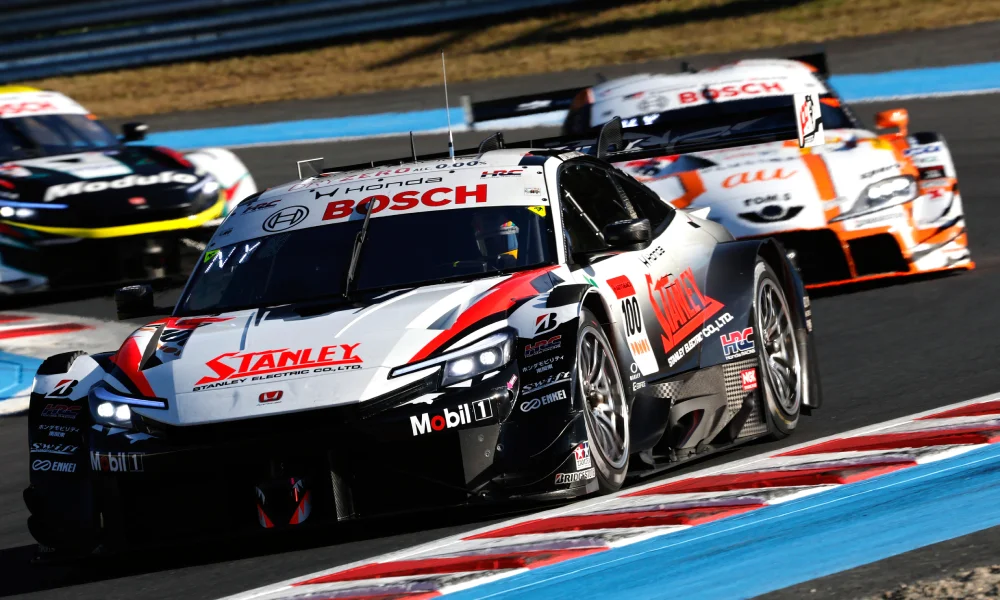
Photo: Honda
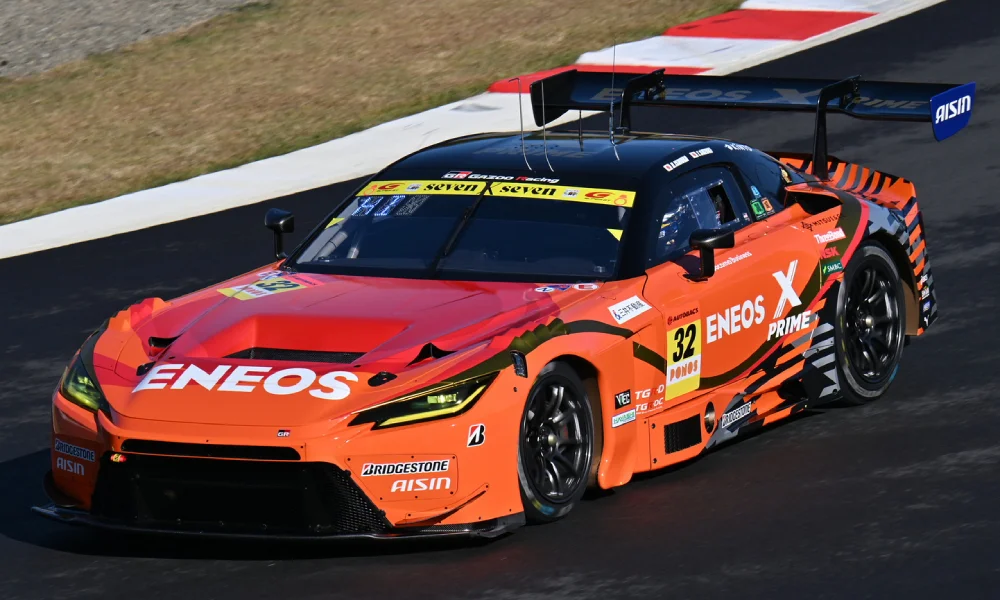
Honda’s new HRC Prelude-GT delivered a GT500 title in its first year, and TOM’S drivers Kenta Yamashita and Sho Tsuboi left Motegi believing the gap to the winning car was larger than their qualifying positions suggested. Naoki Yamamoto and Tadasuke Makino of Team Kunimitsu secured Honda’s first championship in the class since 2020, while the No. 36 Toyota GR Supra crew saw its bid for a fourth consecutive title end across the two 250-kilometer races.
The decisive weekend exposed several weaknesses for TOM’S at once: race pace, tire performance in changing conditions, and the margin for error in a tightly contested field. Yamashita and Tsuboi entered the finale with the points lead, but tenth place in Saturday’s race cost them ground. Sunday brought a worse result. Tsuboi’s car sustained front-left damage after contact with Daniil Kvyat’s Lamborghini GT300 machine and retired before the finish.
Qualifying form did not carry into the race
Yamashita qualified second, behind Makino, and pressured Yamamoto during the opening stint on Sunday. Both leading cars stopped together on lap 22 of 53, with Yamashita handing the Toyota to Tsuboi. That early contest offered a glimpse of what TOM’S could do over a short run, but Yamashita said the Toyota could not match Honda’s pace over the race distance.
“Honda was very quick this weekend,” Yamashita told Sportscar365. “Their acceleration is good, and it feels like they have moved a level above us.” He said the Toyota had qualified close to the No. 100 Honda, yet the difference in race pace and underlying potential became clear once the cars were running in traffic and managing their tires.
“There’s not much more we could have done,” he said. Yamashita had felt Honda applying pressure during the second half of the season, but said the gap appeared to grow again at the final round. His assessment was blunt: TOM’S could not keep up.
Tire choice and acceleration shaped the gap
TOM’S had already identified tire performance as a problem after Saturday’s race. Tsuboi struggled on the out lap in some of the coldest conditions the teams had faced all season, and Yamashita said the team lacked a Bridgestone compound that suited the weekend. By Sunday, he viewed Honda’s ability to make its Prelude work well with its chosen tires as a central part of the result.
Yamashita said the Hondas had appeared to converge on tire choices that matched their cars particularly well during the latter part of the season. He pointed to Autopolis, where Honda was especially quick in the second half of the race, as another example. TOM’S, by comparison, did not have a tire that delivered the same balance of performance.
The Toyota’s acceleration also left its drivers working harder through corners to stay attached to the Hondas, Yamashita said. That extra effort placed more demand on the tires and compounded the disadvantage. In his account, the deficit did not come from one isolated problem: tire fit, acceleration and the resulting tire use all contributed.
That combination matters in a long race because a car that needs its drivers to push harder through corners can spend its tire performance sooner. Yamashita’s comments point to a setup challenge for TOM’S: the team needs a package that can preserve corner speed without asking the tires to compensate for weaker acceleration. His description gives no single adjustment that would close the gap, but it makes clear why qualifying pace alone was not enough.
Pit timing and damage ended the Toyota’s challenge
Tsuboi said the out lap was slow in both races, making the transition back into a stint another area where the No. 36 lost time. He also singled out being undercut by the Real Racing Honda, which finished second, as a costly moment for TOM’S Sunday hopes.
The later contact with Kvyat’s Lamborghini made the finish impossible. Tsuboi apologized for the incident, saying the damage was more severe than he had expected. The damaged Toyota then made contact with Sacha Fenestraz’s SARD Toyota as they fought for third at Turn 11, sending Fenestraz into a spin.
“Even if we were always going to lose the title, it would have been good to finish the year with a podium,” Tsuboi said. He described retirement as the worst possible outcome and called his performance unacceptable for a professional driver. The four-time champion had also missed the chance to surpass Ronnie Quintarelli as the most decorated GT500 driver in series history.
A one-make tire season offers Toyota a reset
Next season, the GT500 field is due to switch to one-make Bridgestone tires. Tsuboi sees that change as a chance for Toyota to find a setup that works across the common tire, although he cautioned that Honda’s Prelude is already strong. He said the team needs to identify where it is losing performance and work with Toyota on changes within the available development limits.
Development is restricted during the GT500 aerodynamics freeze, which is scheduled to remain in place through the end of 2029. That makes the tire change and setup work especially relevant for TOM’S: its immediate route back appears to depend on extracting more from the existing package rather than counting on a broad aerodynamic reset.
For Honda, Motegi validated the Prelude-GT’s competitiveness across a title-deciding weekend. For TOM’S, Yamashita’s and Tsuboi’s comments leave a practical off-season brief: improve the car’s acceleration and tire performance, and make its out laps count. The one-make tire will give the teams a common reference; whether Toyota can turn that into a closer race against Honda will be the key question next season.