Grampas Toy: A 1949 Chevy Coupe Built to Gasser Spec
- Cargo
- Electric Vehicles
- Shipped
- Shipper
- Don Sherman
- Readers
- 760
A retired electrician's 1949 Chevy business coupe packs a 454 big-block and a TH400 into a 1950s-style gasser. Here's what it's like to drive.
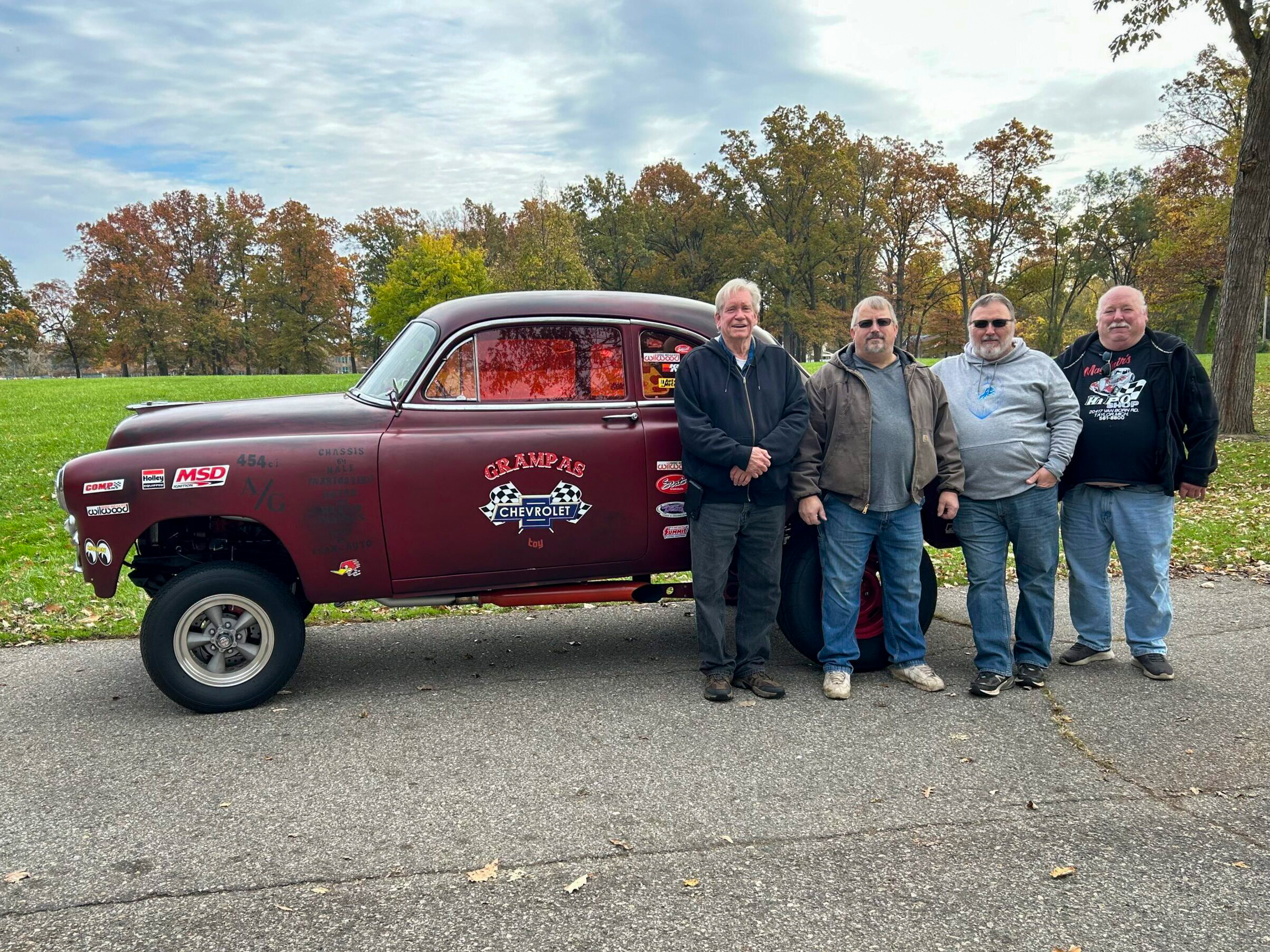
Gasser builds from the 1950s and '60s were never about refinement. They were about looking fast, sounding mean and running hard off the line, usually on a quarter-mile strip. Ron Fogarty's 1949 Chevrolet coupe, which he calls Grampas Toy, captures that attitude better than most recent builds I've seen. It's a clean, period-correct interpretation, and it actually works.
Starting With a Business Coupe
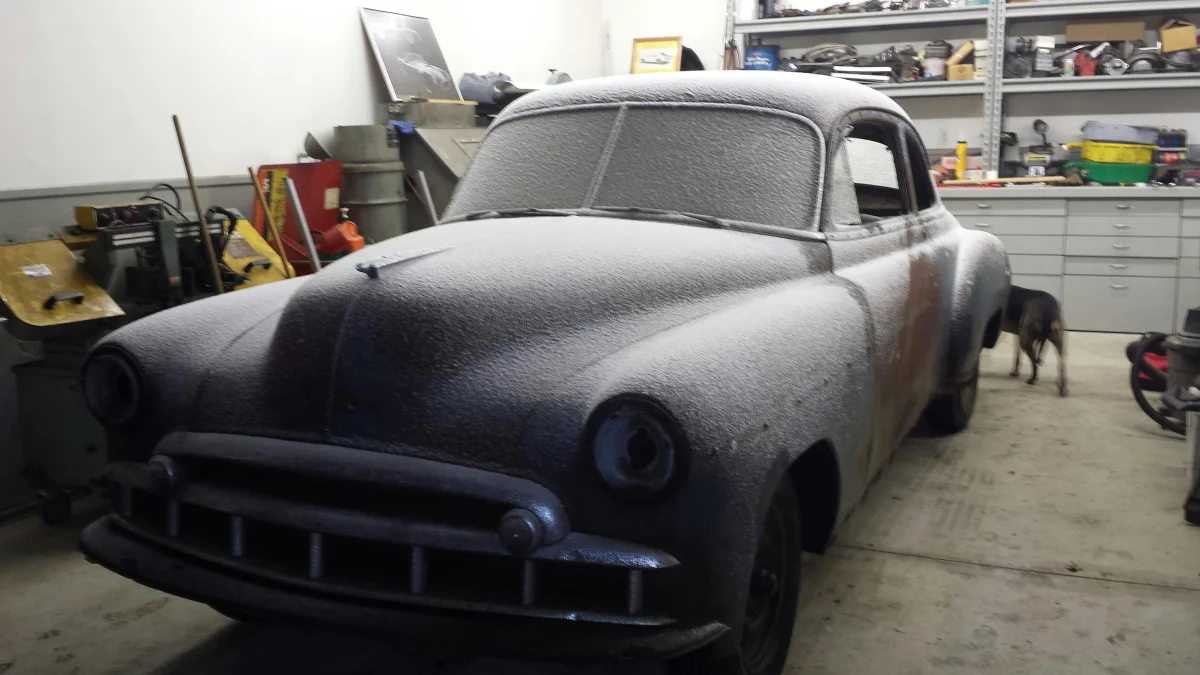
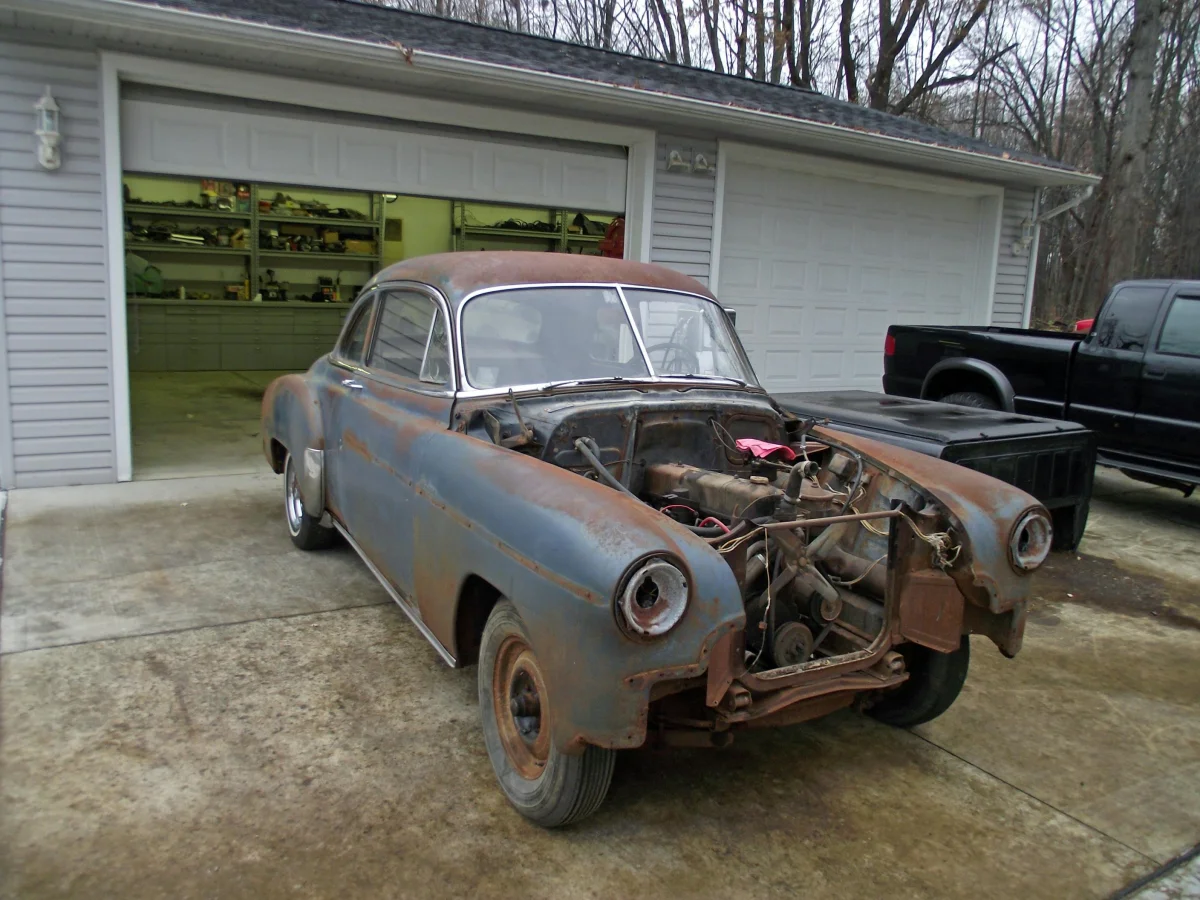
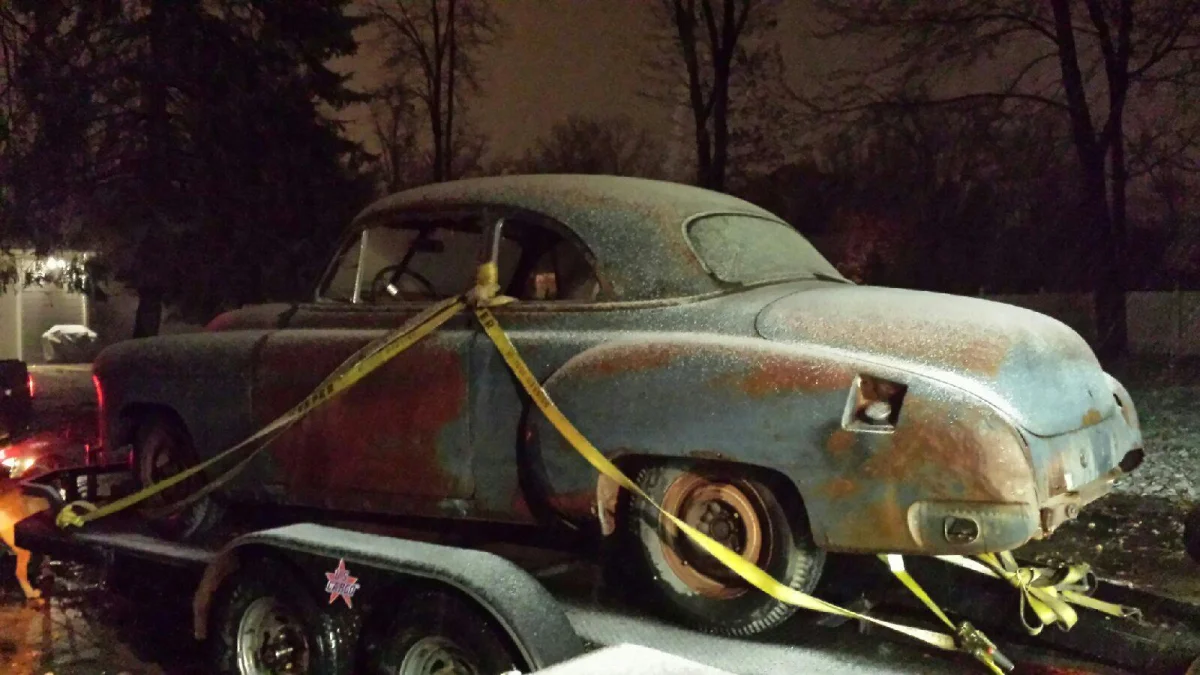
Fogarty, now 76, retired from a career as a certified electrician in Brownstown, Michigan, in 2008. He had time, a garage and a clear goal: own a car older than himself and turn it into something that could pass for a drag racer from the Gas Class era. He found a '49 Chevy business coupe on Facebook Marketplace for $1,300. Apart from some rust in the rocker panels, it was in excellent shape.
The starting point matters. The business coupe was built with no rear seat and a long trunk for bulky sales materials, and that configuration suits a gasser well. Fogarty kept the stock bench seat and had it reupholstered locally, but the cargo-hauling spirit of the original car stayed intact.
The Powertrain: Big Block, Big Ambitions
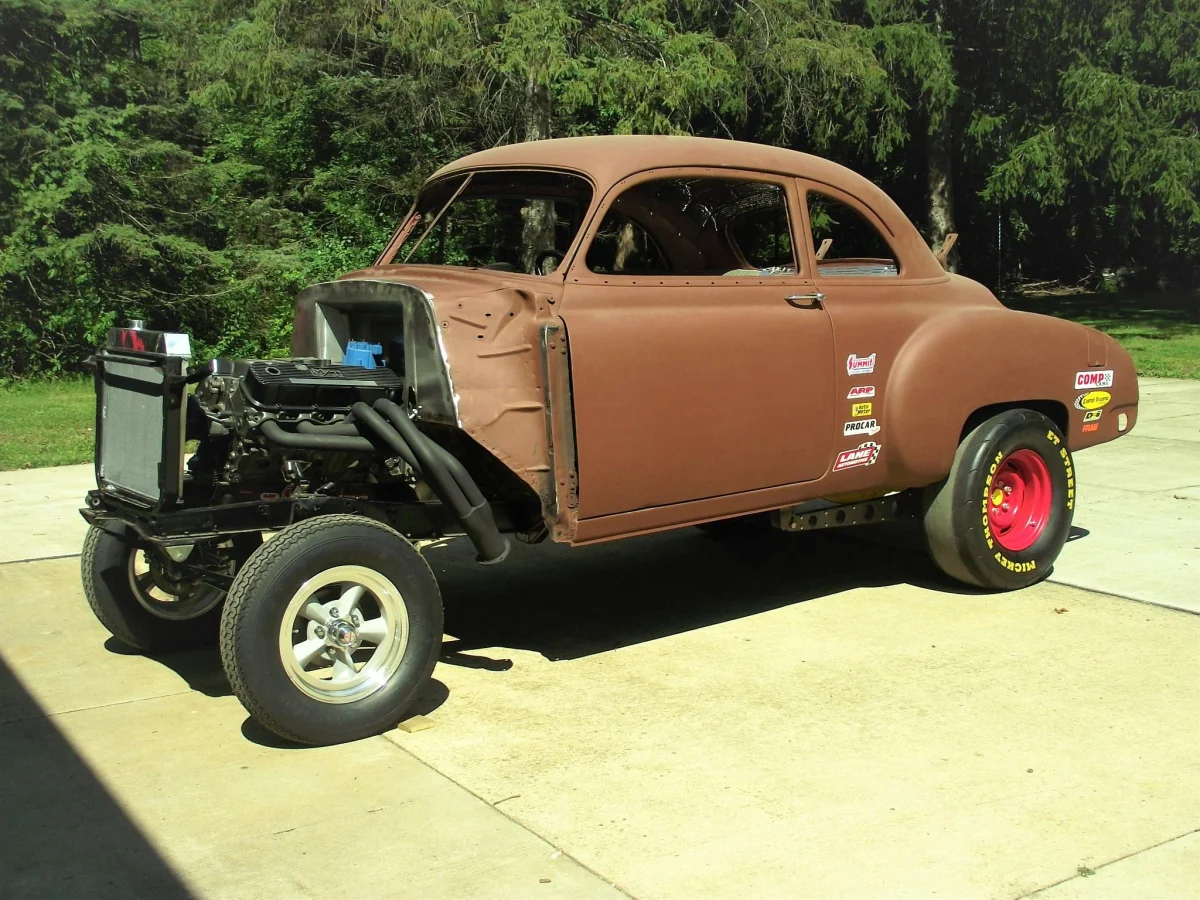
The engine is where Grampas Toy stops being a nostalgia project and starts being a hot rod. A close friend, John Martin, built the core around a 454 cubic-inch Chevy big-block V-8. Aluminum heads went on top, followed by a hydraulic flat-tappet camshaft from Comp Cams, roller rocker arms, MSD electronic ignition and a dual-feed Holley 750 four-barrel carburetor.
No dyno sheet exists, so the output is an educated guess. Fogarty's own estimate is conservative: more than 500 horsepower. Treat that as a ballpark, but a big-block with that induction and cam profile in a car this light is very much in that territory.
Fogarty's son-in-law, Mike Hale, handled the transmission side. He supplied a Hydramatic TH400 three-speed automatic and added a shift kit to firm up the shifts. Fogarty mounted a B&M floor shifter, which he admits is awkward to operate but looks exactly right in a car like this. Hale also brought a rear axle from a Chevy S10 ZR2 pickup. It carries disc brakes and a 3.73:1 final-drive ratio, which is a sensible choice for a car that spends most of its life on the street and occasionally on the strip.
Chassis, Frame and Floor Pan
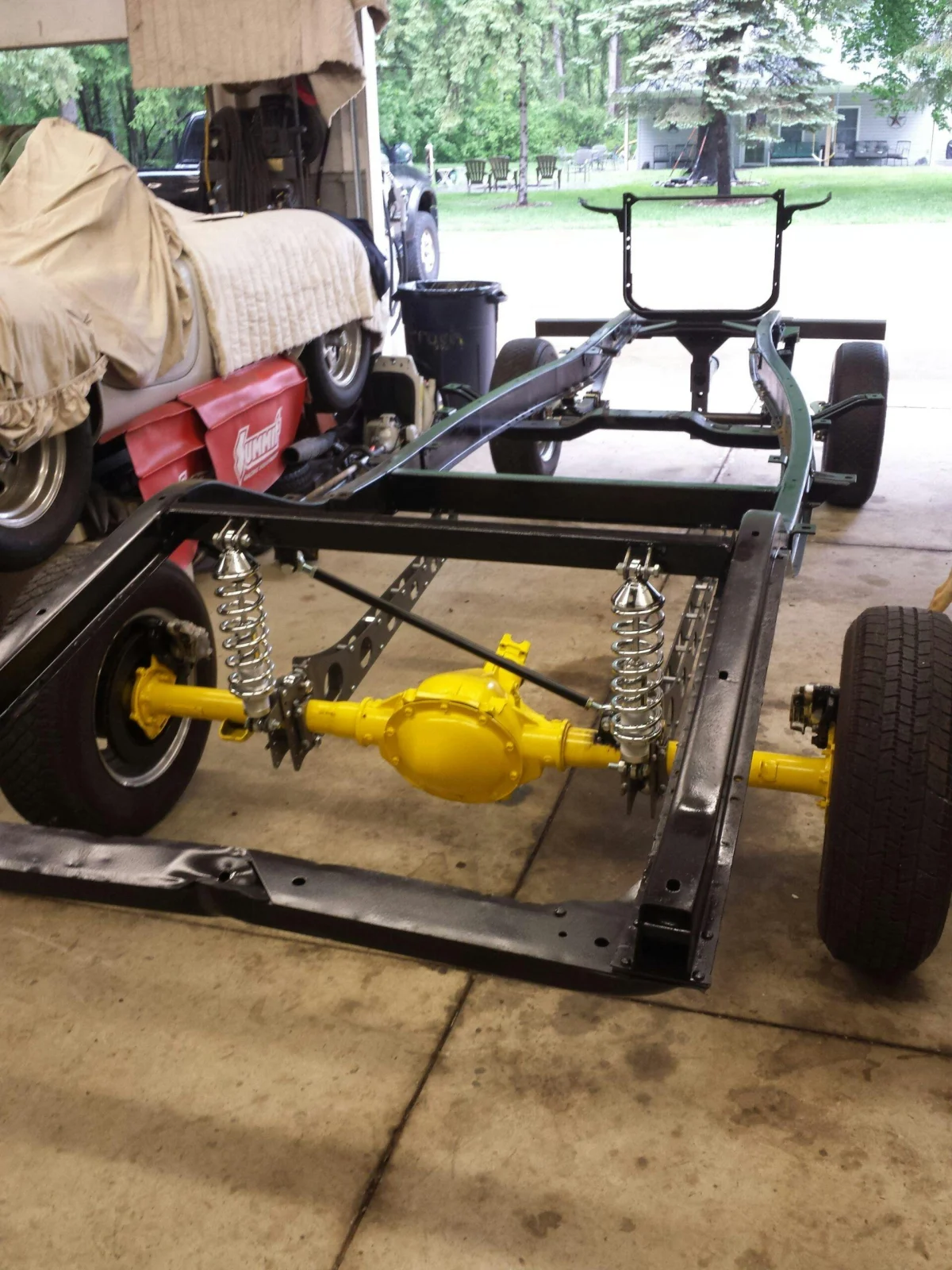
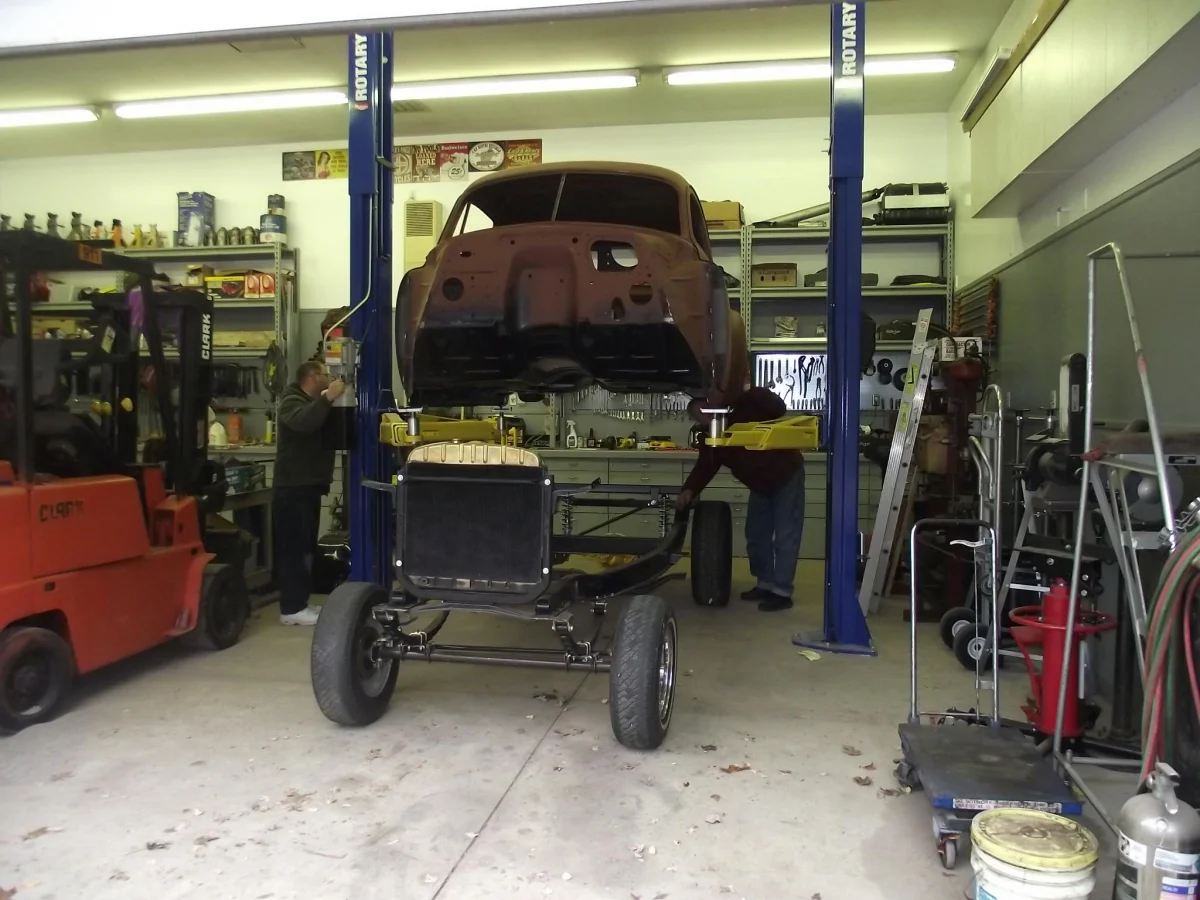
Hale is an experienced fabricator, and his work on the frame is what makes the drivetrain workable. He modified the Chevy frame to fit the S10 rear axle, which is located by twin ladder bars and a short Panhard rod, both sourced from Speedway Motors. Coil-over rear dampers from the same supplier handle the suspension duties, and the front runs a solid axle on leaf springs.
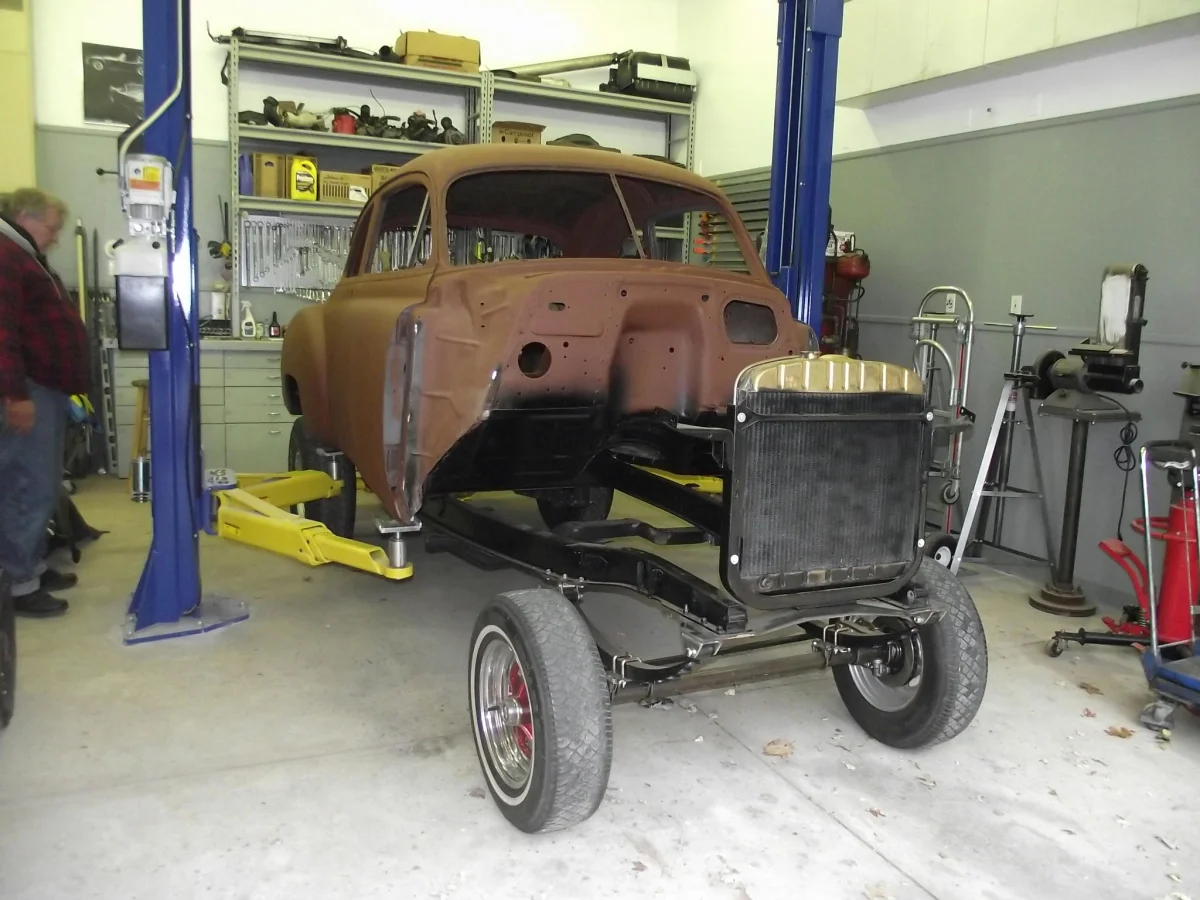
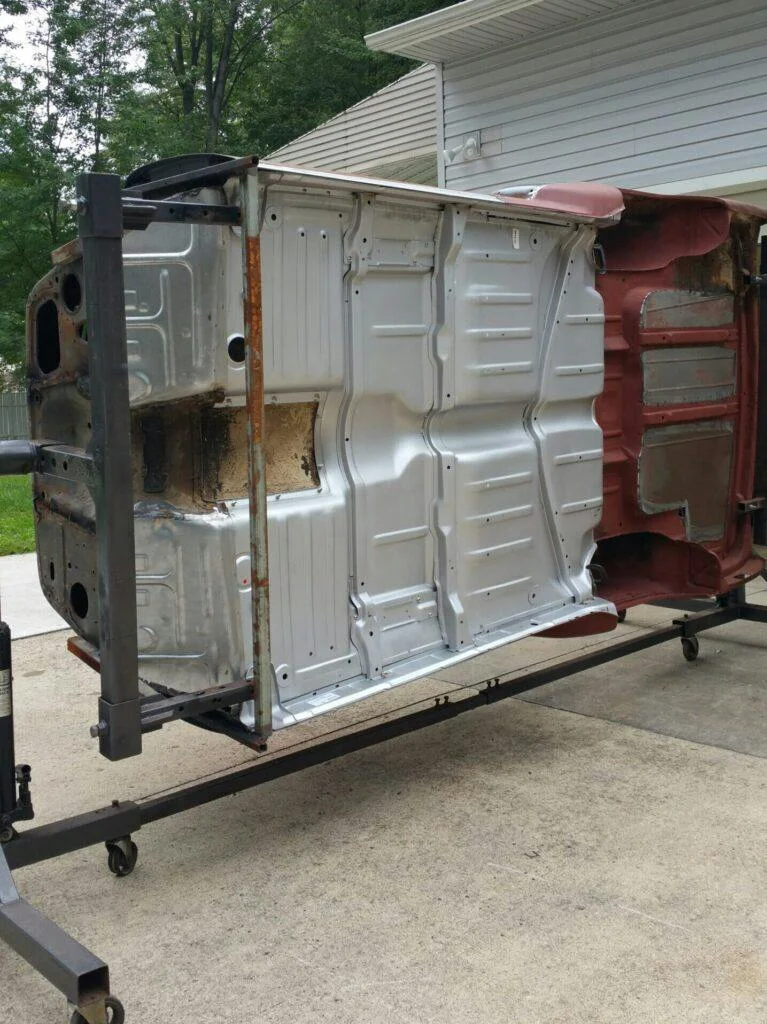
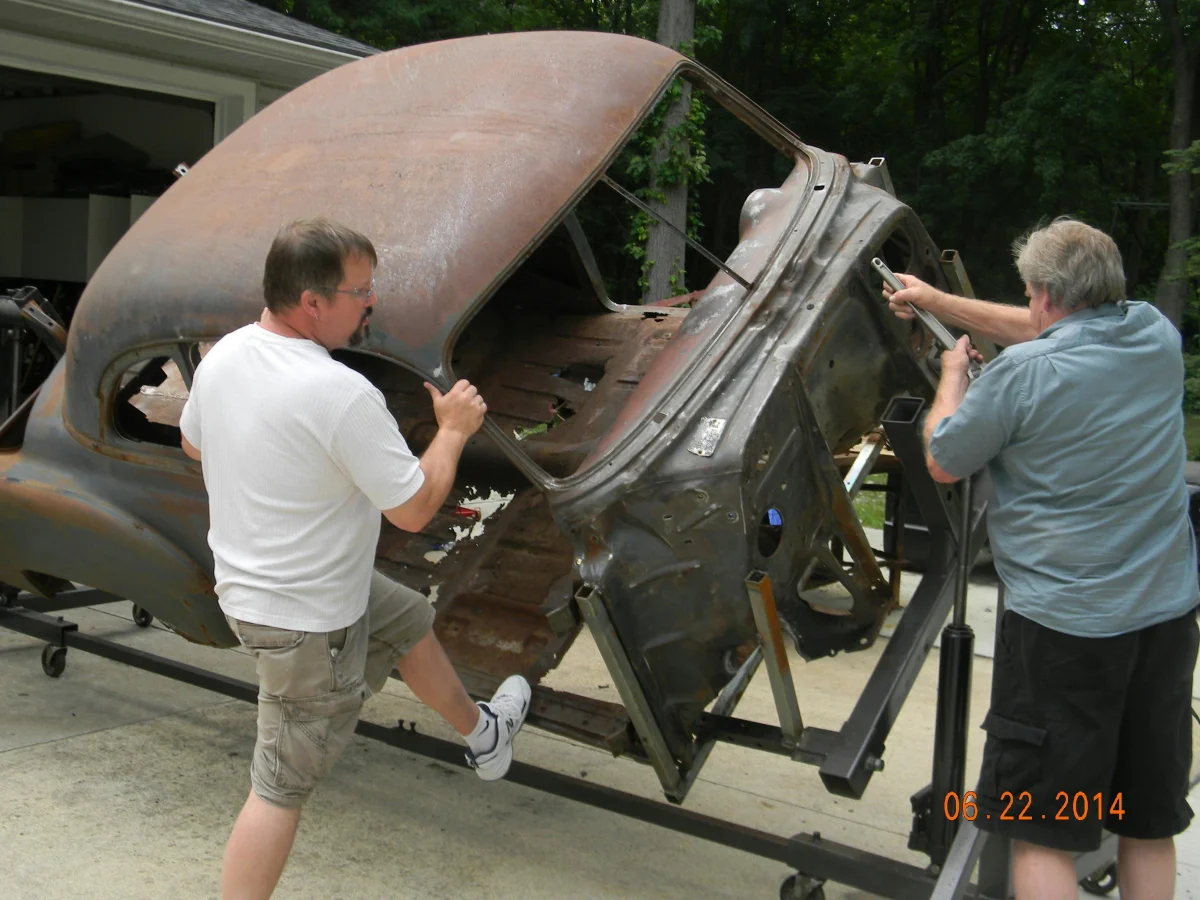
Structurally, the car was taken down to bare metal. Fogarty and Hale separated the body from the frame and mounted it on a rotisserie to strip the floor pan. Four replacement pieces came from the National Chevy Association: two toe panels, a firewall with room for the larger engine, and a trunk floor that supports a new 16-gallon fuel tank. That amount of metal work is where many gasser projects stall, so it's worth noting how much of the car depended on it.


Paint, Wiring and Tires
Fogarty handled the finish himself, and he's clear about which parts were his. The bodywork and paint were his, as was a complete rewire. The color is Toyota Renaissance Red, topped with a matte clear coat that gives it a weathered look. He then rubbed black matte paint onto the surface with a rag to build the patina. It's a deliberate choice that suits the car's character far better than a glossy show finish.

The new springs lift the car enough to clear the Mickey Thompson P295/65R-15 ET Street S/S radials at the back. Up front, the Mickey Thompson Sportsman 29×7.5-15LT tires are bias-ply, not radials, and they're mounted on American Racing aluminum wheels. Fogarty suspects those bias-ply fronts are part of the reason the car tends to wander when you want it to hold a straight line. That's a reasonable diagnosis, and it's the kind of trade-off gasser builders have always accepted.
Other new hardware includes an aluminum radiator from Champion Radiators, Wilwood vented front disc brakes, a dual master cylinder with vacuum booster from Speedway, and a steering column that feeds a Chevy Vega steering gear.
The Cost of Doing It Right
Fogarty puts the full project at six years of work and about $10,000 for the car, plus $5,000 for the engine. Most of the new components came from aftermarket catalogs, which is how a home build like this comes together. The car became roadworthy seven years ago, and since then Fogarty has put roughly 1,500 miles on it, mostly at car shows. The name is a nod to his three grandchildren and six great-grandchildren.
Behind the Wheel
Getting in is the first test. The ride height is high by design, which helps weight transfer and traction at the strip, but it makes the climb into the driver's seat a workout. Sliding the bench forward to reach the thin, wood-rimmed wheel takes effort too. Fogarty has added lap belts for restraint, a sensible concession for a car that will stop abruptly if the driver asks it to.
Turn the key and the exhaust, routed through headers and mini mufflers, delivers a deep bass note that's loud enough to turn heads without being obnoxious. The floor shifter has an automatic mode that makes everyday driving simple, so I used it for a 10-mile loop around Fogarty's neighborhood.
The steering is heavy and unassisted, and it gives you a generous amount of slack when you're not expecting it. Acceleration won't embarrass a current Corvette, but it's plenty strong enough to make the car feel like a handful. The AutoMeter tachometer mounted on the column climbs toward 5,000 rpm every time you commit to the throttle. The gearbox shifts so smoothly you barely register it. Ride motion is hard to predict, and the car reacts to every bump and crown in the road.
The brakes are the surprise. They're strong, progressive and easy to modulate through the round pedal that sits proudly in the floor. For a car with this much power and this little mass to slow, that matters a lot more than the ride quality.
What It Adds Up To
Grampas Toy does what a gasser is supposed to do. It looks like a 1950s strip car, it sounds like one, and it runs the way its builder intended. Fogarty takes it out now and then, and every trip to a show is another trophy for the case. For anyone thinking about a similar build, the lessons are practical: start with a clean body, expect the frame and floor work to take the longest, and budget for the engine to cost half as much as the rest of the car. My read is that the bias-ply fronts and the heavy steering will keep this car honest, which is exactly the kind of car Fogarty wanted to build.