FIA Brings AWS Cloud and AI Into F1 Aero Rule-Making
- Cargo
- Electric Vehicles
- Shipped
- Shipper
- Scott Mitchell-Malm
- Readers
- 645
The FIA is using AWS cloud computing and AI to speed up aero simulation and test draft F1 rules ahead of a possible 2030 car generation.
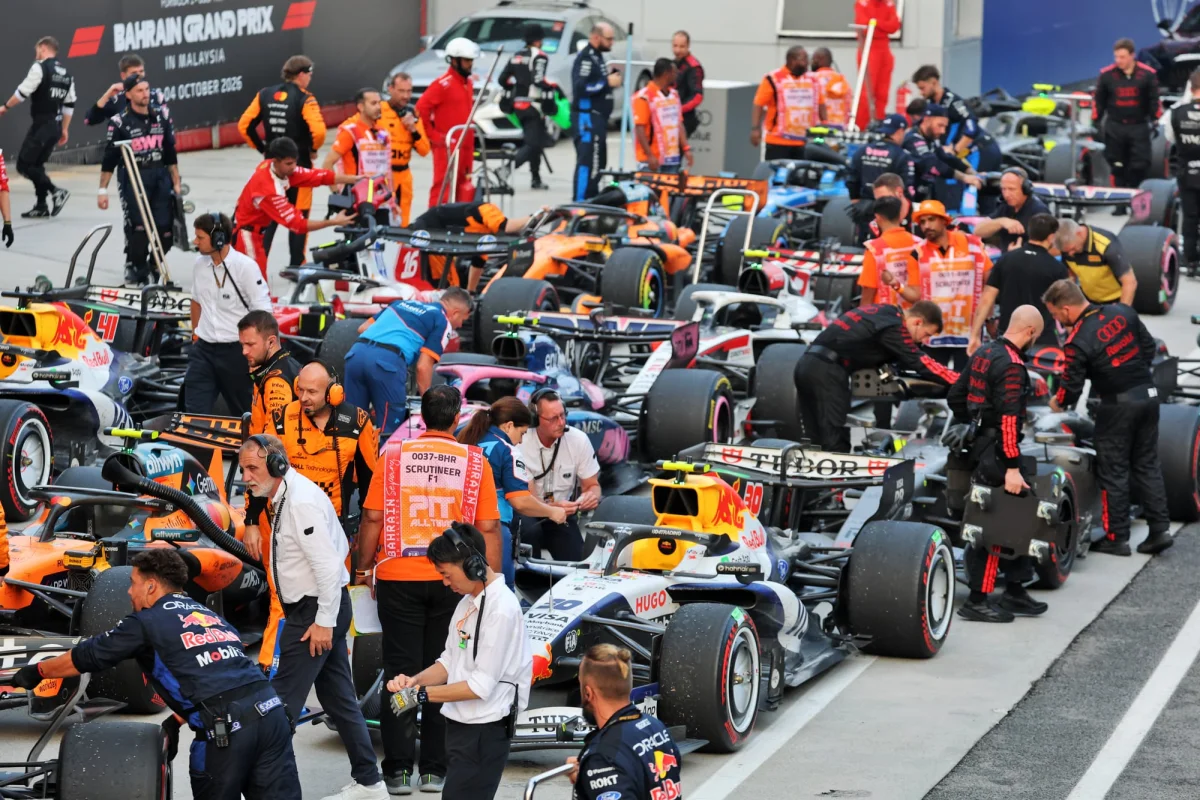
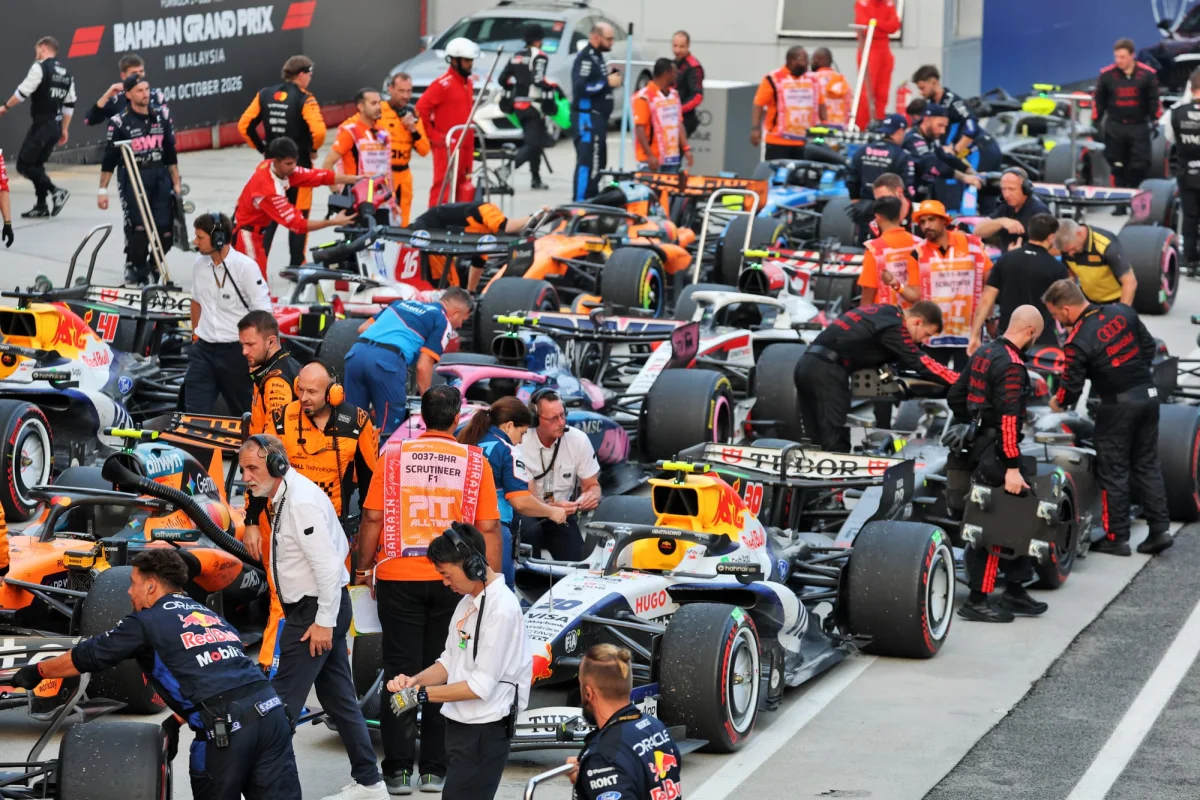
The FIA is bringing AI and cloud computing much deeper into how F1's rules get written. Amazon Web Services will act as the governing body's official AI, cloud computing, machine learning and cloud infrastructure provider, with a remit that goes beyond the track. The core target is aerodynamic rule-making, but the scope also covers licensing systems worldwide and the FIA's own internal operations.
The aero work starts with computational fluid dynamics (CFD). Engineers build 3D digital models of car parts, assemble them into a full car, and divide the air around it into millions of small cells. Equations get solved cell by cell, and post-processing turns those raw numbers into pressure maps, flow visualisations and force data. That's a heavy compute job, and it's the bottleneck that AWS hardware is meant to loosen. The FIA's virtual windtunnel sits at the centre of this, and it's where concept cars get checked for things like how much downforce is lost when one car follows another, and whether the rules produce the racing the FIA is after.
Where the AI actually goes
FIA deputy technical director for F1 Dominic Harlow was clear about the division of labour. The base layer is traditional CFD, run with OpenFOAM, an open-source package, alongside standard post-processing tools. AI sits on top of that, improving how CFD data is viewed and manipulated and offering shortcuts through the simulation itself.
The shortcut Harlow describes is the surrogate model. A full CFD run can take hours. A surrogate is trained on hundreds of past CFD results, learns how shape maps to outcome, and then predicts performance for a new shape in seconds or minutes without solving the physics again. Harlow's pitch was less compute time, less engineering time, less energy use and lower cost for the same amount of work. In practice, that means the FIA can test many more variations of a draft rule, such as wing shapes and floor geometries, within the same window.
Generative AI is not being used to propose design ideas yet. The current priority is to speed up and support human engineers, not replace them. Harlow said generative tools are something the FIA can picture for the future, but for now the work is human-led and engineer-led. He also pointed out that building useful generative models takes a lot of computing power and money, which is one reason it isn't a near-term move.
Beyond aero
My read is that the performance side of the FIA could get more out of this than the aero side. Harlow described tools for computer vision, which analyses image and video, and dashboards that bring together metrics on safety, energy management and legality checks. Much of the incoming data can be processed faster with AI for trend monitoring and pattern spotting, which is what machine learning does well.
Anomaly detection is the clearest example. In the power unit group, models learn what normal sensor traces look like and then flag anything that drifts away from that pattern. Harlow's illustration was a sudden drop in oil pressure, which a model can spot by comparing live data against learned norms. Anomaly detection is a well-established technique, and applying it to power unit telemetry is a sensible use case.
Here's the thing: the more useful part for the FIA may be the shift in how rules get made. Instead of a one-off process that writes a rulebook and then waits years for the results, the models can keep learning from how new regulations behave on track. That's particularly valuable for big technical changes, where older data doesn't accurately reflect the new cars.
The black box problem
That said, there's a catch. Neural networks can be black boxes, where the internal decision-making is difficult or impossible for humans to trace. If the FIA uses one to flag an issue, its engineers need to understand why it was flagged before acting on it. Explainability will matter as much as accuracy here, especially when a model's output could affect a rule or a team's car.
Harlow also said AI is not yet capable of inventing a genuinely new F1 car from scratch, given how complex the cars are. Its strength is predicting how a different setup would perform based on the data it has been trained on.
Broader uses and the GPU angle
AWS gives the FIA access to the latest GPU hardware, and that matters. CFD has traditionally run on CPUs, but the software is being rewritten for GPUs, which can run many simple calculations at once and are often several times faster. That suits both CFD and AI workloads, and it means quicker, more accurate results.
Harlow cited the porpoising problem that caught several teams and the FIA out when the ground-effect era began in 2022 as a case where this could help. Instead of running a steady-state simulation, engineers could run time-dependent, unsteady simulations and gain a better understanding of the phenomenon before it shows up at full scale.
Large language models are also in the plan, though in a more controlled form. Teams often have legal questions about the rulebook, and the FIA wants a private, secure model that can check those questions against the clauses without exposing confidential team material. That is a different proposition from using a public chatbot. The same idea extends to the FIA's remote operations centre in Geneva, which supports race control during events.
Track limits are a likely candidate. The current automated system can generate hundreds of incidents that a human then has to review. AI could rank those by priority or prepare a set of checks before a decision is made. Humans would still make the calls, just faster and more consistently.
The 2026 rules are only in their first year, but work on their successors is already under way, with a possible 2030 introduction for new cars and engines. If the FIA can prove that GPU-driven CFD and surrogate models produce reliable results, the way future F1 rules get tested could change quickly. The thing to watch is whether those predictions hold up once real cars hit real tracks.