Honda Pulls Ahead of TOM'S in GT500 as Toyota Drivers Concede the Gap
- Cargo
- Electric Vehicles
- Shipped
- Shipper
- Jamie Klein
- Readers
- 799
TOM'S drivers say Honda's Prelude moved a level above them at Motegi, with tire choice and acceleration cited as key factors.
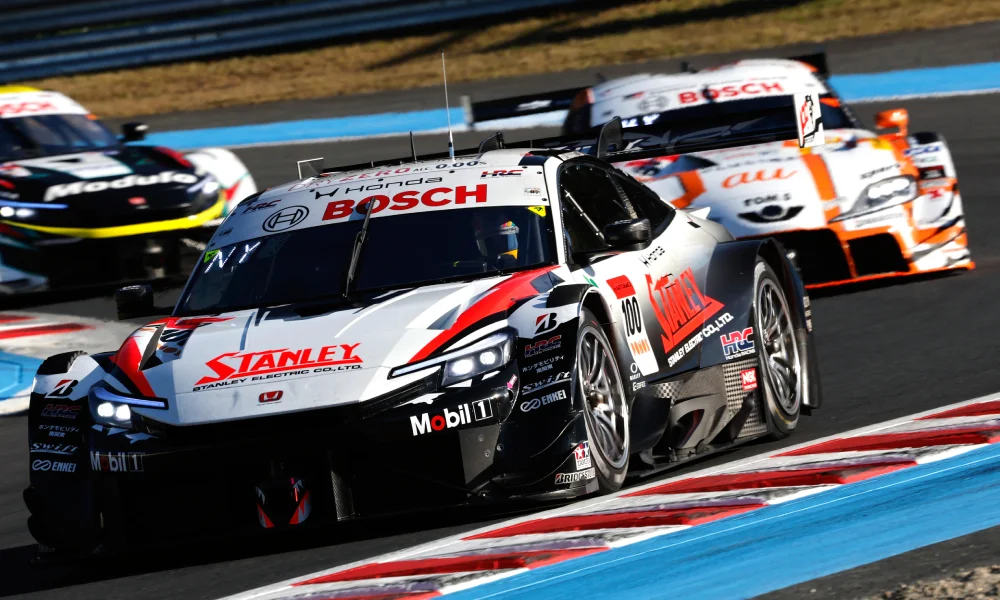
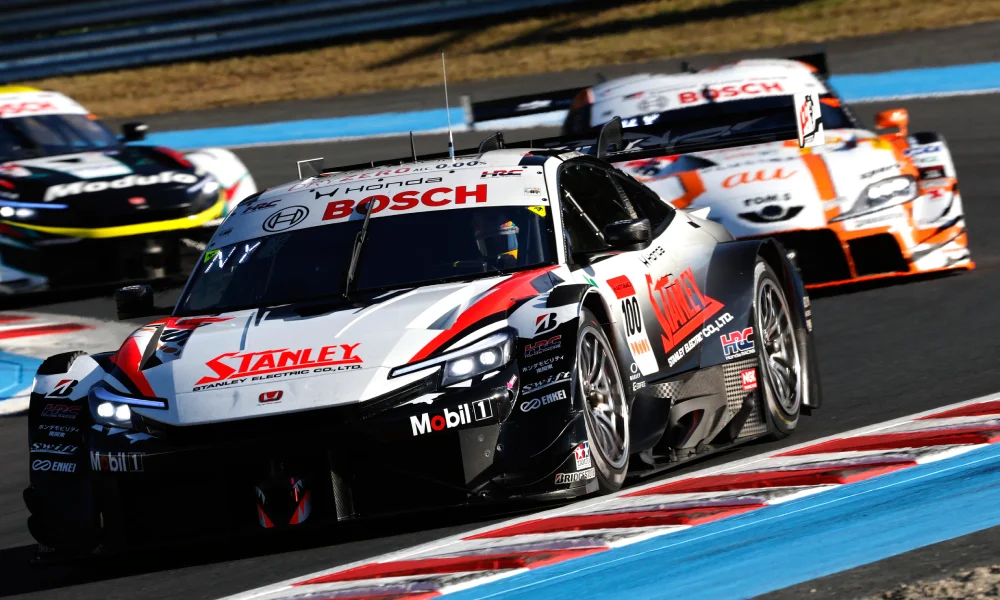
Photo: Honda
Toyota's GT500 drivers don't usually say this out loud. After a season in which the No. 36 GR Supra was the car to beat, TOM'S pair Kenta Yamashita and Sho Tsuboi have accepted that Honda found a level they couldn't match. Their finale at Motegi ended with Team Kunimitsu's Naoki Yamamoto and Tadasuke Makino taking the GT500 title for Honda, and the TOM'S crew's read on why is more useful than the scoreline.
A title fight that slipped away in two races
Yamashita and Tsuboi arrived at the two title-deciding 250km races hoping to score a fourth consecutive GT500 crown for the No. 36 team. They had built a points lead with a tenth-place finish in the opening race on Saturday, and that lead was the margin they needed. Instead, they gave it back.
Sunday was worse. Tsuboi took front-left damage after contact with Daniil Kvyat's Lamborghini GT300 car, and the No. 36 Toyota retired. The result handed Honda its first GT500 title since 2020, and it did so in the first year of the HRC Prelude-GT.
Yamashita qualified second behind Makino and pressed Yamamoto in the opening stint. When the two leading cars pitted together on lap 22 of 53, he handed over to Tsuboi. Afterward, Yamashita didn't argue that his team had left anything on the table in the race itself. His point was that the gap was bigger than the grid positions suggested.
Acceleration and tires, not just pace
"Honda was very quick this weekend," Yamashita told Sportscar365. "Their acceleration is good, and it feels like they have moved a level above us." He said TOM'S had managed to qualify close to the No. 100 car, but in the race he could feel the gap in both race pace and underlying potential.
What stands out is his explanation for the tire side of the equation. On Saturday, Tsuboi struggled for pace on the out lap in some of the coldest conditions the teams had faced all season, and Yamashita said TOM'S simply didn't have a suitable Bridgestone compound in its selection for the weekend. By Sunday, his view had broadened. He believed Honda's success in getting the Prelude to work with tires that TOM'S didn't have access to was a major factor.
"In the second half of the season, it feels like all the Hondas were using similar tires and that they had discovered tires that matched their car very well," he said. That observation matters. When a field converges on a compound that suits one chassis, the car that's out of step loses a few tenths every lap, and those tenths add up quickly over a 250km sprint.
Yamashita also pointed to a mechanical side effect of the same problem. Honda's better acceleration meant TOM'S had to push hard in the corners just to stay in touch, and that wore the tires faster. "So we lost on a variety of levels," he said. It's a classic chain reaction: a straight-line deficit forces more load through the corners, which accelerates tire degradation, which hurts the car further on the next stint.
The undercut and the Turn 11 incident
Tsuboi put the undercut at the center of his frustration. He said being leapfrogged by the Real Racing Honda, which went on to finish second, was particularly damaging to Toyota's hopes. In a finale decided by small margins, a pit-window move like that is hard to recover from, especially when the out lap is already costing time.
The four-time champion also had a personal stake. A strong finish would have let him pass Ronnie Quintarelli as the most decorated GT500 driver in series history. Instead, the damage he took from the Lamborghini contact led to a second incident. While battling for third, he tipped SARD Toyota driver Sacha Fenestraz into a spin at Turn 11.
Tsuboi didn't hide from it. He apologized for the contact with Kvyat and for the Fenestraz incident, and he was blunt about the result. "Failing to finish is the worst outcome," he said, adding that it was "a performance unacceptable for a pro driver." That's the kind of self-assessment that tells you how much the team wanted this one.
What comes next for Toyota
The bigger question is what Toyota does with the off-season. Tsuboi sees a potential reset in next year's switch to one-make Bridgestone tires. If every team runs the same rubber, the tire advantage that Honda seems to have found in the second half of 2025 should disappear, and the remaining differences come down to set-up and the car itself. "Next year everyone will be on the same tire, so if we can find the perfect set-up, we still have a chance," Tsuboi said.
That optimism is measured, though. He acknowledged that the Prelude is now very strong and that the team knows where it's losing out. The development window is also tight. Aerodynamics are frozen in GT500 until the end of 2029, which means Toyota can't simply bolt on a new package to close the gap. Teams in this position typically have to extract more from setup, suspension tuning and power delivery, since those are the areas still open to change. Tsuboi said the team needs to discuss with Toyota what it can do within that limited scope.
His summary is probably the most honest line in the whole debate: "It's essential that we step up a level, so in that sense it's a very important off-season." My read is that TOM'S knows the problem is real and specific, and that's a better starting point than denial. If the one-make tire does level the field, the first few races of next season will show quickly whether Toyota's engineers have closed the acceleration deficit, or whether Honda's new Prelude has another step in it.