Toyota's Snowhunter Concepts Put Snow Tracks Under Five Trucks and SUVs
- Cargo
- Electric Vehicles
- Shipped
- Shipper
- Zach Butler
- Readers
- 847
Toyota's SEMA lineup fits snow tracks to five Tacoma, Tundra, Sequoia, 4Runner and Land Cruiser concepts, with roof racks, cargo boxes and rock rails.
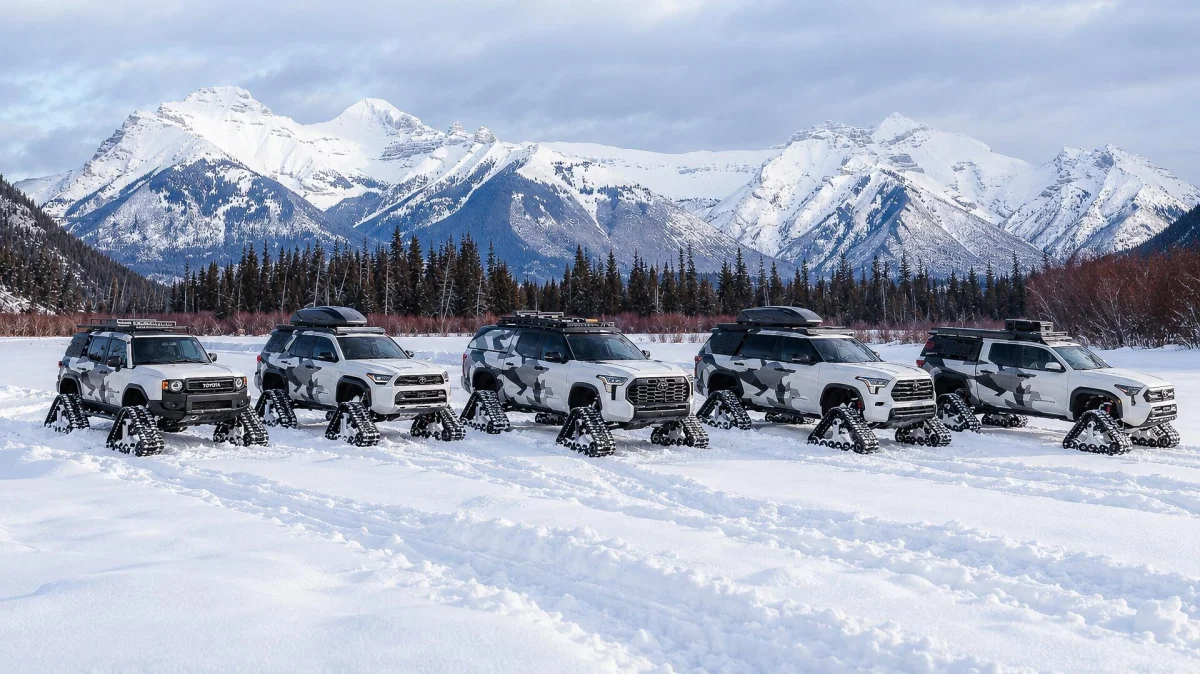
Five tracked trucks, one design studio
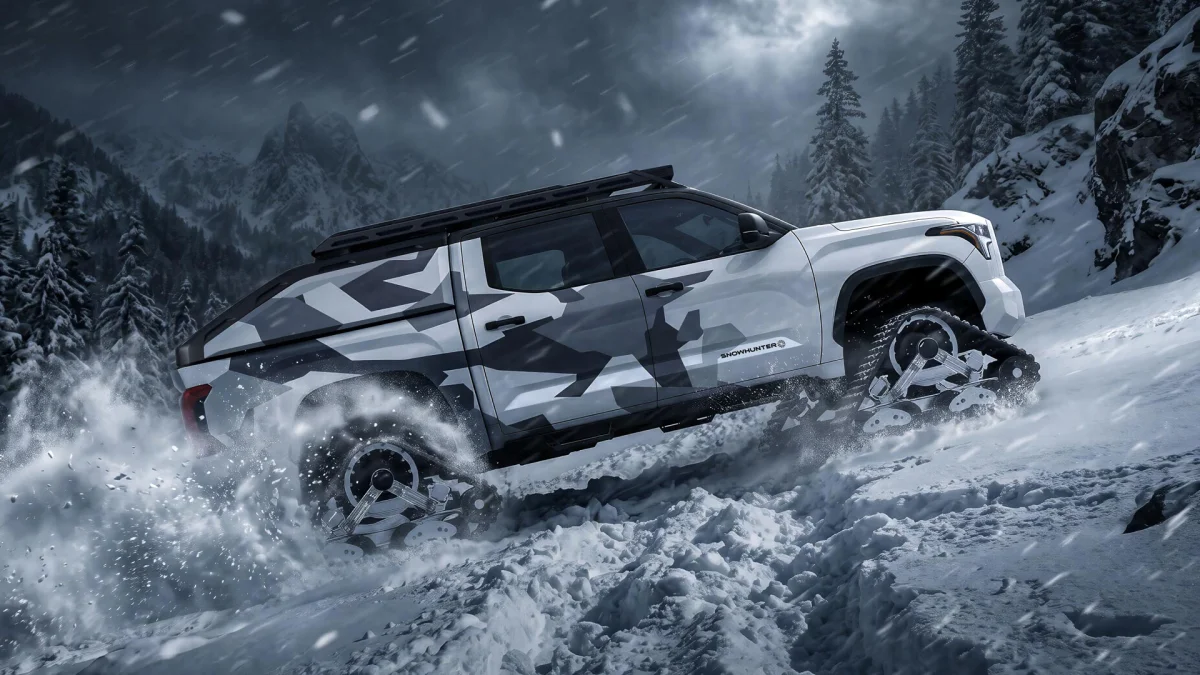
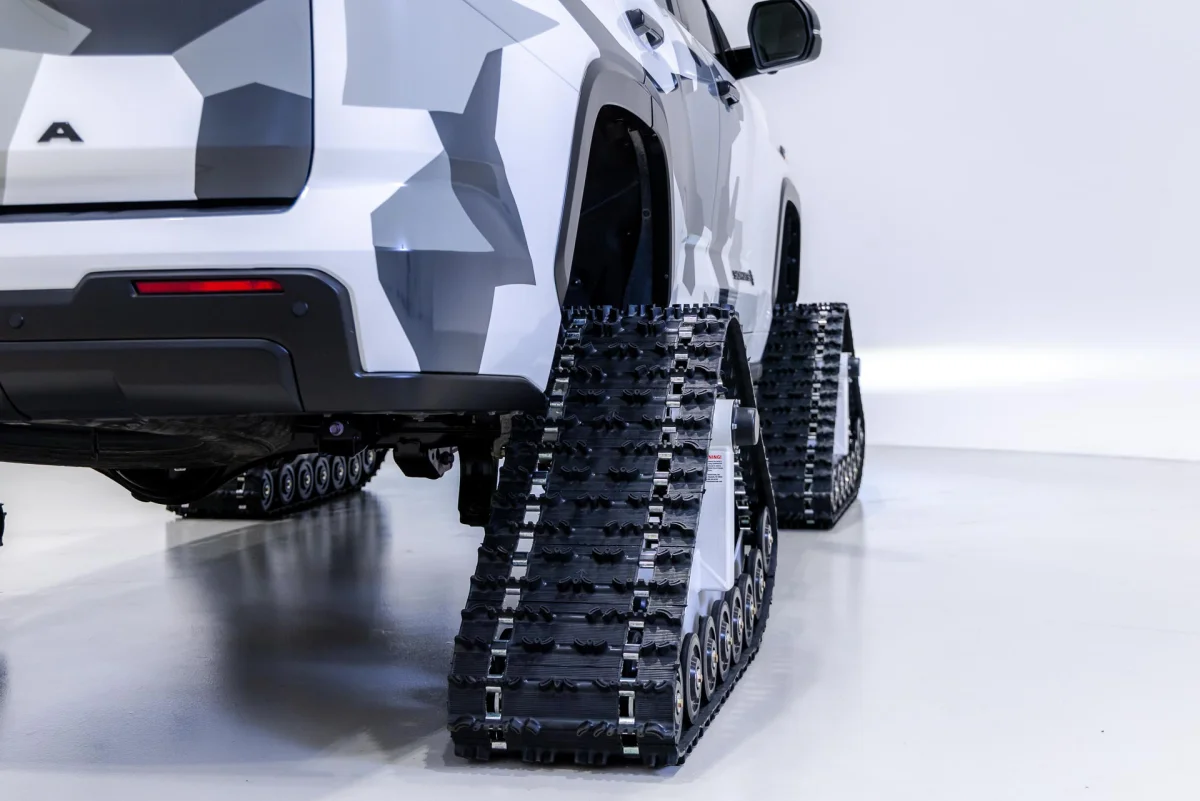
Toyota is bringing five tracked snow machines to Las Vegas for SEMA, and every one of them started life as a production Toyota truck or SUV. That's an unusual approach for a show build. Most concepts pick one vehicle and push it as far as the budget allows. Here, the company went wide, covering its main off-road lineup with a single idea: a tracked, winter-ready basecamp built around whichever Toyota is already in your driveway.
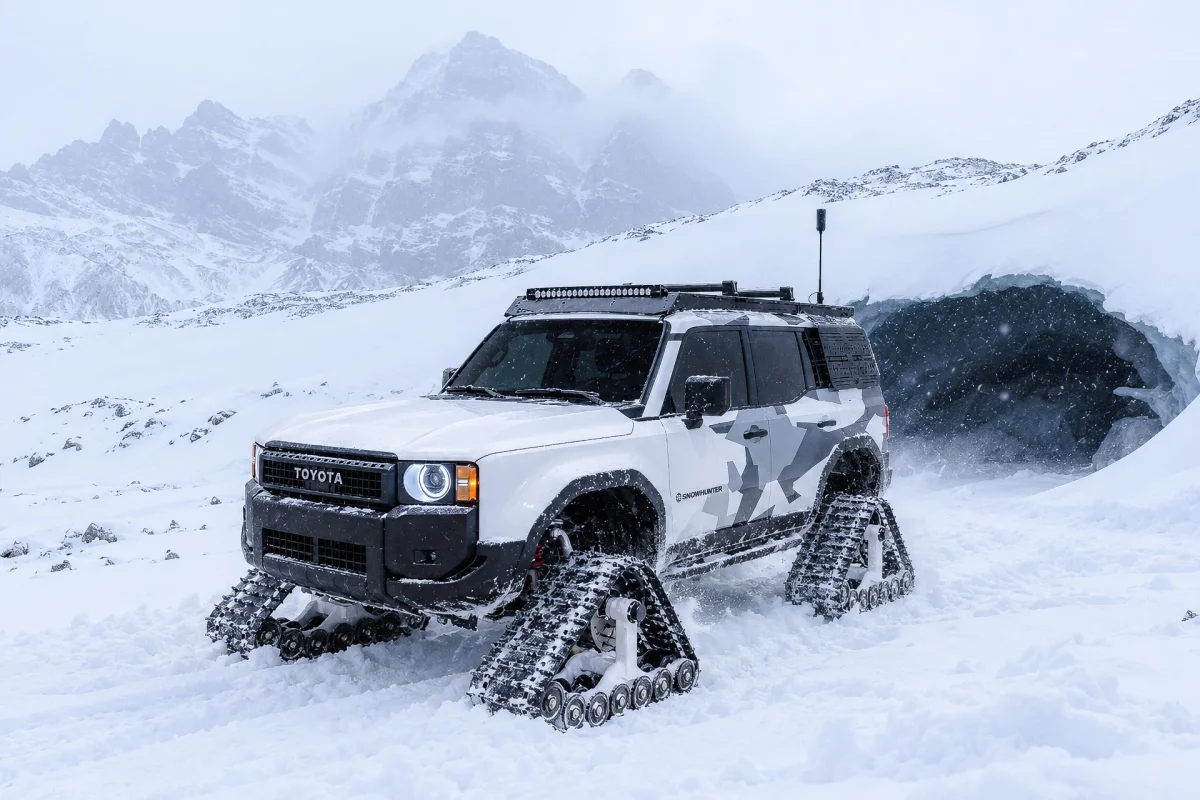
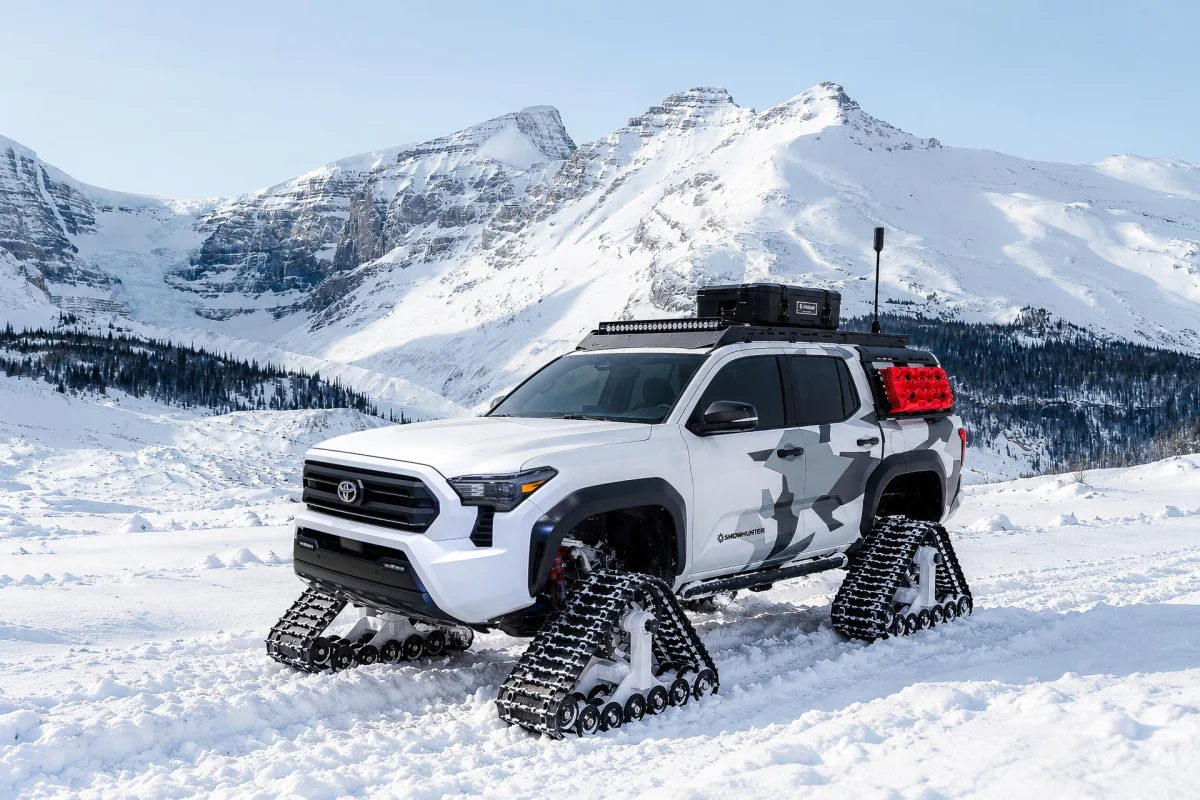
All five Snowhunter concepts came out of CALTY Design Research at Toyota's R&D center in Ann Arbor, Michigan. The snow tracks are the headline, but they aren't the only hardware. Each build uses a suspension lift from Toyota Genuine Parts and TRD, along with Rigid lighting, the same light package that has become a signature of the TRD Pro models. Every concept also wears a unique arctic camouflage, which helps the set read as a family rather than five unrelated projects.
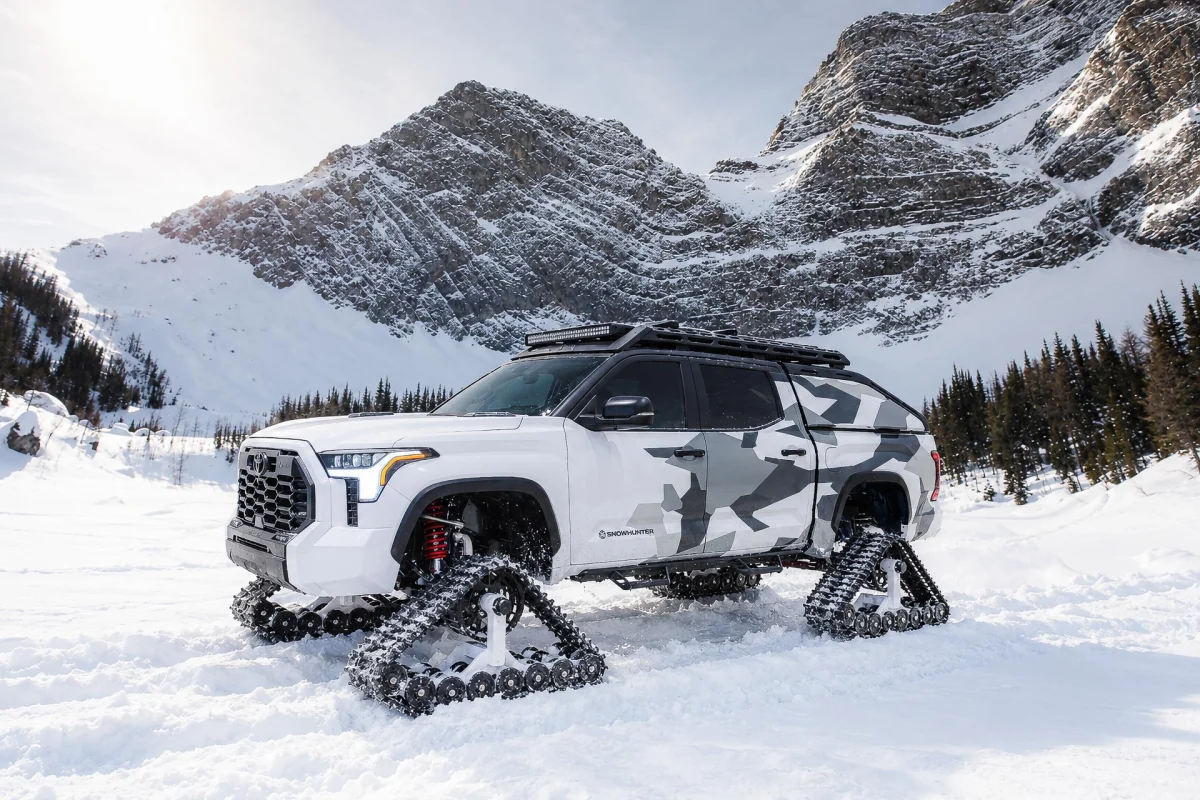
The builds differ in their accessories, though. Toyota is clearly framing each one as a different answer to the same question: what do you need to carry once you've got tracks under you?
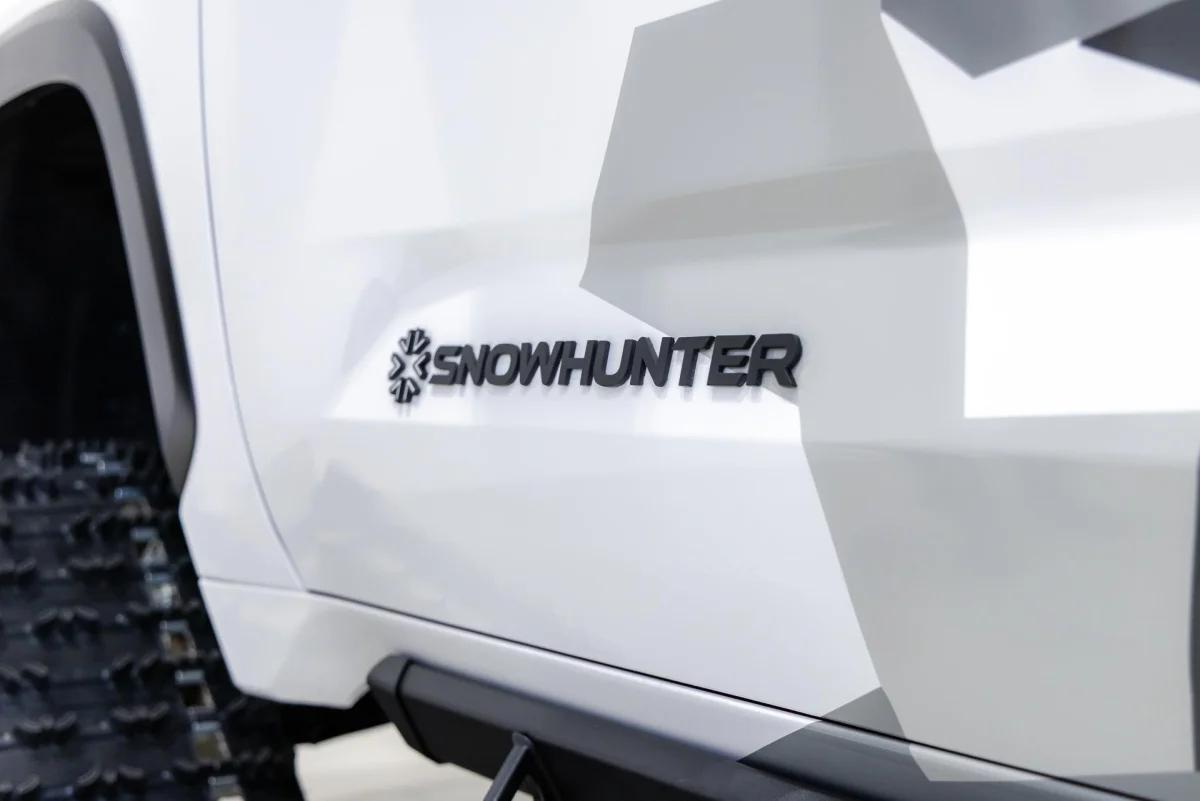
Tundra: the bed becomes the storage plan
The Tundra Snowhunter is the build that most directly delivers on the basecamp idea. Its CALTY-designed TrailLift Pro rack system adds a frame to the bed for configurable storage and gear. An articulating top section makes it easier to load bulkier items such as kayaks or bikes, which matters if you're hauling more than snow gear. The truck also gets a Predator Step, TRD rear billet control arms, and extra lighting beyond what you'd find on a standard Trailhunter.
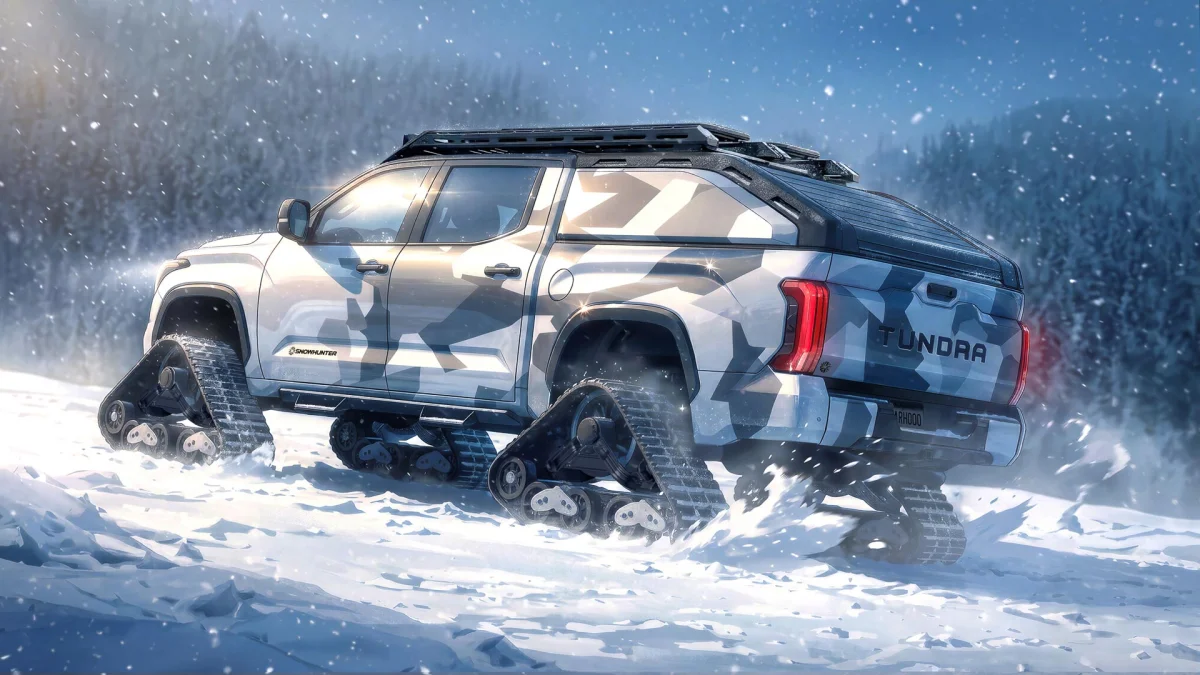
Sequoia and 4Runner: rooftop cargo and rock protection
The Sequoia Snowhunter takes the SUV route. It adds a TRD front skid plate, Toyota Genuine Parts cast aluminum running boards, a Prinsu roof rack, accessory panels around the rear quarters, and a Thule Pulse 2 cargo box on top. Running boards and a roof-mounted box are the kind of changes that help a large family SUV handle deep snow and gear without giving up much daily usability.
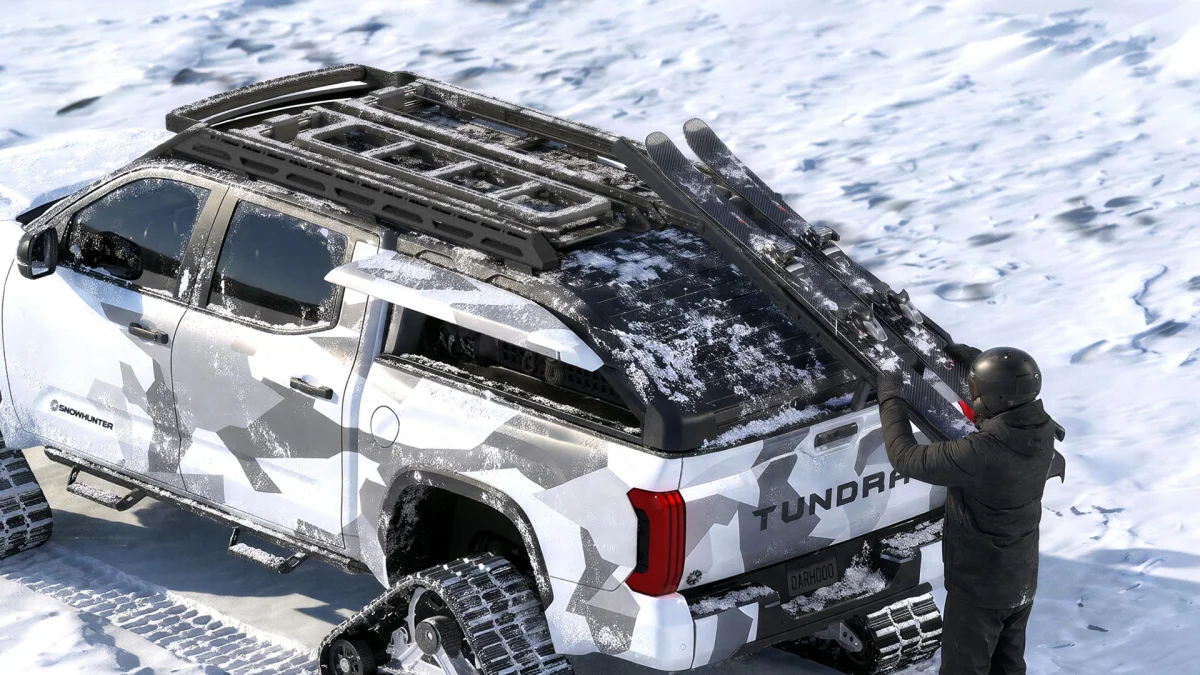
The 4Runner has no bed, so its practicality upgrades go on the roof and sides. It shares the Prinsu roof rack, rear quarter accessory panels, and Thule Pulse 2 cargo box with the Sequoia. The difference is the Toyota Genuine rock rails, which add protection for the trips where the tracks take you well past the trailhead.
Tacoma and Land Cruiser: smaller packages, different priorities
The Tacoma Snowhunter gets roughly the same approach in a more compact package. Toyota adds a roof rack and a bed rack with MOLLE panels for attaching pouches and accessories, plus more cargo box storage, bed lighting, and recovery gear. MOLLE attachment points are a practical touch on a truck that's likely to spend time in rough terrain, because the extra storage can go wherever it's needed rather than being limited to a fixed layout.
The Land Cruiser build leans into protection and winter sports. It gets a roof rack, rock rails, and additional skid plates, and it swaps the cargo box for a Thule SnowPack ski rack. For buyers who ski or ride rather than camp, that's a more sensible trade than a roof box, and it's a good example of how the same platform can be tuned for different weekend plans.
What it means for owners
Here's the thing: Toyota isn't about to sell you a set of snow tracks off the shelf. These are concepts, and the company hasn't framed them as a production or accessory roadmap in the material shared. That said, a lot of what's on these trucks is the kind of gear owners already buy. Roof racks, rock rails, skid plates, cargo boxes, MOLLE panels and lighting are all practical upgrades that work on a Toyota truck or SUV whether or not it ever wears tracks.
The bigger takeaway is the approach. Designing a full set of accessory-led builds around one idea, with the same lighting, camouflage and suspension components across five vehicles, shows how a manufacturer can use a show to test how its accessory catalog fits together. Buyers who want a tracked build will still have to do the research on conversion costs, storage and winter use. For everyone else, the parts list is a useful guide to what Toyota thinks a well-equipped winter rig should carry, and it's worth watching which of these ideas show up in the catalog.