2027 Ford Ranger Swaps Its 2.7L V6 for the 3.0L EcoBoost
- Cargo
- Electric Vehicles
- Shipped
- Shipper
- Zach Butler
- Readers
- 911
The 2027 Ranger drops the 2.7L EcoBoost V6 for a 3.0L twin-turbo, with new wheels, colors and trim content. Here's what changes and what it could cost.
The V6 swap is the headline, but the Bronco is the clue
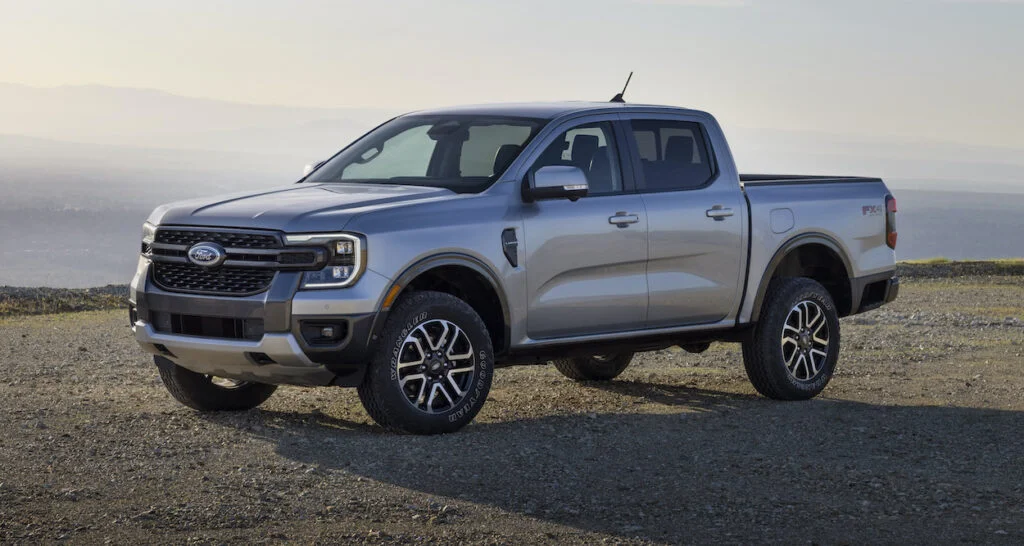
Ford appears to be retiring the smaller 2.7L "Nano" EcoBoost V6 across its truck and SUV lineup. The 2027 F-150 already moved its base V6 to a differently tuned 3.0-liter twin-turbo, and the Bronco followed. Now the 2027 Ranger is losing the 2.7L option too, and the 3.0L is taking its place in the middle of the engine lineup.
Here's the thing: this isn't a new engine bolted on top of the range. The 3.0L slots into the same spot the 2.7L occupied, so buyers who wanted a V6 in the Ranger still get one, just a different one. The base 2.3-liter four-cylinder remains the default, and the higher-output 3.0-liter continues to be tied to the Ranger Raptor.
The details come from the 2027 Ranger order guide, which Autoevolution obtained and reviewed. It points to the 3.0L producing 380 horsepower and 440 lb-ft of torque in the configuration Ford has used for the Bronco. That's a useful reference point, but it isn't a Ranger-specific rating.
Don't assume the Ranger gets the Bronco's numbers
Ford hasn't published official power figures or EPA ratings for the 3.0L-equipped Ranger, and the same goes for the other engine choices. That gap matters. The 2.7L actually made more power and torque in the Bronco than it did in the Ranger, which suggests Ford tunes these engines differently depending on the vehicle's packaging, weight and intended use.
So if the Ranger's "standard output" 3.0L is calibrated below the Bronco's rating, that wouldn't be surprising. Ford has a pattern of matching output to each model's role, and a midsize truck that's expected to tow and haul will be judged on torque curves and payload as much as peak horsepower. Until the full spec sheet lands, treat the 380 hp and 440 lb-ft figures as a ceiling for comparison rather than a promise for the Ranger.
For buyers weighing the 3.0L against the outgoing 2.7L, the questions that matter are towing ratings, payload, fuel economy and how the engine behaves under load with the Ranger's gearing. Those numbers will come from Ford's official spec release, and they'll tell you far more than the Bronco comparison can.
Other changes in the 2027 Ranger lineup
The engine change sits alongside a fair amount of package reshuffling. The XL, XLT, Lariat and Raptor trim structure carries over, but several options move around, and a few features disappear. At least a couple of the sub-Raptor trims will be offered with the new 3.0L.
Wheels are the most visible update. Aluminum wheels from 17 to 20 inches are available depending on trim. The catch is that the 17-inch black-painted steel wheels that used to be available on the base XL are gone, so every 2027 Ranger comes on aluminum. For fleet buyers and budget-minded shoppers, that's a real change in the starting spec.
The color palette loses Carbonized Gray and Velocity Blue and gains Neptune Blue, which is the same blue now offered on the F-150. Inside, Sandstone is out as an interior color and Space Gray is in.
Tech and comfort get some attention too. The base XL moves up to a 12-inch infotainment screen from the 10-inch unit, and dual-zone electronic climate control is standardized across the range. The Sport Appearance and Chrome Accent packages are discontinued, replaced by a new Bronze Appearance Package.
The Luxury Package now covers Lariat and Raptor and adds ambient lighting, a 10-speaker B&O sound system, a memory driver's seat, rain-sensing wipers and power-folding mirrors. The heated steering wheel is listed for Lariat. Trims with the FX4 package can now add rocker rails with hoop steps, which helps with getting in and out of a raised truck.
What it might cost
Pricing is the open question. The order guide doesn't confirm how the 3.0L will affect MSRPs. For now, the reference points are the 2.7L Ranger XLT at about $42,990 and the XL 4x2 base price at $35,445.
Those are the starting points for comparison, not the 2027 numbers. Mid-cycle updates rarely swing prices dramatically, but a year-over-year increase is common even when the changes look modest. Based on that pattern, the base XL could start around $36,000, the 3.0L XLT could land somewhere in the $43,000 to $44,000 range, and the Ranger Raptor could be near $60,000. Treat those as informed estimates until Ford publishes final MSRPs.
The bigger shift is what the 3.0L does to the middle of the lineup. Buyers who previously stepped up from the four-cylinder to the 2.7L will now find a different V6 in the same place, with the trim-level and option mix shaped by the new packaging. Dealers and fleet buyers will want to compare the 2026 and 2027 order guides line by line before deciding which trim makes sense.
What to watch next
The next question is how the 3.0L Ranger performs in practice. Ford's full spec sheet should confirm power, torque, towing and EPA numbers, and independent testing will show whether the detuned 3.0L delivers the low-end pull that midsize truck buyers tend to prioritize. If the engine matches the Bronco's character in the Ranger's heavier, more capable body, it'll make a strong case in a segment where V6 options are increasingly the focus. If it doesn't, the 2.7L's absence will be felt more than the spec sheet suggests.