Buc-ee's Says It Wants Red States, But Its Home State Just Shifted
- Cargo
- Electric Vehicles
- Shipped
- Shipper
- [email protected] (Justin Hughes)
- Readers
- 473
Buc-ee's co-founder says he'd rather build where leaders share the chain's values. Recent statewide results, starting in Texas, complicate that plan.
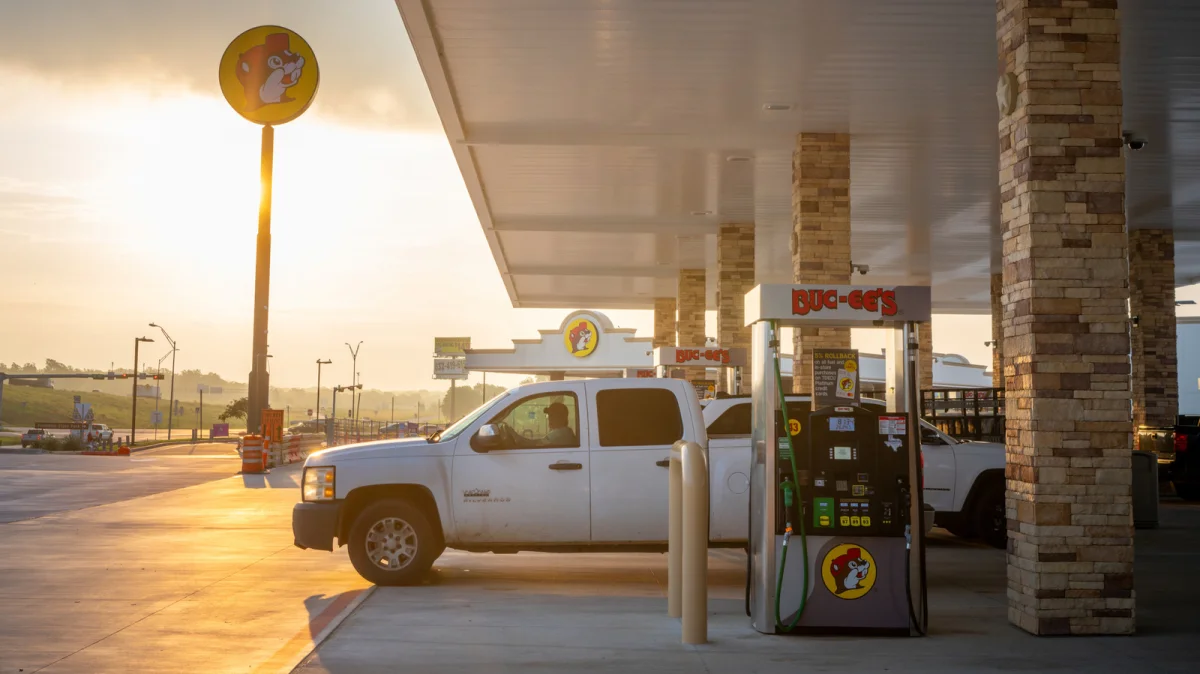
Buc-ee's co-founder Arch "Beaver" Aplin III has made it clear where he'd like the chain to grow. Speaking at the grand opening of a new location in Benton, Arkansas, he said the company is done trying to build where its work isn't appreciated. Then the statewide results came in, and his preferred map got a lot harder to follow.
Aplin's comments, as reported by Fox Business, were blunt. "I'm starting to realize life's too short to try to build in places that people don't appreciate what you're bringing, versus a place like this where people do appreciate what you are building," he said. He added that conservative states typically promote business-friendly, family-oriented policies that line up with what Buc-ee's stands for, and that this kind of mindset works best when it starts at the top, with the governor's office and local leaders.
Read as a business statement, it's a clear signal about site selection. Read as a sales pitch to a particular customer base, it's a little more interesting. Buc-ee's has built its following on road-trip culture, brisket, and a sprawling, almost theme-park approach to the gas station. Pointing to values as a filter for expansion is a bold choice for a brand that wants to be everywhere travelers stop.
The home-state problem
Here's the thing: Texas is Buc-ee's home. The chain is headquartered there, and its biggest concentration of locations sits in the state. That makes the recent results awkward. Democrat James Talarico won a statewide contest that will make him the first Democrat to represent Texas in the U.S. Senate since 1993. Governor Greg Abbott lost to Democrat Gina Hinojosa, and the Texas House moved to a slight Democratic majority. Few observers expected Texas to produce that combination, and it's a reminder that state-level politics can shift faster than a store-opening pipeline.
That said, a shift in the governor's office or the legislature doesn't automatically change how a chain like this operates. Gas stations and convenience stores follow traffic patterns, interstate corridors, land costs, and local permitting far more than they follow the party in charge. A site on a busy highway near a growing town will usually pencil out regardless of who wins the statehouse. The CEO's comments suggest the company cares about the broader climate, not just the math, and that's where the tension lies.
There's also a plain irony here. If Buc-ee's truly wants to avoid doing business in states with Democratic leadership, its own headquarters state is now an uncomfortable starting point. Moving a headquarters is a far bigger undertaking than picking a new site, so the practical answer is probably more selective expansion rather than a retreat from existing markets.
EWY Media/Shutterstock
Where the next stores might go
If you're trying to predict Buc-ee's next moves, the reddest parts of the country look like the natural targets. Alabama, Florida, Kentucky, and Tennessee all remained solidly Republican, and they're the kinds of markets where the company's "business-friendly and family-oriented" framing would fit most comfortably. Missouri also stayed red overall, though a Democrat flipped a House seat there, a reminder that even safe states show movement at the local level.
Arkansas is the most immediate test case. Aplin made his remarks there, and the state's Senate race saw Republican incumbent Tom Cotton stay in office. The Associated Press reported that every county in Arkansas shifted more toward Democrats than it did in 2024. Even so, Arkansas remains a deeply Republican state, and the Benton opening shows the chain is still moving ahead there. The more interesting question is whether a county-by-county drift like that changes how a company thinks about long-term bets.
Elsewhere, the results were mixed in ways that matter for a national chain. Arizona Democrats will hold the state house, the state senate, and the governor's office for the first time in 60 years. The Colorado House flipped from a 50/50 split to seven of eight seats going to Democrats. In Ohio, Democrat Amy Acton defeated Republican Vivek Ramaswamy for governor, and the state House flipped as well. Georgia's Keisha Lance Bottoms will become the first Black woman to serve as governor of the state, and of any U.S. state. Mississippi's Senate contest was still too close to call at the time of writing, with Democrat Scott Colom holding a 0.1% lead over incumbent Republican Cindy Hyde-Smith.
What to watch
My read is that the CEO's comments say more about brand identity than about a near-term pullback. Buc-ee's has a loyal following that cuts across political lines, and its appeal is built on the experience: clean restrooms, endless brisket, and those Beaver Nuggets. Turning away from entire regions would mean giving up a lot of road-trip traffic and a lot of goodwill, and the company hasn't signaled anything that drastic.
What's worth tracking is the pace and location of new openings over the next couple of years. If new stores keep clustering in the Southeast and in parts of the Plains, the CEO's stated preference is probably shaping the map. If the company keeps opening in mixed or Democratic-leaning markets, the comments were more about public messaging than about how the chain actually picks its sites. For now, the stores are still growing, and the next Benton-style grand opening will be the clearest sign of which way the company is leaning.
Brandon Bell/Getty Images