Freight Routing Guide Costs Rise as Backup Carriers Face Holiday Pressure
- Cargo
- Electric Vehicles
- Shipped
- Shipper
- Zach Strickland, FW Market Expert & Market Analyst
- Readers
- 823
The cost of a rejected primary tender rose to 10.69% as acceptance fell, signaling tighter capacity for shippers ahead of Thanksgiving.
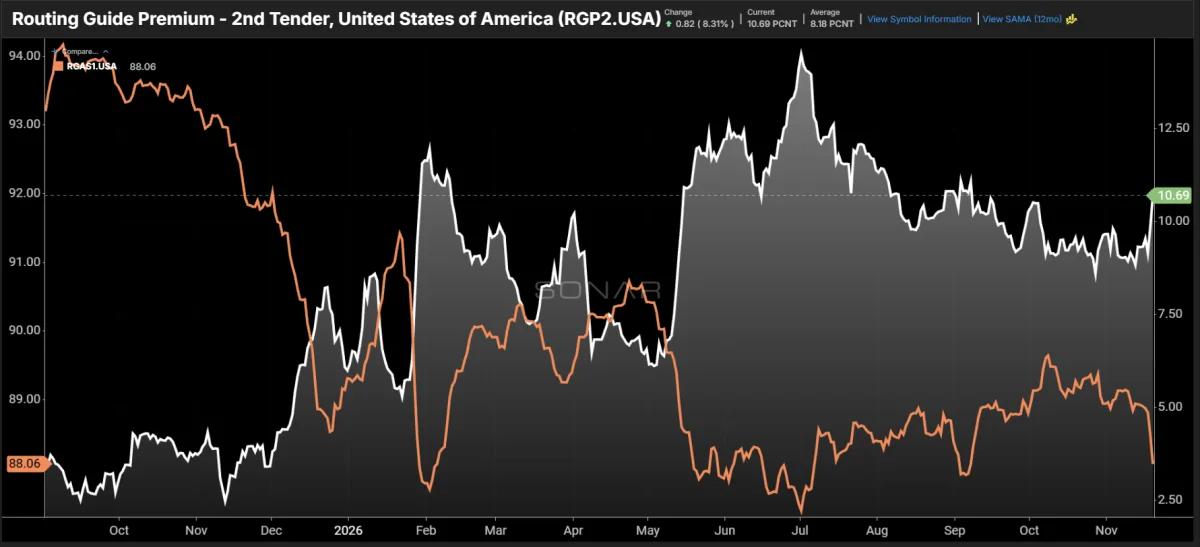
Shippers are paying more to move loads when their first-choice carrier declines. The routing guide premium for a second tender reached 10.69% on Thursday, its highest reading since September, while acceptance of primary tenders fell to 88.06%, the lowest level since September. Those shifts point to more freight slipping to backup carriers just as Thanksgiving approaches and truckload capacity typically tightens.
The weekly move was sharp: the second-tender premium increased 1.87 percentage points from 8.82%, and primary-tender acceptance dropped 88 basis points. In practical terms, fewer loads are staying with the carrier at the top of a shipper’s routing guide, and the next carrier is charging more to take them.
What the premium measures
The routing guide premium compares the all-in cost of using a primary carrier with the cost of carriers farther down the shipper’s routing sequence. It includes fuel and accessorial charges. As primary carriers reject more tenders, shippers rely more heavily on those secondary options, and the additional cost can rise quickly.
These measures tend to move in opposite directions: lower acceptance by primary carriers is often accompanied by a higher premium for the next tender. The change can be gradual for a time, then accelerate around holidays or other disruptions. That makes the backup cost a significant part of capacity planning, even when it has not yet appeared in a shipper’s spot-market bill.
Heading into this holiday period, the premium associated with a failed primary tender was about 8.8%. It rose by nearly two percentage points in roughly a week, with further increases considered likely. The prior year offers a comparison: the premium was around 4% a year earlier, then grew to about 8% by Christmas.
Why secondary capacity can cost more
Backup carriers face the same broad capacity conditions as primary carriers. Their position in the routing guide can also make the relationship less attractive: a secondary carrier may receive freight only when the primary option cannot cover it, rather than a steady share of planned volume. When capacity tightens and spot rates rise, that carrier has little reason to accept a below-market rate for work that may disappear once conditions ease.
Some shippers use contract-plus pricing to manage that risk. Under this approach, they add a premium to the standard contract rate for the primary carrier. The aim is to keep freight within a known carrier network instead of turning to the spot market or asking an unfamiliar carrier to handle freight that may require extra effort. The added amount raises the contract cost, but may help secure service when capacity is under pressure.
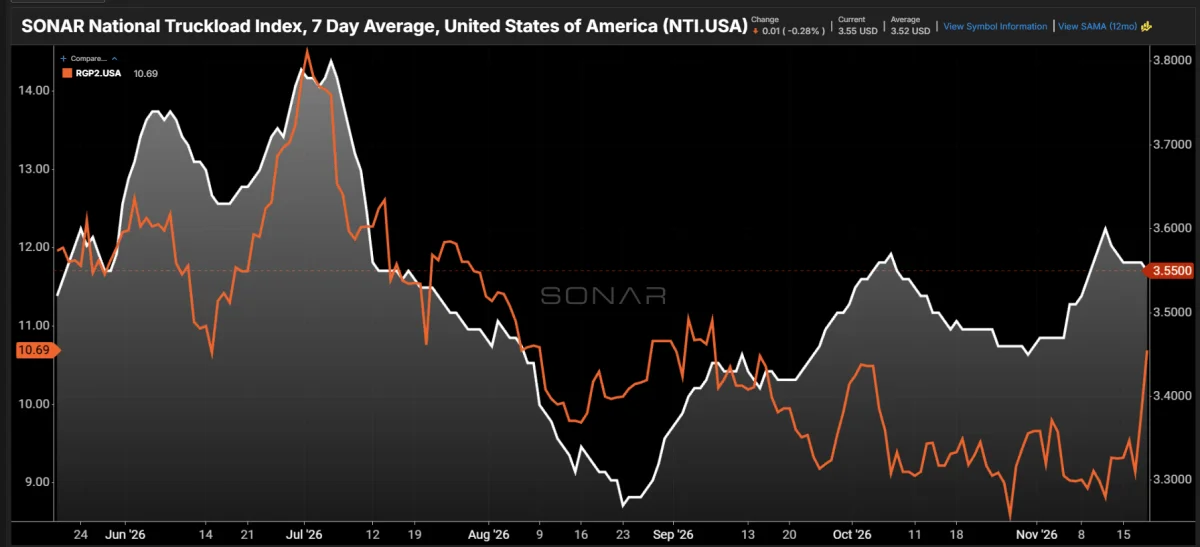
That premium does not appear directly in spot-rate measures because a contract tender is still contract freight. Contract loads also have more lead time: around 3.7 days at present, compared with roughly one day for spot loads. The longer window gives the contract market an early signal of changing conditions, sometimes before spot-rate indexes show the same pressure.
Contract pressure can precede spot-rate moves
As of Thursday, Nov. 19, shippers were already seeing weaker carrier compliance, even though the National Truckload Index (NTI) was flat to slightly lower week over week. A subdued spot-rate reading therefore did not mean that contracted freight was moving without strain. If spot rates begin climbing quickly, spot freight can also draw capacity away from contract loads, adding pressure to routing-guide acceptance.
For transportation teams, the key planning question is not simply whether a primary carrier has agreed to a rate. It is how the full carrier sequence will perform when the market tightens, and what each step down the guide is likely to cost. A routing guide built around a low primary rate can leave a budget exposed if secondary carriers have little incentive to honor that price during a surge in demand.
Backup service depends on the relationship
The data points to a practical limit of treating contingency carriers as guaranteed capacity. In a volatile market, available service and its price are shaped by current demand. Shippers can still raise backup capacity and its pricing during bid discussions, but the working relationship matters alongside the rate on paper. Carriers are less likely to reserve attention for a customer that turns to them only after its preferred options have failed.
With primary acceptance down and the second-tender premium climbing ahead of Thanksgiving, shippers have an early indication that backup freight is getting more expensive. Tracking acceptance and secondary-tender costs together can show whether a routing guide is keeping loads covered before a spot-rate increase makes the pressure more visible.