1987 Monte Carlo SS Pro Touring Build Doubles Power and Cuts Emissions
- Cargo
- Electric Vehicles
- Shipped
- Shipper
- Eric Weiner
- Readers
- 591
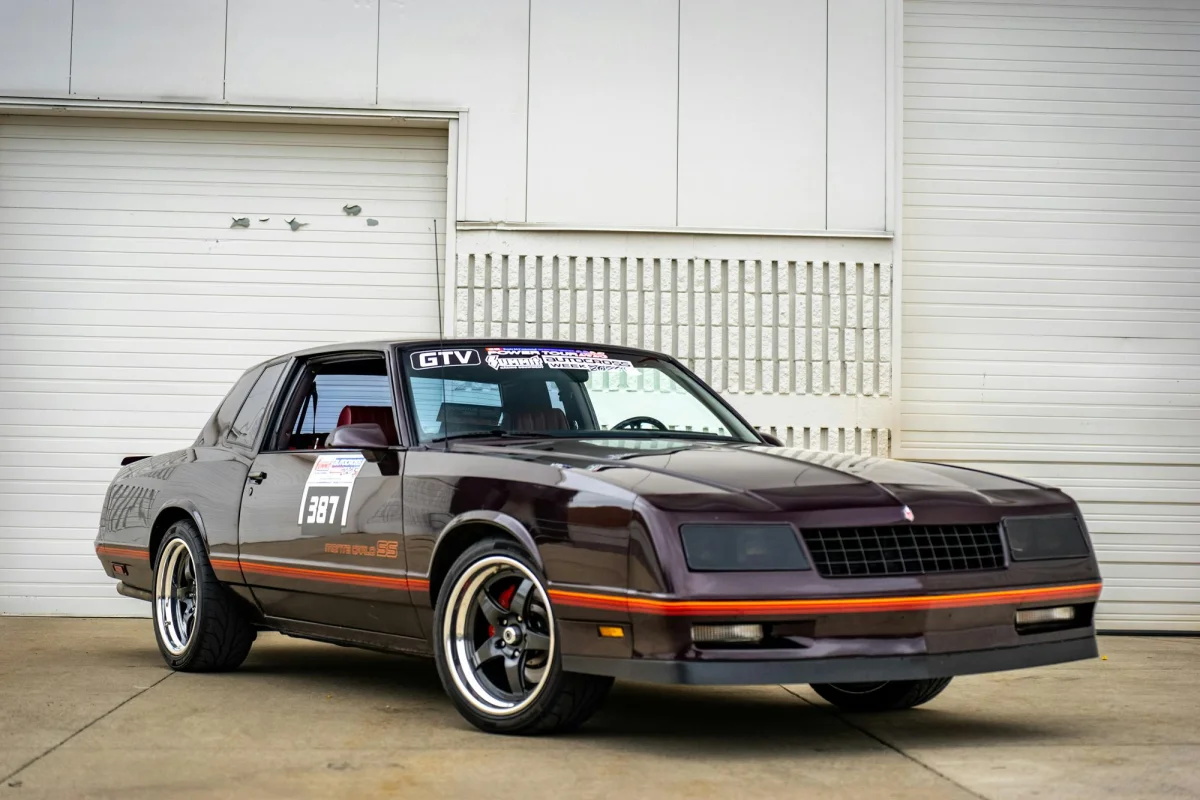
Summit Racing's 1987 Monte Carlo SS went from 131 to 302 wheel horsepower through five build phases, with hydrocarbons and CO cut sharply along the way.
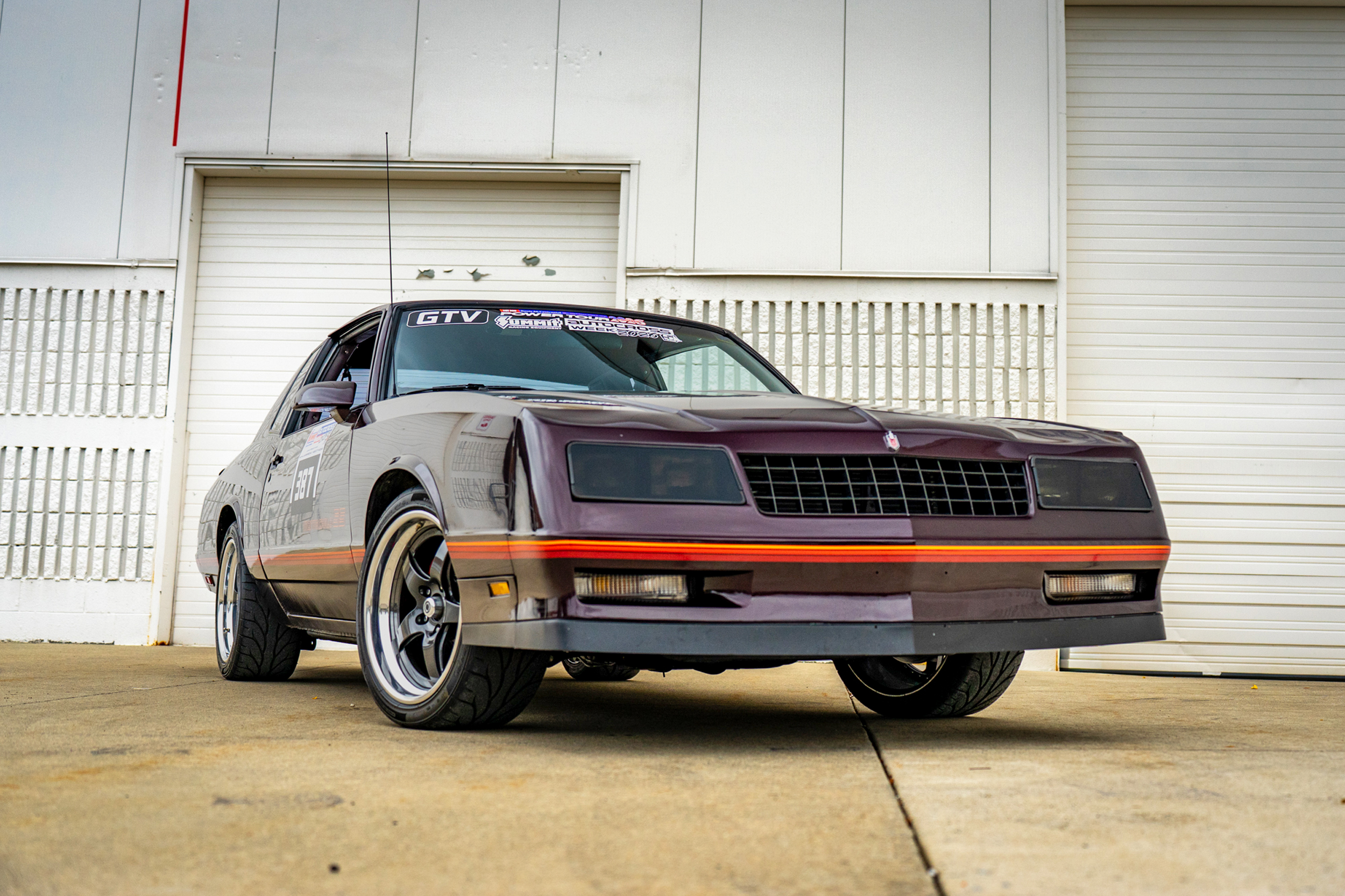
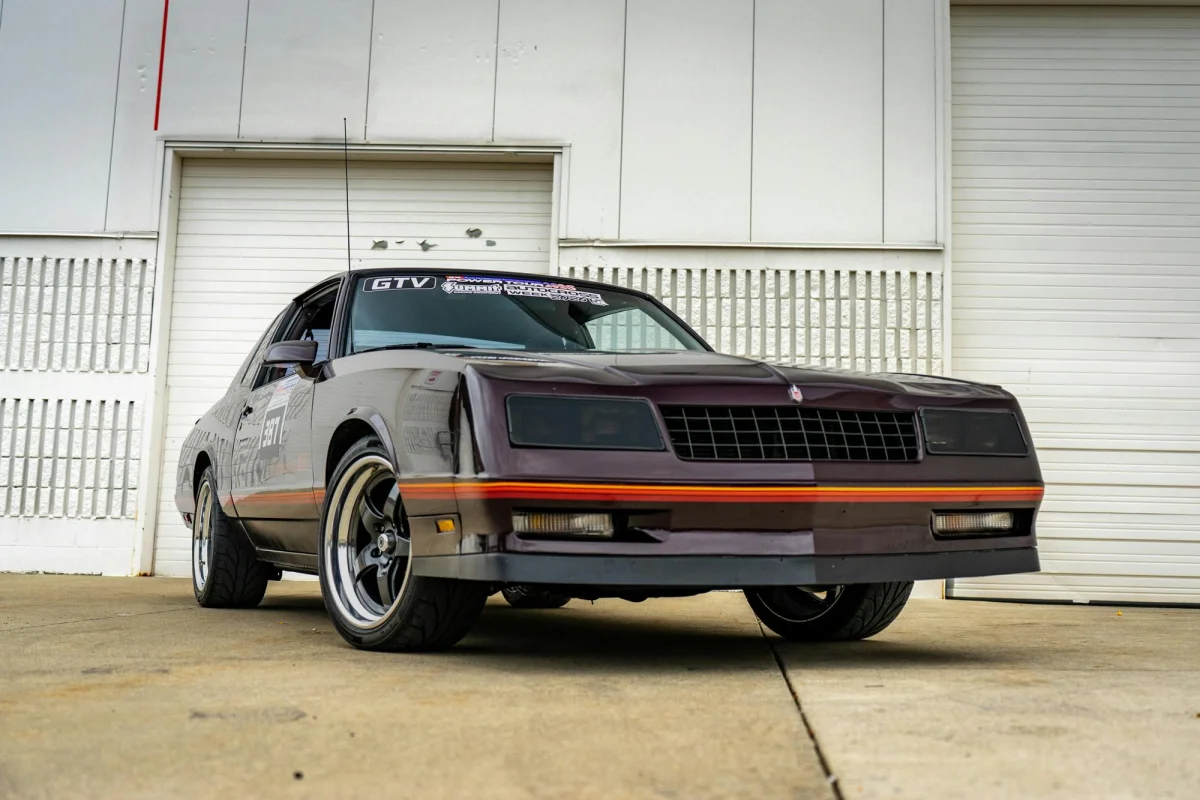
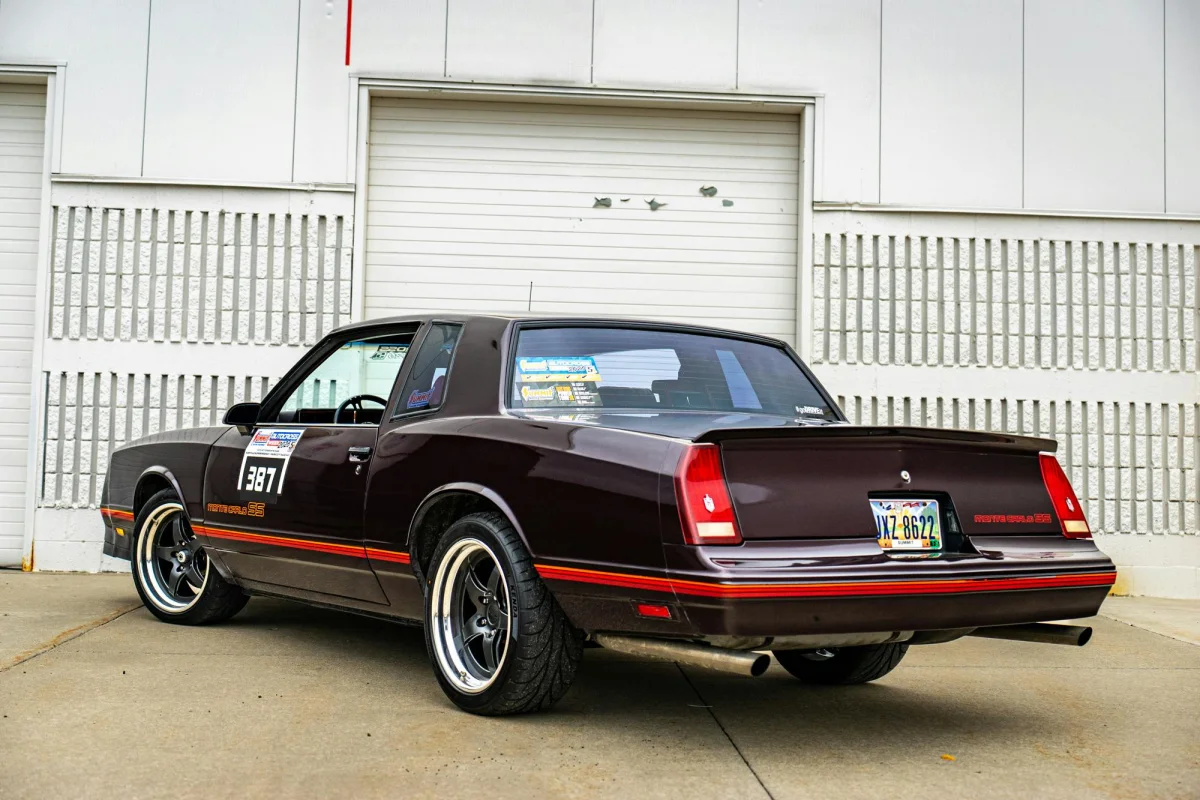
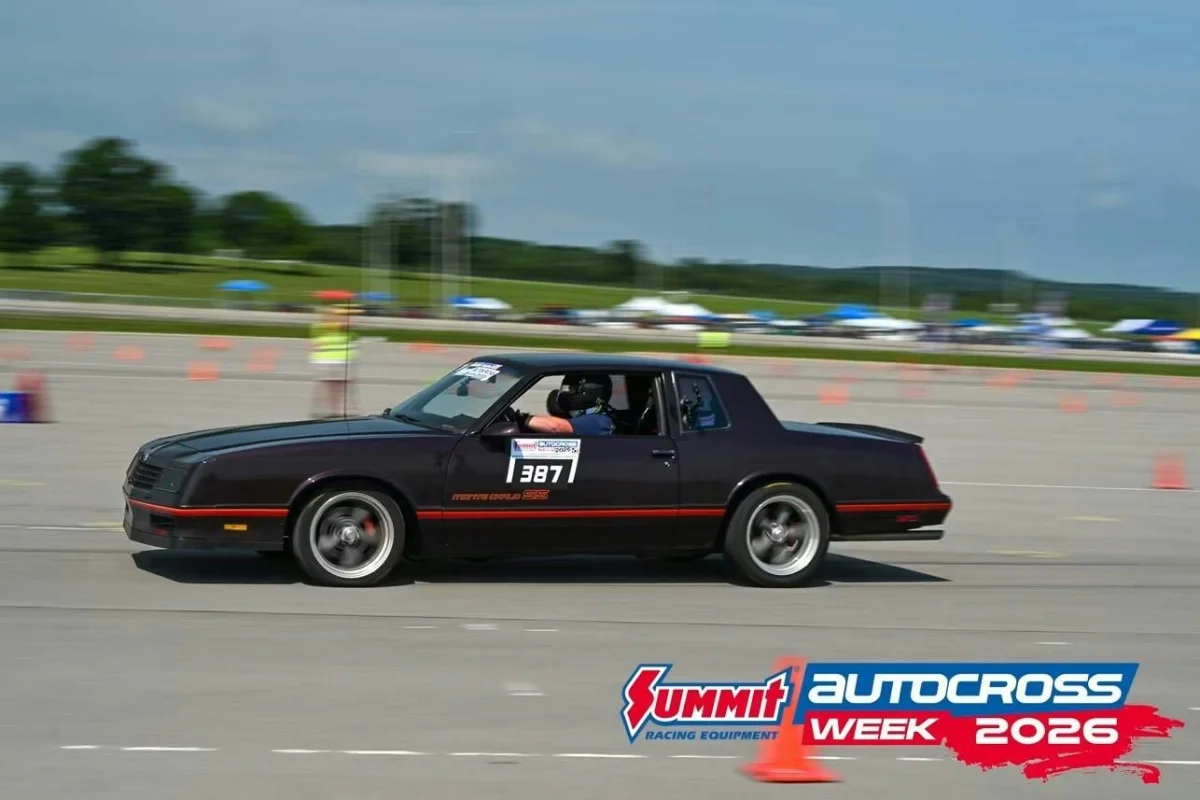
Stab the throttle on this 1987 Monte Carlo SS and the coupe squats, goes quiet for a heartbeat, then the four-speed automatic drops a gear and the V-8 digs in. The rear tires hook up, the exhaust settles into a steady LS snarl, and the speedo needle keeps climbing. Upshifts land with authority. Stand on the brakes afterward and there's no nose dive, no wallowing. That's the part that surprised me most. This is a 37-year-old G-body, and it drives like someone sorted it out properly.
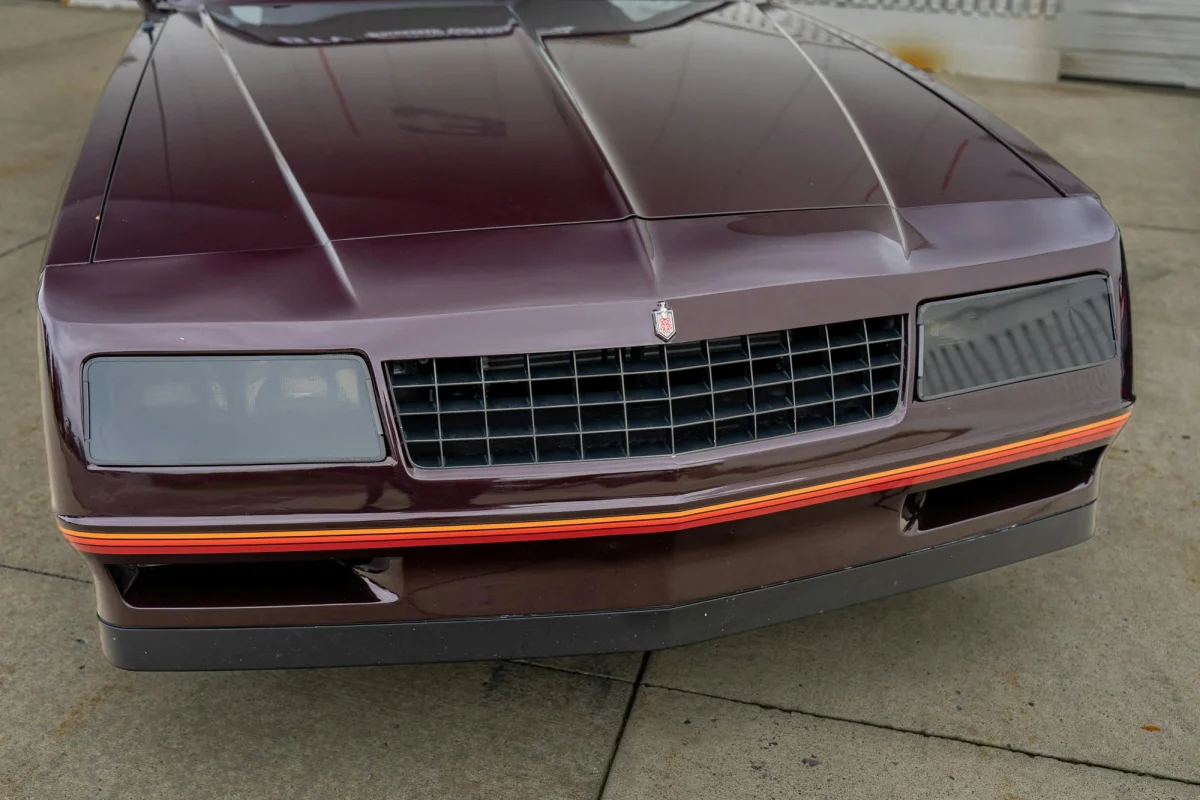
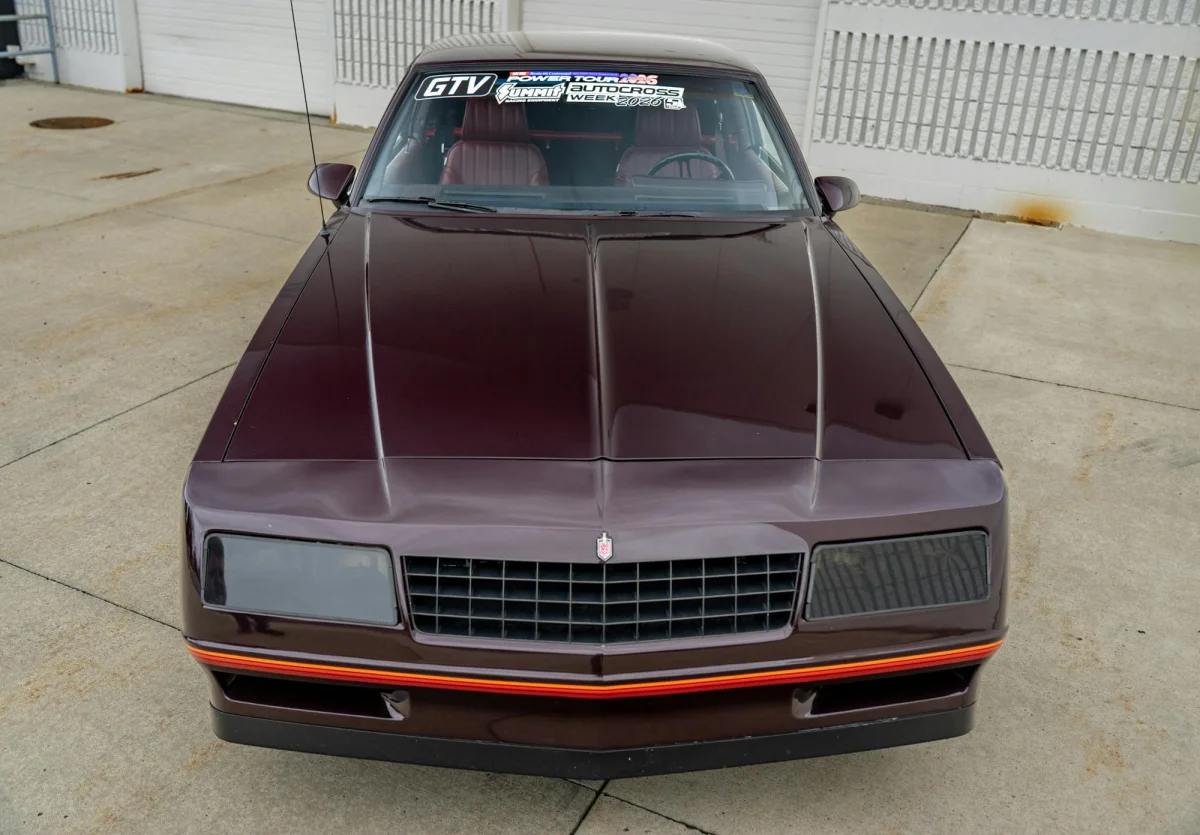
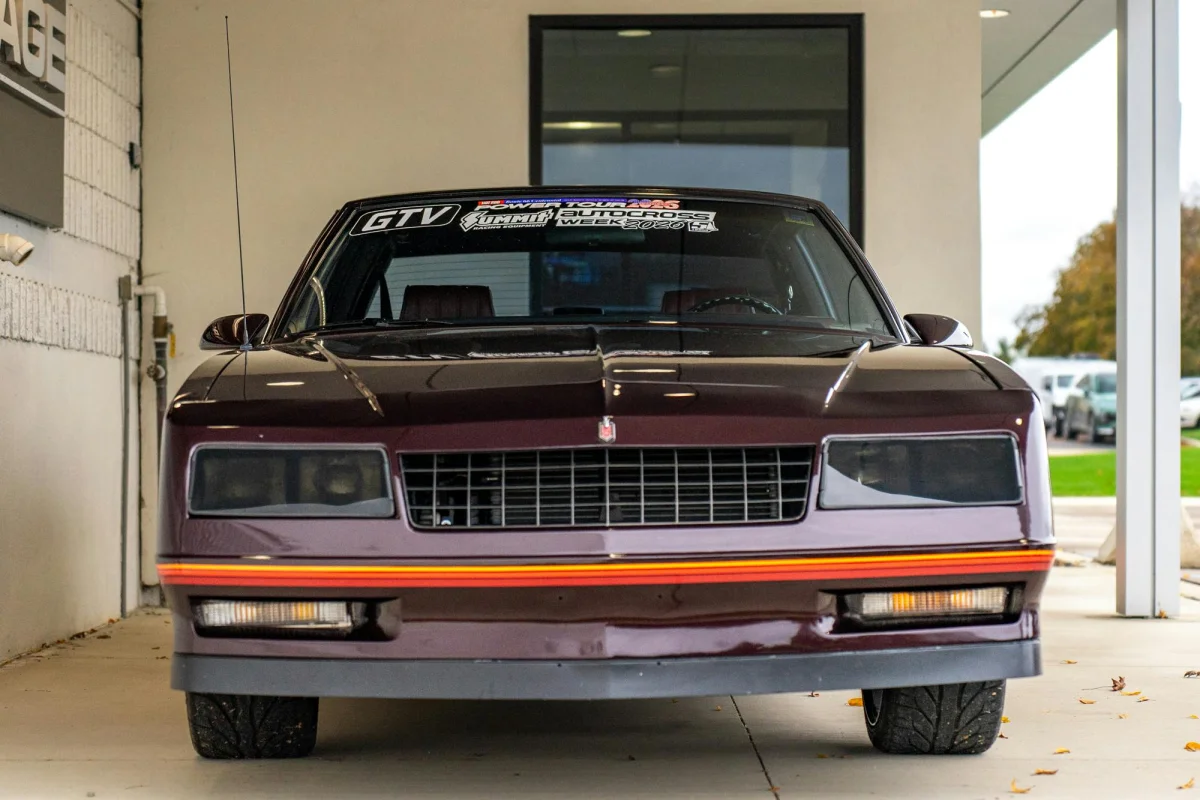
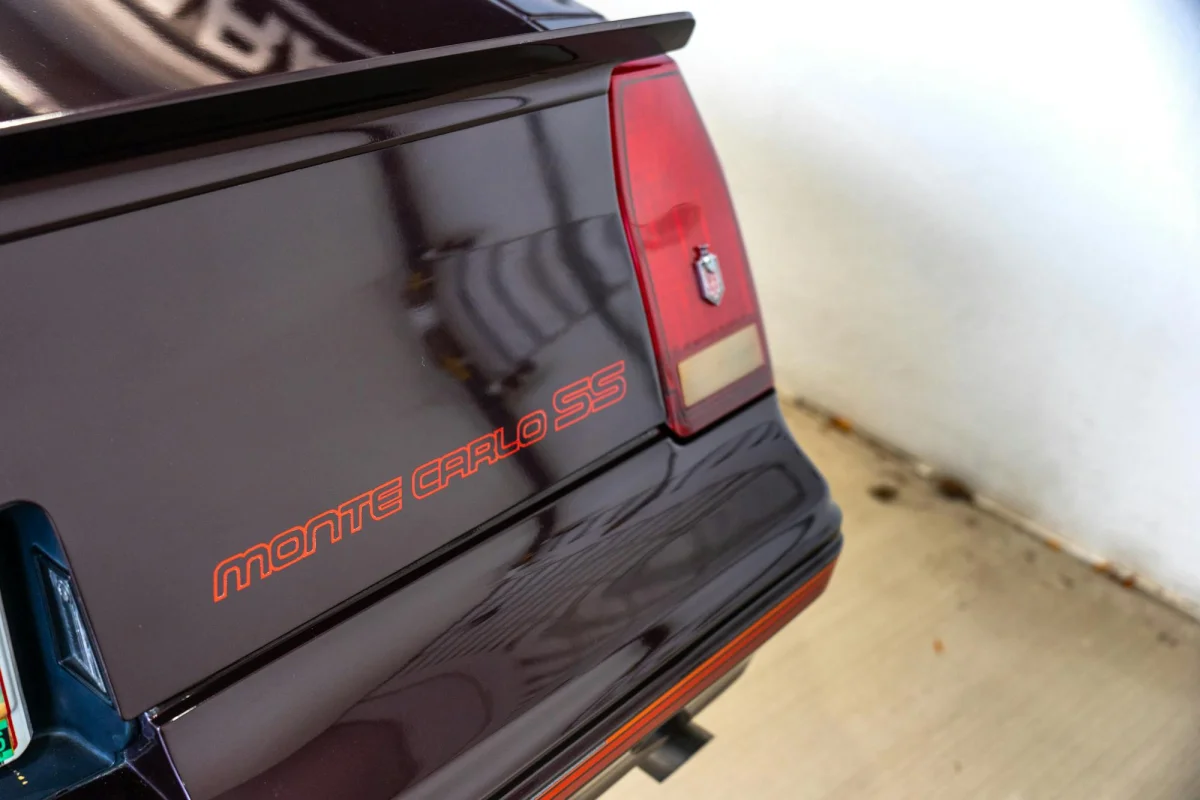
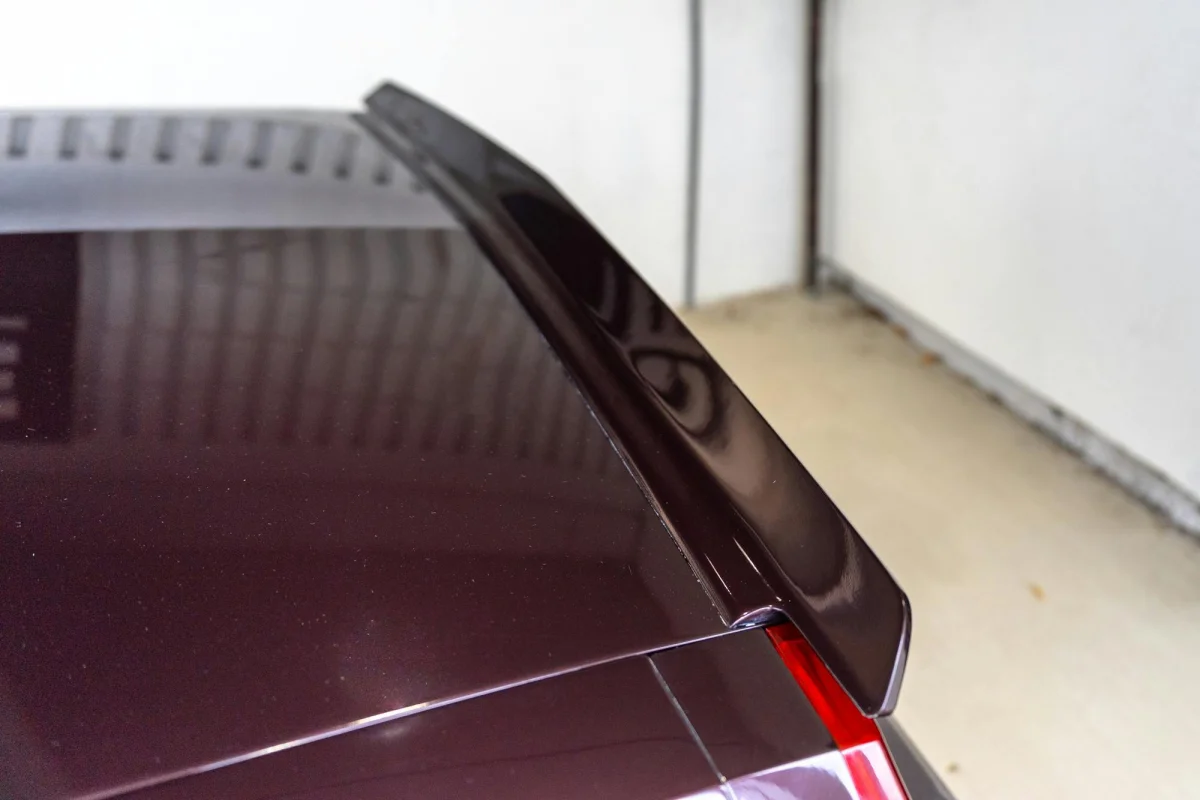
Summit Racing, the Ohio-based parts house, built it as a Pro Touring hot rod rather than a restoration. The goal was blunt: double the horsepower and halve the emissions. Restoration category lead Barry Flesher summed up the intent as "a whole lot cleaner and a whole lot meaner." Most people still hear "hot rod" and picture a smoky heap that doesn't care about emissions, so the project was meant to show that old-school performance and cleaner running can coexist.
Why this project started
Flesher told us the idea took root around 2017, when new emissions rules threatened the aftermarket engine business. The wording was broad enough to potentially reach ordinary passenger cars, not just the glider-kit trucks it was aimed at. That got clarified, and engine swaps carried on. But Summit still wanted to prove a point: a hot-rodded car can run cleaner than its stock ancestor if the build is done with that goal in mind.
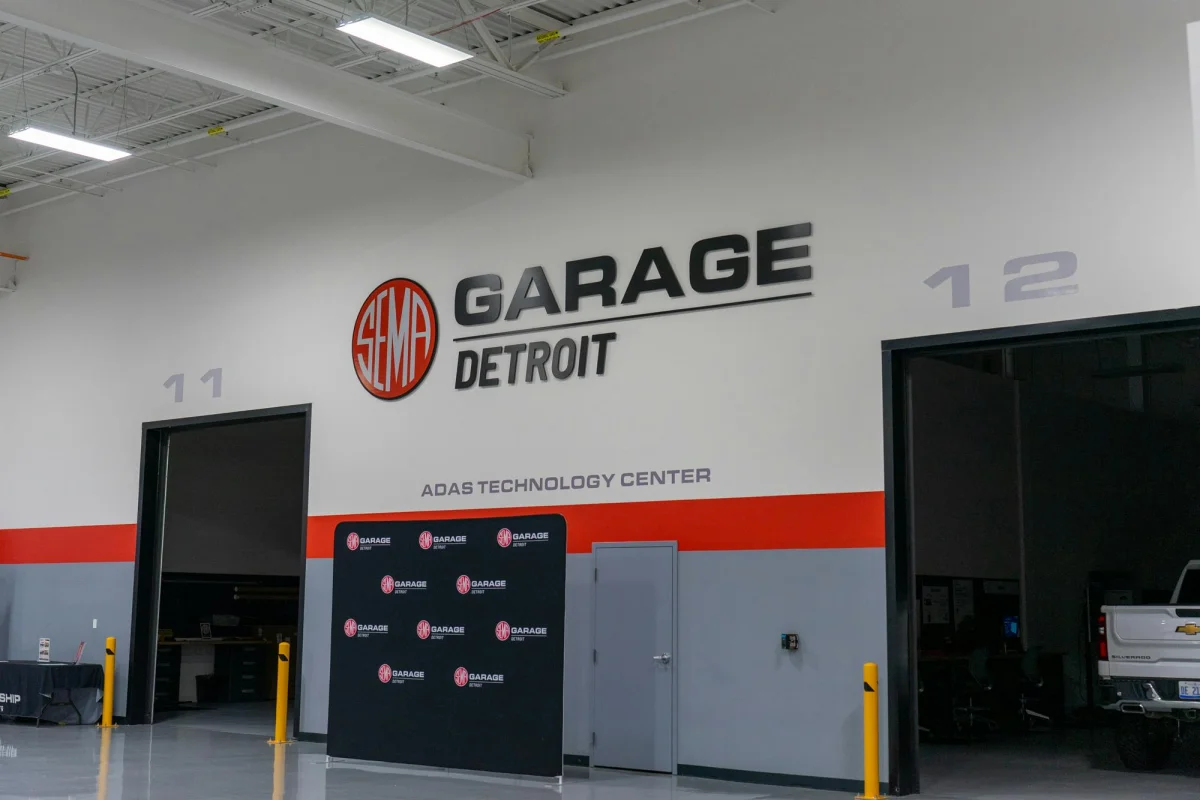
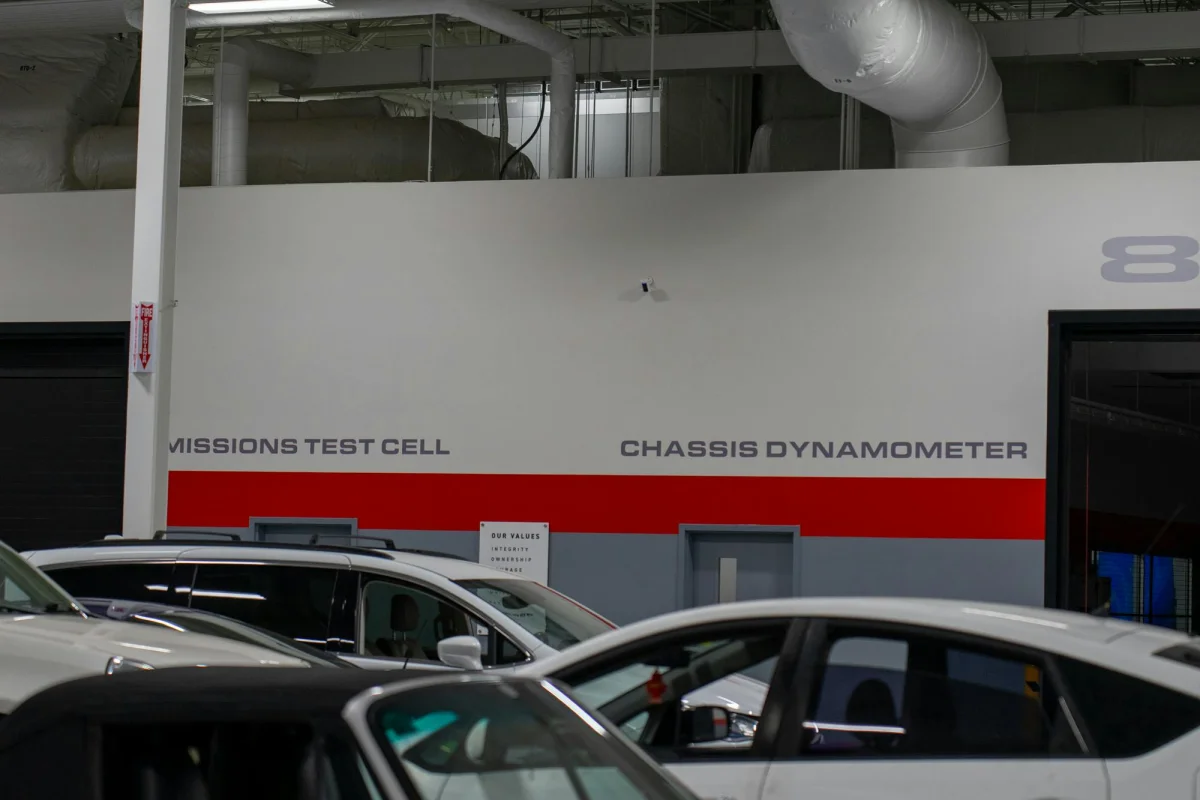
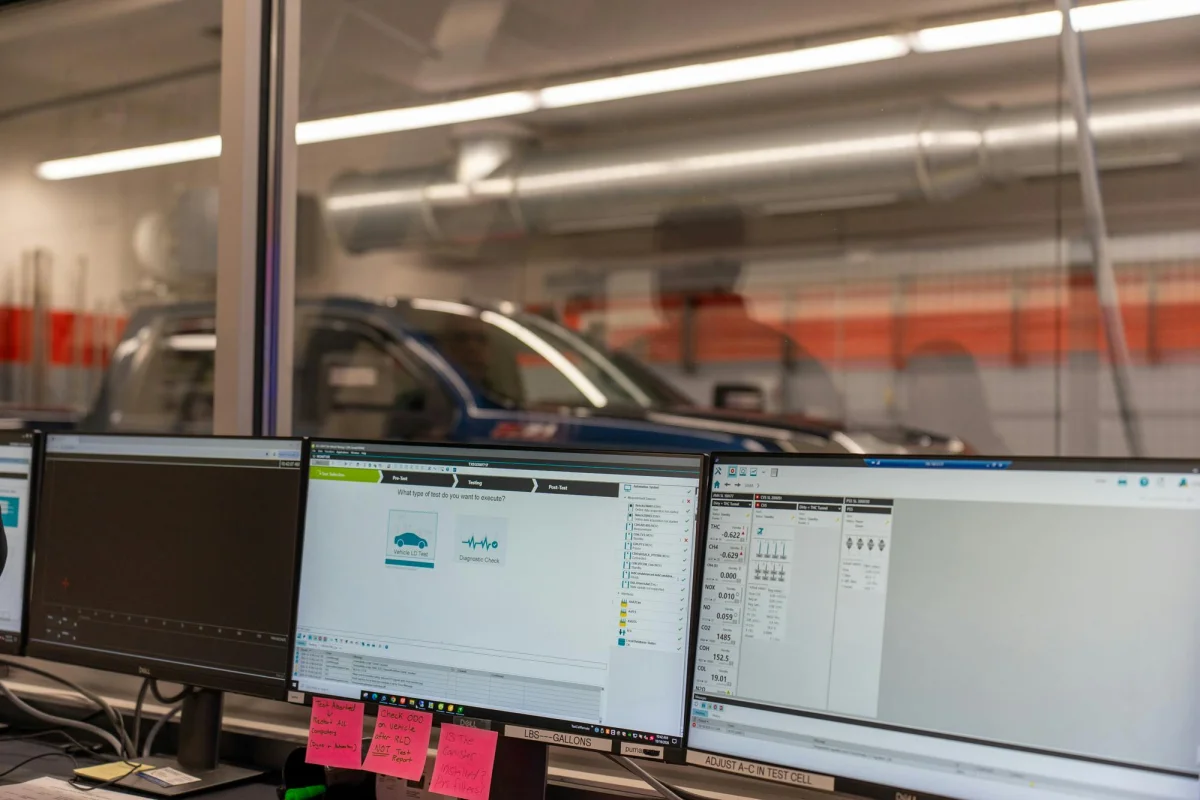
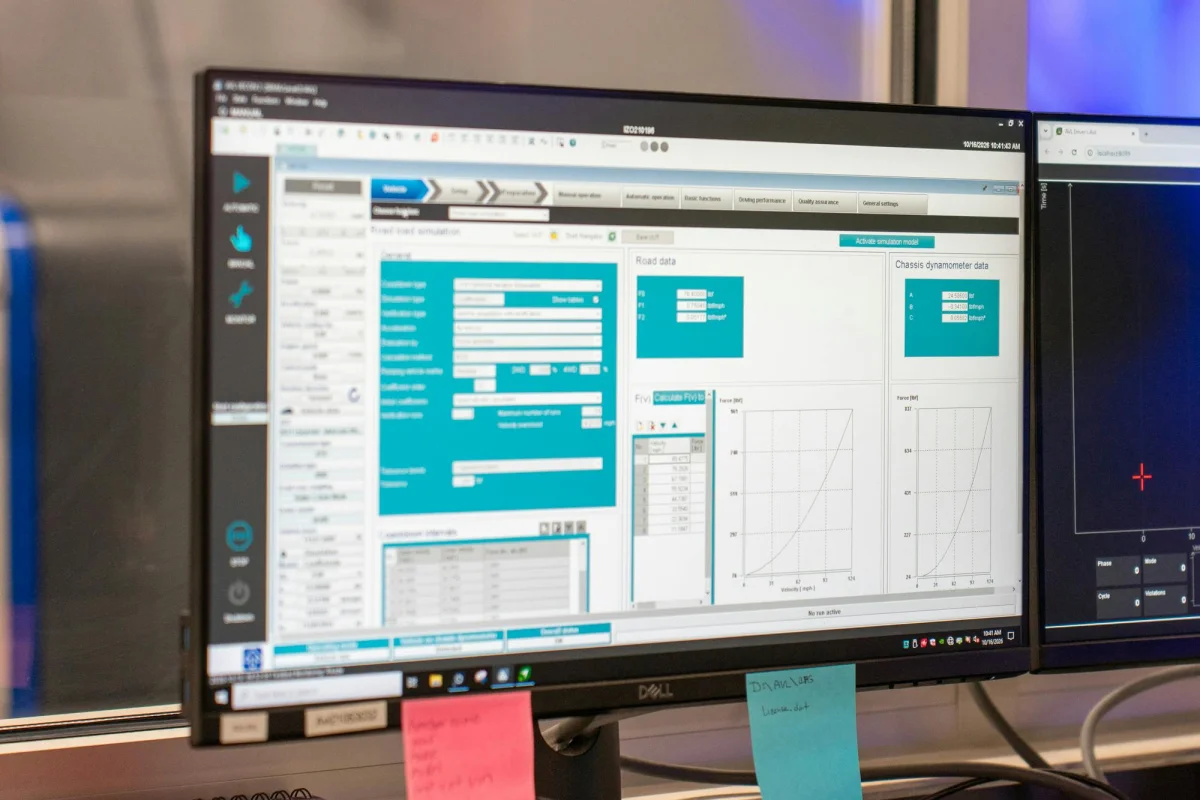
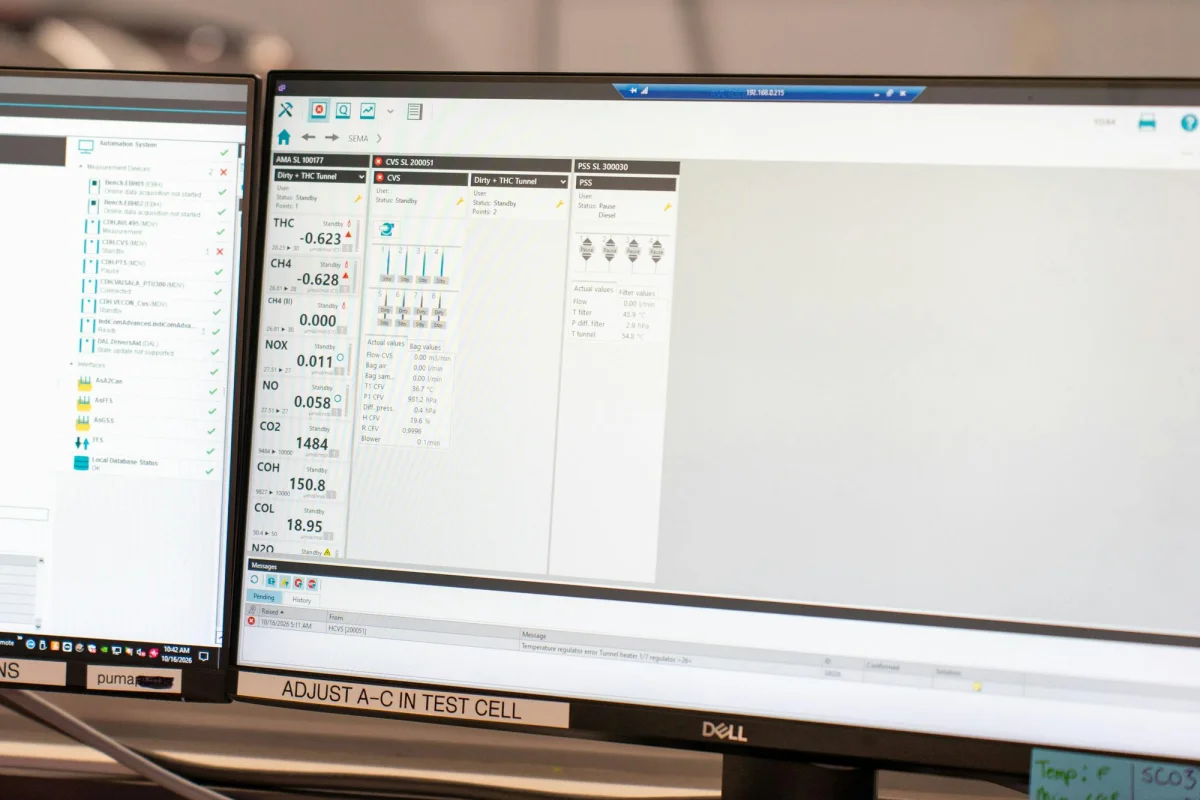
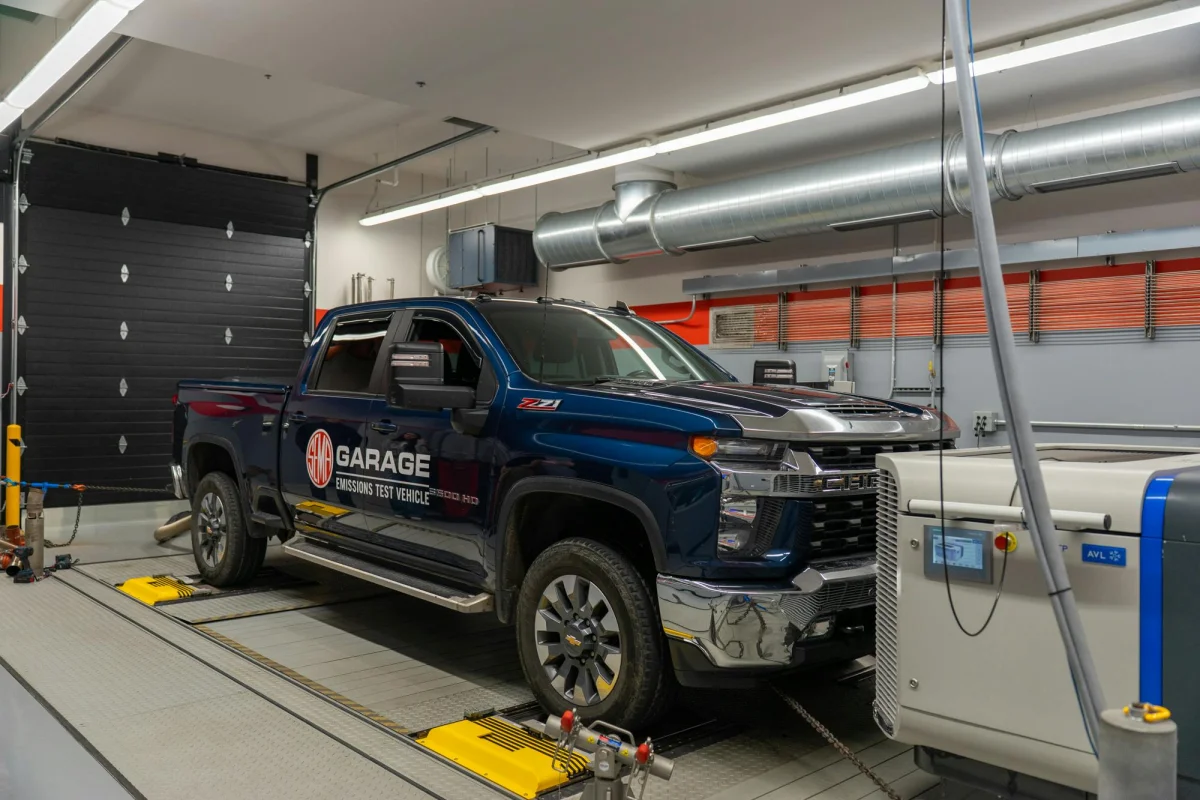
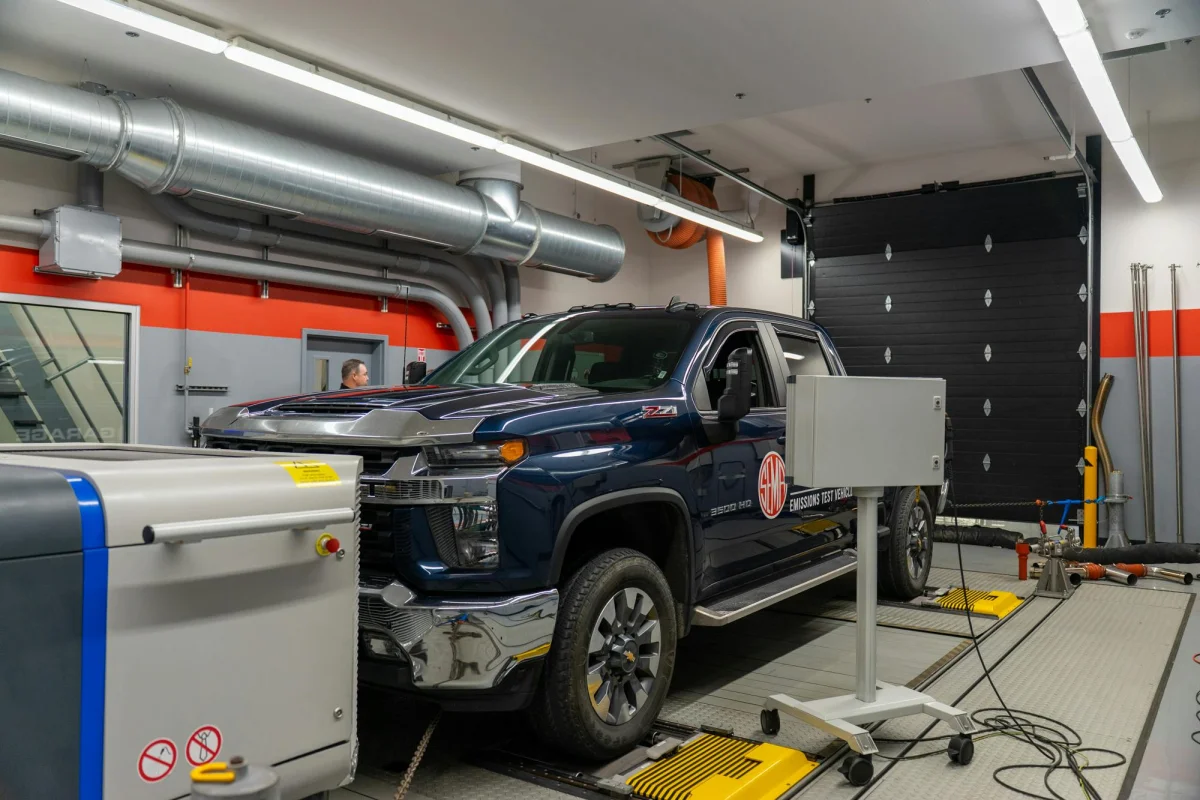
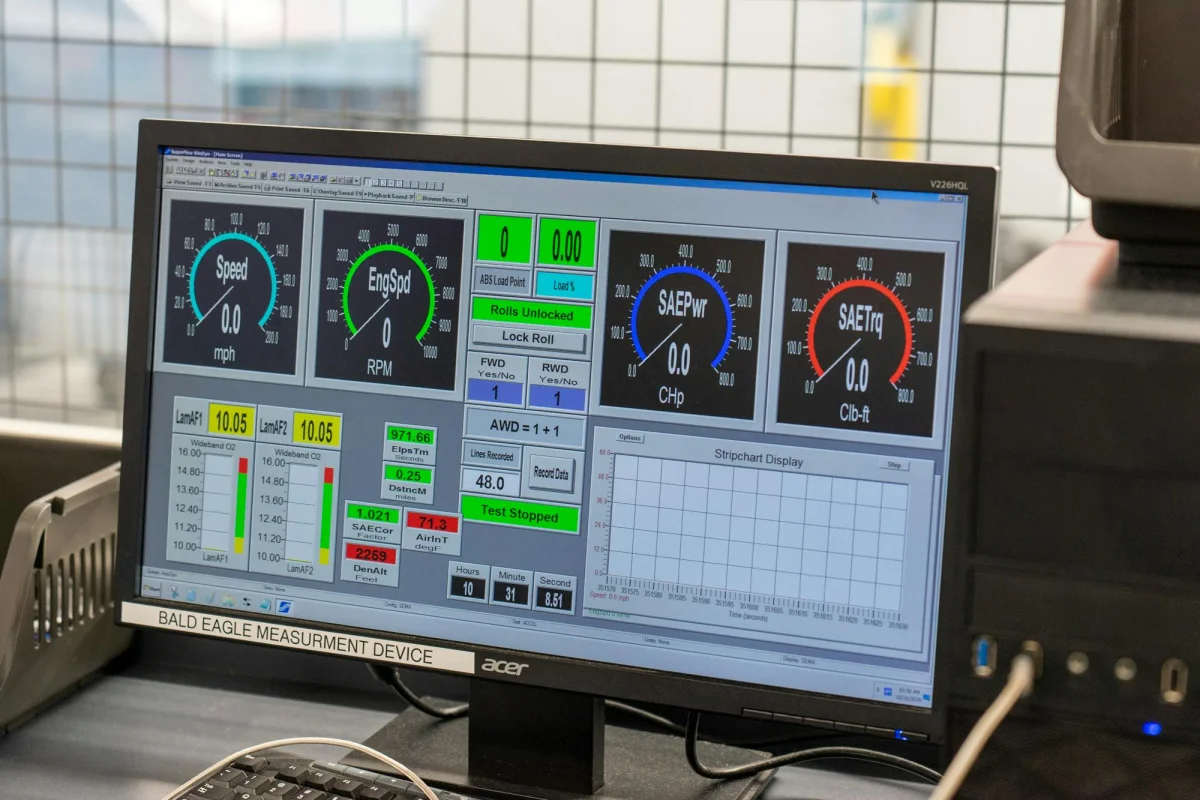
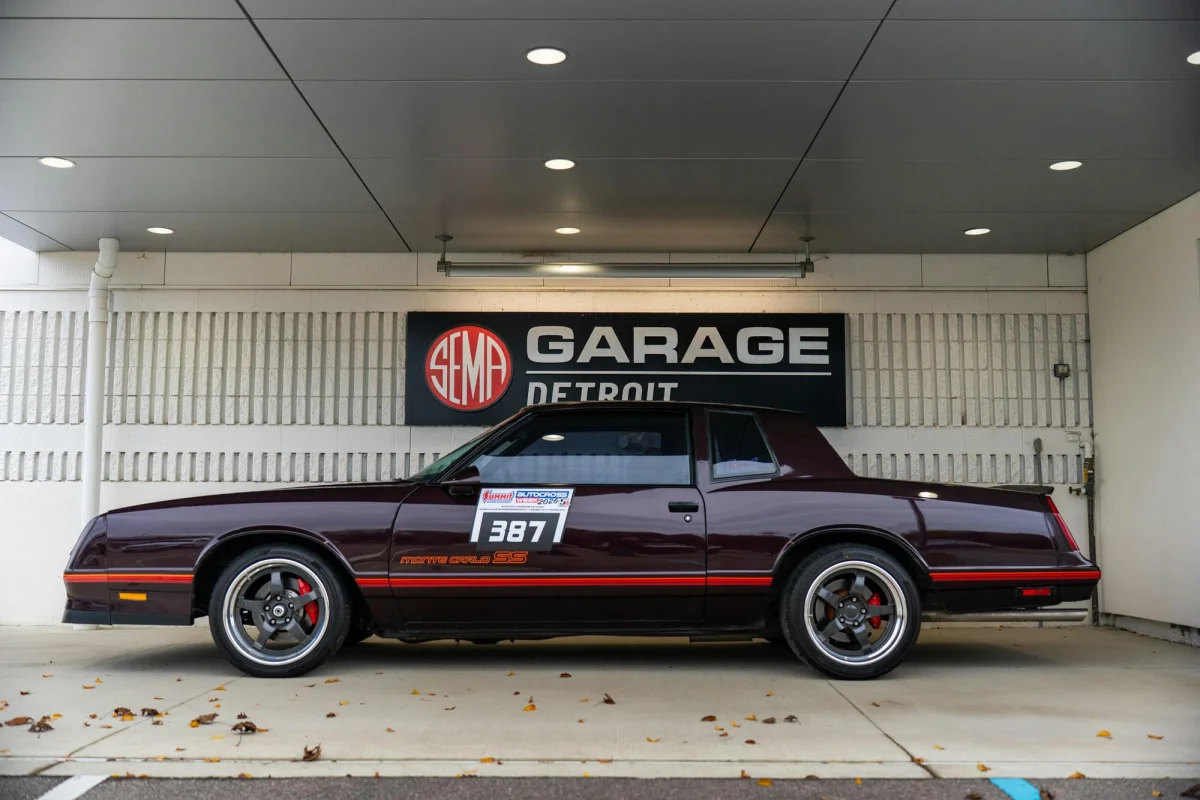
The testing setup mattered as much as the parts. Each iteration was measured for power and particulates at SEMA Garage Detroit, a certified facility with a dyno and OEM-grade emissions equipment. Over roughly three years the car went through several phases and three different engines. Almost every part came from Summit's own catalog, which makes the project a useful reference for what a catalog build can actually deliver.
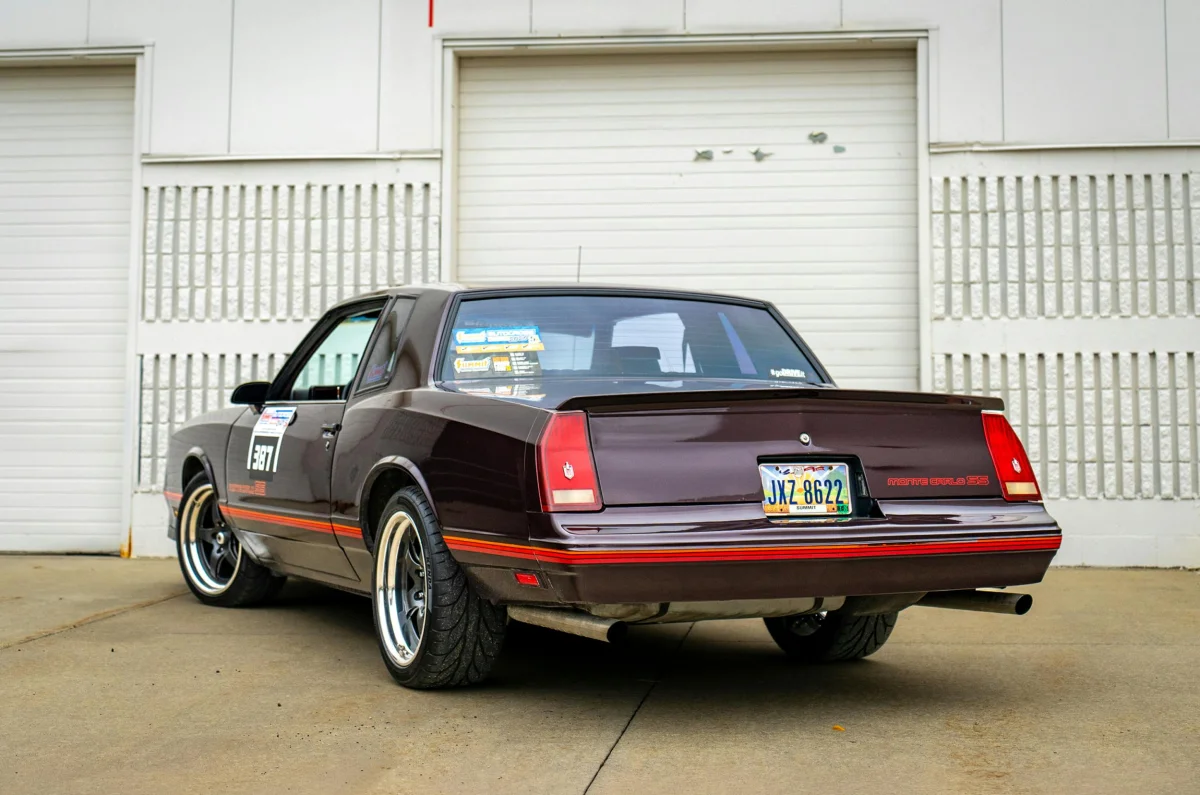
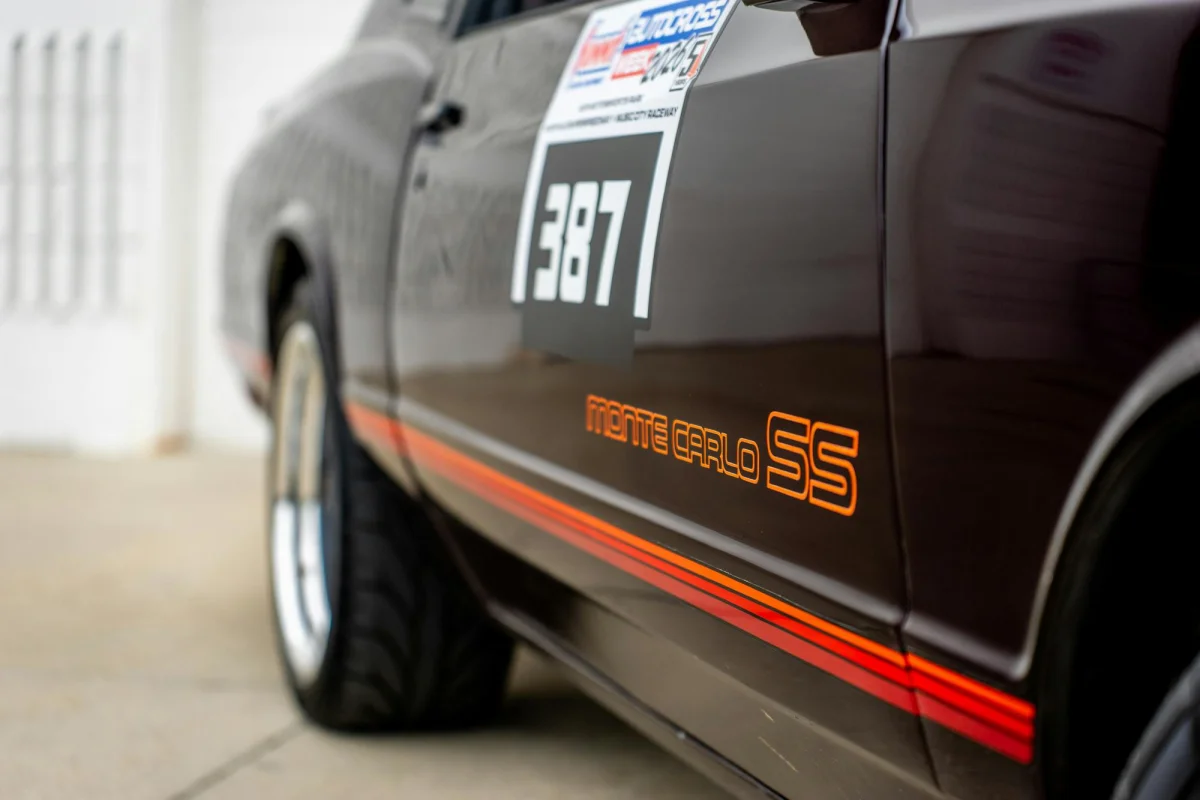
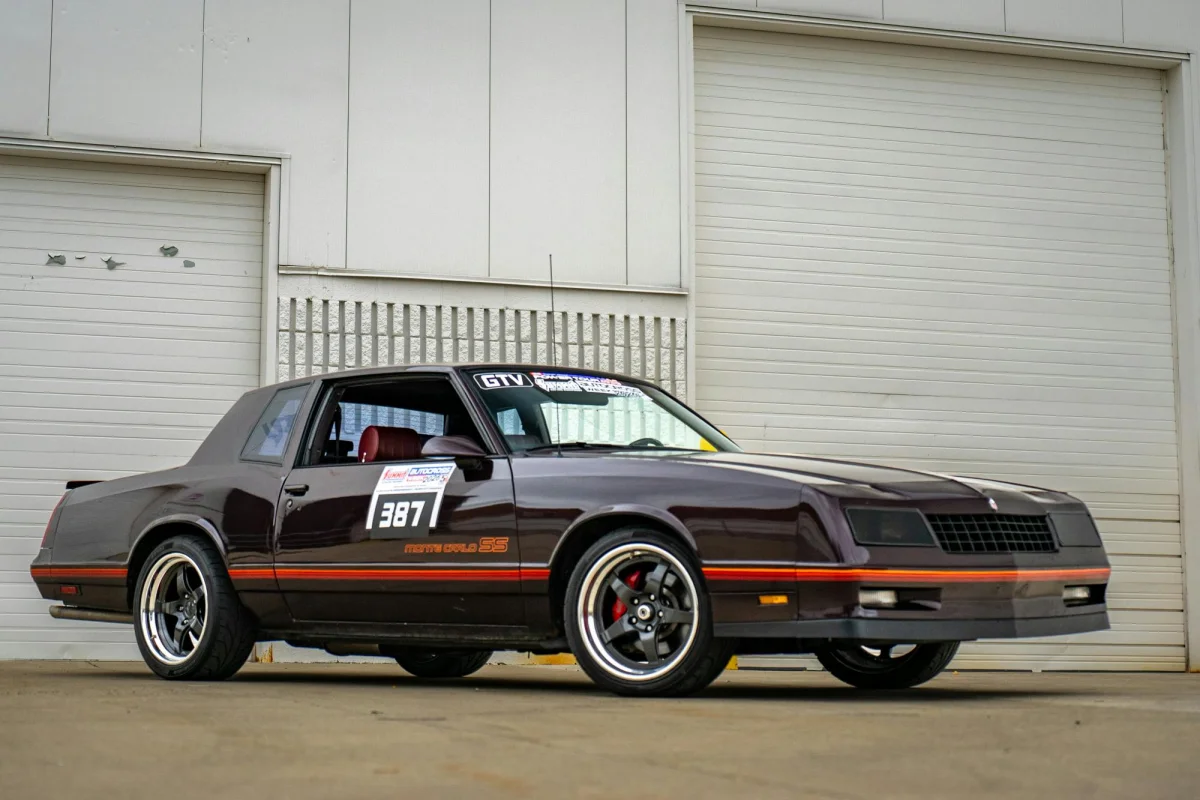
The choice of car makes sense, too. Flesher wanted something an enthusiast would actually own: "nothing exotic, unattainable, or unrelatable." Summit's technical lead, Justin Weideman, had a personal link to the platform. His parents brought him home from the hospital in a white '87 Monte Carlo. The team found this one in Dayton, Ohio, a survivor with about 97,000 miles and, in Weideman's words, "granny-fresh, all original and factory-correct." They paid $12,500.
Phase 1: The stock baseline
From the factory, the car carried a 305-cubic-inch (5.0-liter) V-8 with a computer-controlled four-barrel Rochester carburetor, rated at 180 hp and fitted with a catalytic converter. The survivor car made 131 hp at the wheels, roughly 150 hp at the crank.
That gap reflected age and wear. Summit found a sticking carb choke, leaking valve seals, a cracked block, and a factory catalyst that was already underperforming. None of it was ideal, but it gave the team a realistic starting point, the sort of tired car most hot-rodders begin with.
Phase 2 and 3: Injection and typical tweaks
The first attempt kept the original 305 and swapped the carburetor for Summit's Max-EFI 500 throttle-body injection, plus a new fuel tank, pump, and regulator. The gain was small, about 3 percent more horsepower. That's a useful reminder that a fuel system change alone rarely transforms an old small-block.
Phase 3 added the usual 305 upgrades: a dual-plane intake, a new exhaust, timing advanced from six to ten degrees, long-tube headers, and three-inch high-flow catalysts. Weideman also removed the secondary air injection and exhaust gas recirculation systems, which weren't working anyway. Together these lifted output by 40 hp over stock, to about 172 whp. Interestingly, the car made 8 percent more power with its catalytic converters fitted than without them.

Emissions moved the wrong way here. More power came with dirtier numbers, and the factory catalyst still outperformed the aftermarket Stainless Works pieces on cleanup. The lesson is that bolting on tuning parts doesn't automatically clean up exhaust.
Phase 4: Staying with a small-block
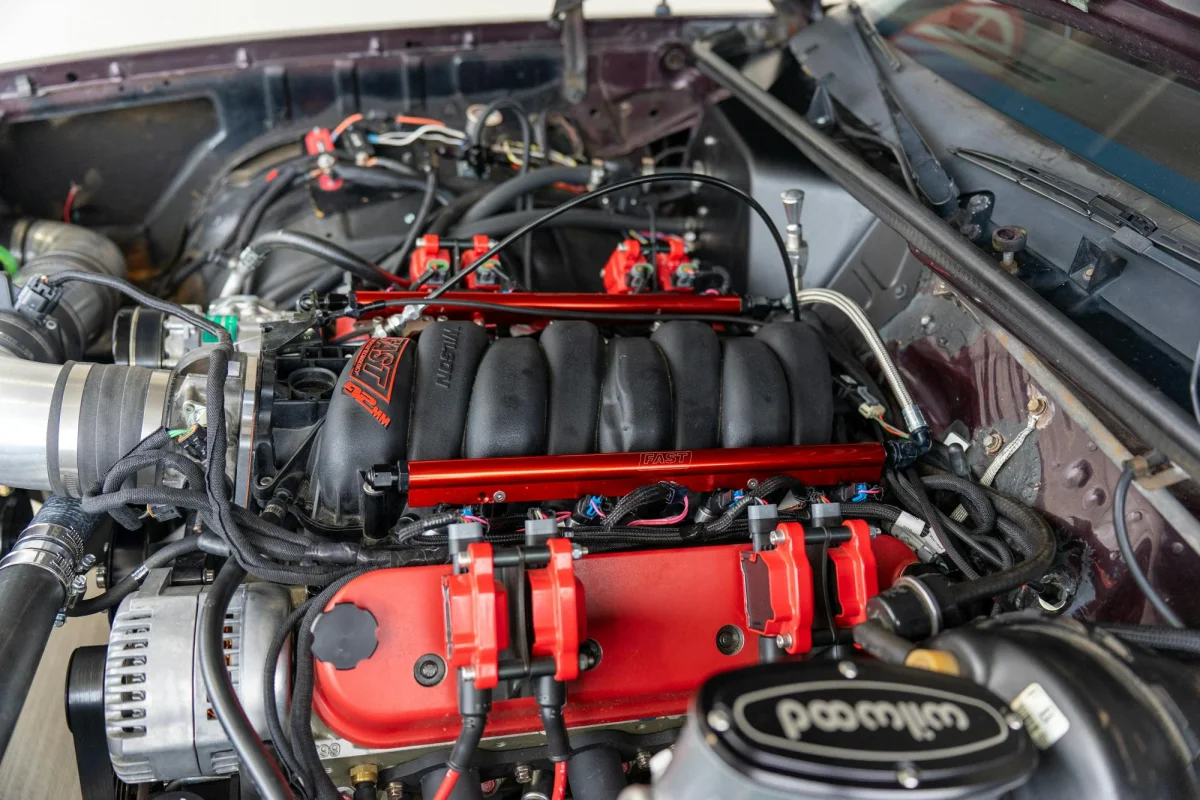
Next, Summit dropped in a new 383-cubic-inch small-block V-8 from Blueprint Engines, retaining the Phase 3 intake, injection, and OEM ignition control. Weideman tested several header and catalyst combinations. The best result came from short-tube headers with Magnaflow catalysts, which took wheel horsepower from 172 to 268. That's roughly double the Phase 1 figure.
Emissions improved significantly but still fell short of the target. Total hydrocarbons (THC) dropped 80 percent and nitrogen oxides (NOx) dropped 71 percent. For a G-body, 268 wheel horsepower with a much cleaner exhaust is a solid result on its own, and it was achieved by sticking with an old-school pushrod design. The team wasn't finished, though.
Phase 5: The LS swap and the cleanup
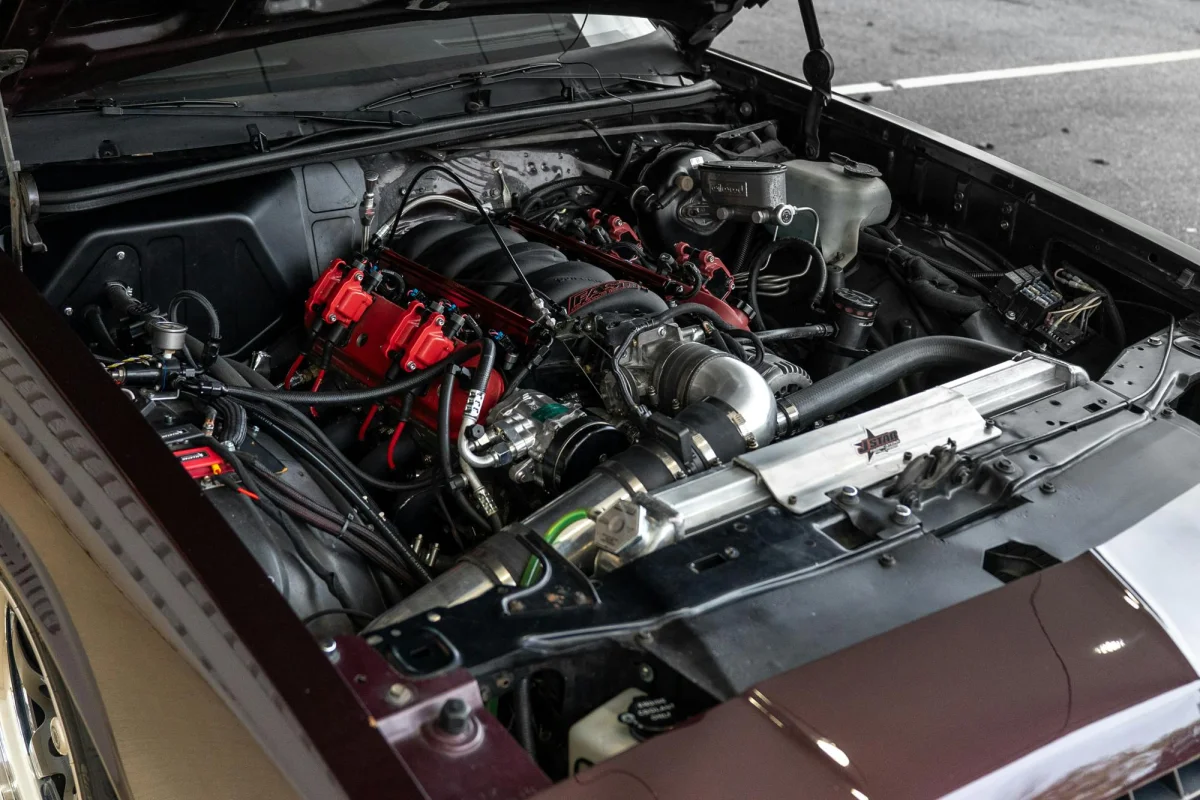
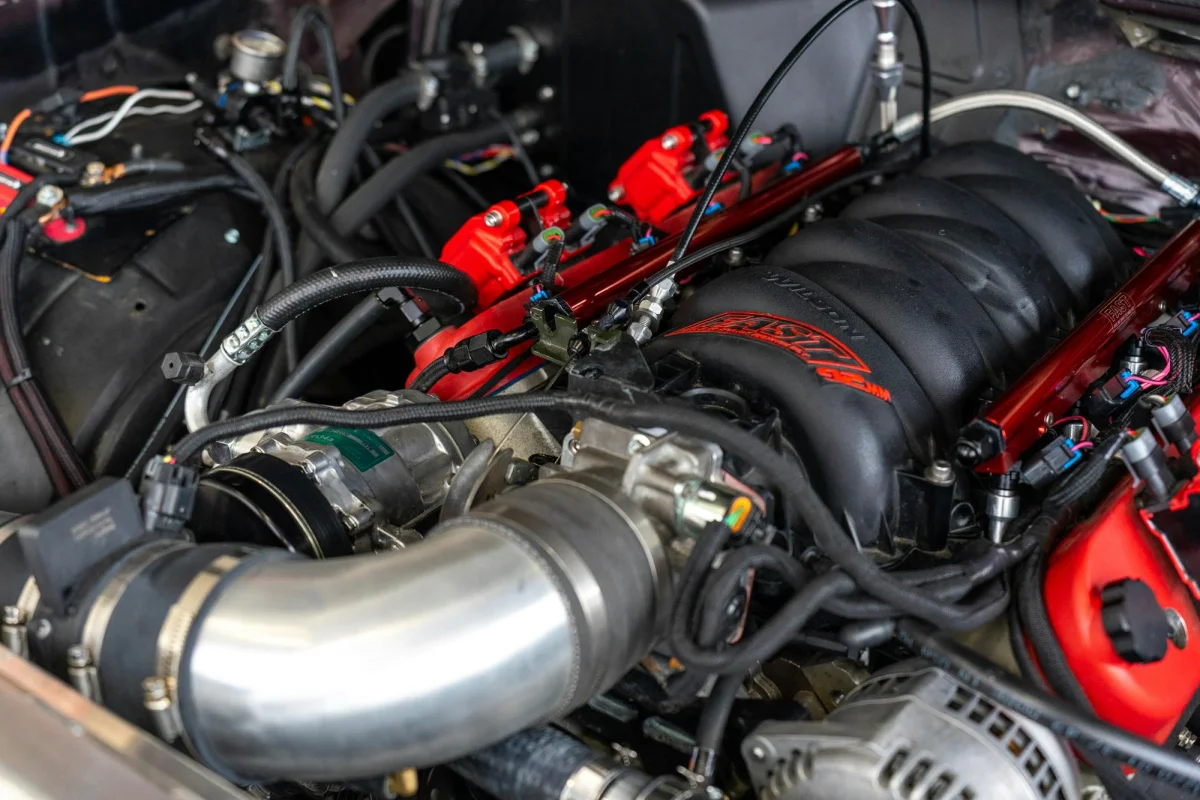
Weideman, working toward what he called a "mild budget build," went with Summit's 5.3-liter LS V-8, the same family found in plenty of 25-year-old Chevy trucks. The package included a 24x crank trigger, an ECU from a 2002 Camaro, a Trick Flow Specialties (TFS) dyno tune, and a mild 222/231-degree, 112-degree LSA camshaft. "In hot-rodding terms, this is a modest, easily sourced powerplant," he told us.
The result was 302 wheel horsepower, about 2.3 times the baseline reading from the original 305. The four-speed transmission's shift points cap the revs well short of the engine's roughly 400 hp peak, so the car is leaving power on the table by design. With GESI High Load catalytic converters, THC fell 81 percent, carbon monoxide (CO) fell 93 percent, and NOx fell 71 percent, all compared with baseline.
Weideman also pointed to parts that don't show up on a dyno sheet. The car gets a complete aftermarket vapor canister setup with a full PCV system plumbed in. "When people think emissions equipment, they just think catalytic converters," he said. "You can tell when a car doesn't have cats. We've all parked a carbureted car inside a garage, and then you walk out in the morning, and that's all you smell."
Pro Touring chassis and running costs
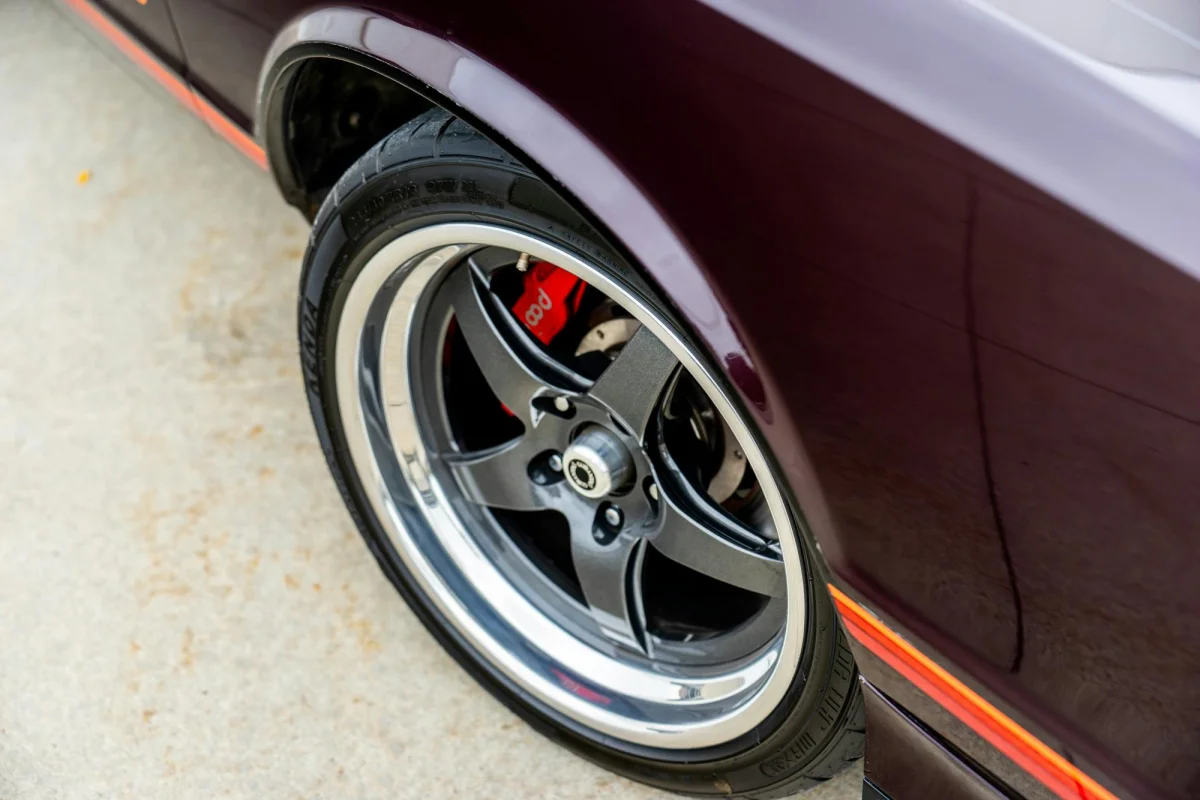
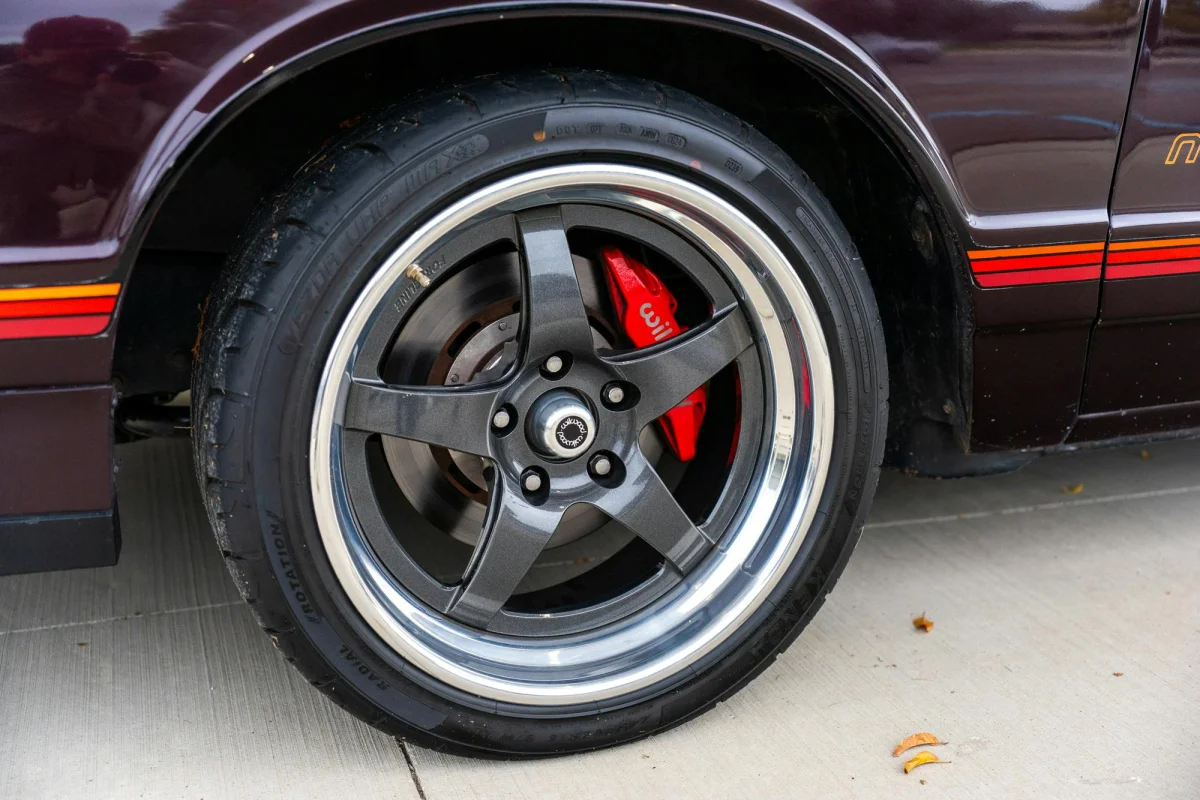
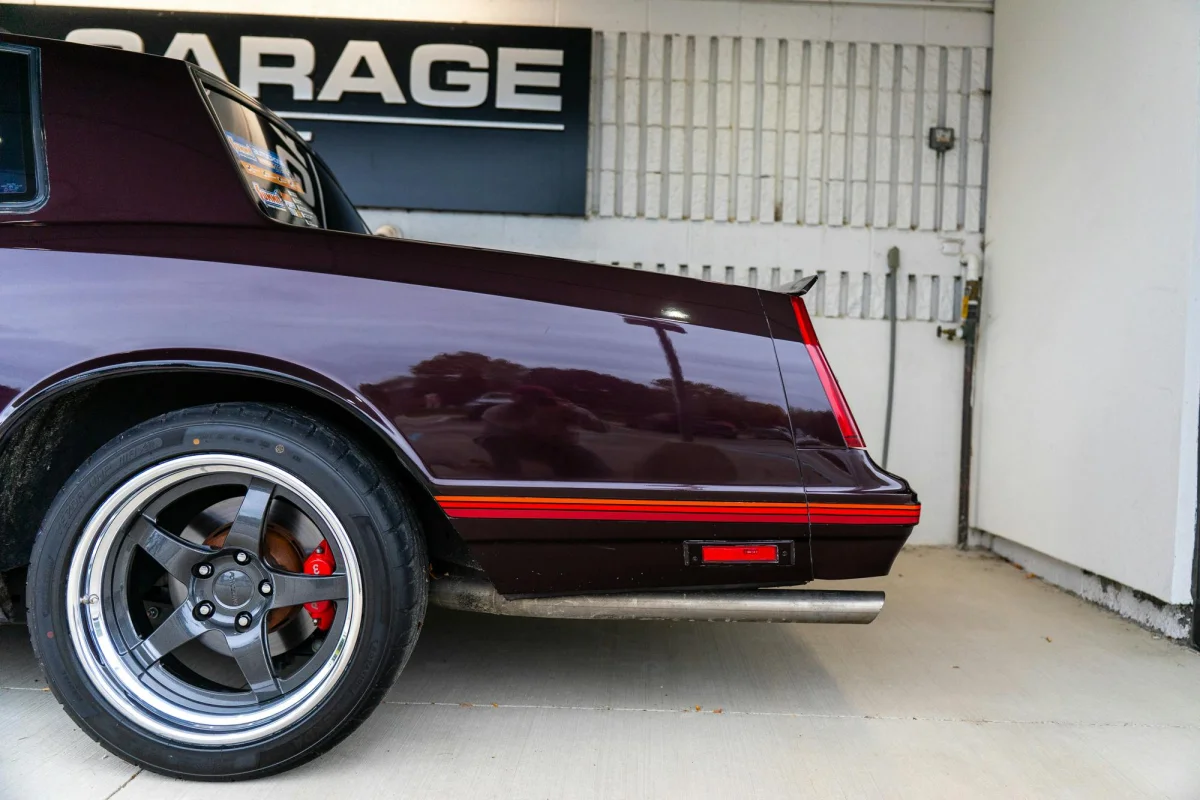
With power and emissions targets met, the chassis got the same attention. Flesher described the goal as "a Pro Touring-flavor build with the LS swap and an aftermarket suspension, which gives it that stance." A QA1 Level 2 kit covers front control arms with adjustable coilovers, rear trailing arms with adjustable coils and shocks, frame bracing, and front and rear anti-roll bars. Wilwood supplies the brakes, with four-piston front calipers and vented rotors behind Forgeline wheels. The steering received a new box and shaft kit.
The drivetrain stayed deliberately conservative. Weideman kept the four-speed and the 3.73 rear gearing. The 200-4R was rebuilt and resealed, then paired with a new lockup torque converter, a TransGo shift kit, a cooler, a driveshaft, and a Mosier Muscle Pak 12-bolt rear end.
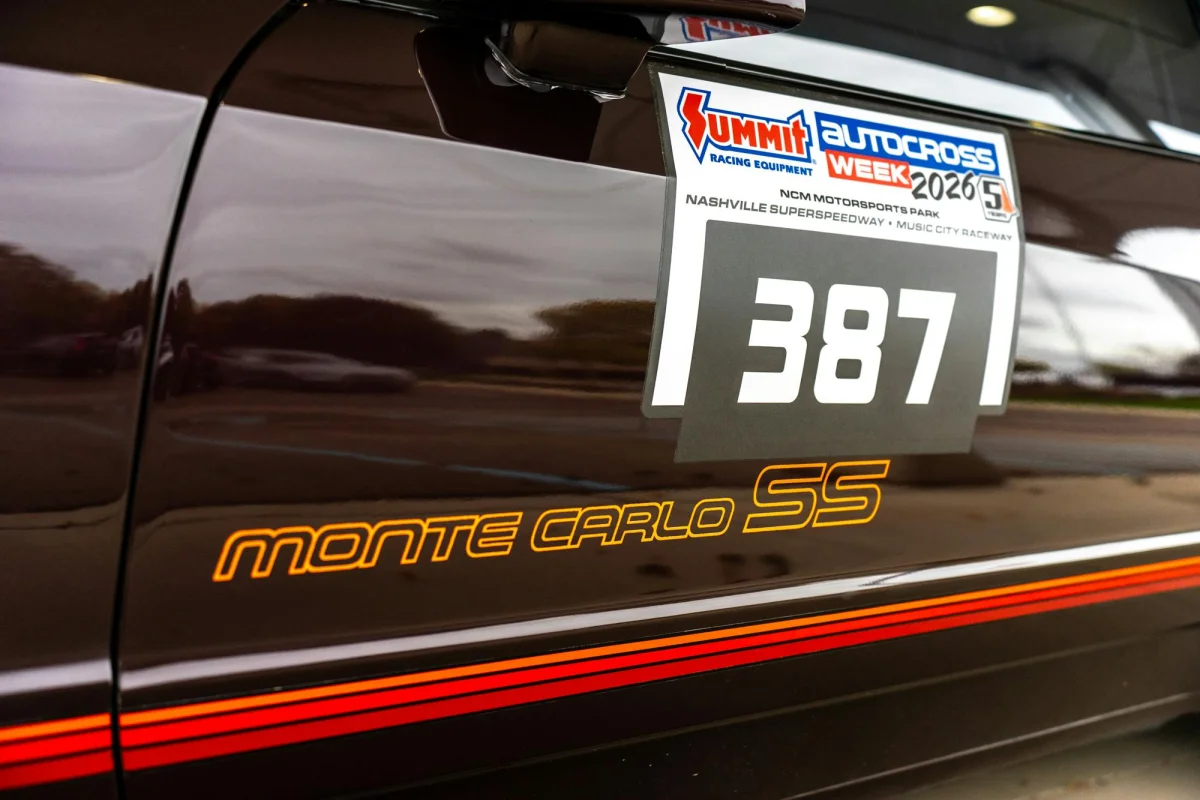
Weideman's bigger point was about accessibility. "Everything we did could be completed by a home enthusiast with basic hand tools, a little welding, and some ingenuity." He also put the car through real use, including the Hot Rod Power Tour from Chicago to Tulsa and back, and several days of autocross after driving from Ohio to the Nashville area. That's the kind of mileage that tells you whether a build is livable.
The money side is the figure that will matter to most readers. Parts for Phase 5 came to just north of $45,000. Add the $12,500 purchase price and it's still far from a six-figure custom. For a car with this much work in it, that's a reasonable number.
Behind the wheel
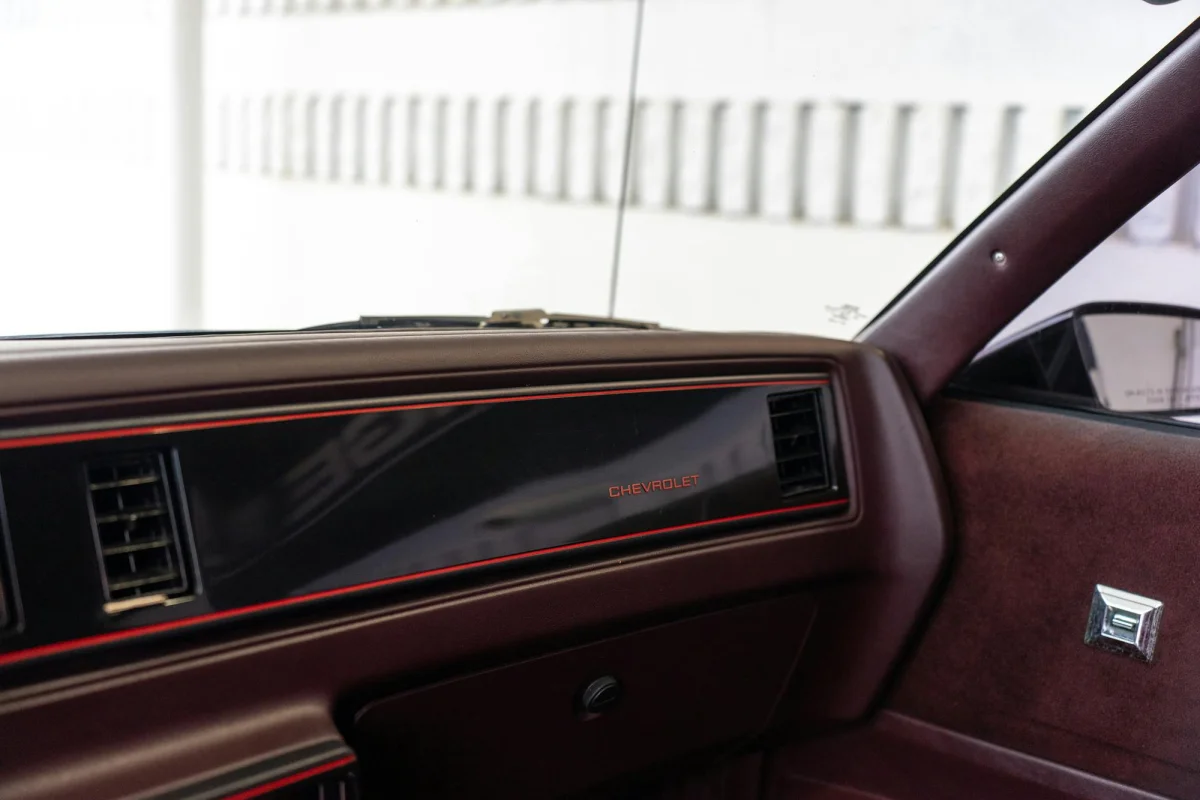
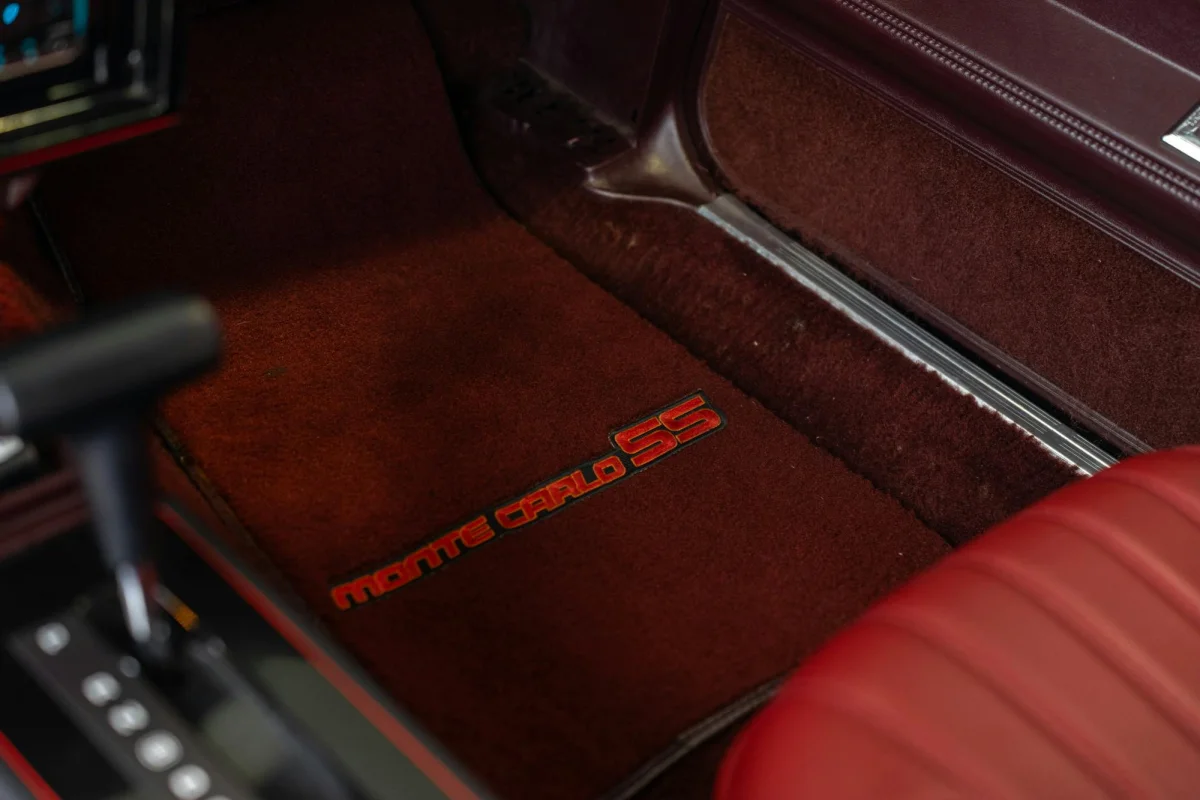
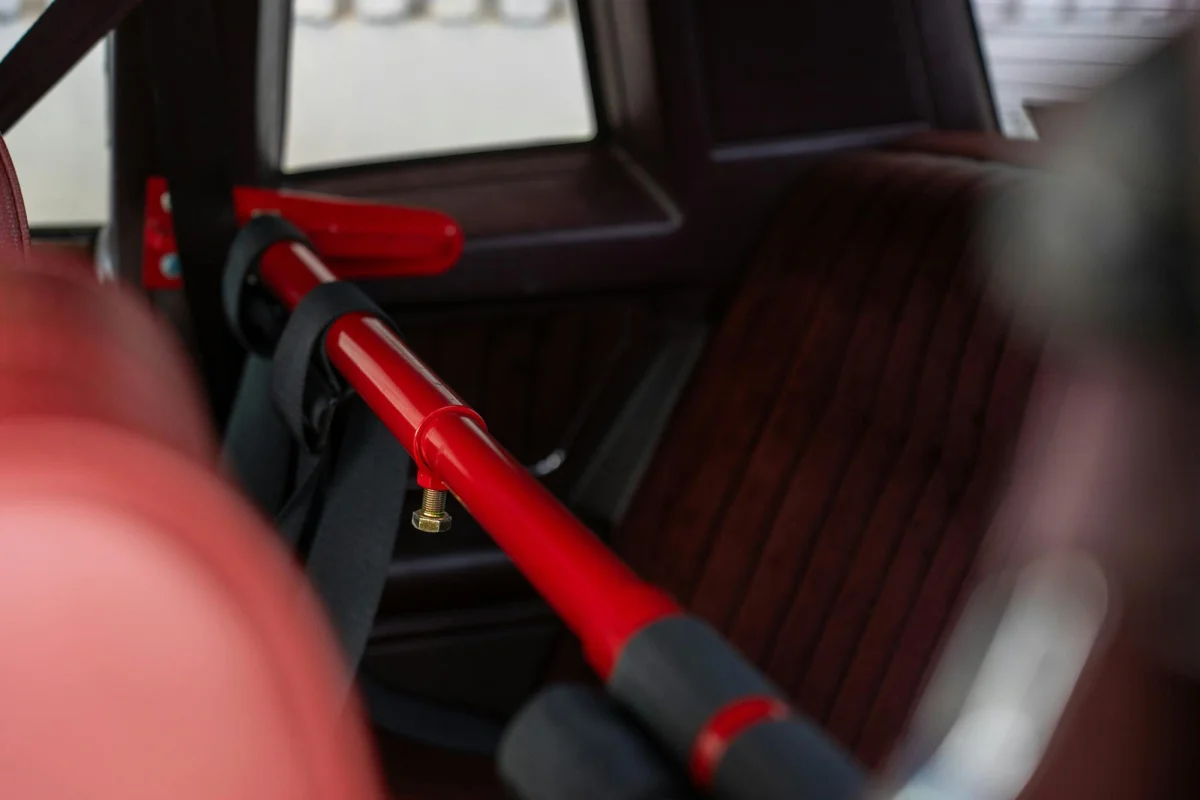
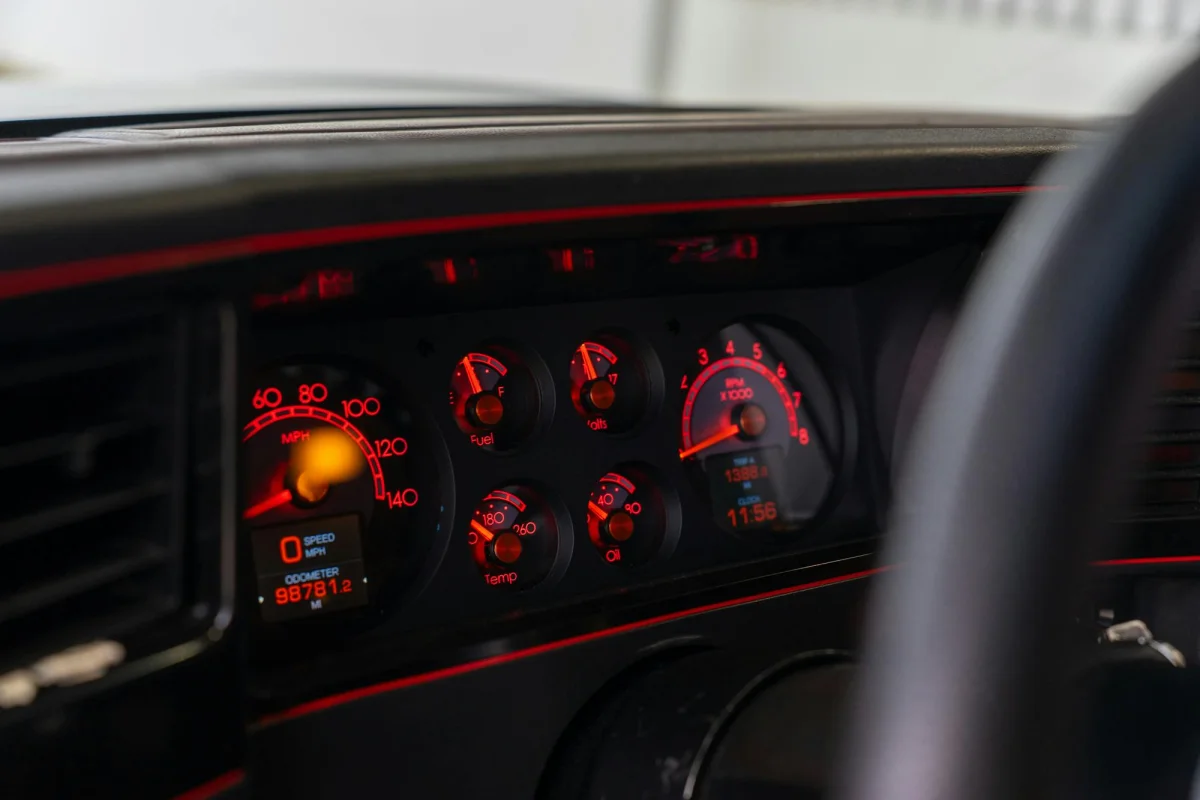
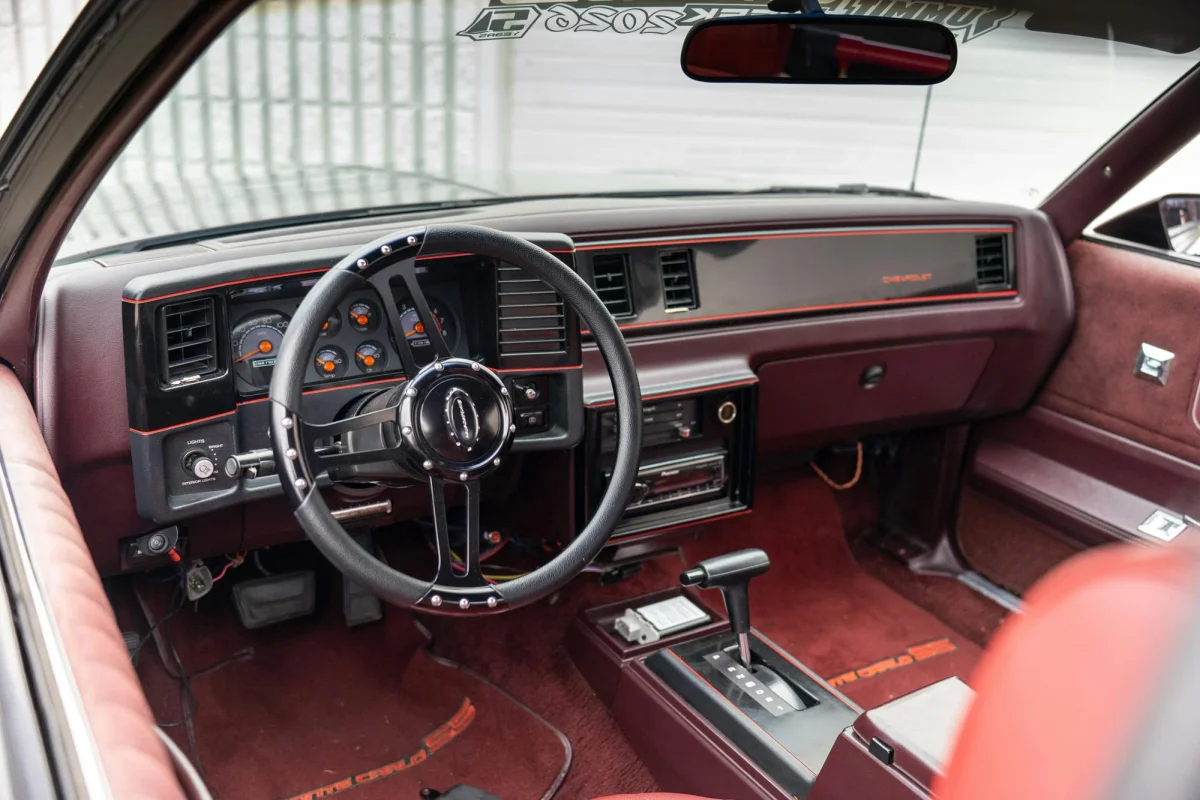
The interior is mostly original, with new bucket seats, a rear chassis brace, a new steering wheel, and an aftermarket gauge cluster. The 5.3 fires readily and idles happily after ten or fifteen seconds. The exhaust note is throaty without being obnoxious.
Throttle response needs a firm foot at low speeds, but the engine comes alive through the mid-range and keeps pulling strongly at the top of the rev range. Upshifts are a little abrupt, which is typical of an '80s GM four-speed with a shift kit. Harder driving smooths them out. On the road, the car is quick enough to be fun and never feels unruly.
Steering gets more precise as you load it into a corner, though on-center feel is loose, much like C10 trucks of the period. The nose takes a moment to settle, but the car corners flat and soaks up bumps without fuss. None of that is a flaw for a G-body, and this '87 SS still feels like one.
Weideman's closing argument was about maintenance. "People who don't understand hot rodding think we just all drive dirty junk down the road. But even when it's old stuff, hot rodders pay better attention to maintenance than a lot of people do with their daily drivers." Judging by the numbers and the miles, the team made its case.