One-Owner 1965 Mustang Heads to Auction After 61 Years in One Family
- Cargo
- Electric Vehicles
- Shipped
- Shipper
- Eric Evarts
- Readers
- 497
A 1965 Mustang in Rangoon Red, ordered new and kept by one family for six decades, goes to a no-reserve online auction with its 289 V-8 and original hardware largely intact.
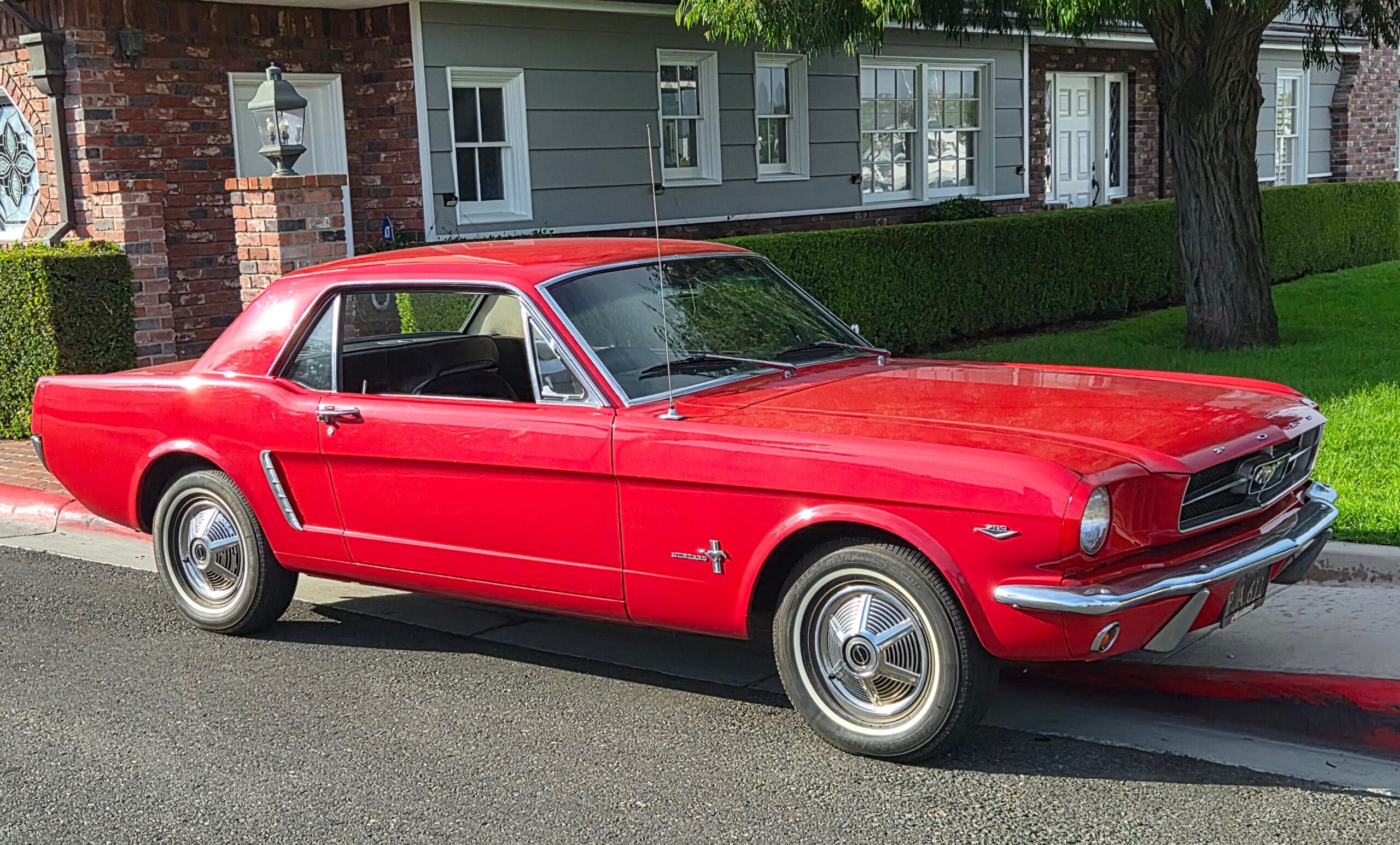
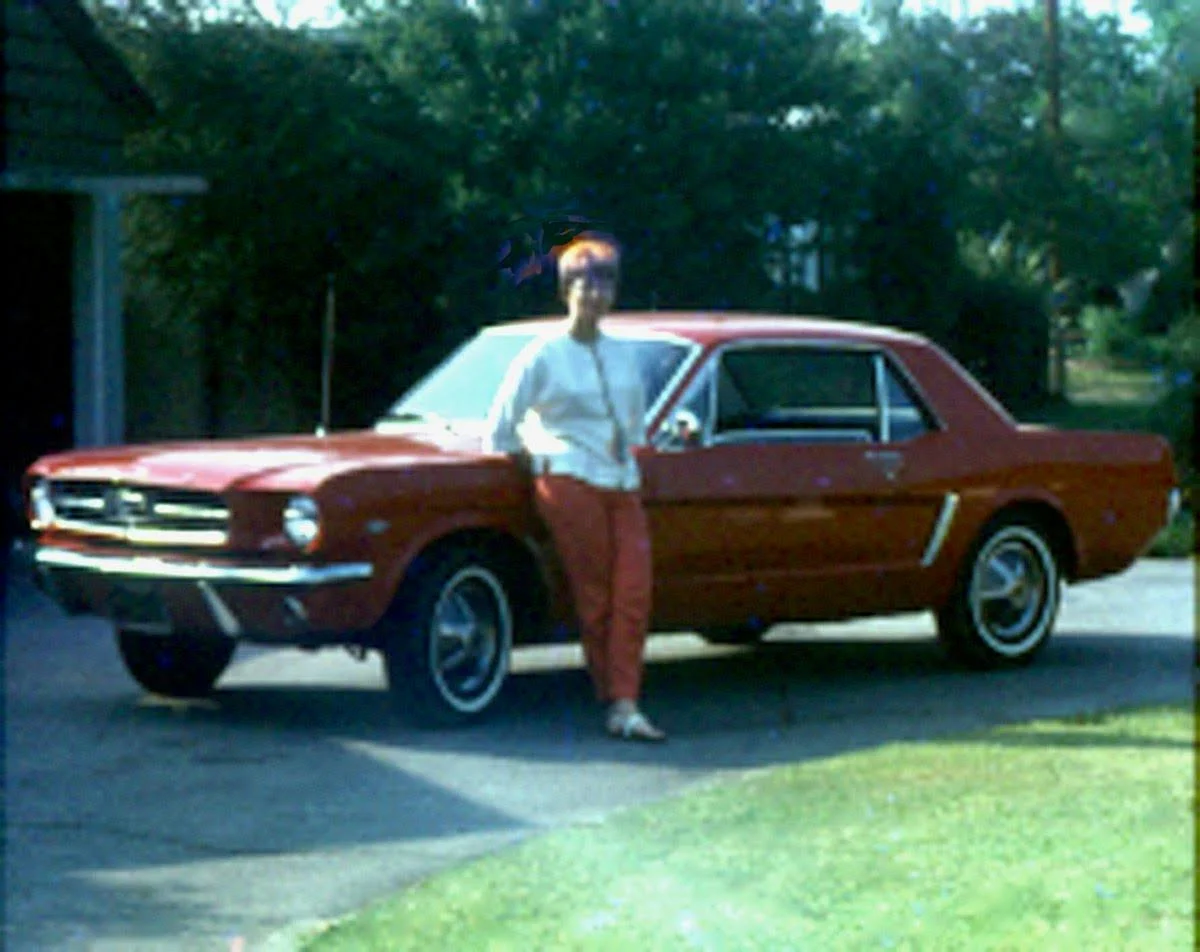
A one-owner 1965 Mustang that has spent its entire working life with one family is heading to a no-reserve online auction, and its history reads as much like a buyer's checklist as a family story. This is a C-code coupe in Rangoon Red, ordered new in September 1964 and delivered in January 1965, after a labor strike delayed production of Ford's pony car.
The car's origins are more interesting than its name suggests. Ford's internal proposal was modestly titled the "Special Falcon Program," and the result, a sporty two-door on Falcon underpinnings, went on to become one of the most influential American car designs of its era. The car in question was a fairly plain order by the standards of the time. It came with the 289-cubic-inch V-8, a three-speed automatic, power steering and an AM radio. Nothing else.
A spec sheet with few extras
The 289 is the detail that matters most here. Rated at 200 horsepower, it's the base V-8 rather than the four-barrel or GT-equipped variants that many enthusiasts chase. Those lower-spec choices make the car less valuable to collectors, but they also make it a useful reference point for what a plain, well-kept Mustang of this vintage is actually like to drive. The rear axle is the stock 2.80 ratio, and the car has no power brakes, which is worth knowing before you buy.
Six decades of routine upkeep
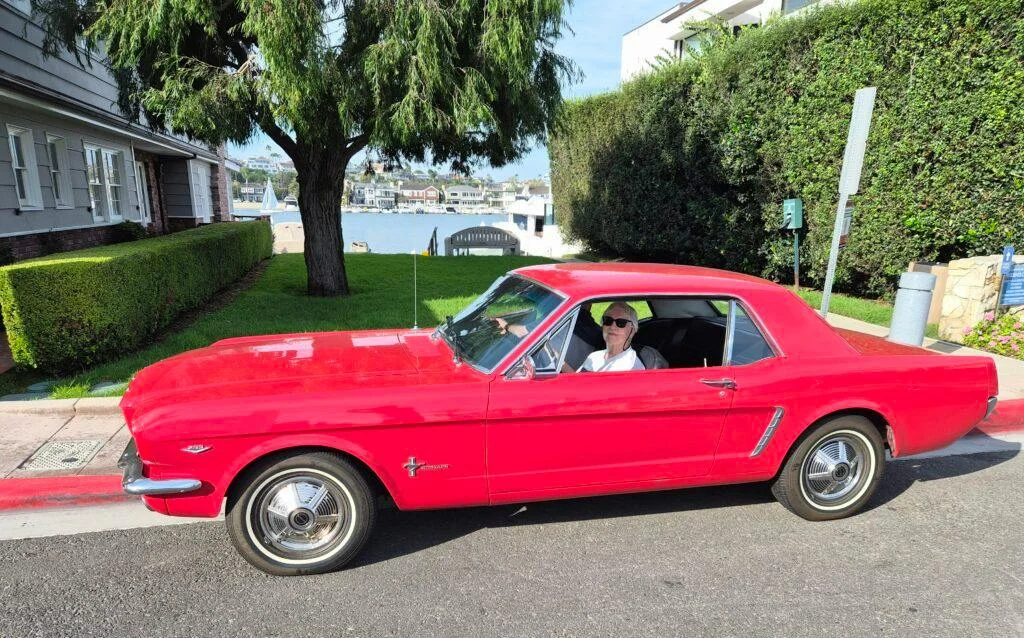
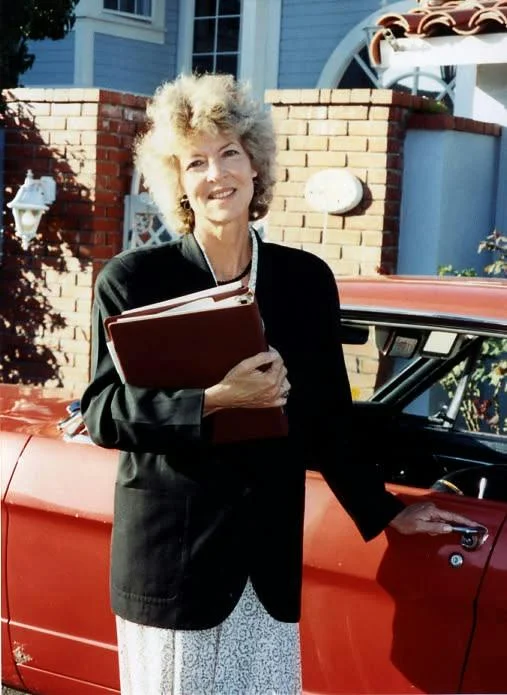
Karen Evarts, the original buyer, had previously owned a Jaguar XK150 coupe, and she ordered the Mustang through a program offered by her then-husband's employer. Her husband Don brought the car into the family when they married about a year after the Mustang was first delivered. After 61 years, the odometer story is one of steady, unglamorous use: a dedicated garage space, every oil change logged, and a regular run to the grocery store roughly every two weeks.

The mechanical history is more specific than most. The engine began smoking in 1976, and the car received a new short block that year. The Ford 8-inch rear end has seeped gear oil for years, and the mechanic who has looked at it advised against fixing it. In the 1980s, the original AM radio was swapped for an AM/FM cassette deck, which meant cutting into the original dash. That modification was later reversed, so the dash is back to factory condition.
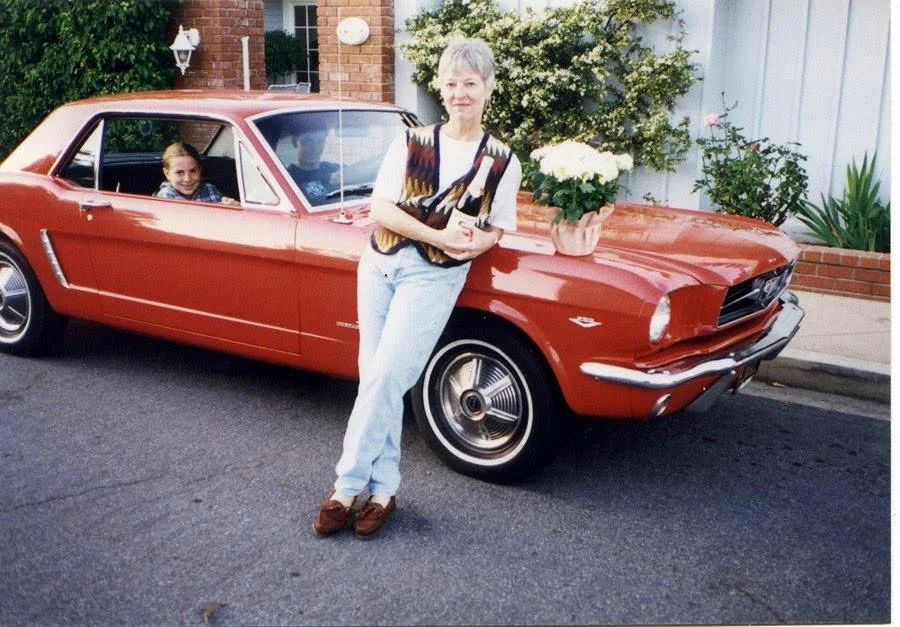
The recent repair list is typical of a car that spends most of its life parked: starter (more than once), alternator, carburetor, and a "289" fender badge that came off the right front fender.

Other cars, and a few scars
The Mustang shared garage space with the family's other vehicles for decades. Early family road trips to Colorado were made in a Dodge Polara, and the children's first Mustang was a Matchbox model with working steering. Don commuted for 20 years in a company-owned Mercedes W126 300SD, which he drove slowly and carefully. Family outings in the 1980s often happened in a string of Chevrolet G10 conversion vans, while the Mustang came out for grocery runs and soccer pickups.
The car has also absorbed a bit of public life. In 1990, after a demanding stint teaching social studies to teenagers in inner-city Los Angeles, Karen ran for a seat on the school board twice and lost both times. During that period, someone keyed a profane message into the rear roof pillar. The body shop buffed out most of it, though faint marks remain, mainly visible up close rather than in photos. The misspelled words in the message are one of the few details the family still laughs about.
Why the sale, and why now
Karen has been steadily attending local car shows in recent years, and she says the hobby has given her a different outlook on the car and on life. For a long time, she resisted selling. Part of the reason, the family believes, is that too many relatives wanted it, and she didn't want to disappoint anyone. The younger generation, meanwhile, has largely drifted away from cars. Her career-focused grandchildren and their spouses see the Mustang as a distraction at best, and they point to its lack of modern safety equipment.
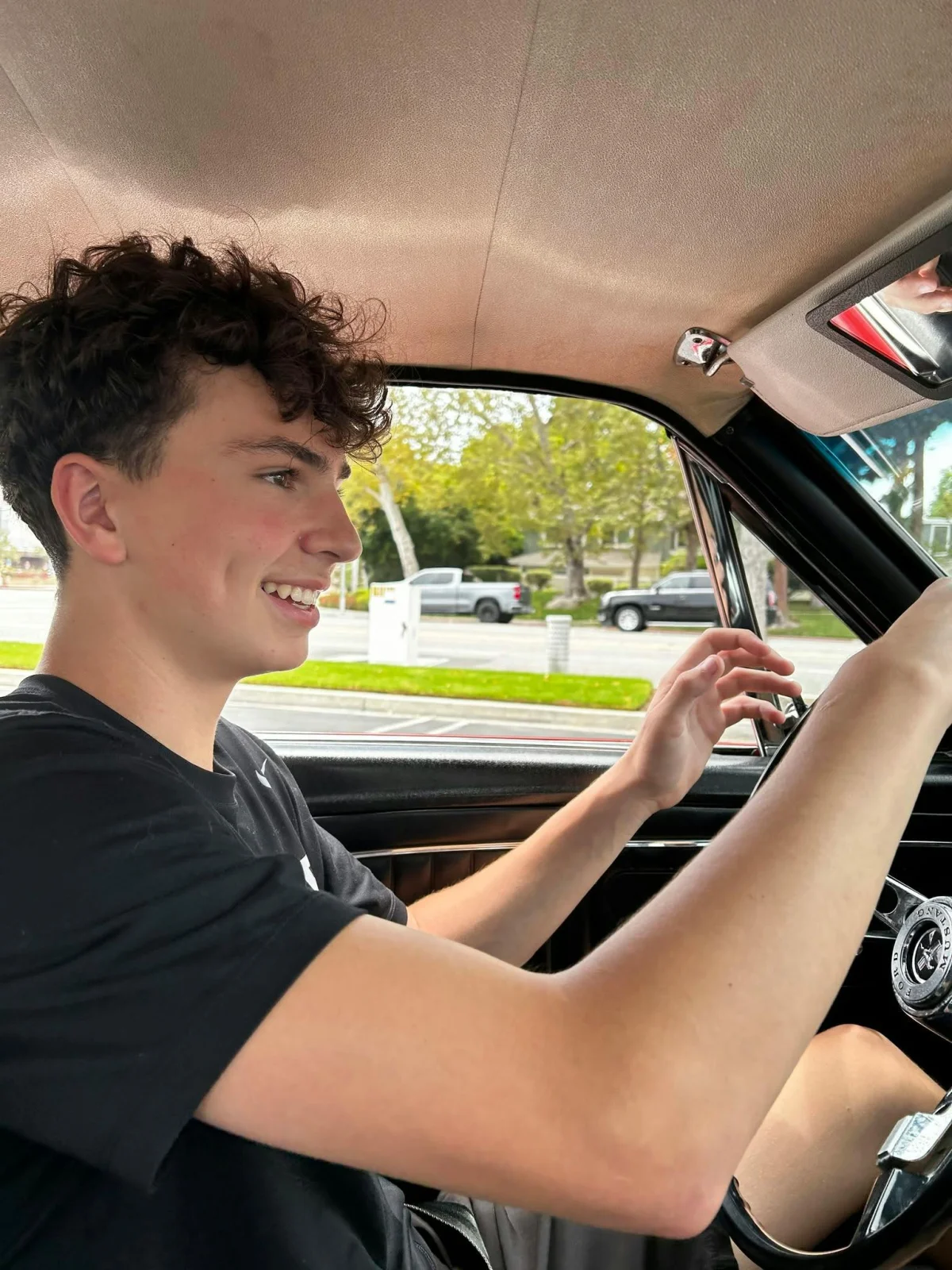
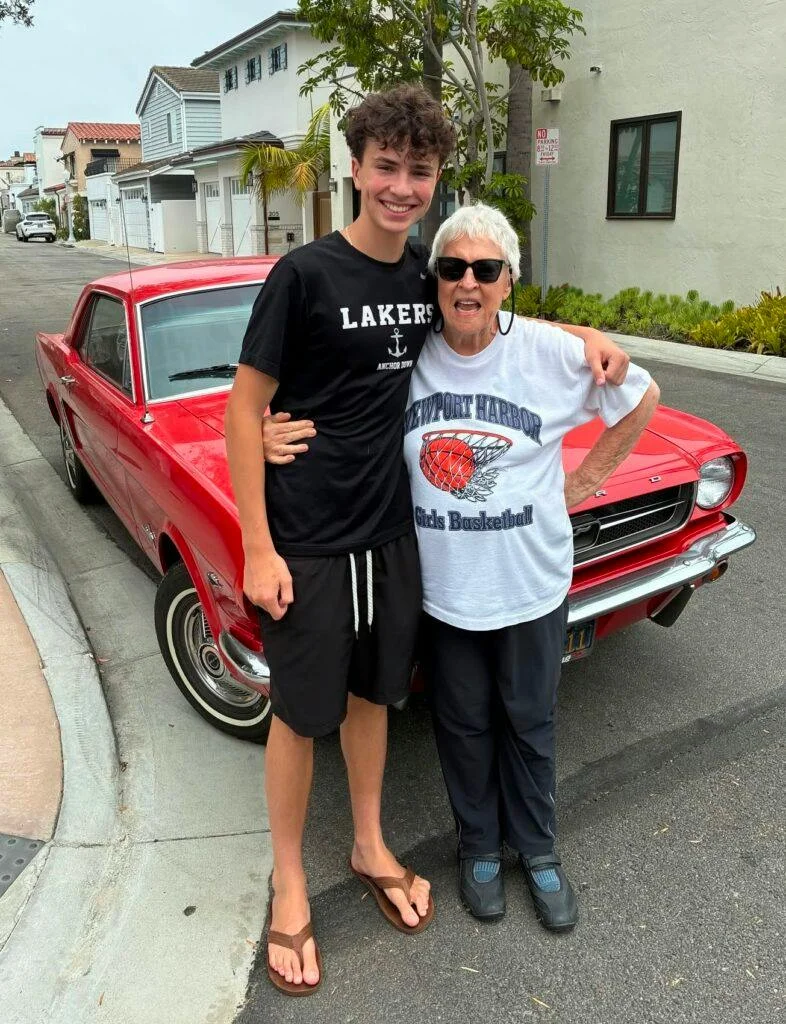
The decision came in a conversation after the couple's 50th wedding anniversary party. Karen wanted to keep the car long enough for her first grandson, Duncan, to drive it once he turned 16 and got his license. He is the only grandchild with a real interest in cars, so the timing worked. He flew down in July, and Don taught him to check the oil and other fluids before heading out. Karen showed him how to cold-start an American V-8 with an Autolite carburetor, which is a skill that, as it turned out, takes more practice than it looks.
Behind the wheel, and a starter that wouldn't cooperate
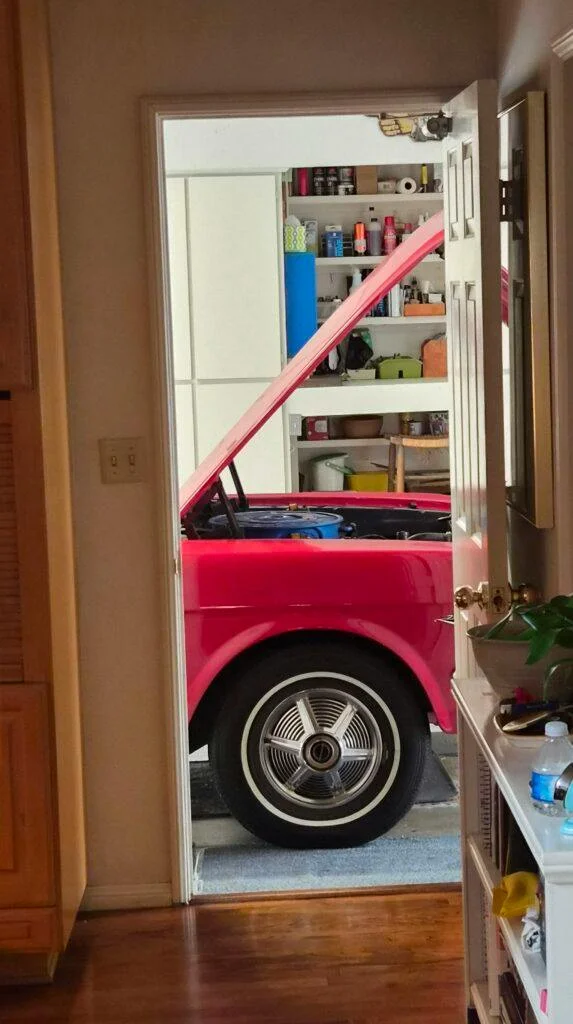
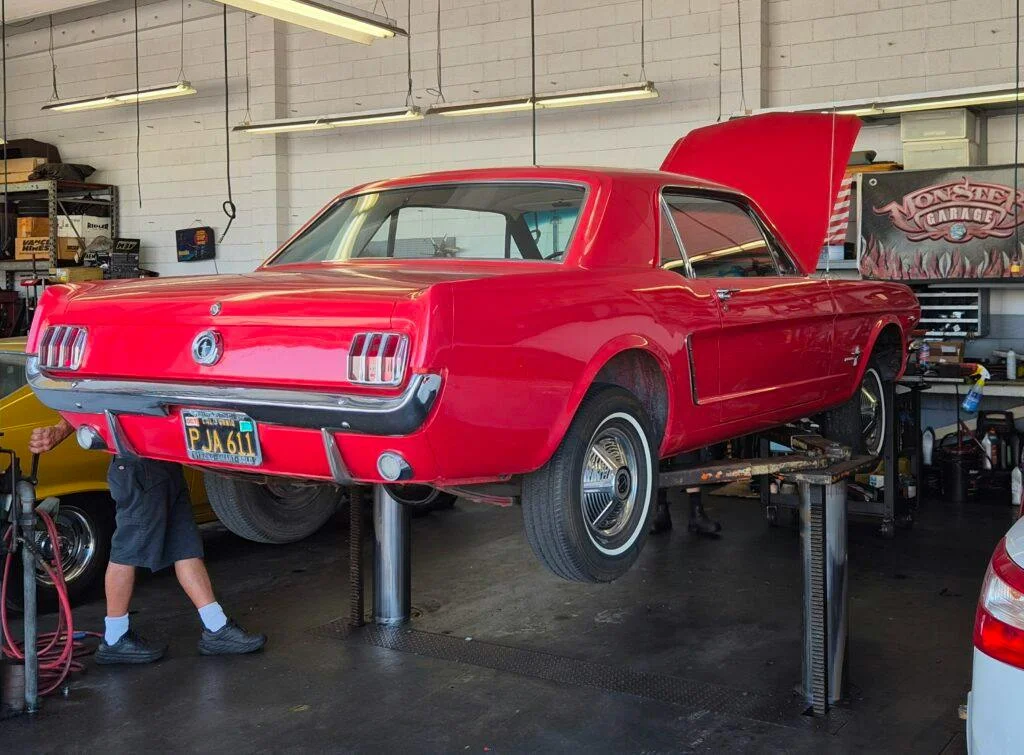
The photo shoot was supposed to be straightforward. Don was at the wheel for a cold-start video, and the hood was up when the carburetor started flooding the intake manifold with a steady stream of gasoline. The shoot stopped there. The car went to Karen's mechanic, who put it on a lift for underbody photos and resealed the carburetor.
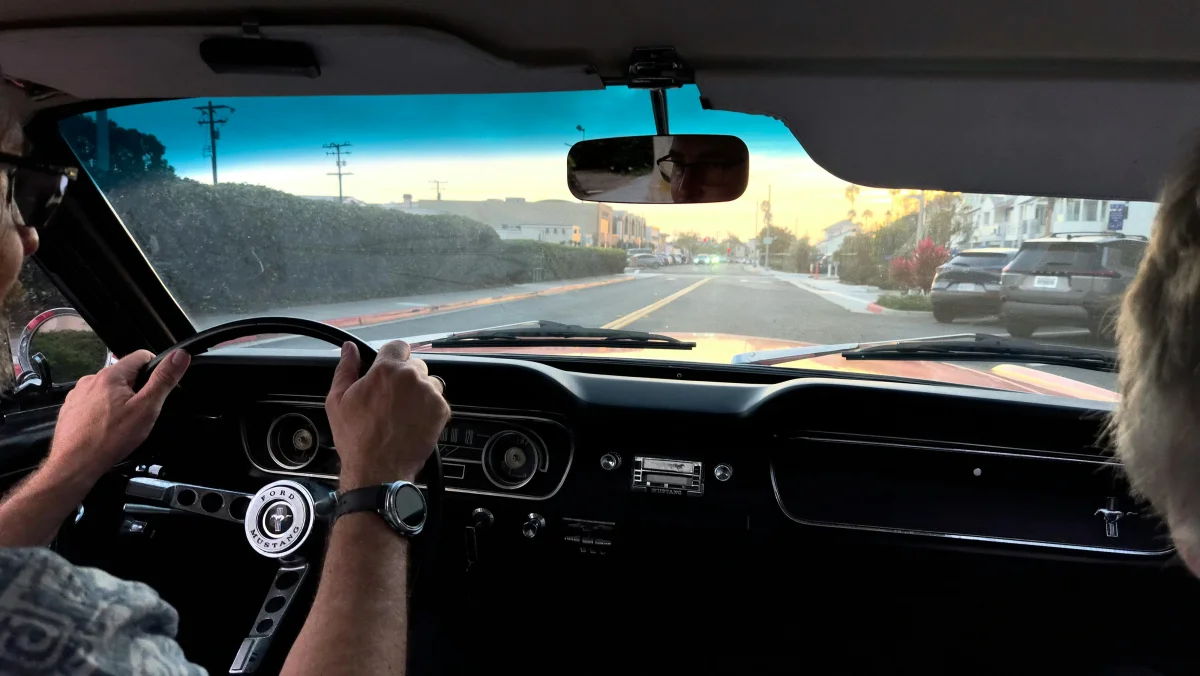
Once the car was running, it was time for a drive. The 289 changes the character of the car. Compared with a straight-six example driven earlier, the V-8 version feels light on its feet but more planted on the road. The brakes take real effort and planning, and Karen now uses both feet on the pedal. The bucket seats make for a snug cockpit, and the thin wheel sits close to the driver's chest. At low speed, the wheel needs a good deal of muscle to turn against the weight of the V-8.
On the highway, the steering is direct around center but a little slow. With around 80,000 miles on the bushings and steering gear, keeping a straight line requires active, elbows-up correction. On an open stretch of road, though, the car pulls with more authority than its vintage suggests. The 289 and the stock gearing mean it doesn't feel underpowered in everyday traffic.
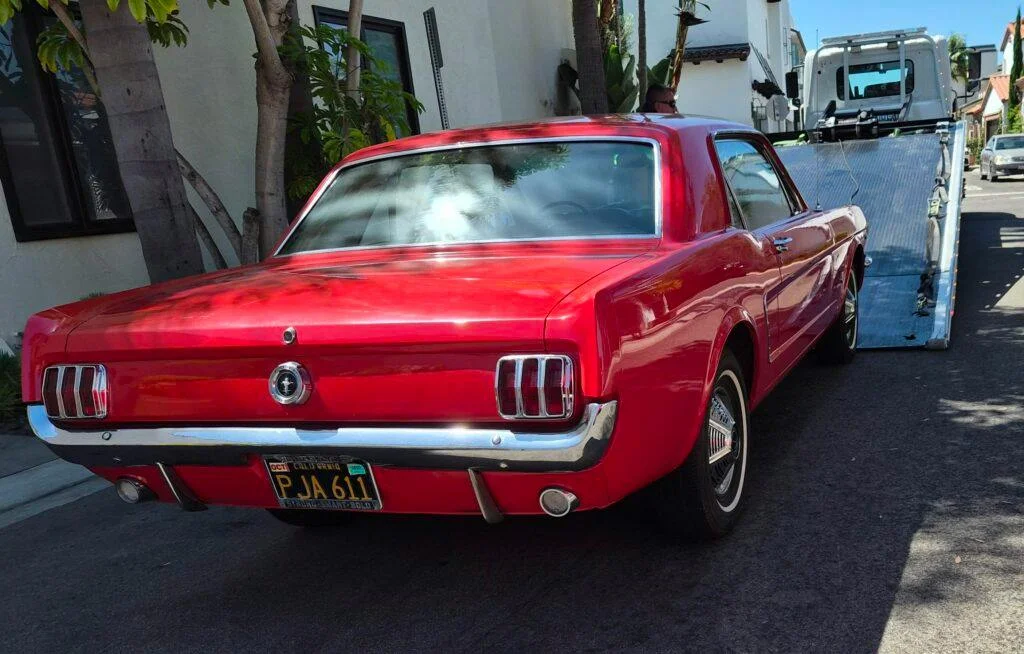
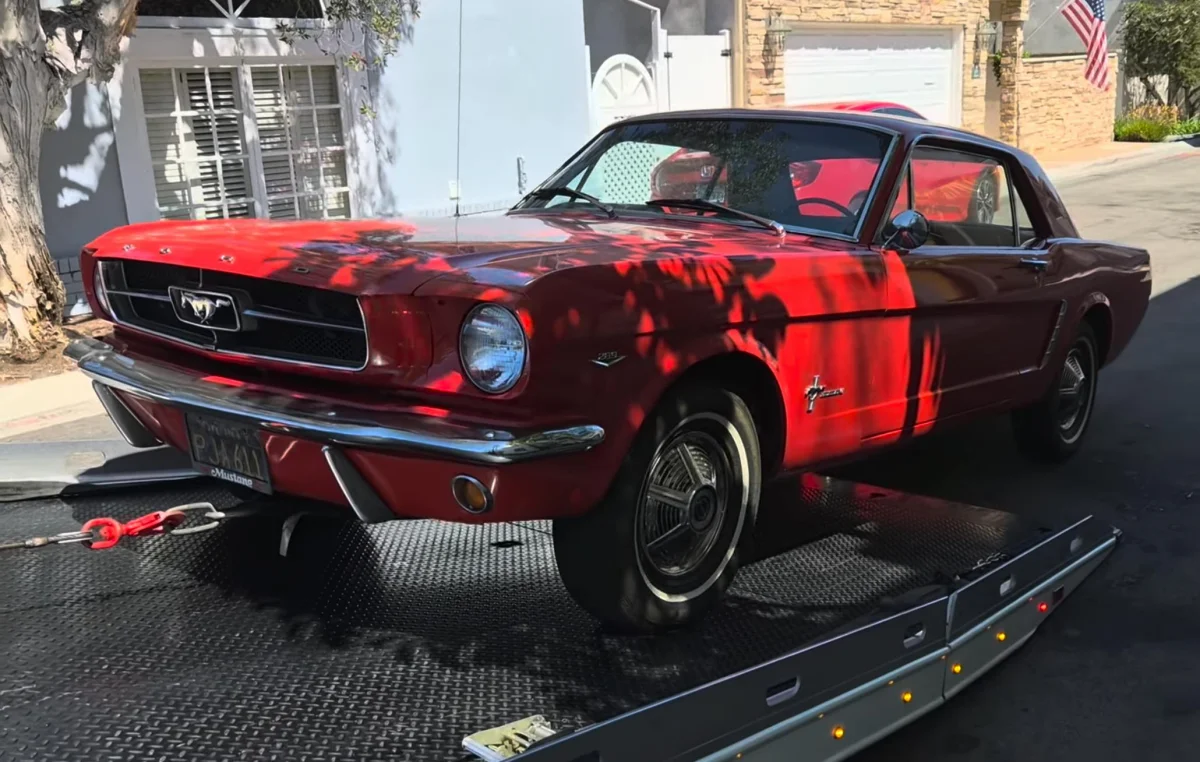
The car's electrical systems mostly work. The glove box latch, cigarette lighter, footwell courtesy lamps and the high-beam foot switch all function. The unlabeled black knob on the left of the steering column, which Karen assumed was a manual choke, had never been used by her. Trying it the next morning, the key produced nothing but a click. The jumper cables were connected to a Hyundai borrowed for the trip, and the result didn't change. A roadside service truck arrived within the hour. The driver, who had helped his father restore more than a dozen pony cars, diagnosed the starter rather than the battery, and the diagnosis held. The Mustang went to the shop on a flatbed that afternoon.
What's left in the auction
The shop visit ended the photo session, so the rest of the weekend turned into a family history session. Karen's maintenance logs helped the family build a timeline of the car, and Don shared stories from his Vietnam service that he rarely tells. The car's repair will be documented, and a full inspection report will be added to the auction package once the work is finished.
The listing is a no-reserve auction running through Monday on a major online platform, which means whoever bids highest takes the car home, regardless of a reserve price. Details and photos are collected on a dedicated website the family set up for the car.
For a buyer, the Mustang offers a rare combination: a documented 61-year ownership history, a plain but correct 289 V-8 car, and a clear list of items to check. The starter, carburetor, rear-end seep and the dash that was cut and restored all deserve a close look. And the car's next owner will be the first new driver in six decades.
There are plenty of memories attached to this car, and the family hopes there will be more with its next owner. Just not with them.