Chitty Chitty Bang Bang: How a Surrey Race Shop Built the Movie Car
- Cargo
- Electric Vehicles
- Shipped
- Shipper
- Kirk Seaman
- Readers
- 557
How a Surrey race shop built Chitty Chitty Bang Bang's movie cars, from hearse frames that failed to a V-6 borrowed from a Ford Zephyr.
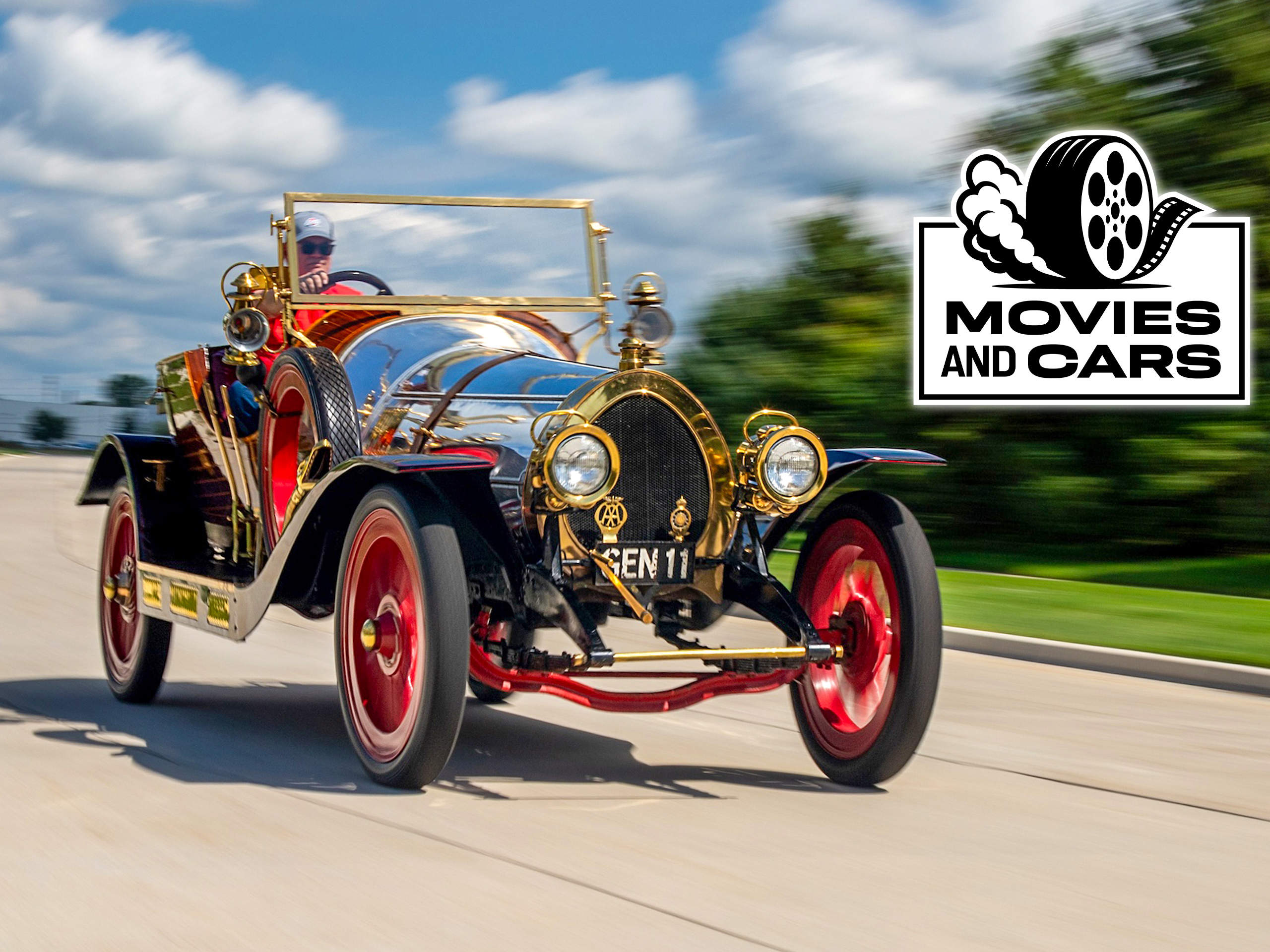
Most movie cars are production cars with a costume on. Chitty is different, and the reason goes back to how the thing was built. The fantasy machine from Chitty Chitty Bang Bang was designed by a Bond production designer, fabricated by a small racing shop, and assembled from parts that came out of Edwardian-era catalogs, British boatyards and wartime aircraft workshops. Looking at how it came together explains why it still feels like a real object rather than a prop.
A Car Born From a Bedside Story
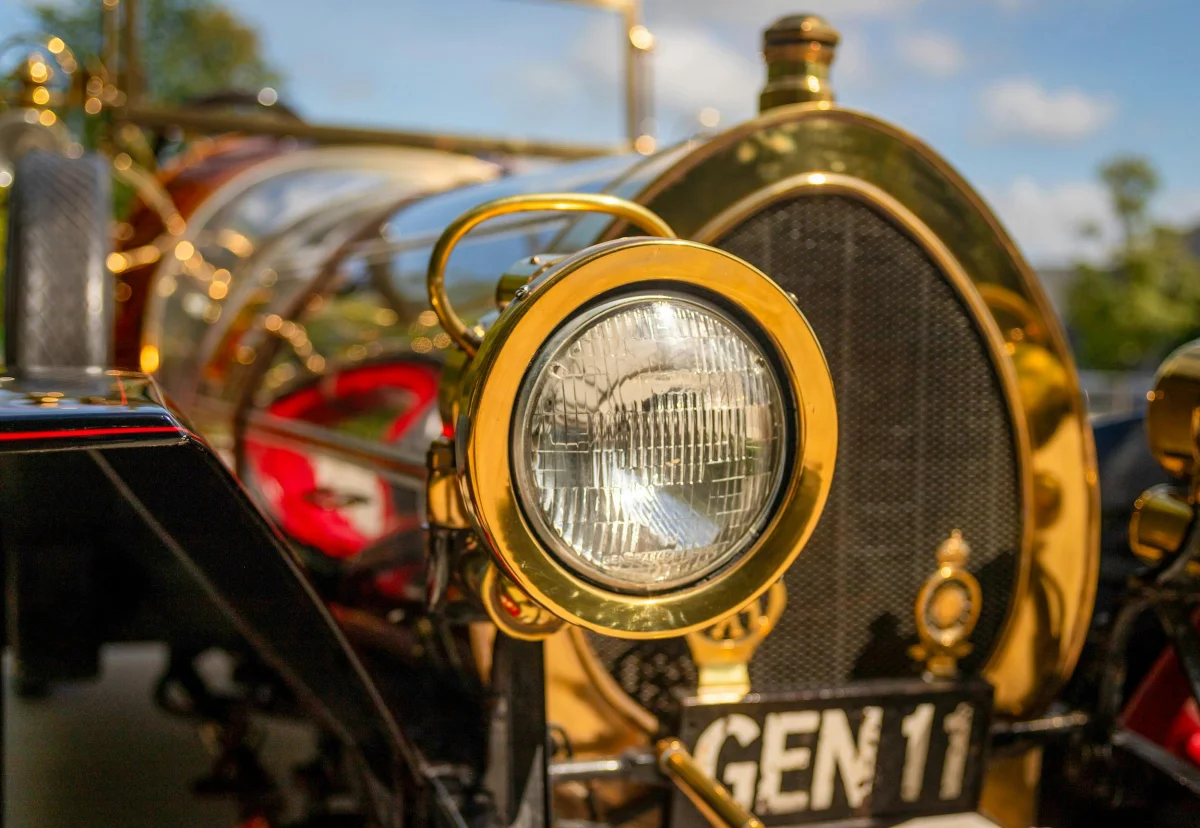
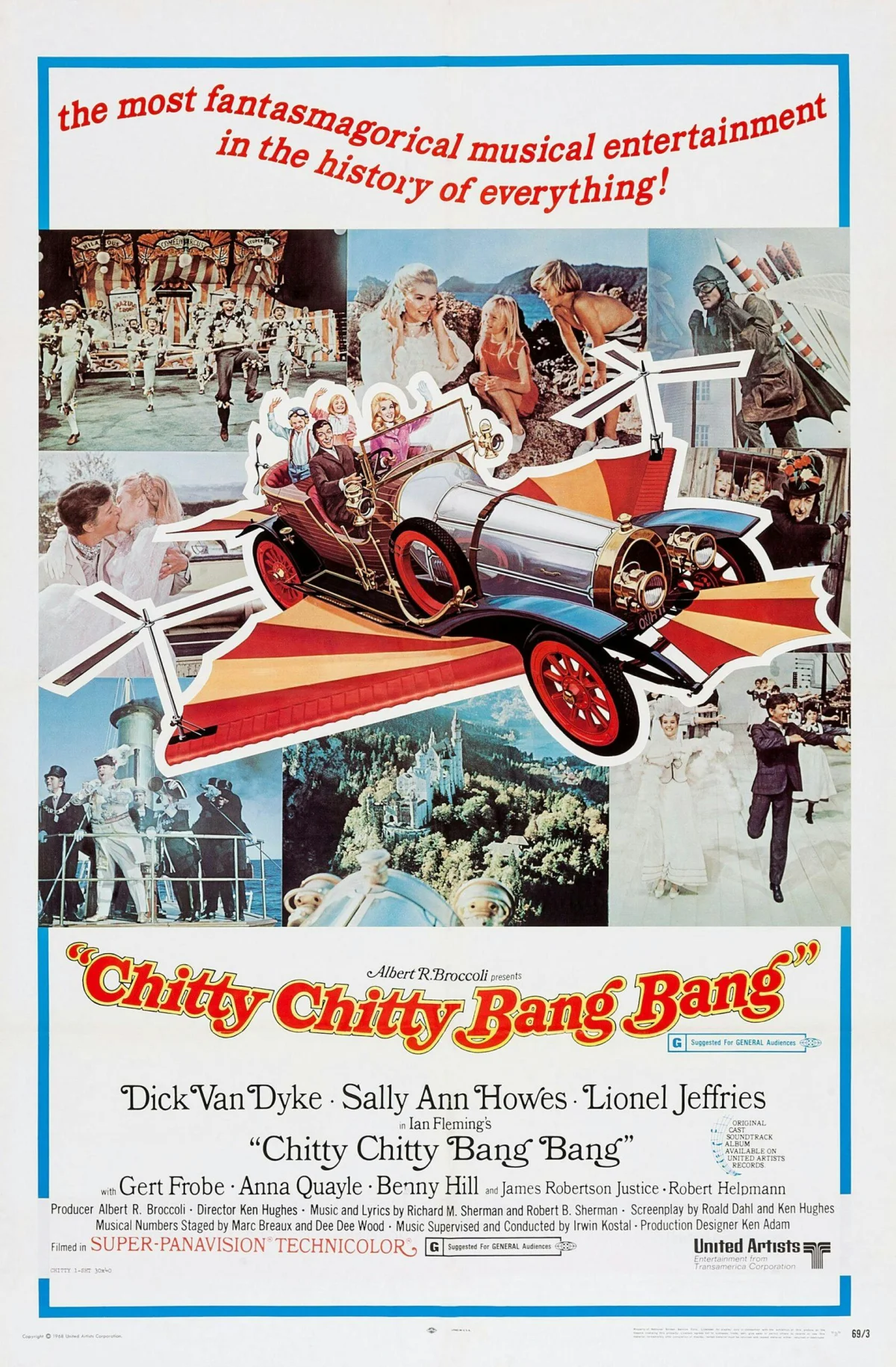
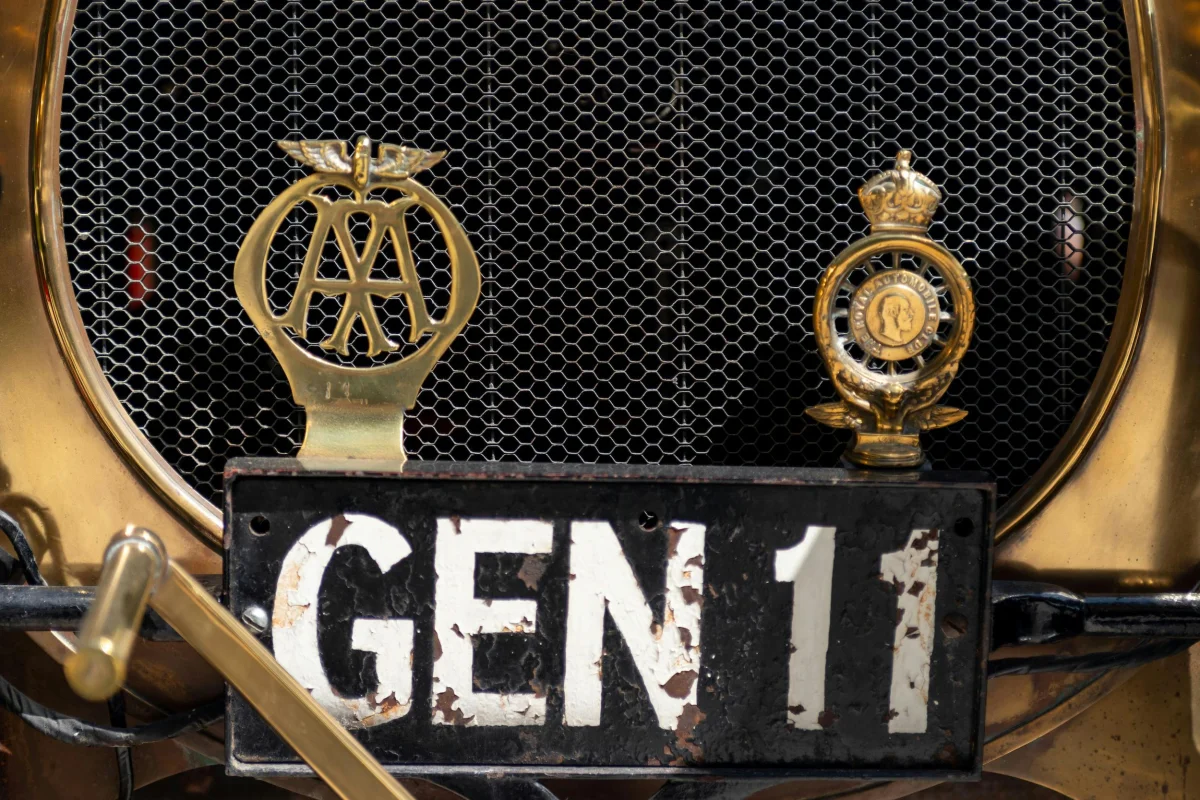
Chitty Chitty Bang Bang reached U.S. theaters on December 18, 1968, loosely adapted from a children's book by Ian Fleming, the man behind James Bond. The connection makes more sense than it first sounds. Compare Chitty with the Aston Martin DB5 and the family resemblance is obvious. Chitty flies, floats and drives itself. Its number plate, GEN11, is a wink at the genie theme. The story has exotic travel, tight escapes and villains who lose to ingenuity and British stubbornness, which is the same formula Bond relied on.
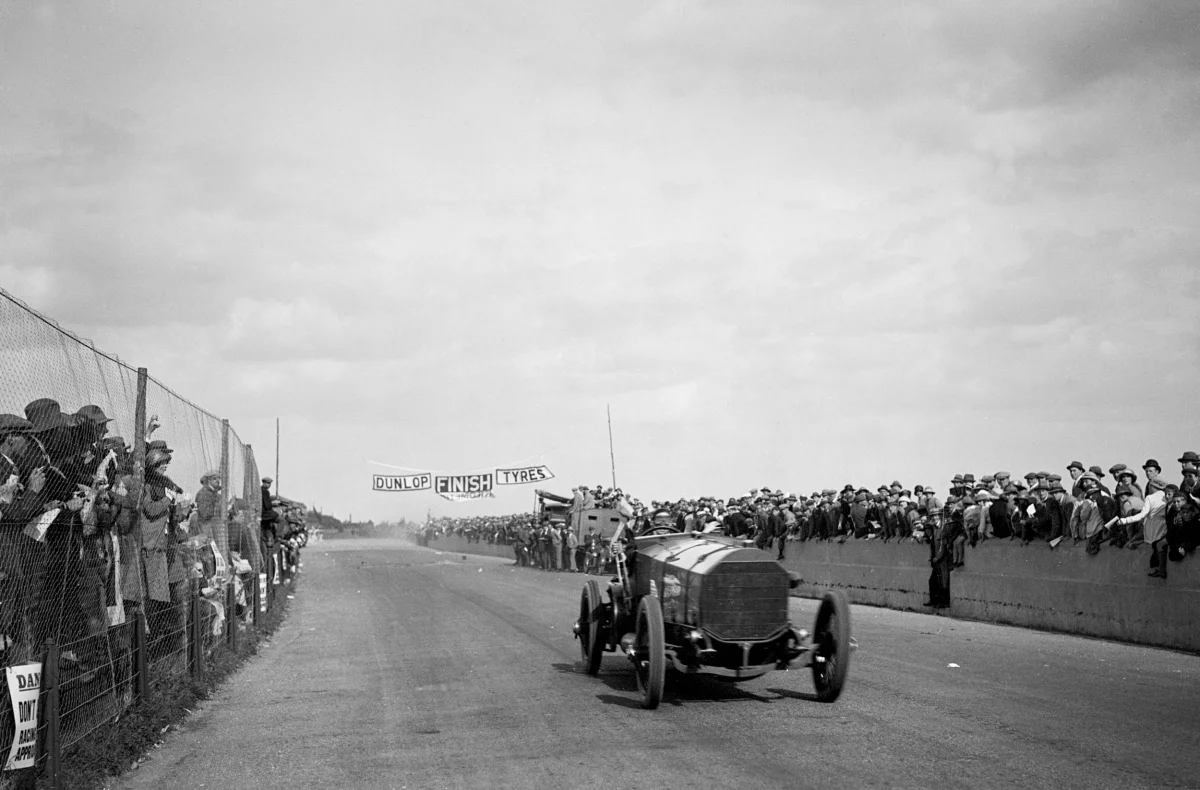
Fleming wrote the book after a serious heart attack in April 1961. His doctors ordered him to stay in bed, and even a typewriter was off limits. He wrote the bedtime stories he had been telling his young son, Caspar, longhand on paper. The car's name came from the early 1920s racers built by Count Louis Zborowski, each called Chitty-Bang-Bang. Zborowski's mother was an Astor, and when she died in 1911 he inherited a fortune that made him one of the richest people in the world under 21. Fleming had watched those cars run at Brooklands as a boy. The book's dedication credits the original car, built in 1920 on Zborowski's estate near Canterbury. John Burningham's illustrations drew Chitty looking vaguely like a Bentley.

Fleming died on August 12, 1964, at 56, before the book was published. His close friend Albert R. "Cubby" Broccoli, producer of the Bond films and a cofounder of EON Productions, which held the rights to all of Fleming's works including Chitty, decided to turn the book into a movie as a tribute.
Casting and Creative Choices
Broccoli wanted a family musical that could ride the momentum of Disney's Mary Poppins from 1964. He signed its male lead, Dick Van Dyke, as Caractacus Potts. He hoped Julie Andrews would follow, but she felt the role sat too close to her magical nanny and her singing nanny in The Sound of Music, so Sally Ann Howes took the part of Truly Scrumptious. For the songs, Broccoli went to Richard and Robert Sherman, who had won two Oscars in 1965 for Mary Poppins, Best Song and Best Score. They earned another Best Song nomination for "Chitty Chitty Bang Bang."
The Bond connections ran deep. Desmond Llewelyn, Q in the Bond series, played the junk dealer Mr. Coggins, who sells the wrecked Chitty to Caractacus. Gert Frobe, who had played Goldfinger in 1964, took the role of Baron Bomburst. Behind the camera, designer Peter Lamont, special-effects man John Stears and production designer Ken Adam all had Bond credits. That's part of why some of Chitty's scenes carry a distinctly 007 look.
Ken Adam's Edwardian Design
Ken Adam's influence on the Bond films is hard to overstate. He set the visual style of the series from Dr. No in 1962, designed the gold vault and interior of Fort Knox for Goldfinger, and built the SPECTRE boardroom for Thunderball. He also persuaded Aston Martin to supply a pre-production DB5 for Goldfinger, then worked with Stears to develop its gadgets, from the front-mounted machine guns and revolving number plates to the oil slick, smoke screen and ejector seat.
Chitty was a natural next job for him. The book's illustrations made the car look too ordinary for Adam's taste. He wanted color and a machine that looked as if an eccentric Edwardian inventor could plausibly have built it, with just enough magic in the proportions to hint at its abilities. He based the shape on pre-World War I race cars: long hoods over huge engines, tall spindly wheels, brass radiators and lamps, and open touring bodies. The result sits in a believable middle ground, which is exactly what the film needed.
Alan Mann Racing Gets the Build
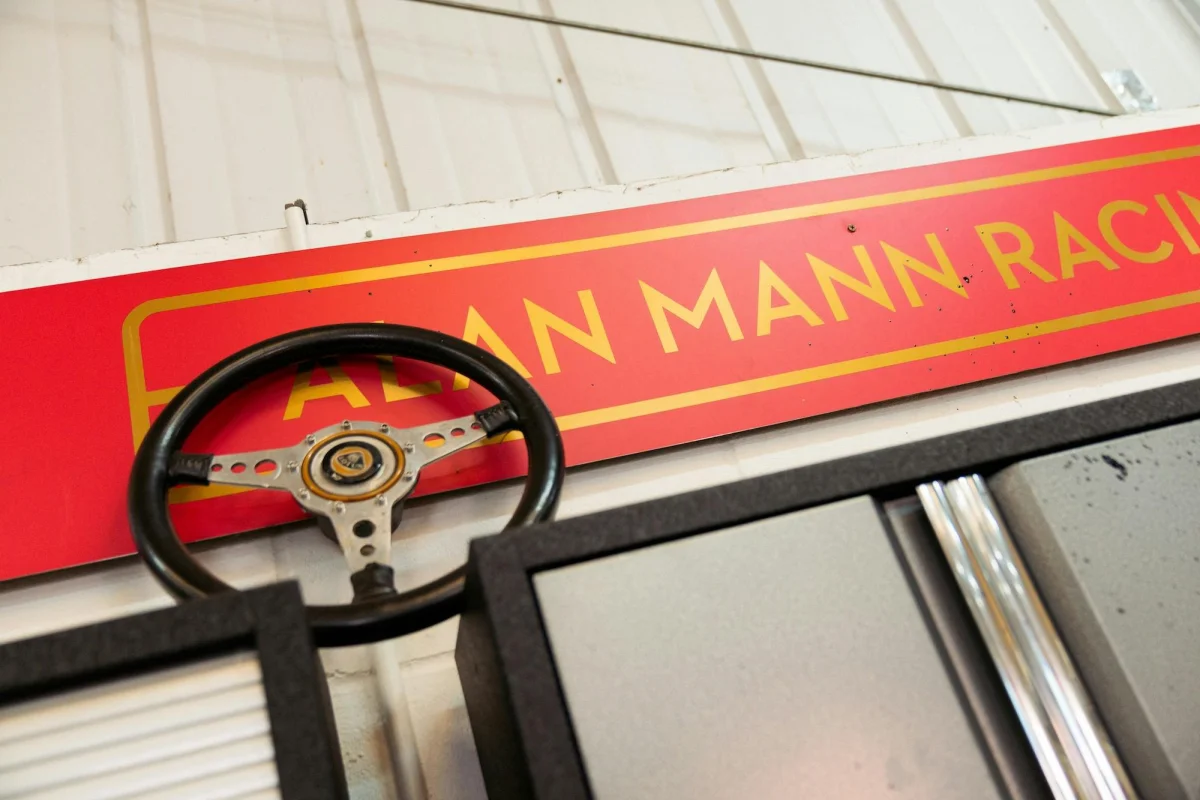
A design on paper still needed someone to build it, and that job went to Alan Mann Racing. Founded in 1963 in Woking, Surrey, southwest of London, AMR was deeply involved in Ford's "Total Performance" campaign of the 1960s. That program covered rally, touring cars, endurance racing with a lightweight GT40, and the development of the Cobra Daytona coupe. Mann's ties to Ford's motorsport chief, Walter Hayes, led to unusual commissions, including work on the Fords used in Goldfinger.
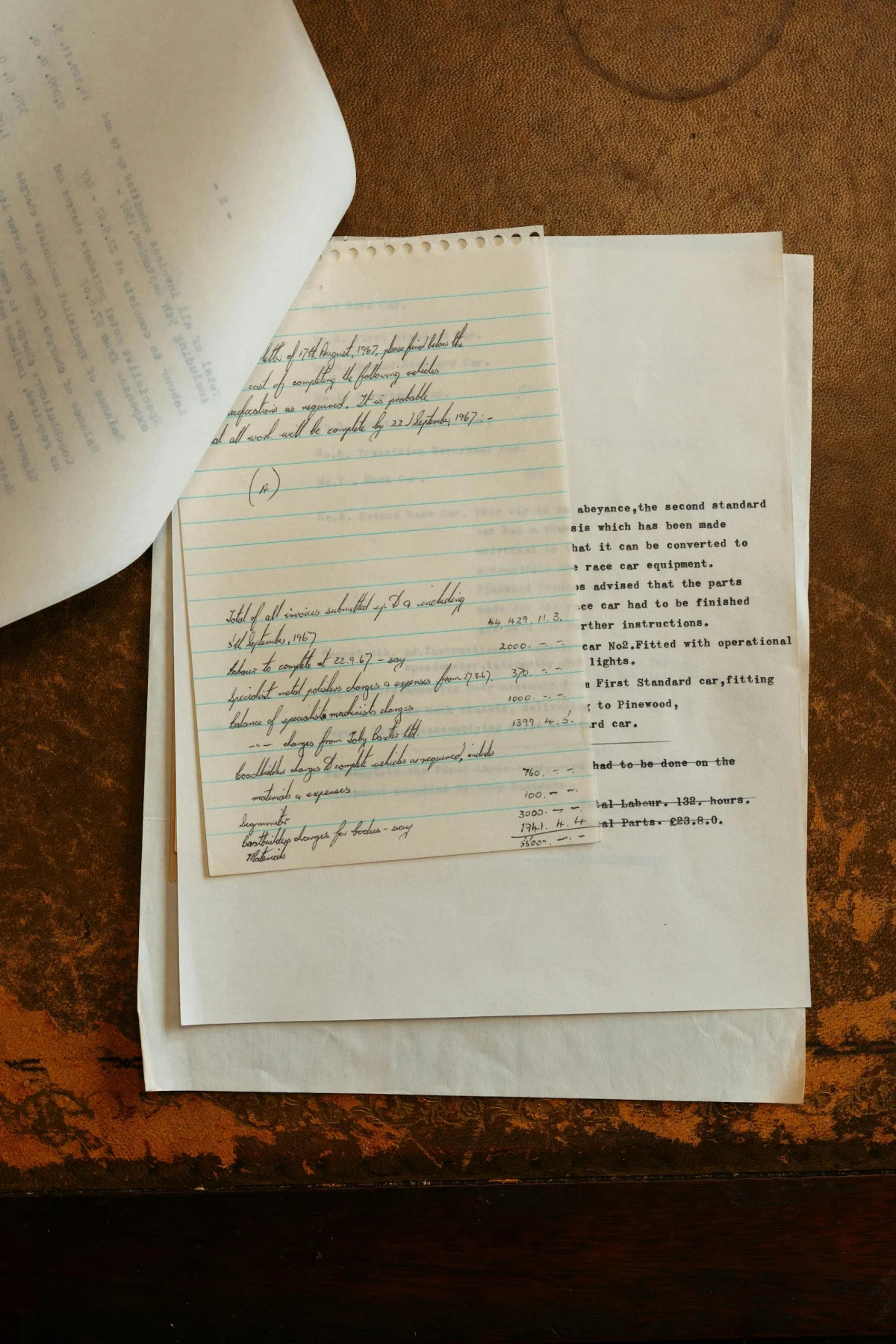
That success carried through to the Bond films that followed, Thunderball in 1965 and You Only Live Twice in 1967, and it earned AMR the contract to build six versions of Chitty. Two were road-going cars. The other four covered close-ups, floating sequences and other special effects. The contract was worth £80,000, roughly $225,000 at the time, or about $2.3 million today, which was a major job for a shop of AMR's size.
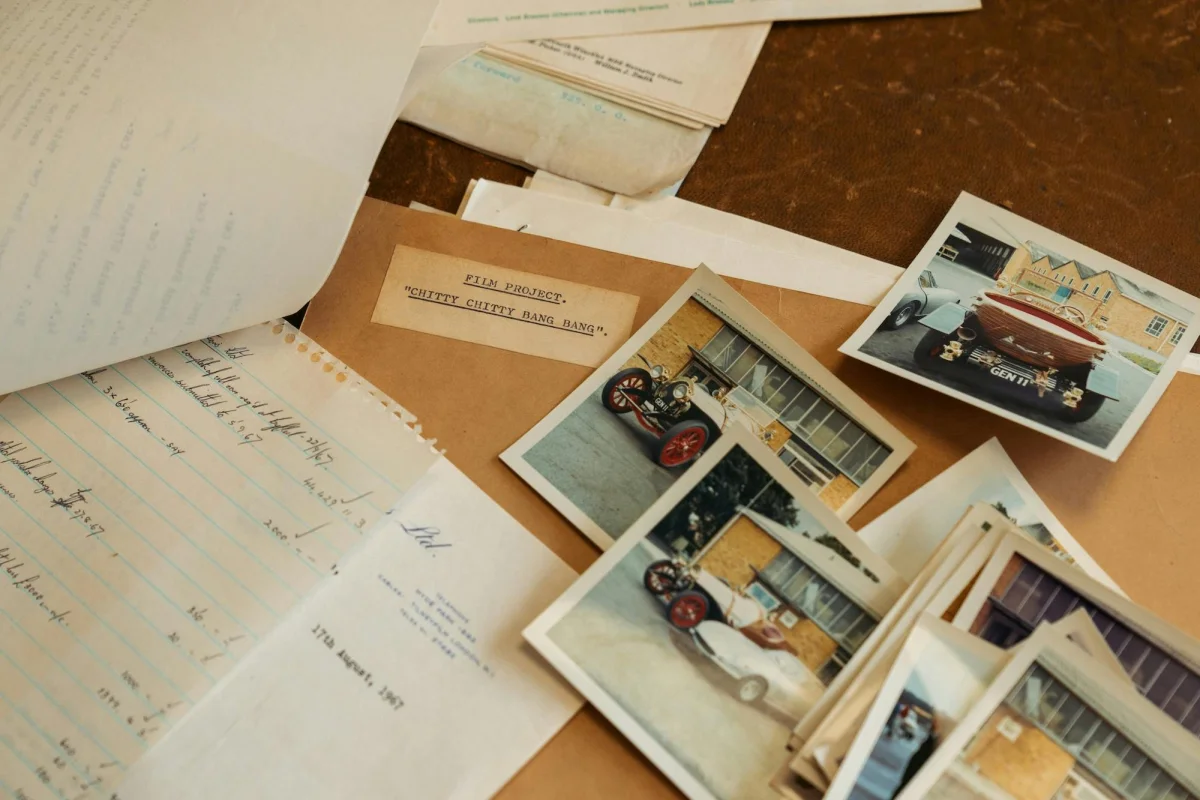
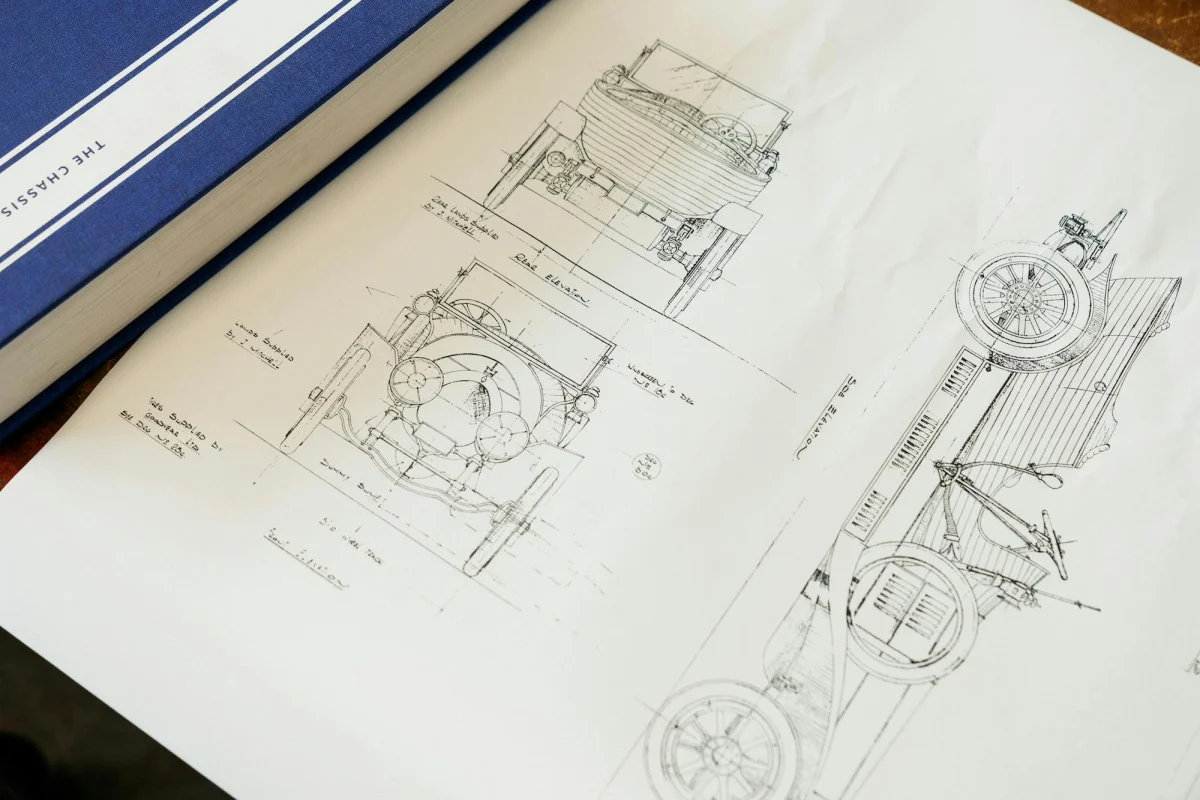
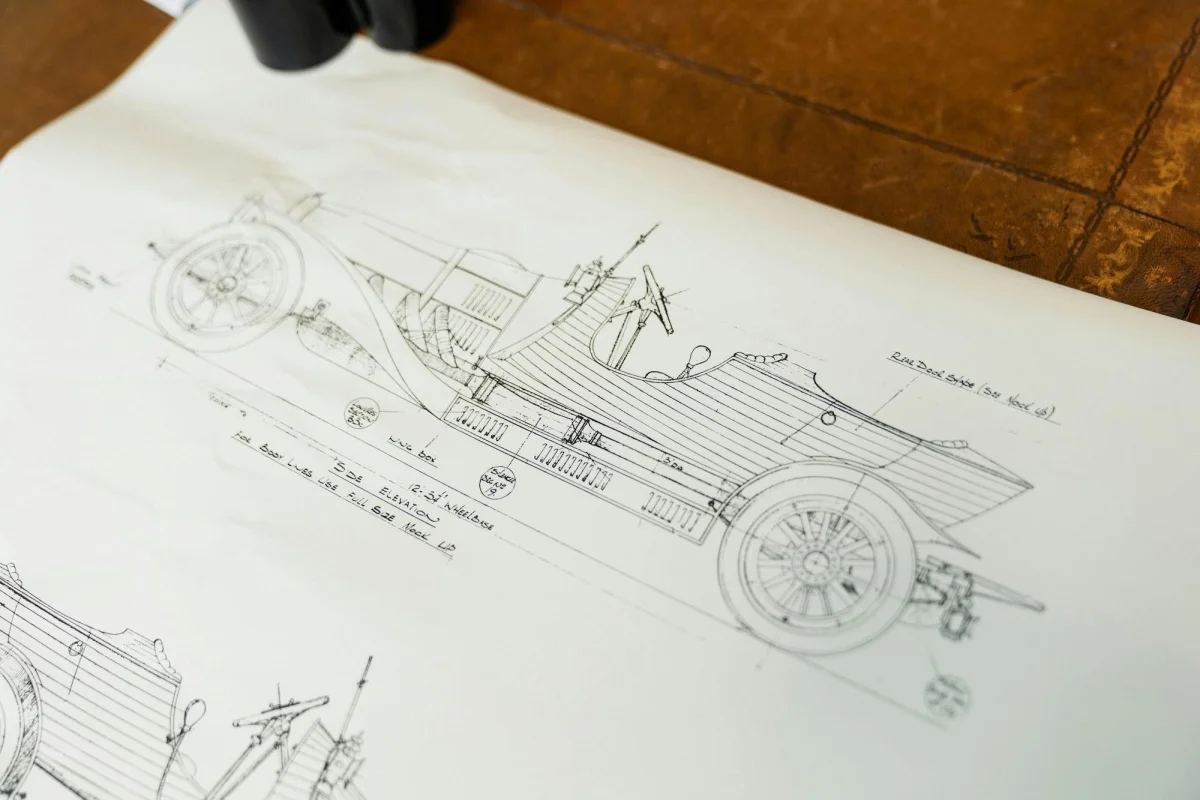
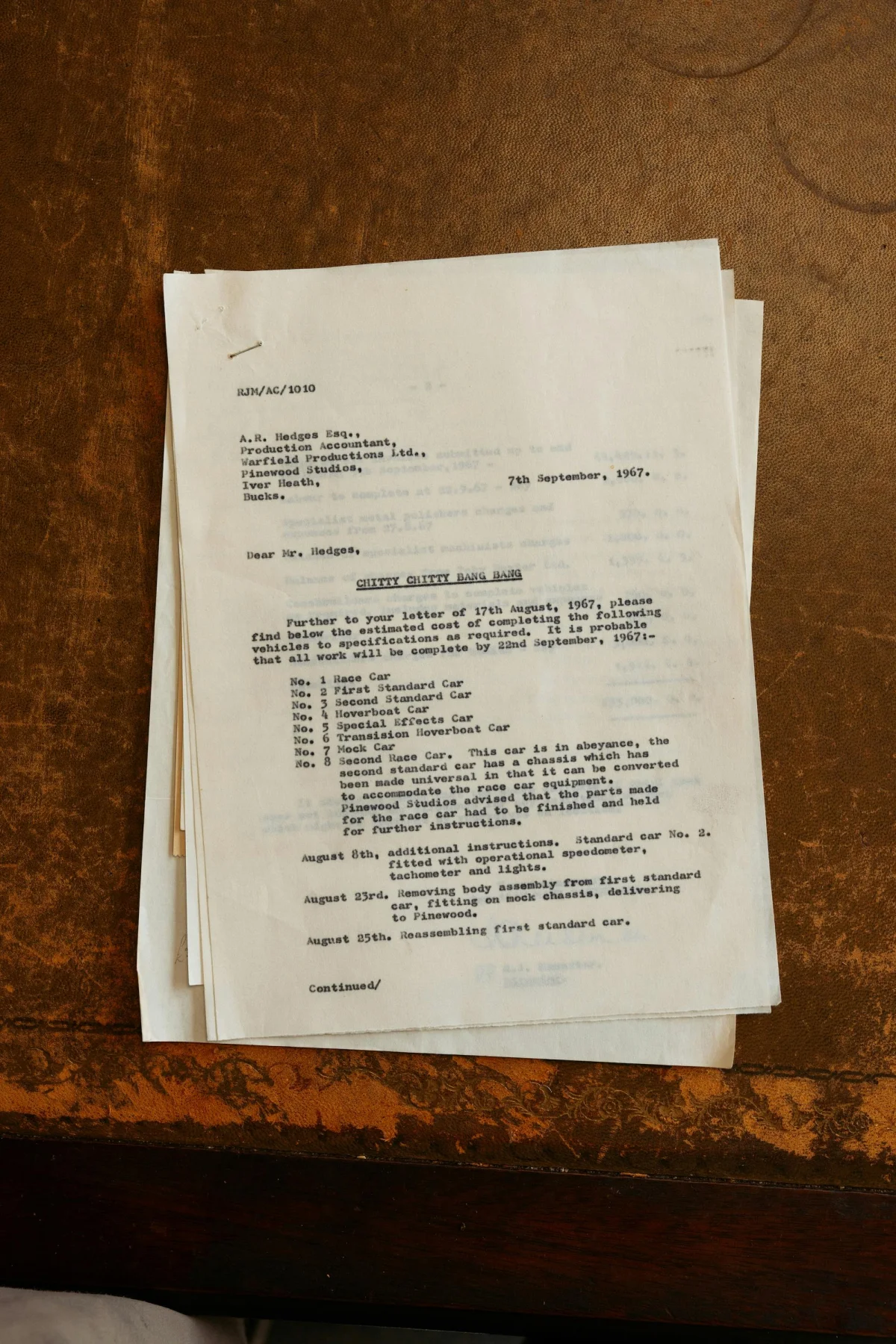
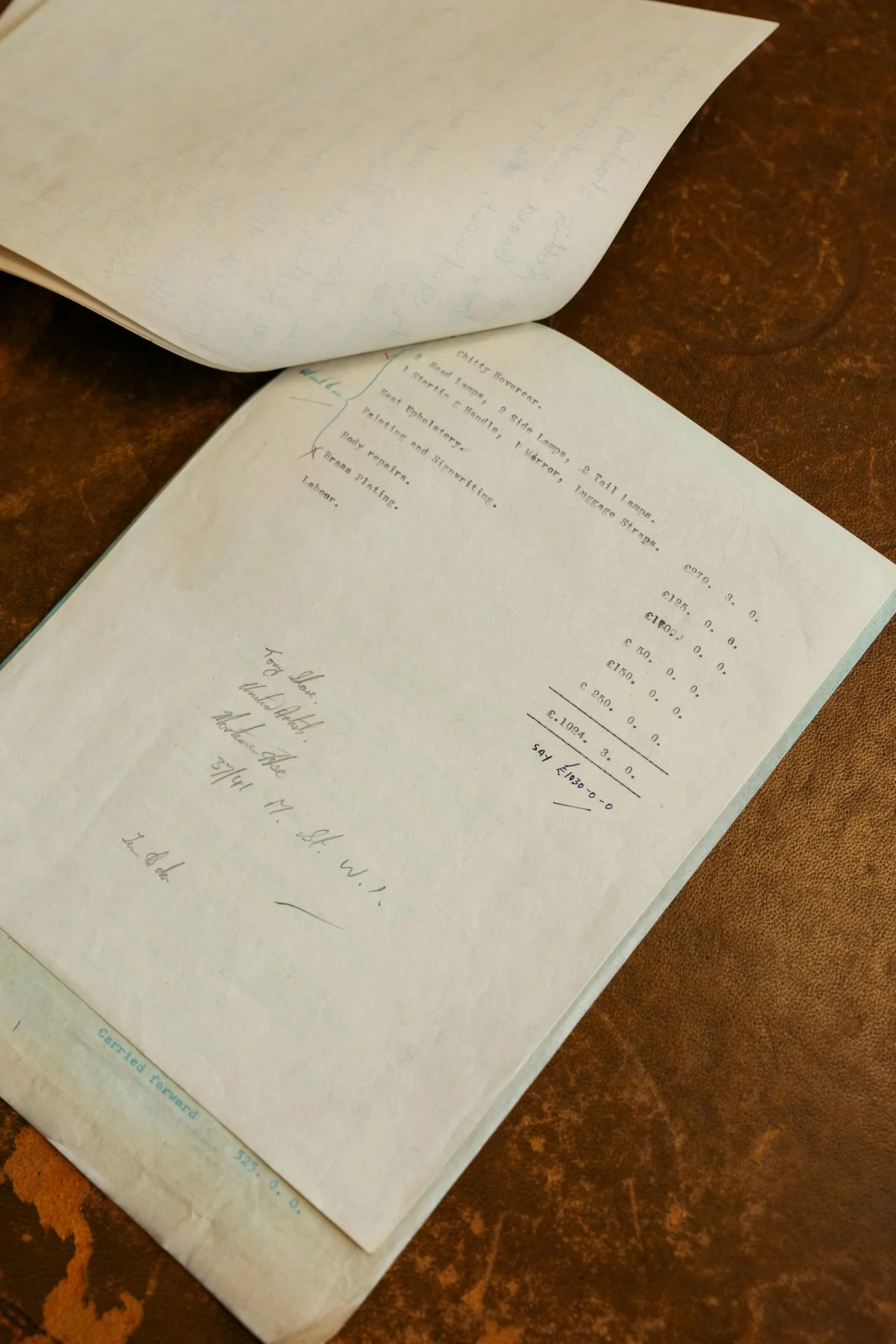
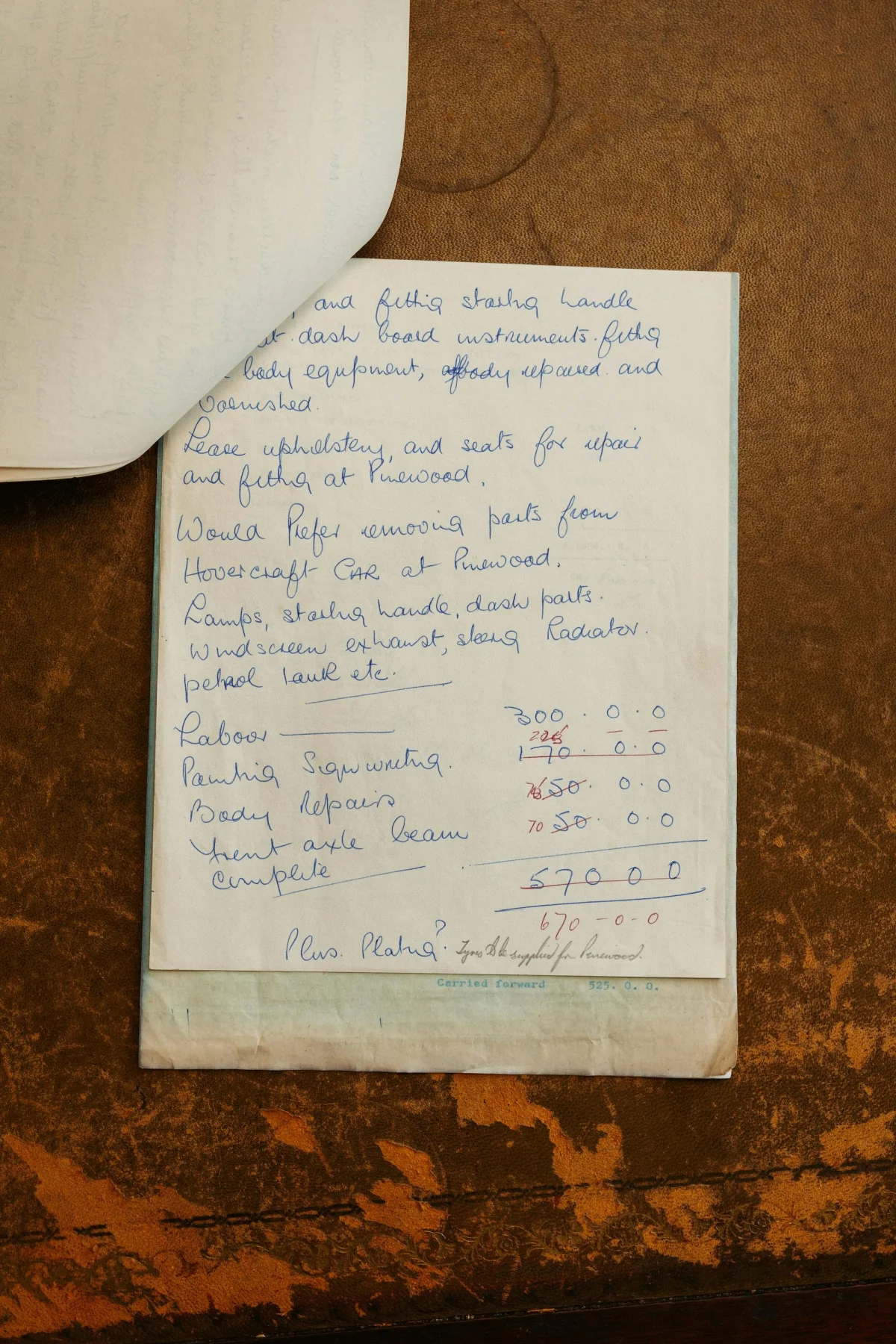
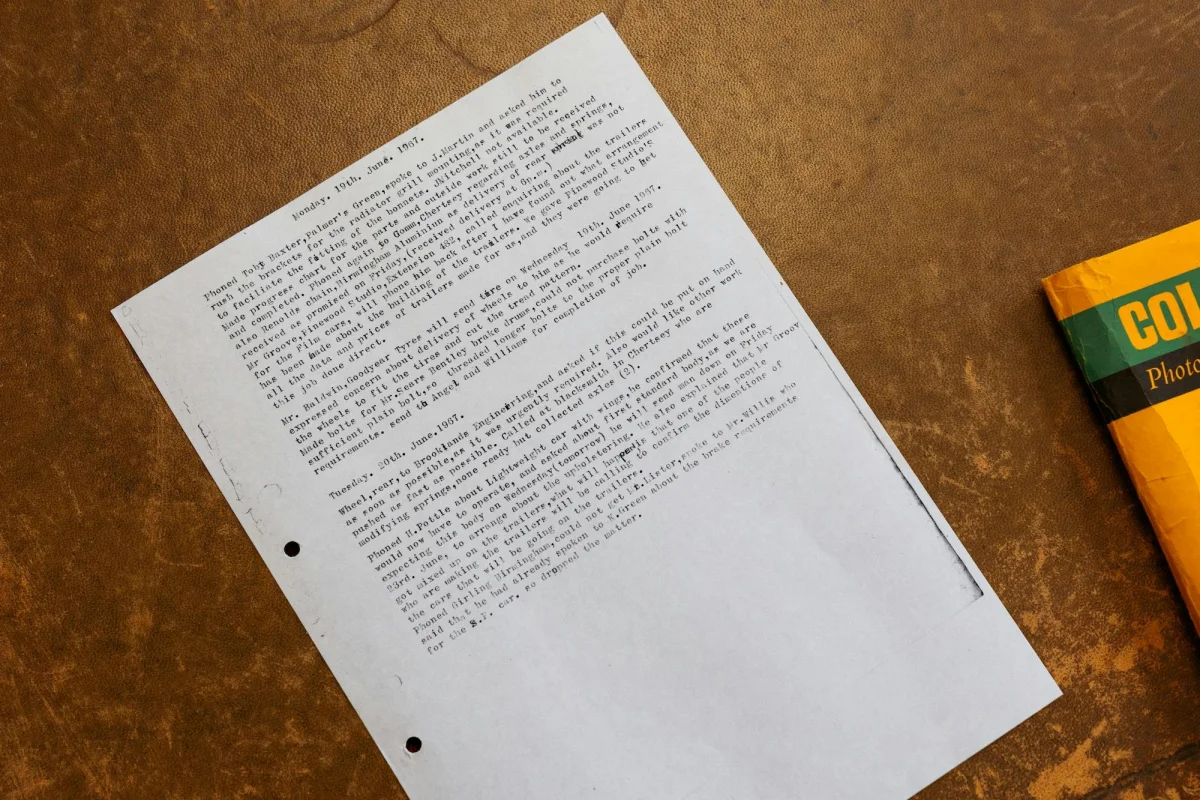
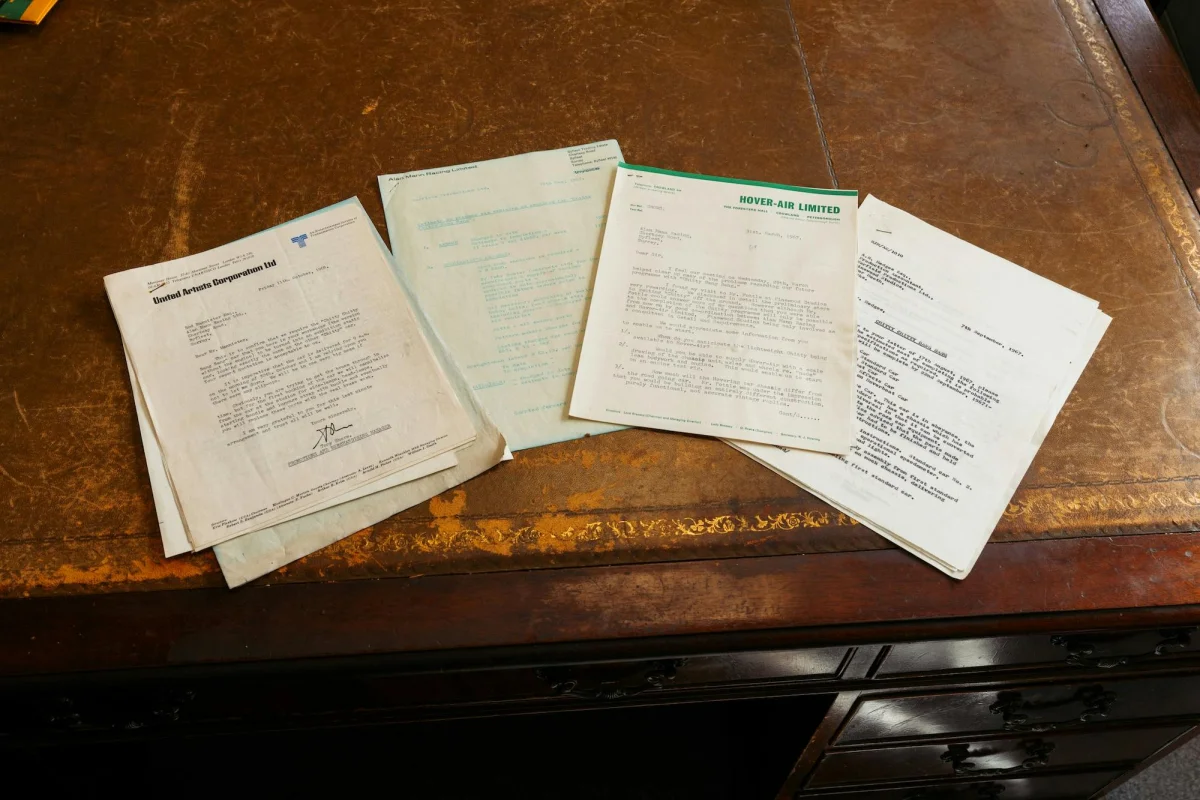
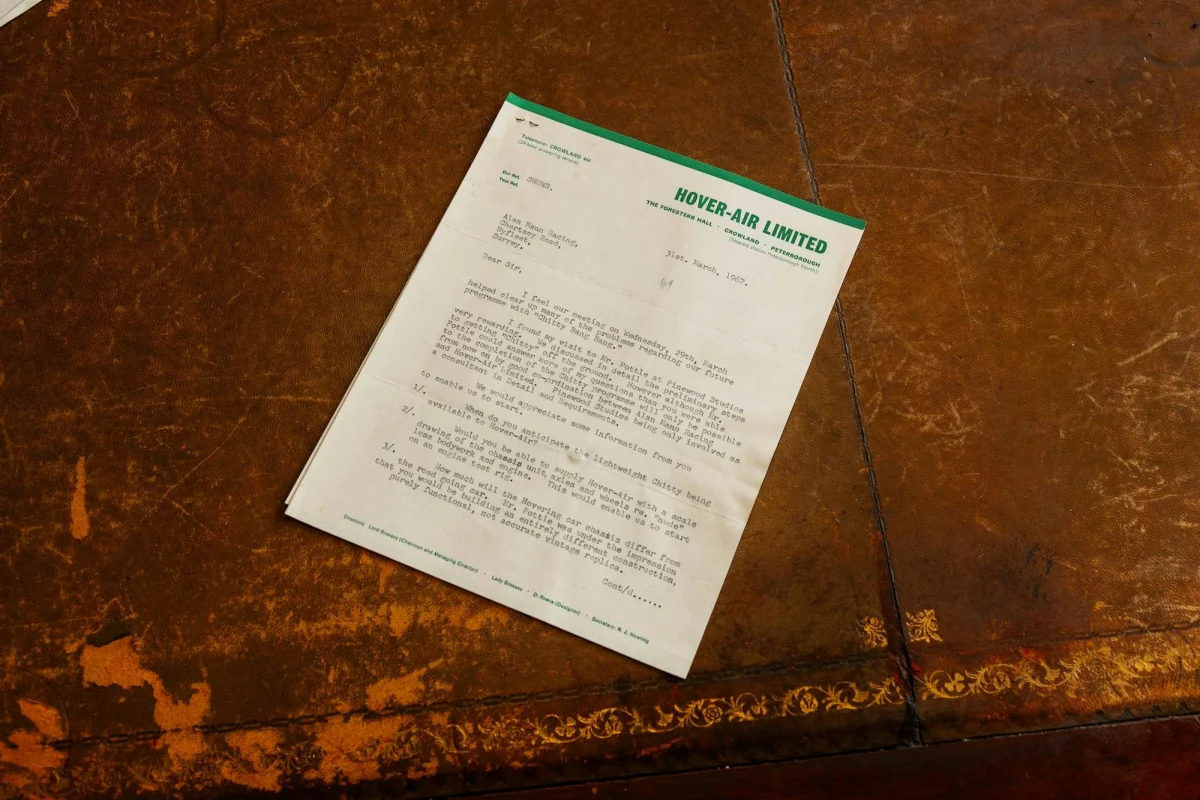
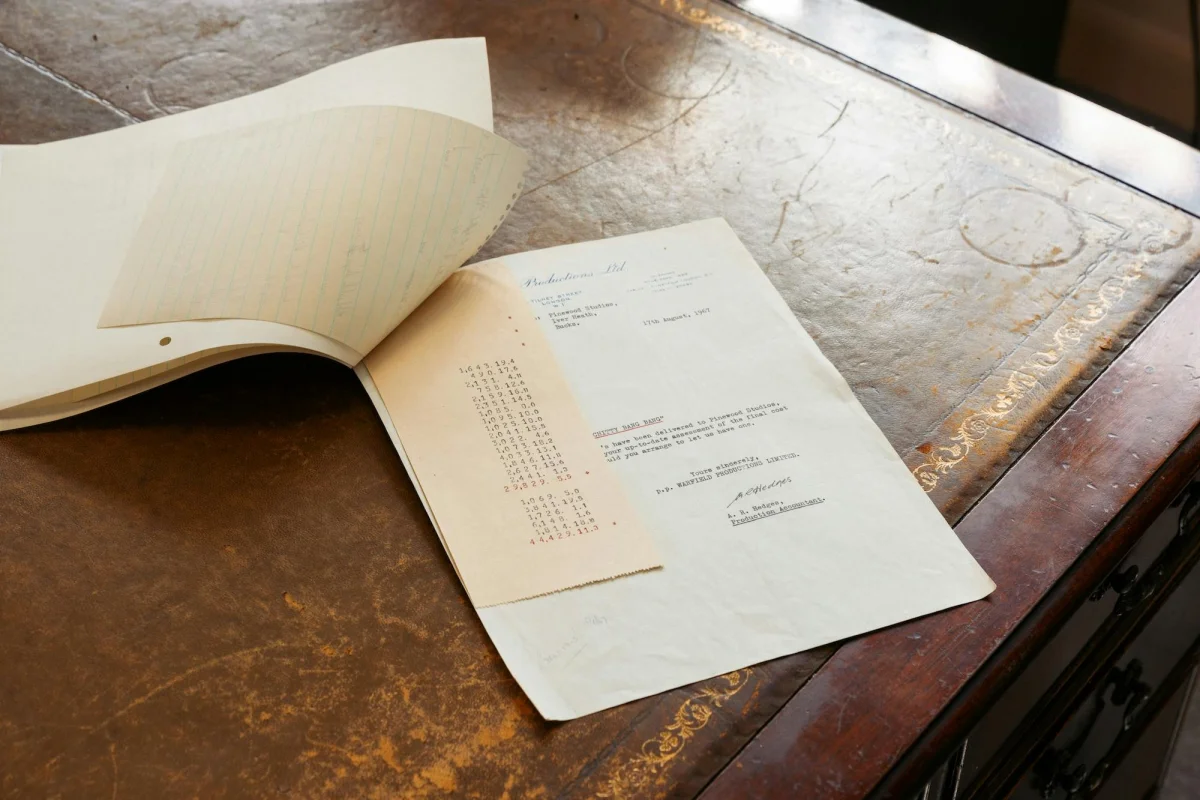
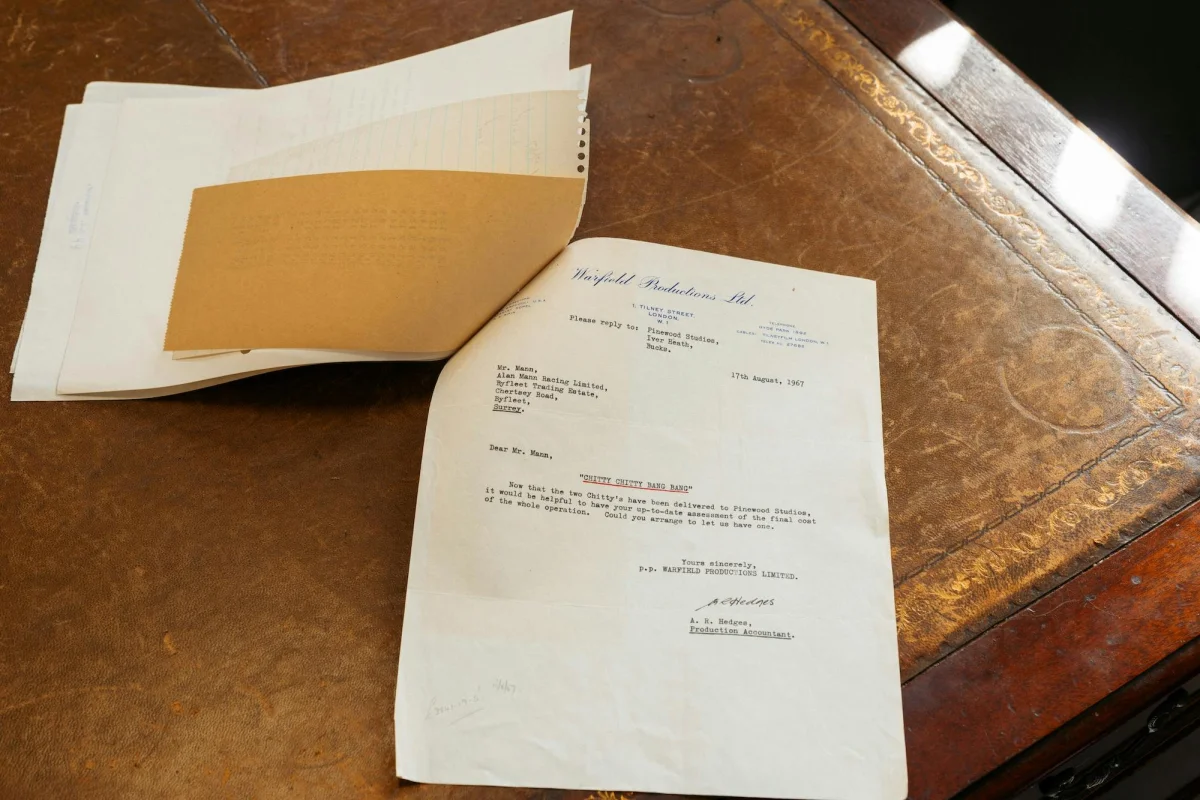
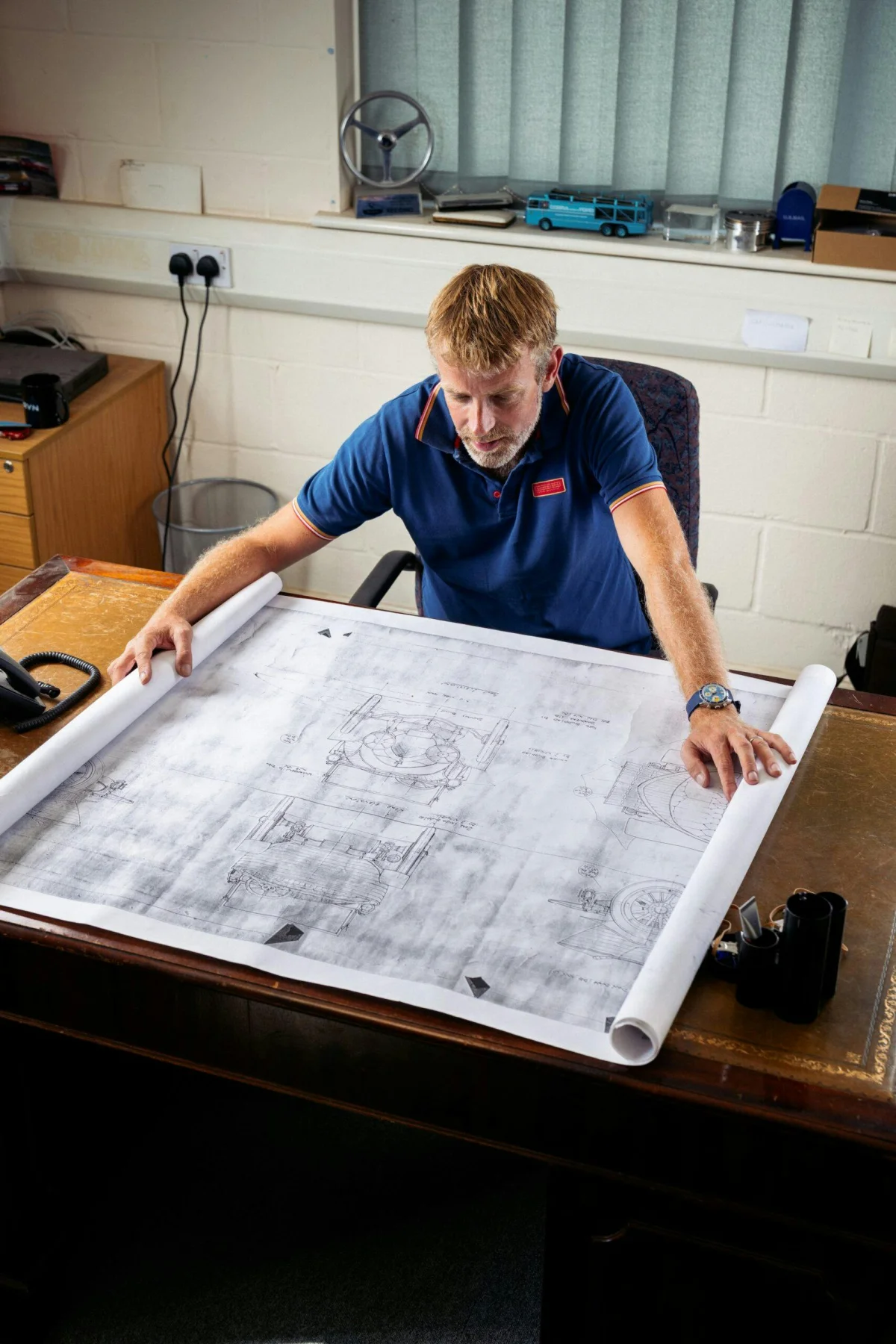
AMR still operates from Woking, now run by Henry Mann, the youngest son of founder Alan Mann. The shop's focus remains Fords of the '60s, but it also holds the archive of the movie cars' construction. Boxes of drawings, invoices and receipts sit alongside build diaries that run to hundreds of pages. The first entry is dated Thursday, May 11, 1967. It covers anodizing aluminum to a standard mild steel finish, calls to a plating firm in Derbyshire, and arrangements with Ford for rear axle casings, differentials and axle shafts. It reads like any production job, which is the point. Chitty was built with ordinary industrial methods.
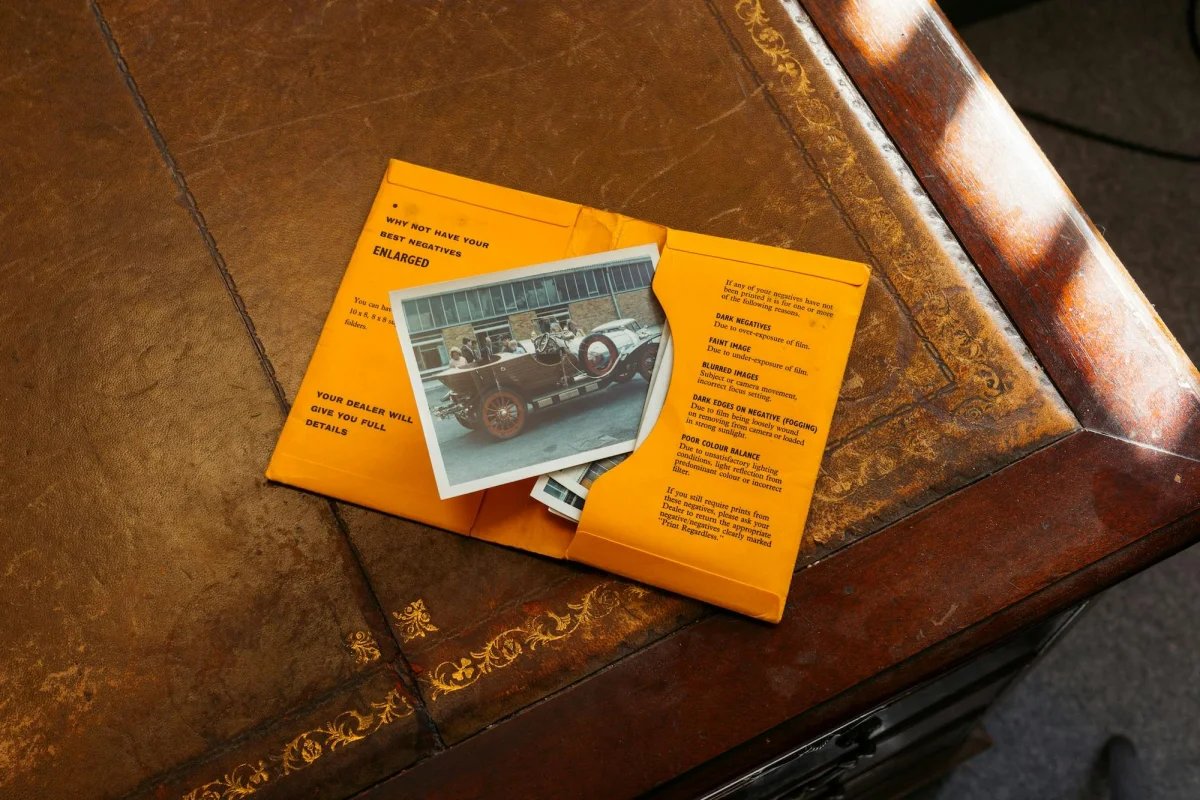
Borrowed Parts and Hand-Built Details
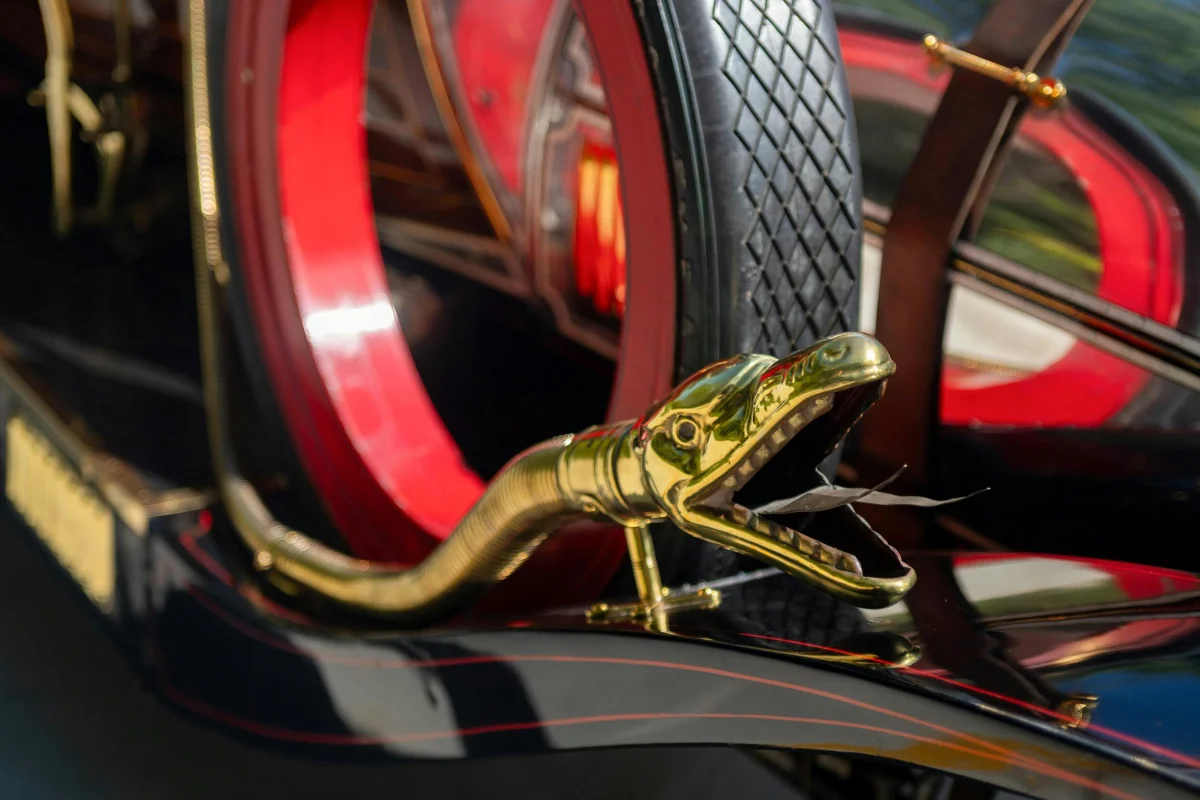
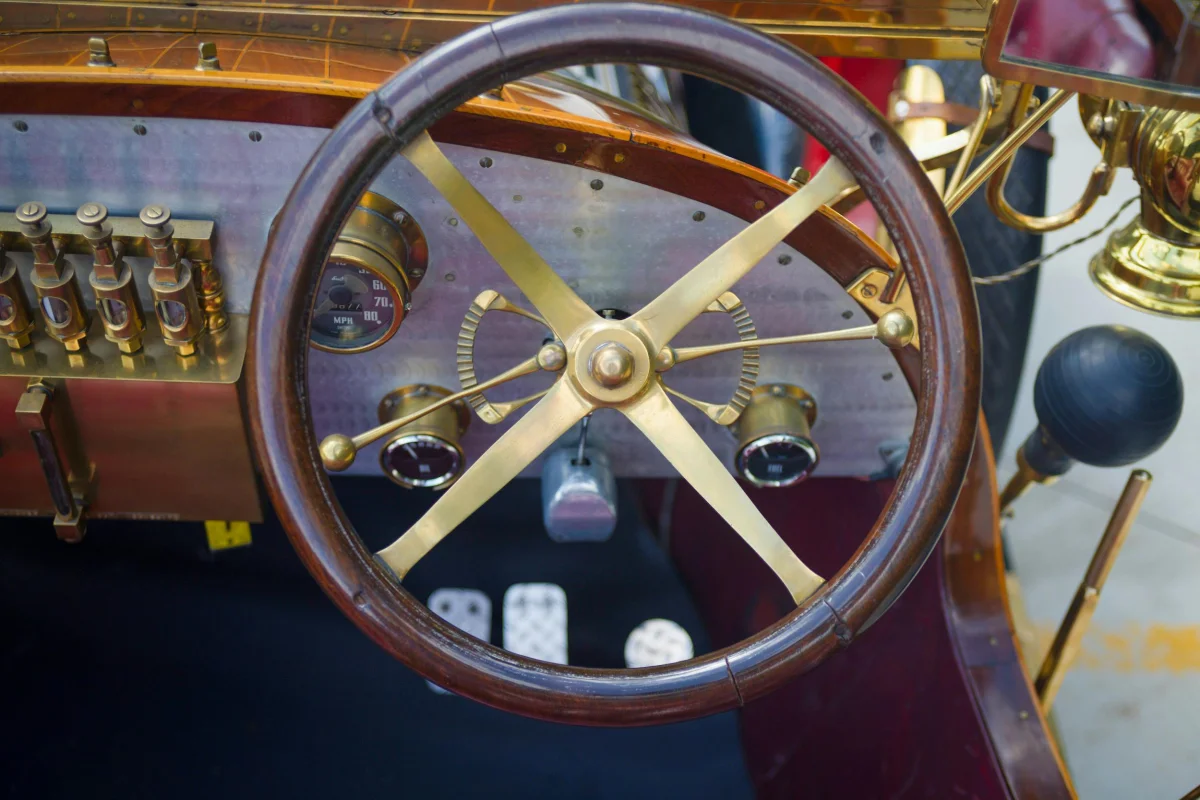
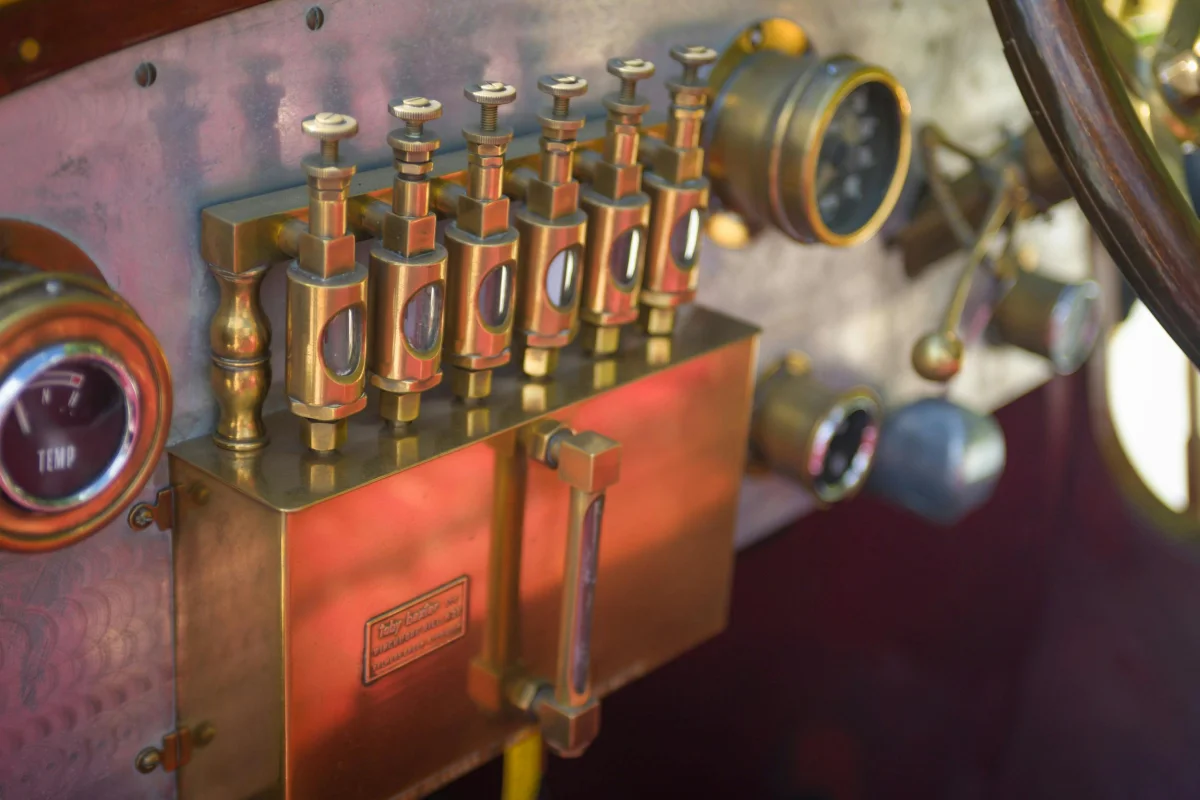
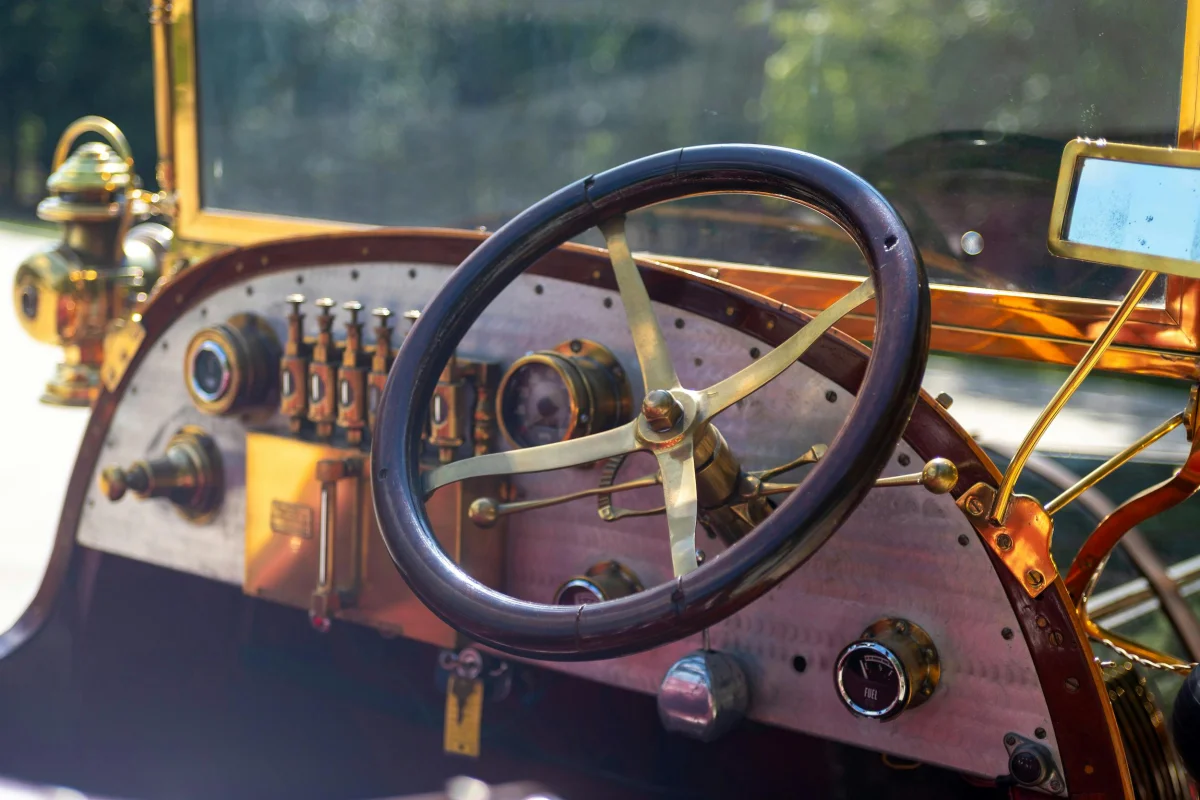
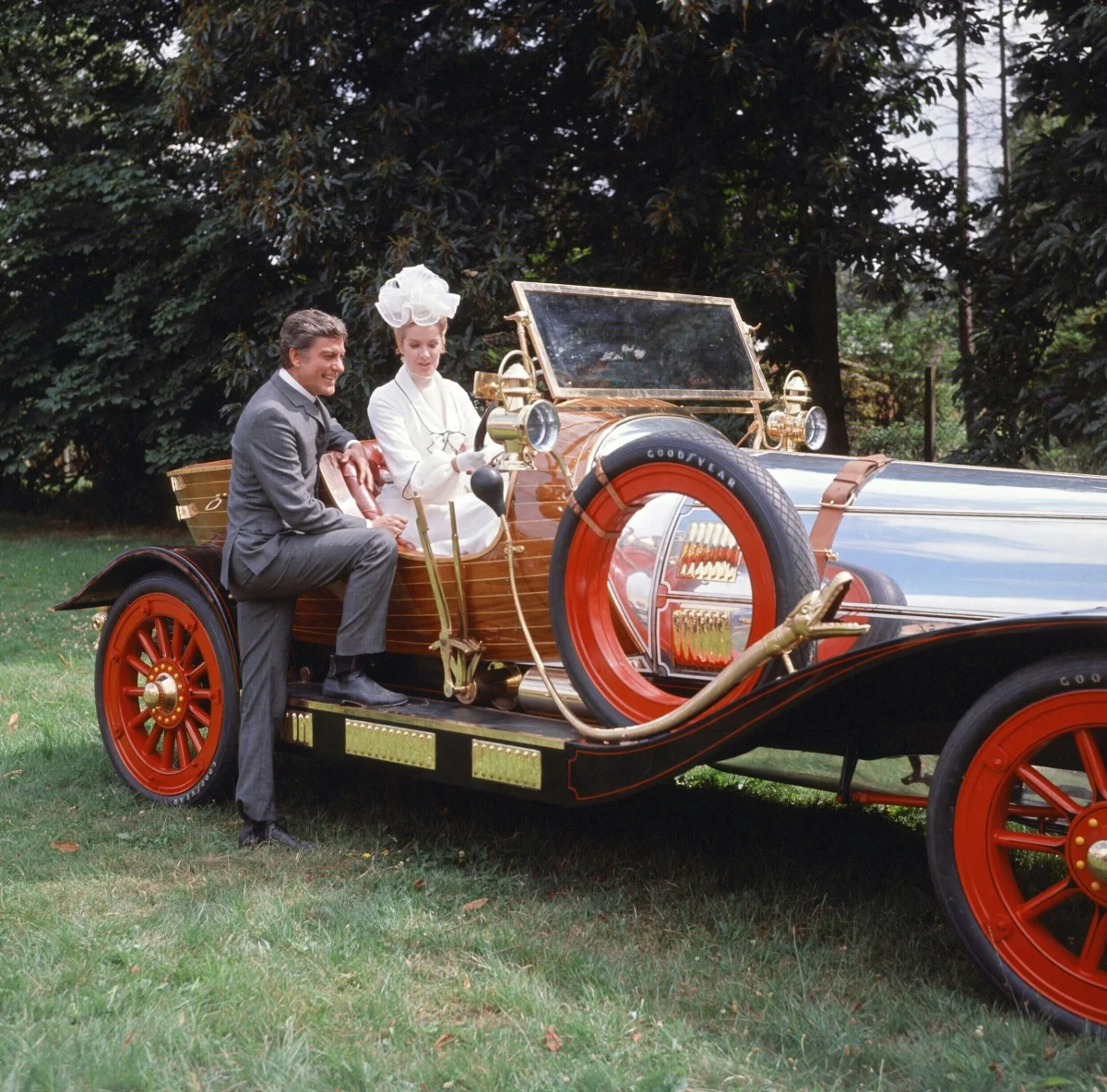
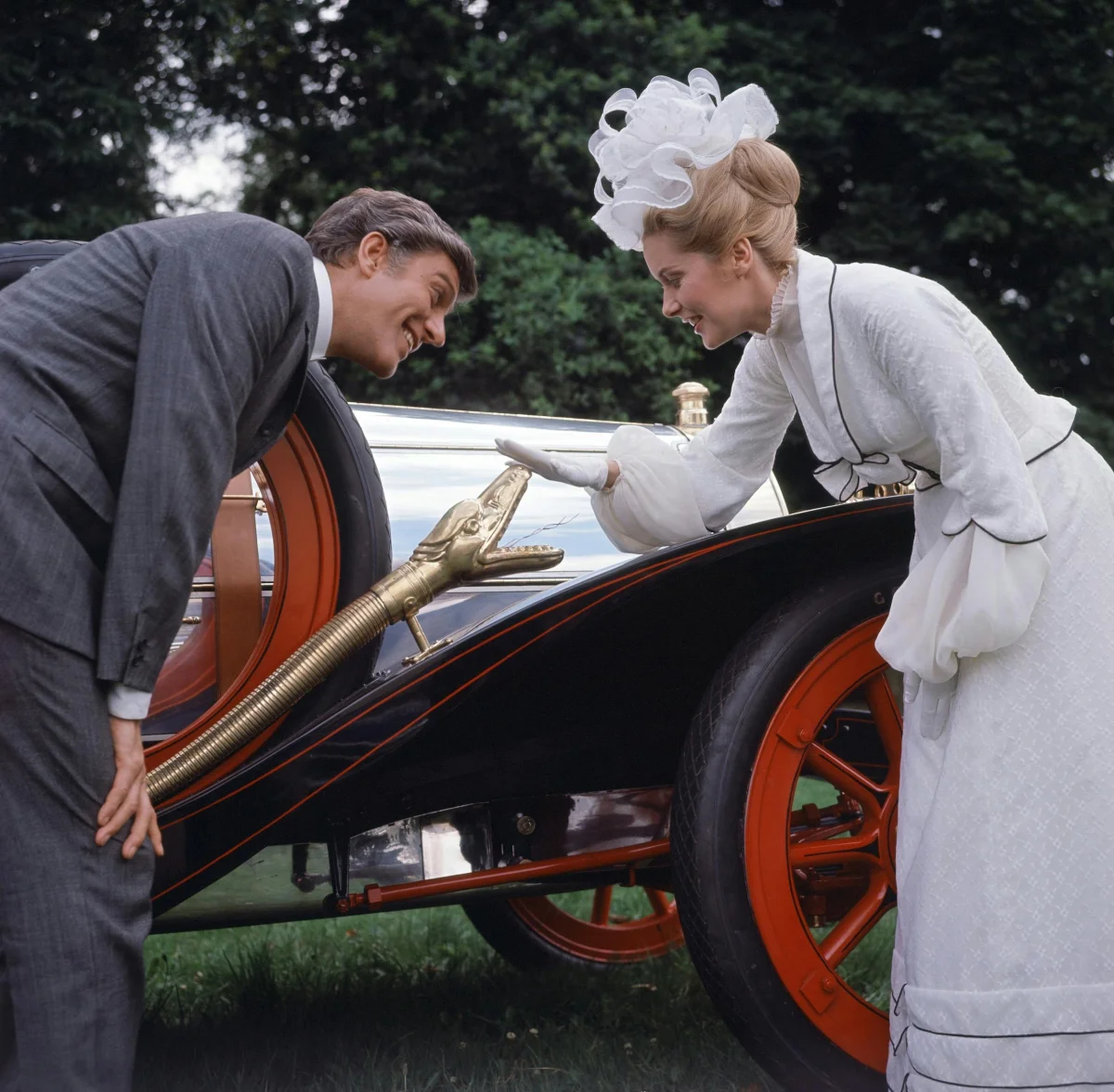
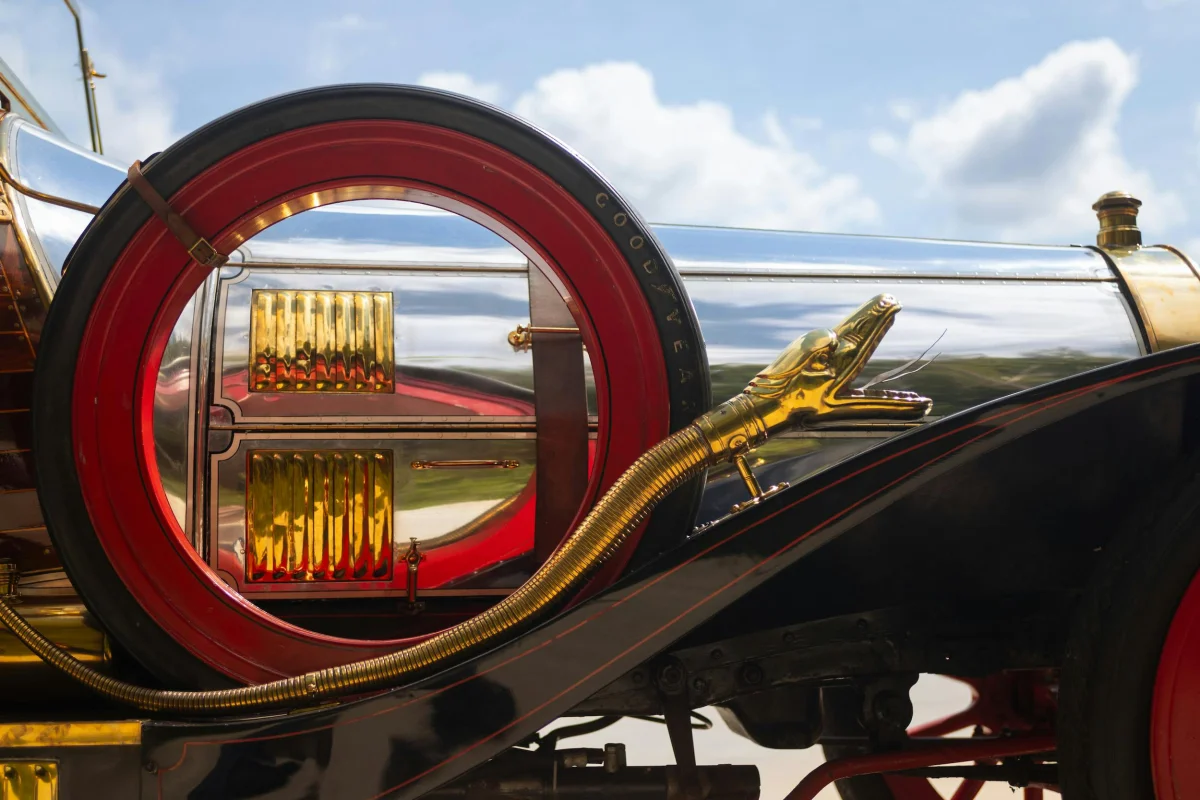
Henry Mann describes how the design was finalized. Adam knew he wanted an Edwardian car with a boat-style tail that hinted at both boat and plane, but he hadn't settled the details. Mann and Adam visited Stanley Sears, father of racing driver Jack Sears, who owned a large collection of prewar cars. They went through them and picked details from different machines. The dash-mounted oilers and lamps came from a 1904 Mercedes 18/28hp Racing two-seater. The boa constrictor horn came from a 1903 Clement Talbot Type CT4K 18hp. The Clement Talbot's red-painted spoked wheels and red leather interior may also have shaped Chitty's look, though the paperwork doesn't confirm it.
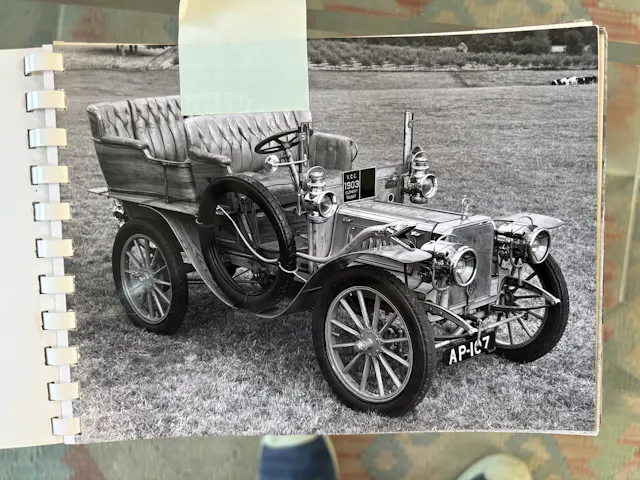
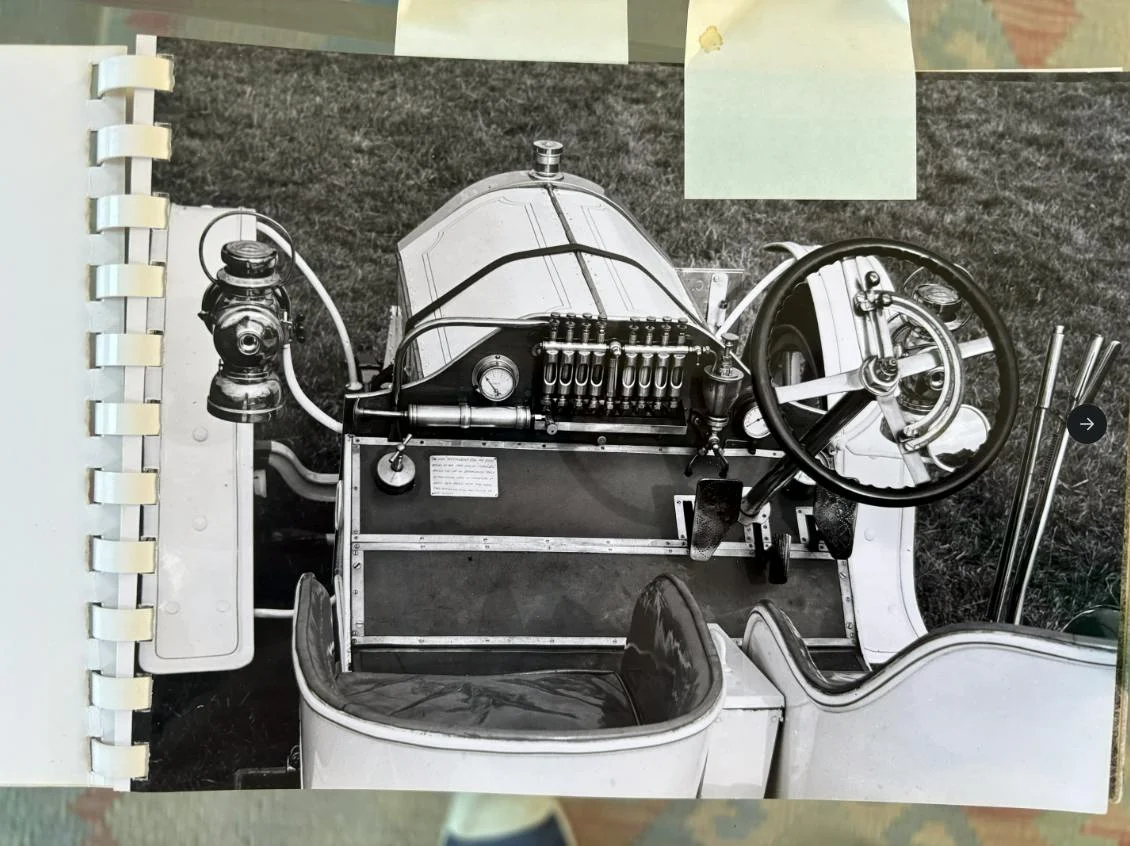
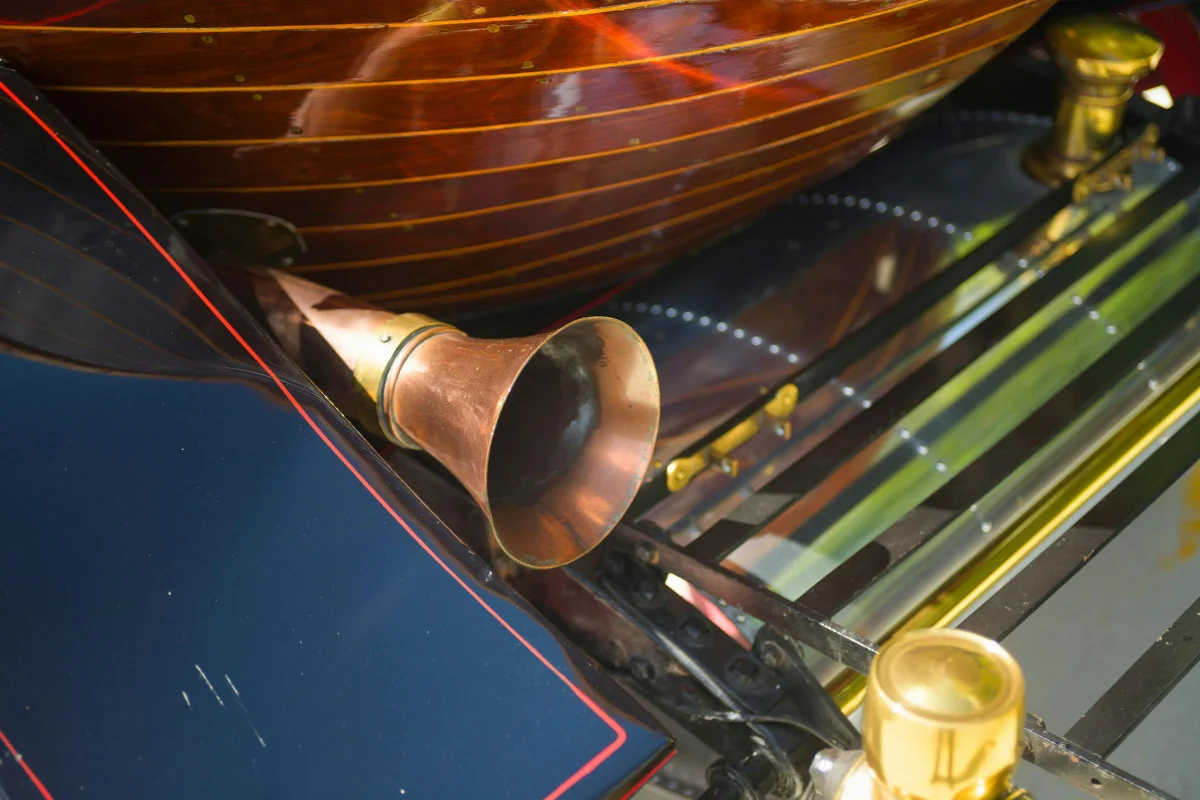
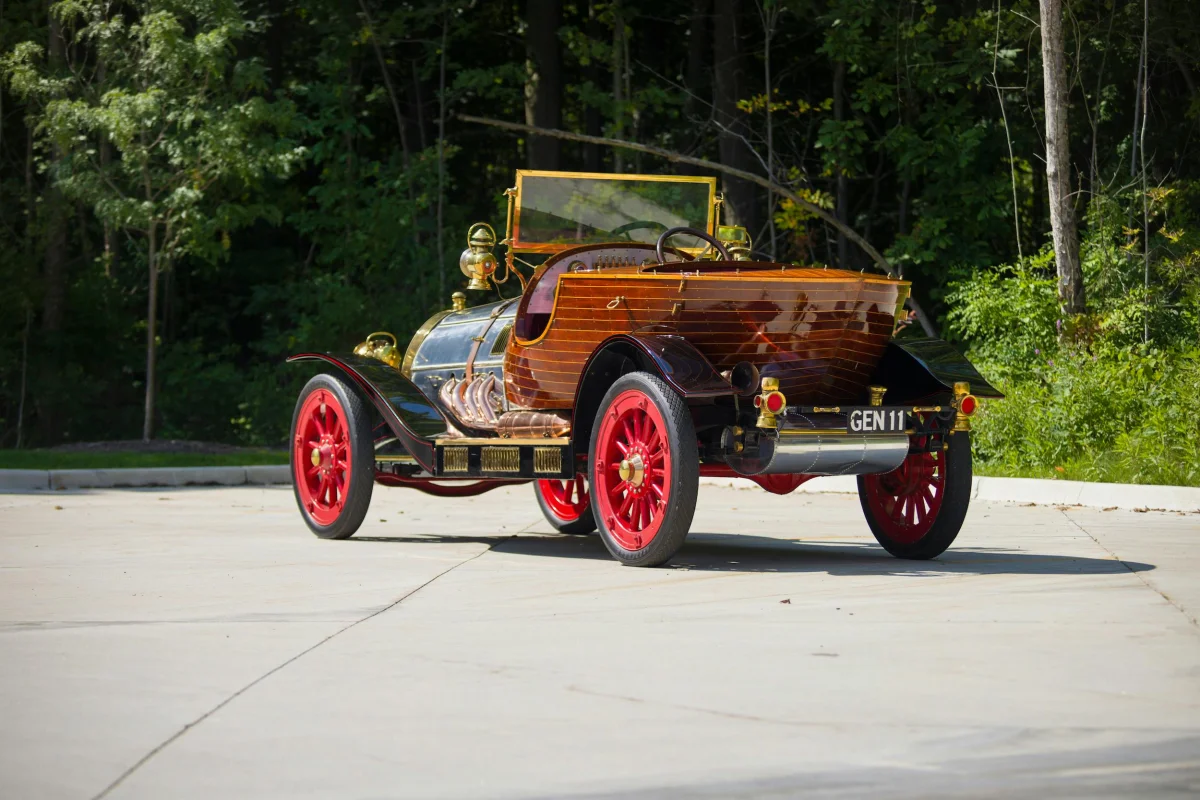
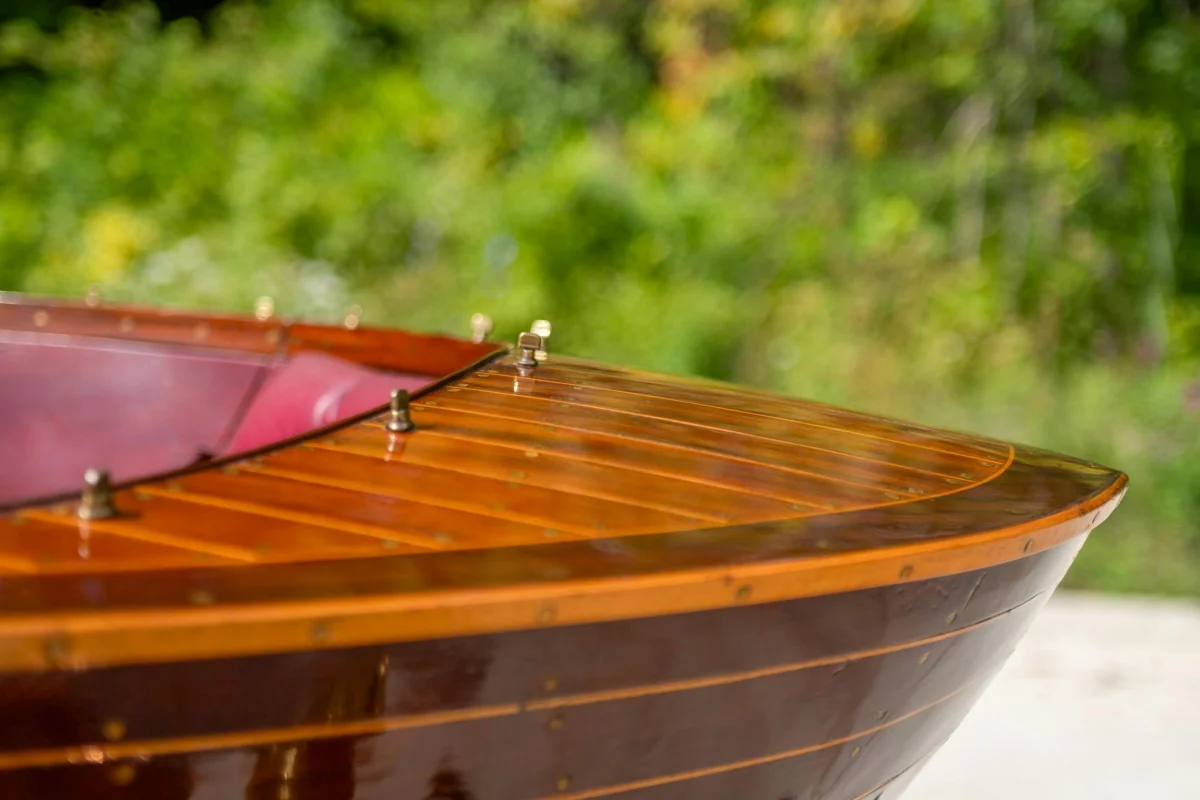
Mann leaned heavily on small specialist workshops, many of them still tucked into English village buildings at the time. The wooden boattail came from Bates Wharf in Chertsey, one of the oldest boatyards on the River Thames, with roots going back to the late 1800s. That choice explains the varnished, Chris-Craft-like finish that gives the body its glow. The aluminum hood and other sheetmetal work went to Gomm Metalcraft. Its founder, Maurice "Mo" Gomm, had learned to hand-shape lightweight alloys during the war, working on aircraft for the Royal Air Force. After the war he moved into motorsport. He worked with Eric Broadley on the Lola Mk 1 prototype in 1957 and 1958, built early aluminum monocoque tubs for Tyrrell Racing, made the original Williams Formula 1 FX3 chassis, fabricated oil tanks for the Ford GT40, and later prepared AMR's Ford Escort body shells and some of Ford's factory rally cars.
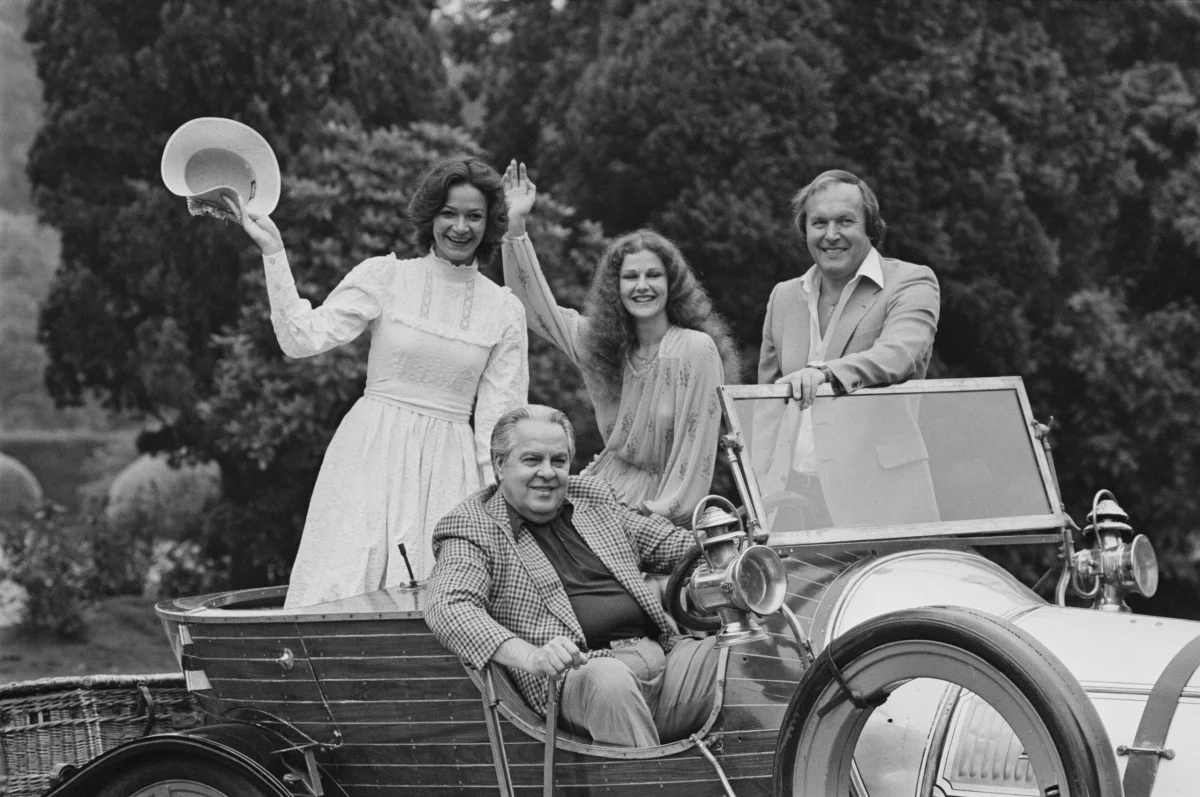
The spoked wheels that look like wood are actually cast aluminum, made by Birmingham Aluminium Casting Company. Founded in 1903, the firm was known for early aluminum and magnesium castings.
The Chassis Problem
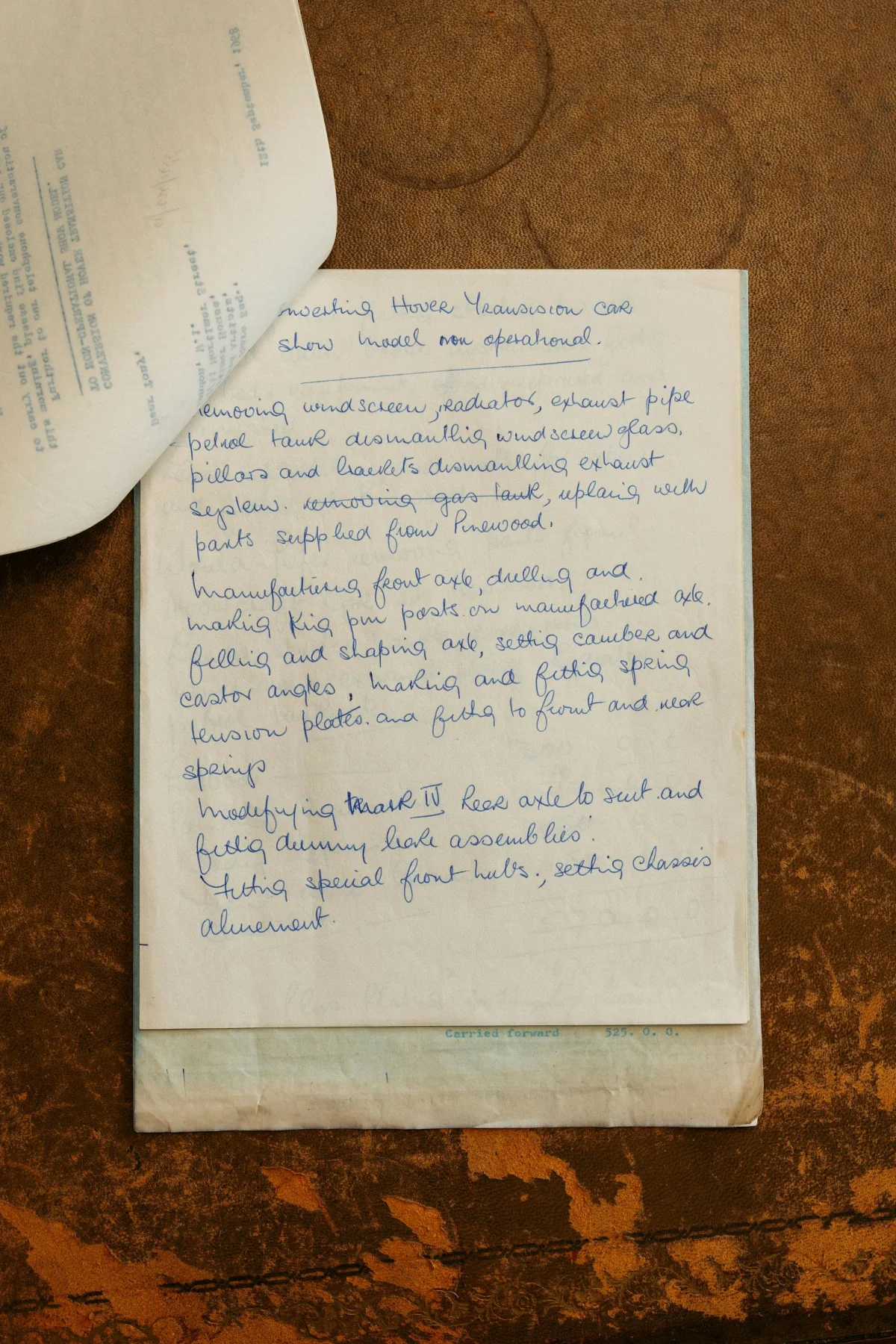
The chassis is where the fantasy ran into engineering. Lionel Whitehead joined AMR in 1964 and stayed until 1970, when the original shop closed. He is now 95, and he remembers the Chitty work clearly. "I was mainly doing the chassis work for the two roadgoing versions," he says. "First, we tried using frames from Rolls-Royce hearses. Those weren't adequate, so we tried using heavy-duty truck frames. Those didn't work either, so we had to make the entire chassis from scratch."
The suspension was homemade too. "I designed the front axle. I had to farm out its construction to a blacksmith," he explains. "There were 11 parts for that, and then we welded them all up to make a complete axle. The car didn't have front brakes. The rear brakes were from a Ford Transit Mk 1 van. The rear springs were like truck springs. We ordered them and they made what we wanted." Whitehead still watches the film when it airs in the U.K., usually every Christmas.
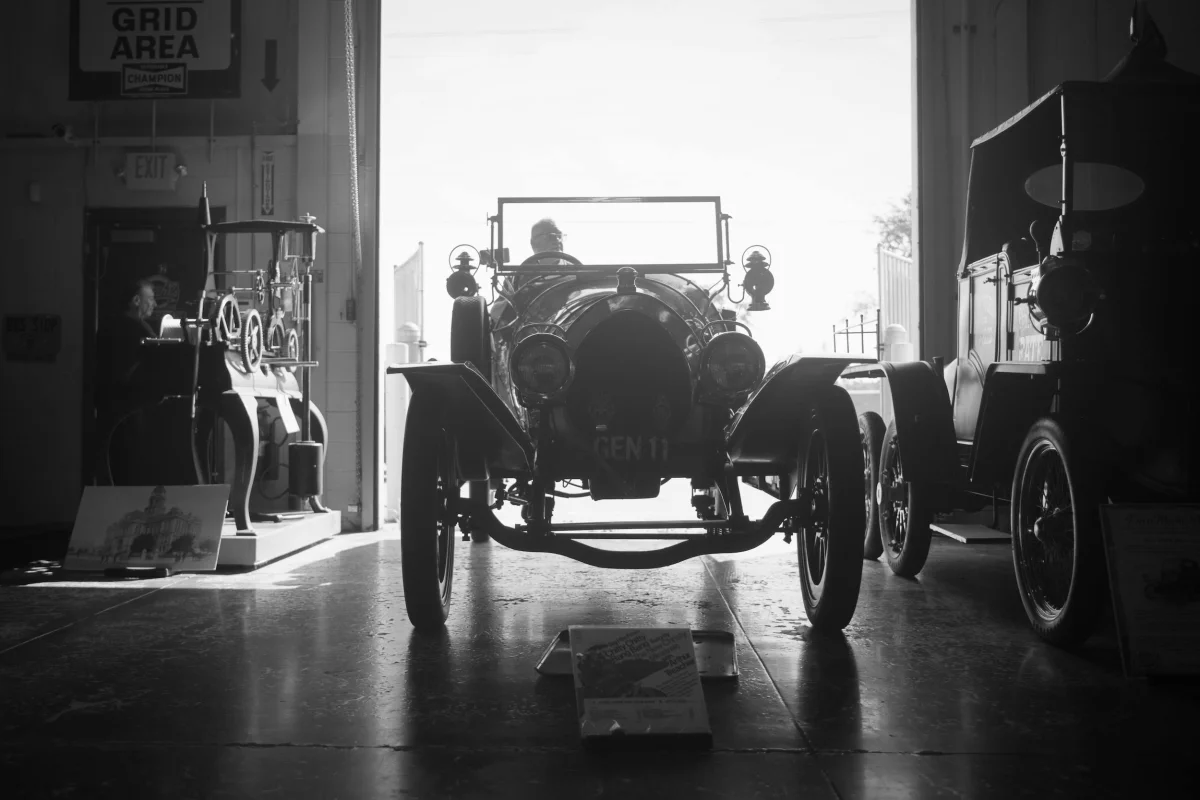
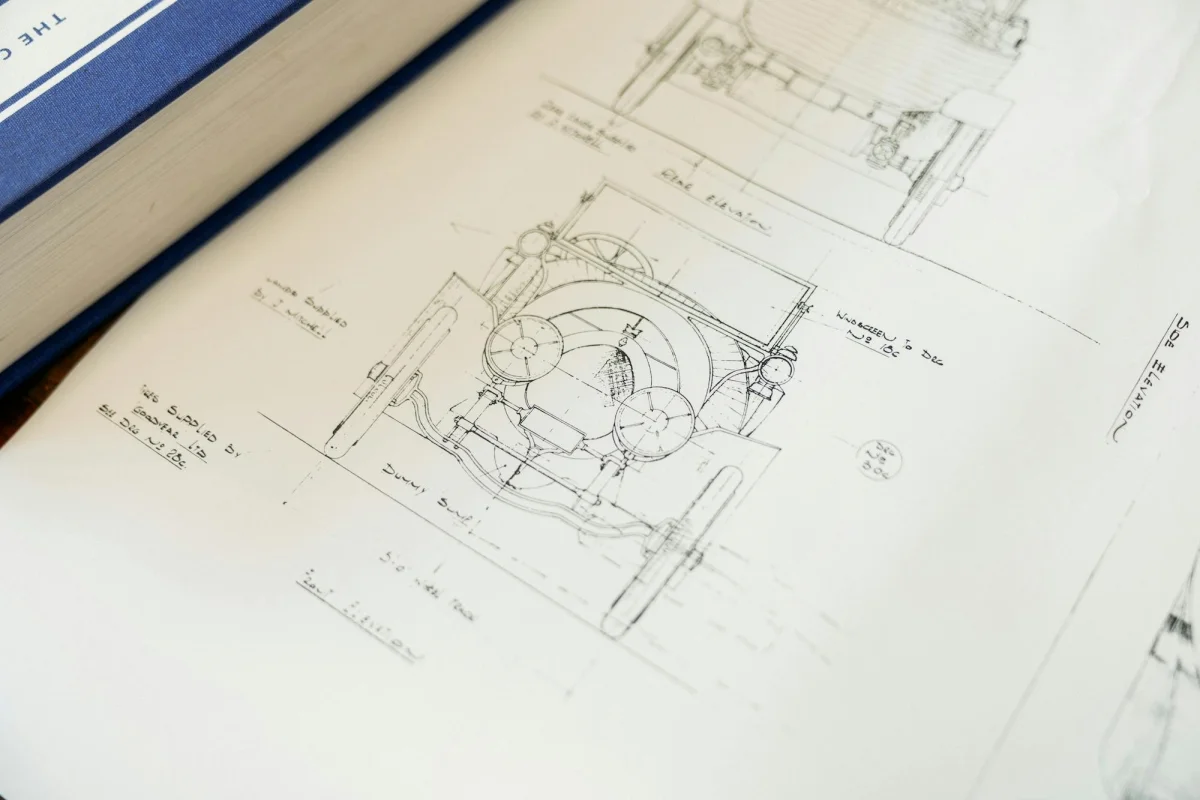
The rejected frames weren't wasted. They went into some of the race cars that appear at the start of the film. Tires were another problem. The team needed pneumatic tires that could give at least some cushioning to a car weighing around 4,000 pounds. The powertrain was a 3.0-liter V-6 and automatic transmission from a Ford Zephyr. Looking at that setup, the car's mechanical reality is a long way from its screen persona, and that gap is the most interesting thing about it.
Pulling back the magic curtain to reveal the workaday reality does nothing to alter my love for this car.


Filming Schedule and the Surviving Cars
Principal photography started on Monday, July 17, 1967, in England. That timing was tight. Filming on You Only Live Twice had wrapped barely a month earlier, and much of the Chitty crew was the same team: the props, lighting and camera crews, and Adam himself. The shoot began on the back lots and stages of Pinewood Studios in Buckinghamshire. The crew then worked at nearby locations, including Cobstone Windmill in Turville, which doubled as the Potts family home. Poor weather later that summer pushed part of the production to the south of France.
AMR's pace matched the schedule. It delivered the first "standard car," the name for the road-going examples, on July 26, 1967, just 76 days after work began. The second arrived 22 days later, on August 17, 1967.
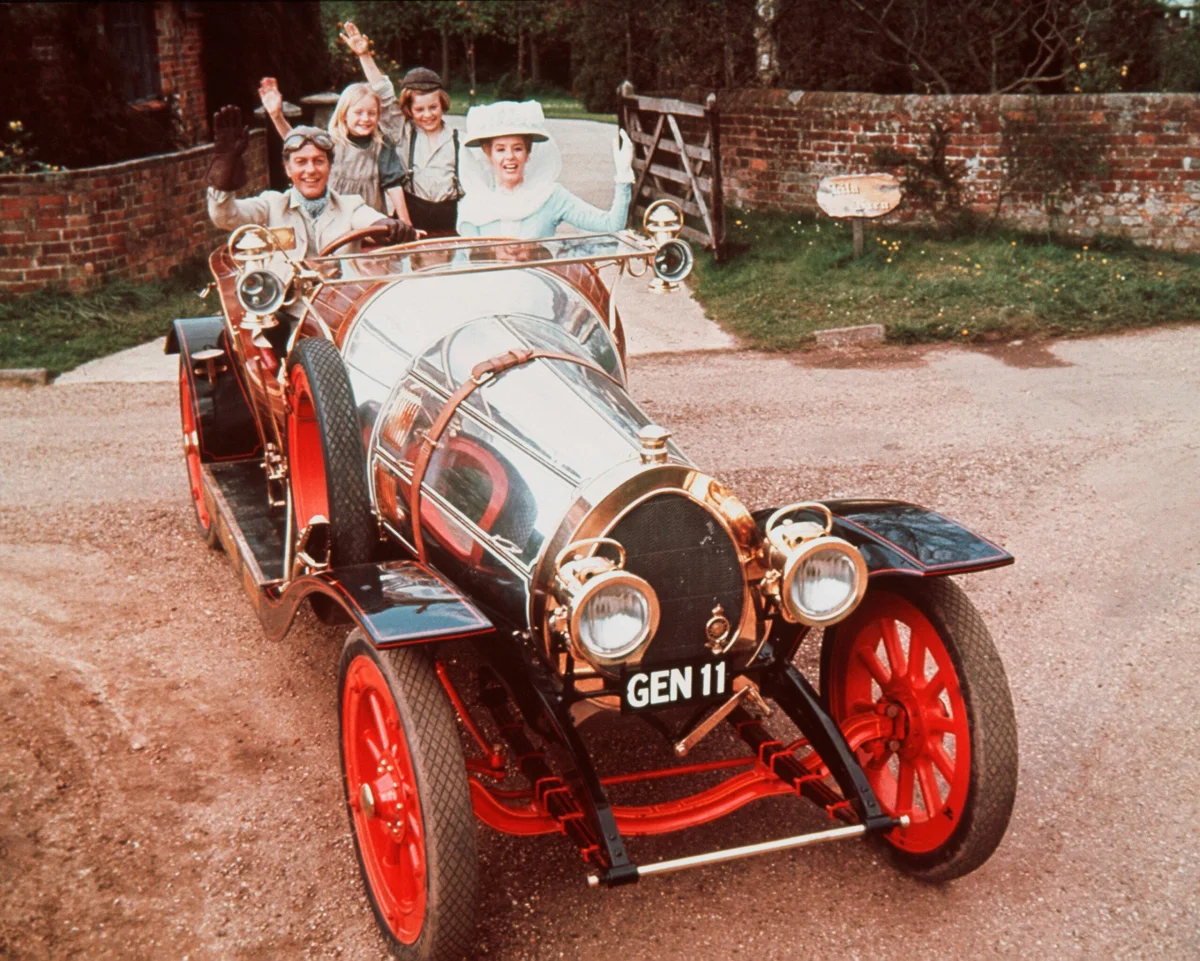
Henry Mann grew up during the shop's racing and movie-car peak, but his father didn't discuss much of the business at home, so he had no idea of the Chitty connection. "I watched the film as a child, but had no knowledge of Dad's involvement," he recalls. "Later on, when my dad's mom died and we were clearing out her things, there was a little model of Chitty on her dresser. Dad explained everything and I was like, 'What? And you built a car for the film?!' That would have been helpful to know when I was a kid on the playground!"
He still marvels at how the film and car have endured. "I'm glad it had the power from some small workshop in Surrey to inspire somebody across the pond. I think it was probably a surprise to everybody who worked on Chitty how well-loved the film was and how iconic the car became."
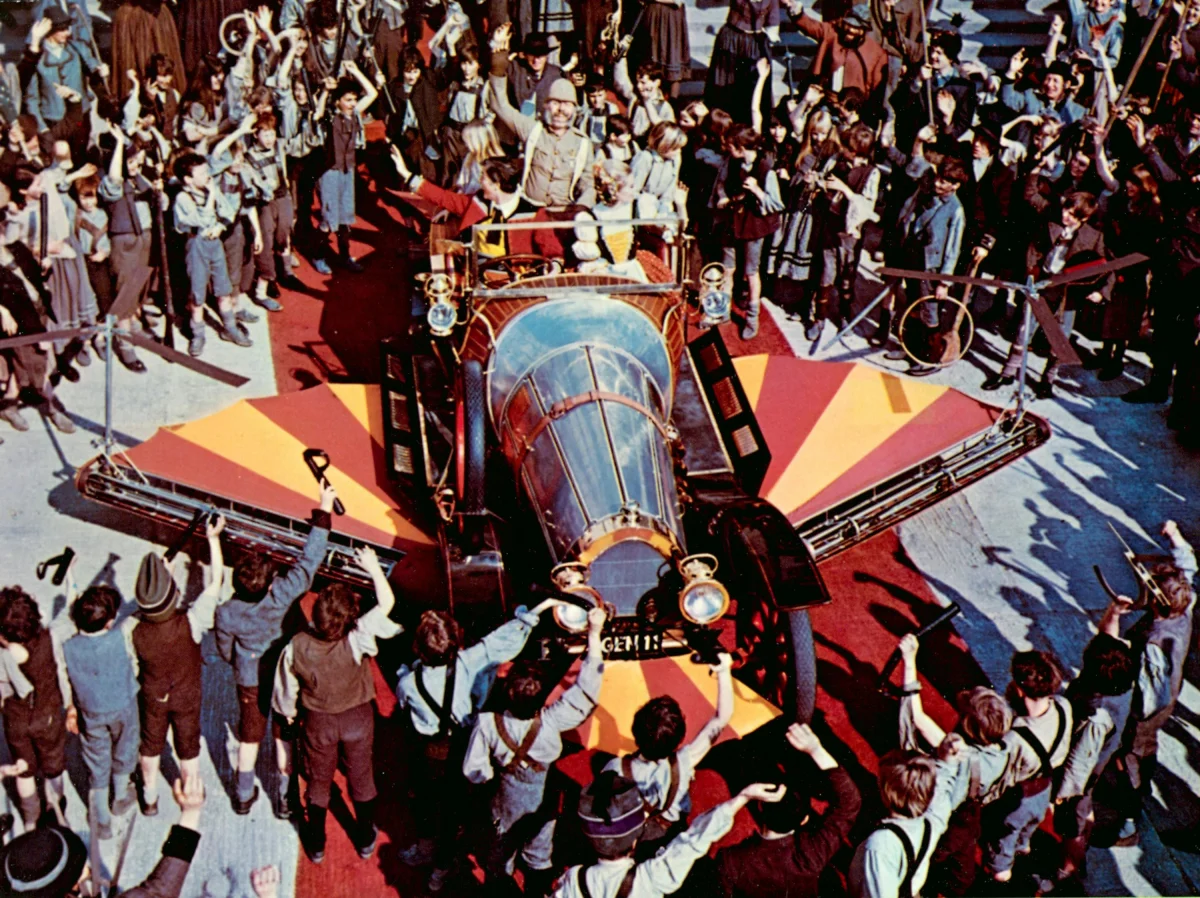
Both road-going cars survive. The first standard car, sometimes called "Chitty Prime," stayed in private English hands until 2011, when it was sold to director Peter Jackson of the Lord of the Rings and The Hobbit trilogies. It's now part of Jackson's collection of antique aircraft and cars in New Zealand. The second, "Chitty Beta," was used to promote the American release. It moved through collections and museums across the U.S. until May 2021, when the Stahls Automotive Foundation in Michigan bought it.
Behind the Wheel at the Stahls Collection
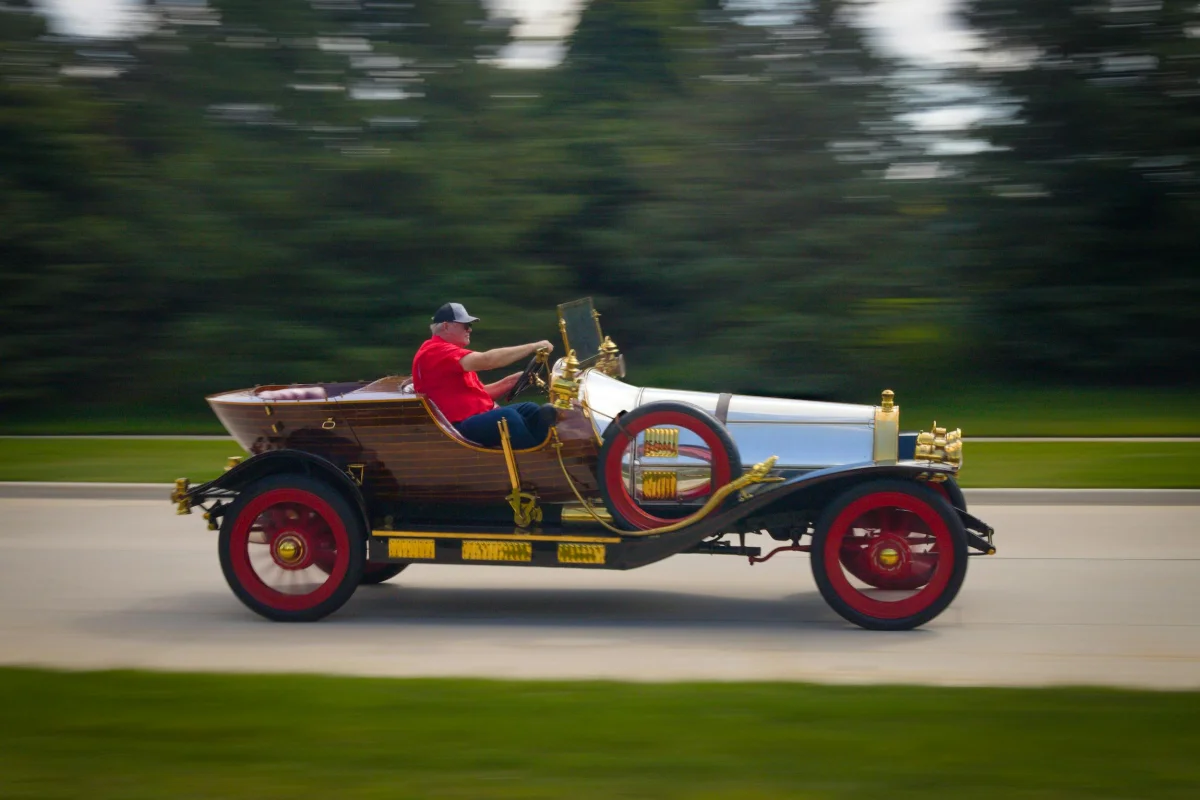
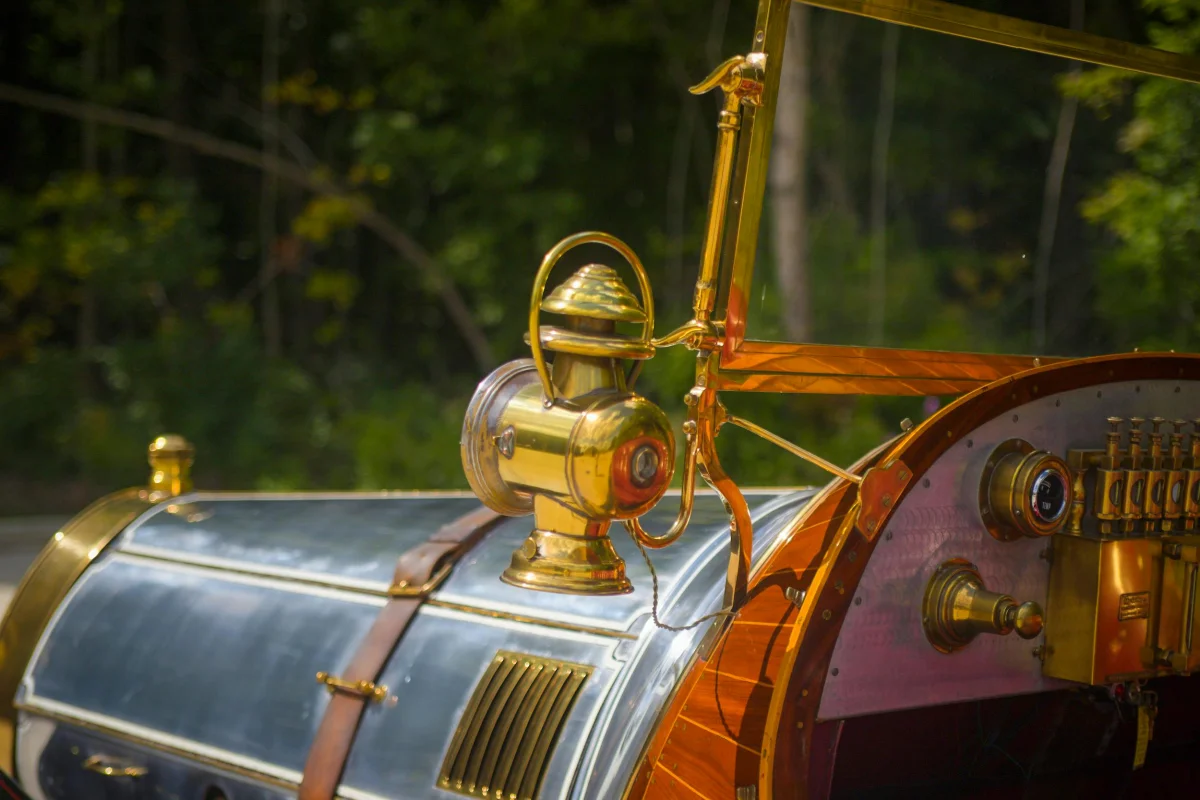
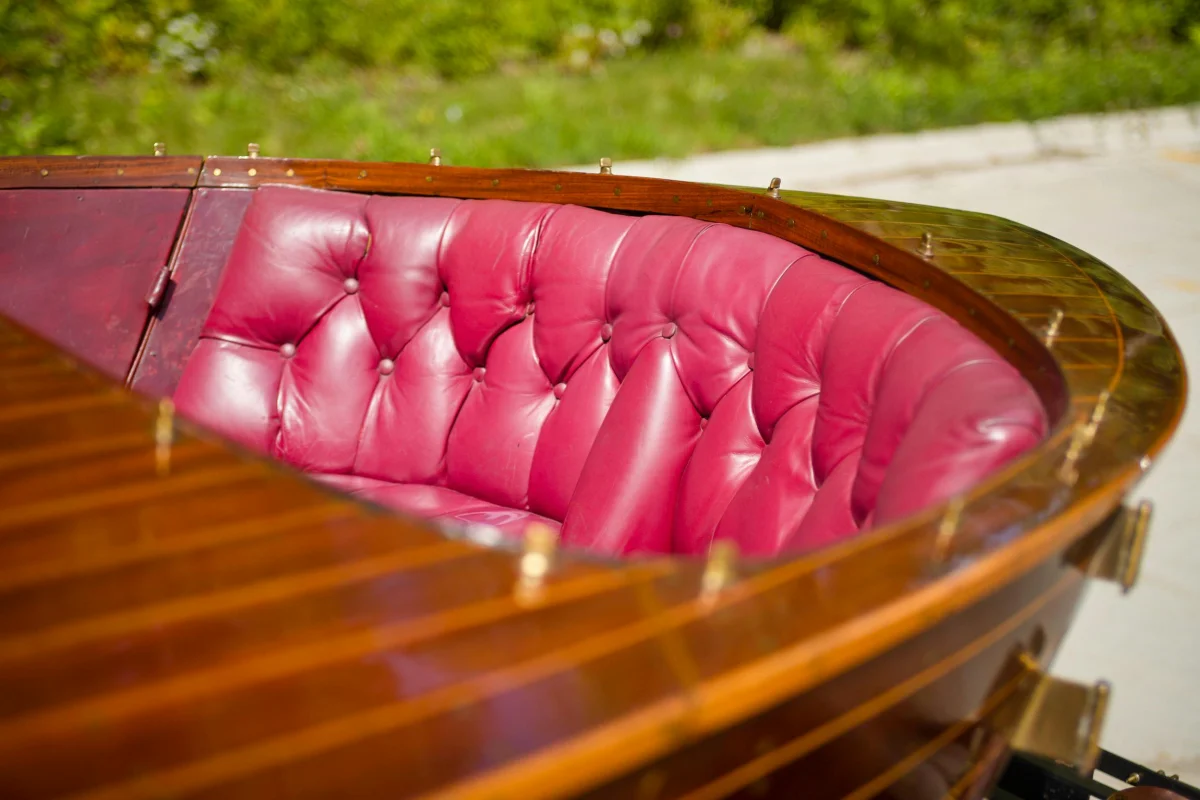
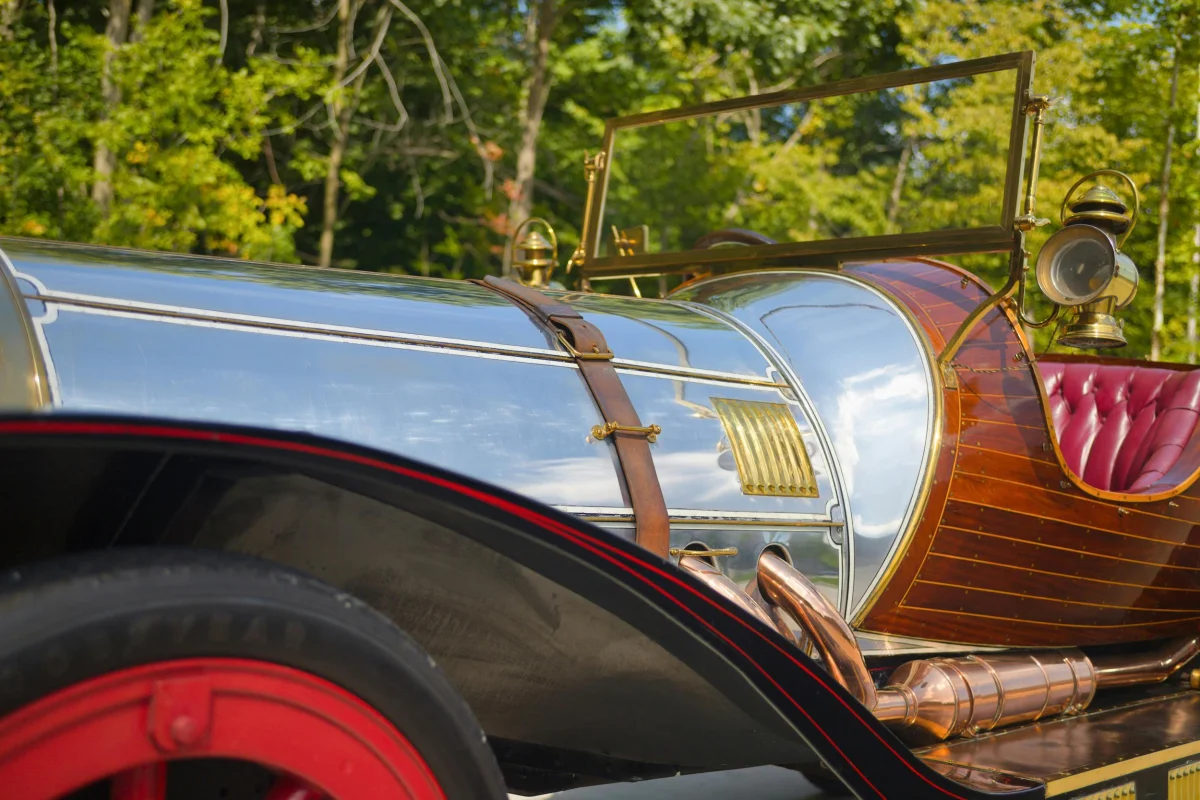
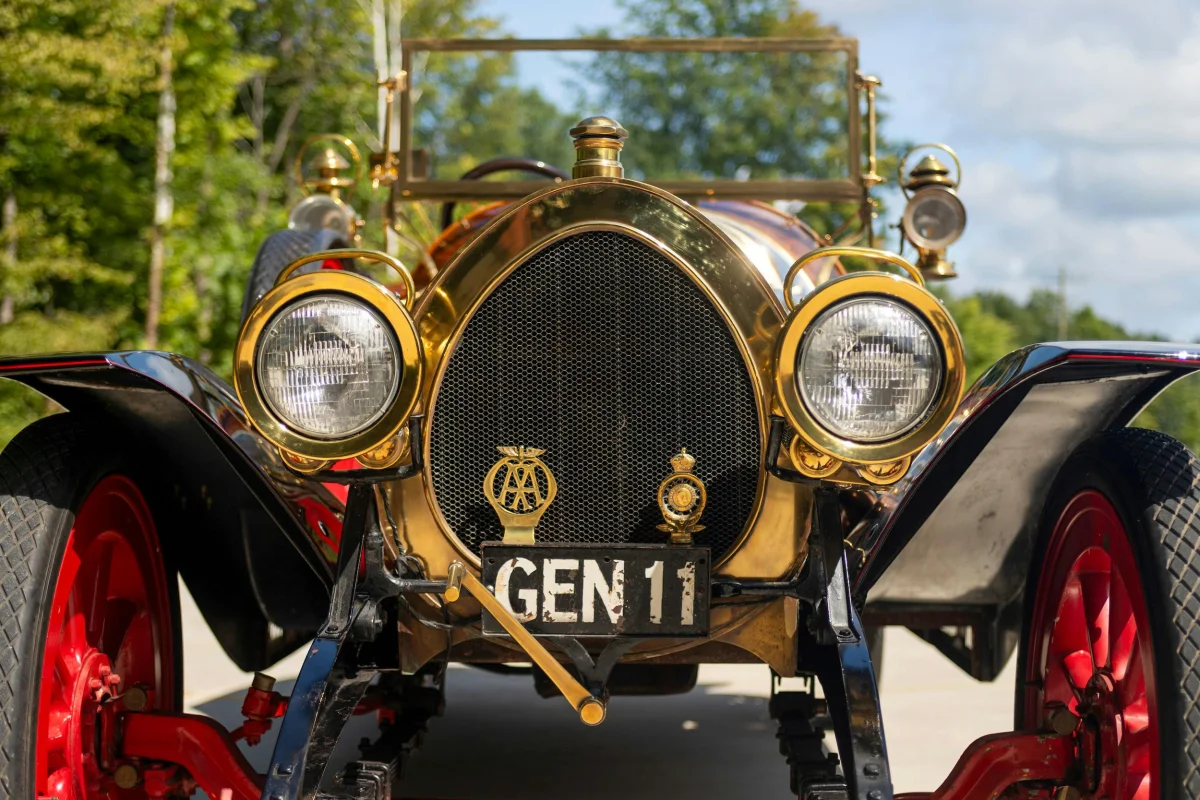
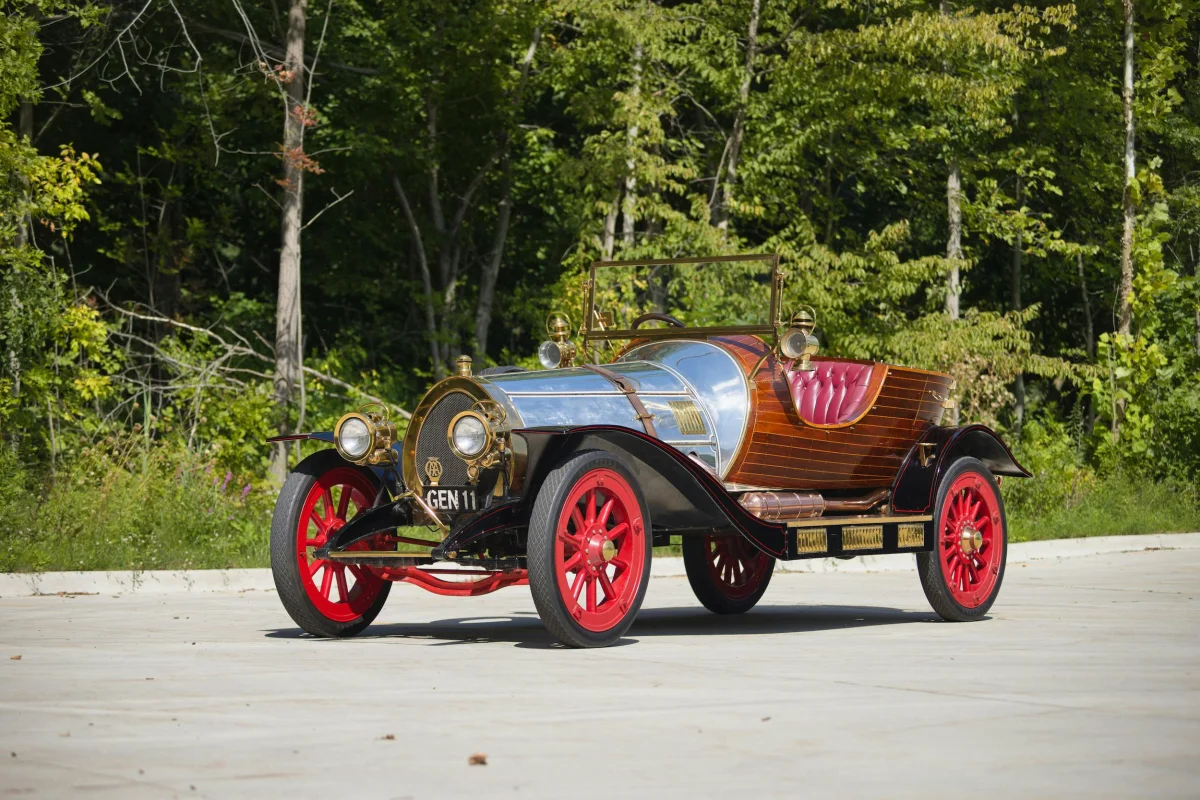
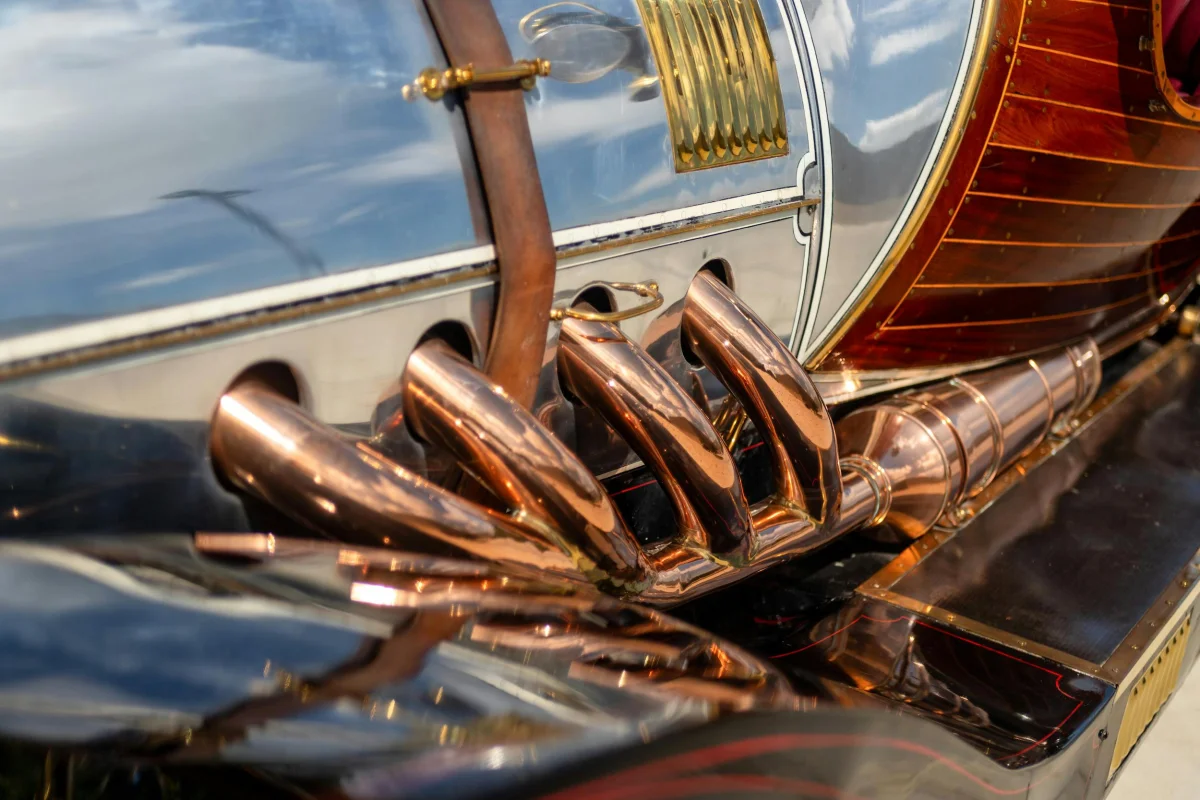
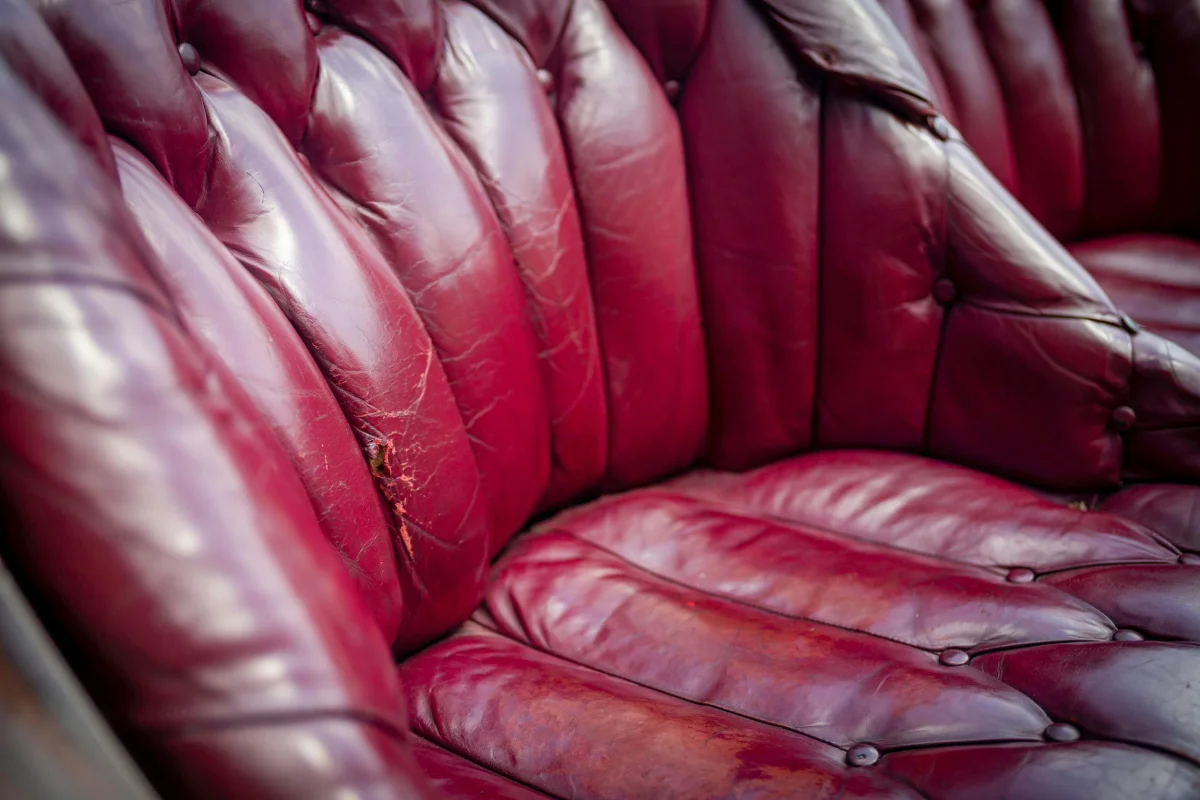
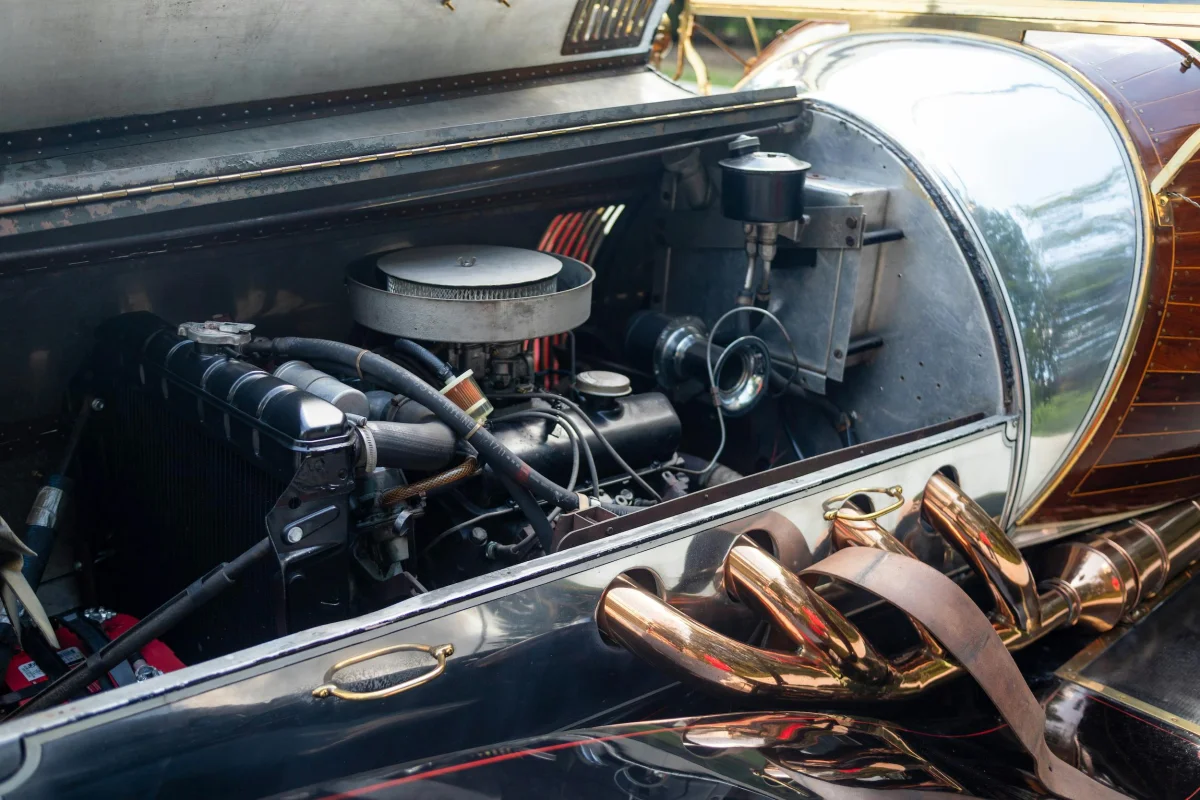
Seeing the car in person changes how it reads. The screen version is two-dimensional, and the real thing is larger, more graceful and more imposing than the film suggests. The proportions hold up in a way that even careful tribute builds rarely manage. The details carry the appeal: the brass radiator tucked between the swooping black fenders, which are pinstriped in red; the mirror-polished aluminum hood; the copper exhaust pipe curling along the hood; and a brown strap with a brass buckle holding the hood down. The red leather has the soft patina of a well-used baseball mitt. The varnished wooden boattail glows in deep brown.
The proportions are perfect and the details delicious.
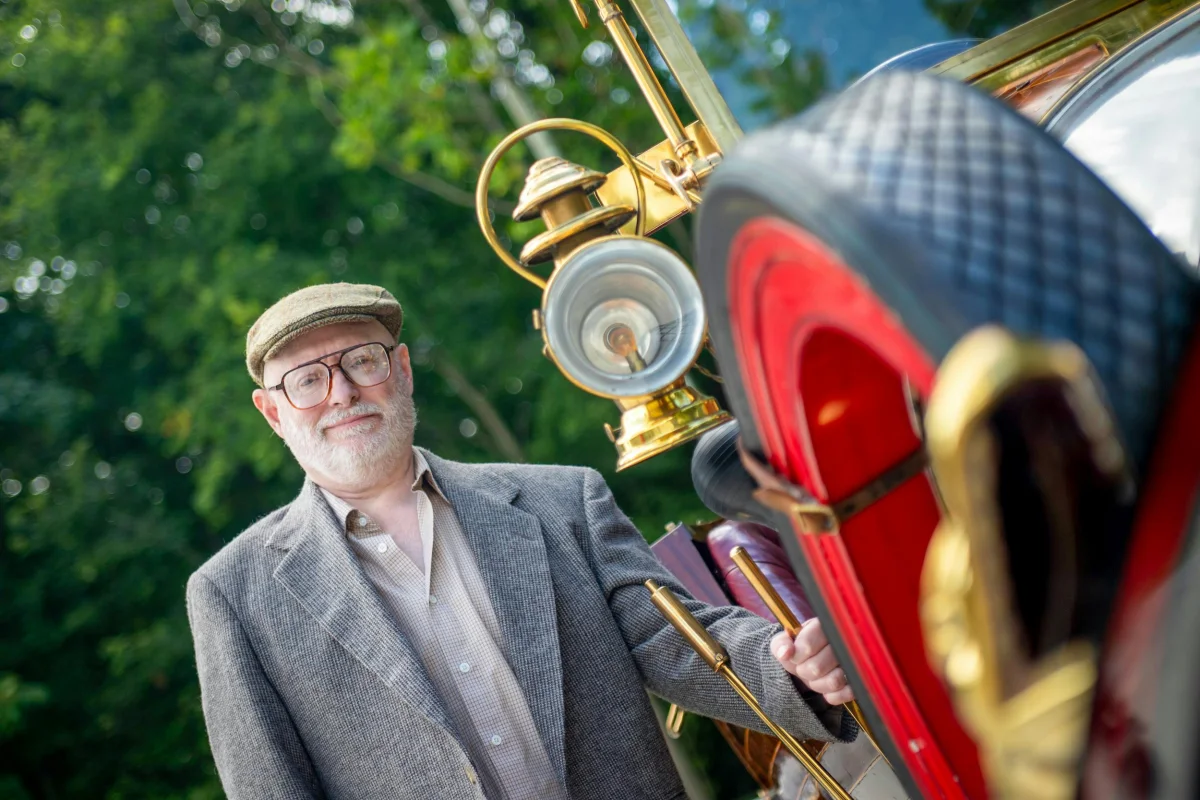
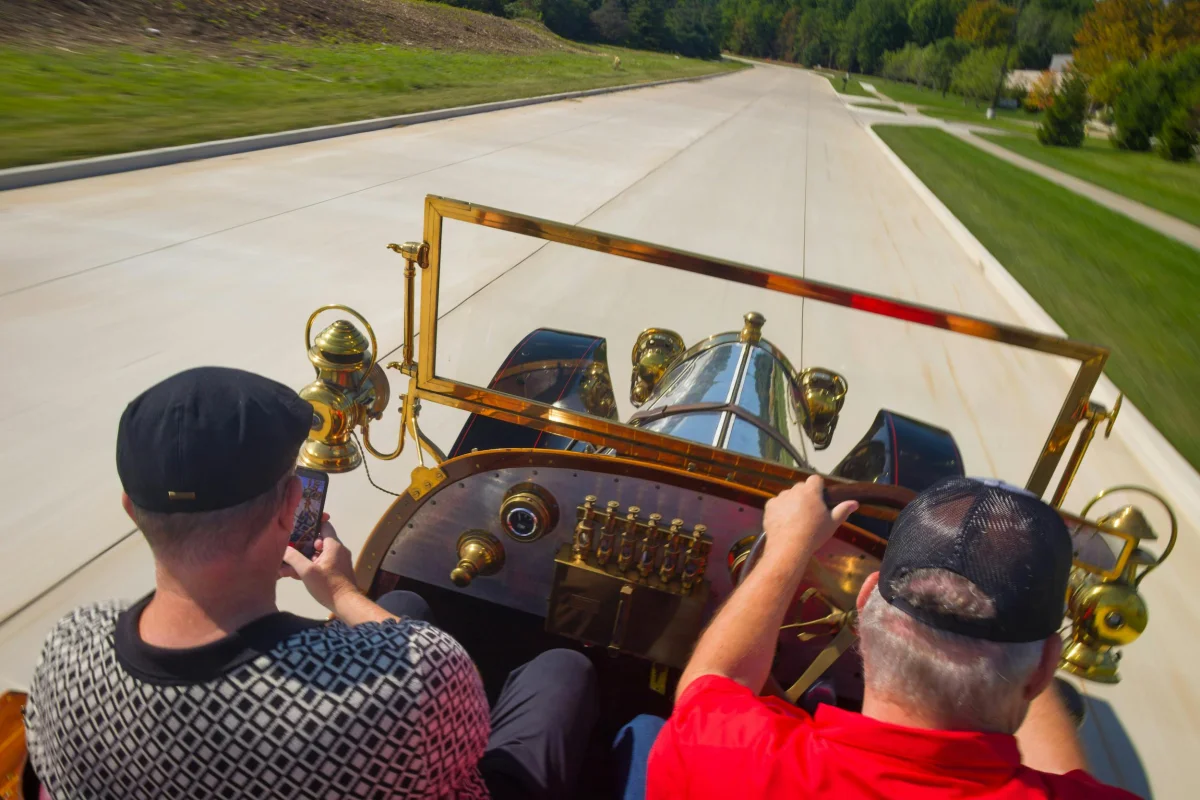
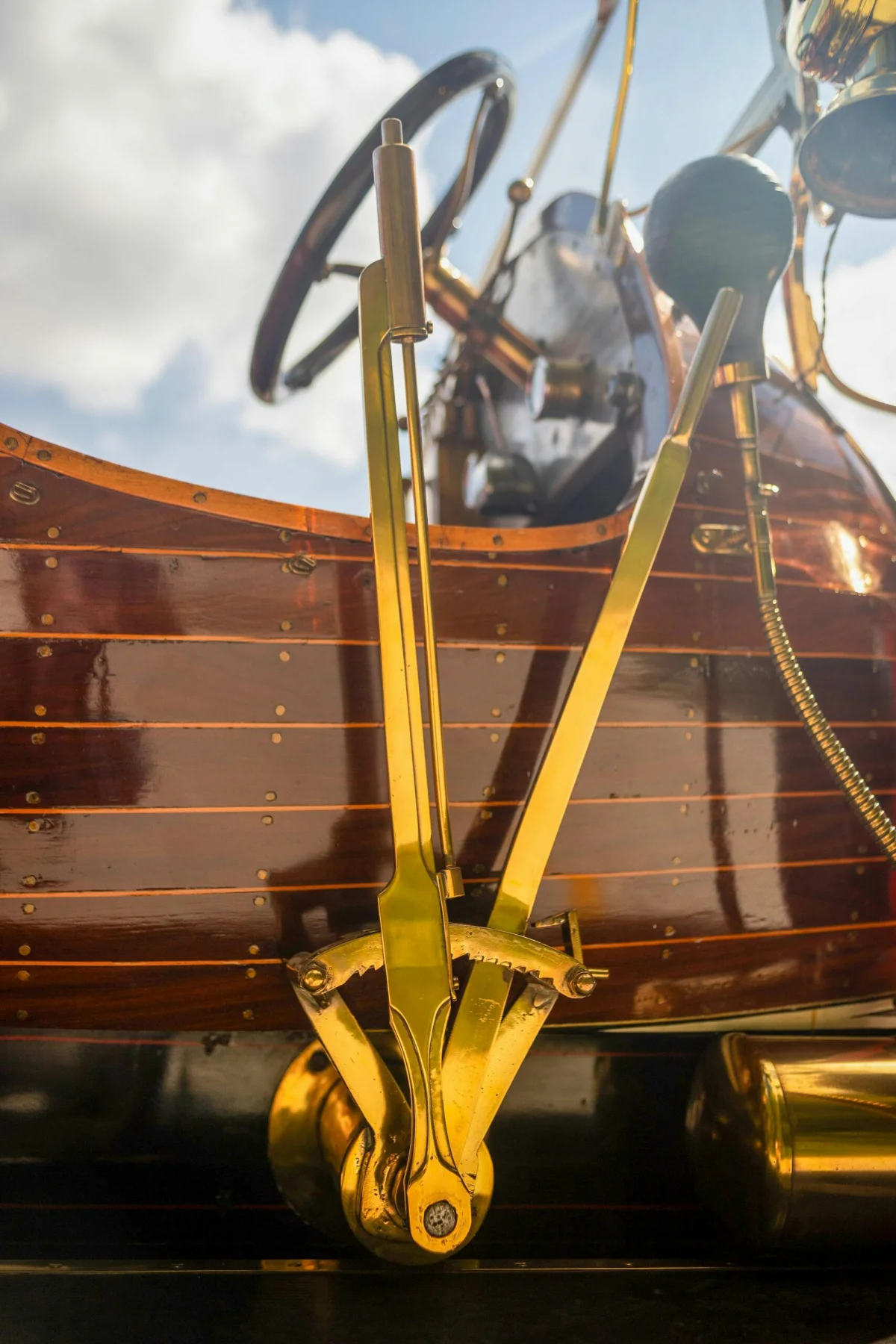
Jeff Stumb, executive director of the collection, drove. Chitty is right-hand drive like other proper British cars. There are no front doors, so entry means climbing onto the running board and over the curved cutaway in the wooden body. The long brass levers beside the driver are the automatic selector and the handbrake, and the oversized controls make the seat harder to reach, so passengers and drivers tend to climb in from the passenger side. The engine starts without fuss and idles with a soft burble. There's none of the "chitty-chitty" clatter or "bang-bang" backfire that gave the car its name.
On the drive, the ride was surprisingly smooth, helped by the long wheelbase. The same wheelbase gives the car what Dick Van Dyke later called "the turning radius of a battleship." The steering doesn't self-center, so after each turn the driver has to wind the wheel back to straight. The front seat is snug but workable. The rear seat looks like it was built for children. With no front brakes, the speeds stayed under 25 mph, which suited the situation. The five-foot hood stretches out ahead, and the car feels like it should take off. It doesn't.
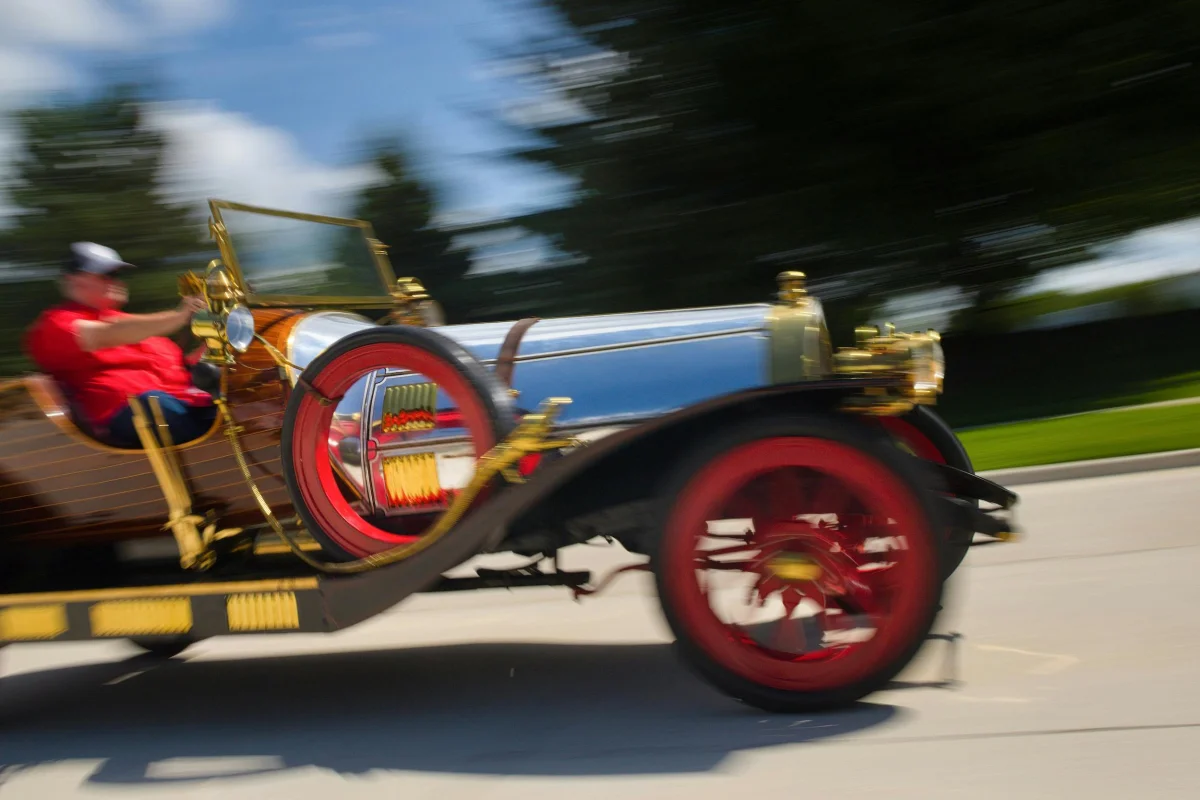
The view down the five-foot hood reflects the blue summer sky. My inner 7-year-old is pinching my 61-year-old self.
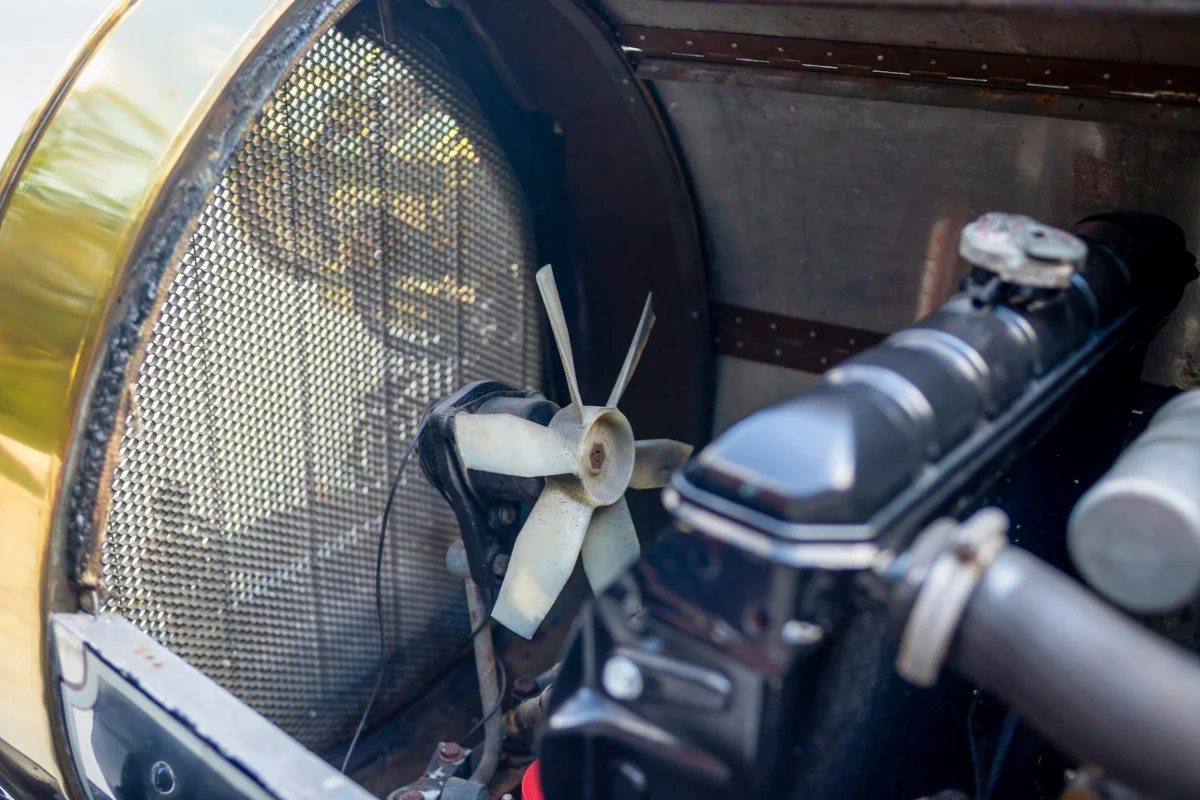
Afterward, the car could be studied up close, and that's where the movie magic gives way to hardware. The V-6 looks almost comically small once the hood is open. The curved exhaust pipes end at the hood and aren't connected to the engine. The grille is decorative, not a radiator. A small electric fan sits behind it and blows toward the real radiator behind the engine. None of that diminishes the car. It just shows how much of Chitty's presence comes from proportion, color and craftsmanship rather than engineering.
Why does that matter? Chitty was built as a movie car from the start, shaped by one designer's vision and realized by a network of specialist craftspeople. Most movie cars are ordinary cars that happen to appear on screen. Frank Bullitt's Mustang is still a Mustang. Bandit's Trans Am is still a Trans Am. Even with its gadgets, Marty McFly's DeLorean is a DeLorean underneath. Chitty doesn't fit into any existing model's identity. There is only one Chitty, and no production run will ever make another.