A 40-Year-Old 911 Turbo Still Running Hard for Its Owner
- Cargo
- Electric Vehicles
- Shipped
- Shipper
- Jim Koscs
- Readers
- 382
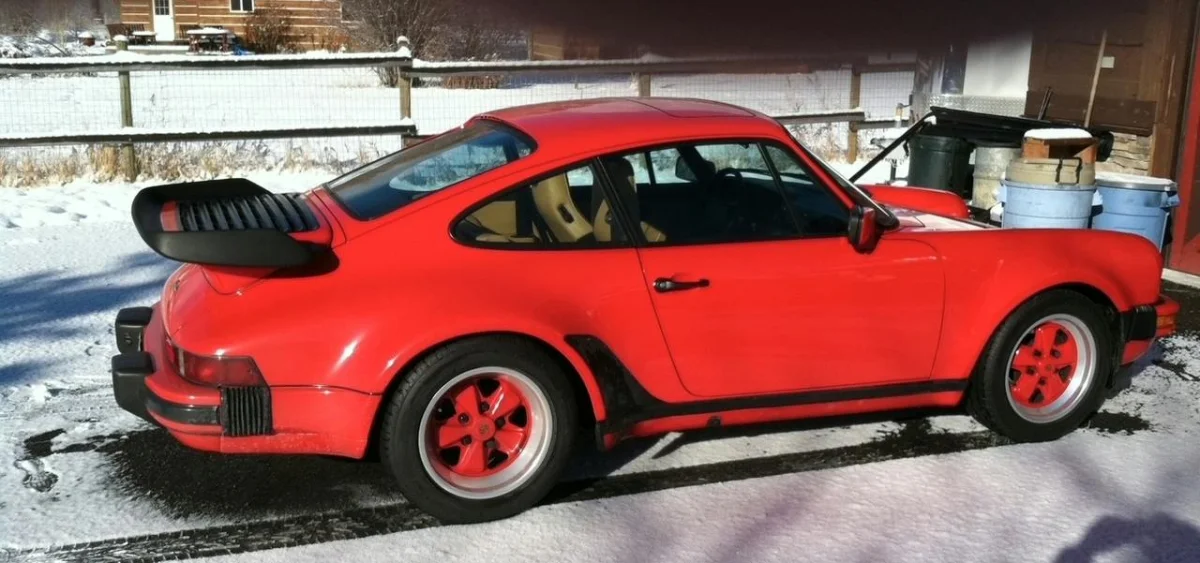
An 1986 Porsche 911 Turbo with 461 hp, a 120,000-mile odometer and a dramatic breakdown story shows what a well-kept first-generation Turbo can still do.
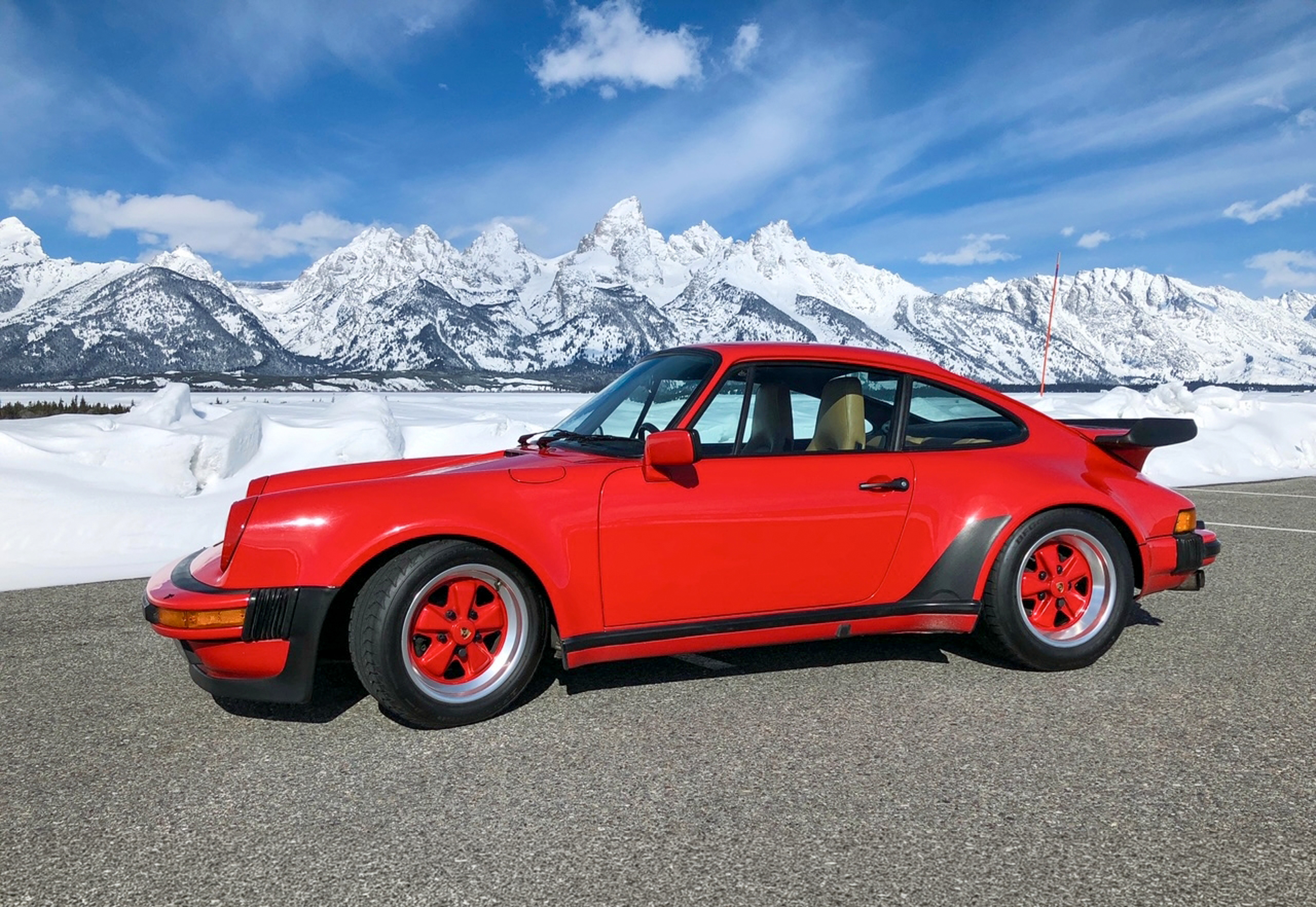
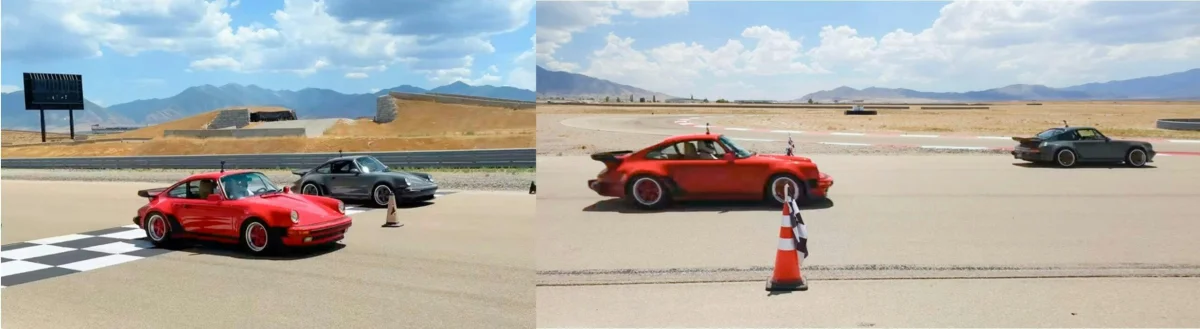
A 1986 911 Turbo that makes 461 hp, has been driven hard for four decades and still lost a drag race to a $1.8 million Singer is a useful reminder of what these cars can do. The Porsche belongs to Marty Quadland, who is 86, a retired oral and maxillofacial surgeon, and a former SCCA racer. His rival in the roll-down match was Supercar Ron, whose gray Singer-reimagined "Classic Turbo" is rated at 500 hp and more.
Supercar Ron set up the match for his YouTube channel at Utah Motorsports Park. Marty's Guards Red Turbo looks just as it did the day he took delivery, but it makes 63 percent more power than stock. On the launch, Marty got the better start. The Singer pulled ahead by the finish, and the other 911 owners in the track session were surprised by how close it was.
A Garage Built for Driving
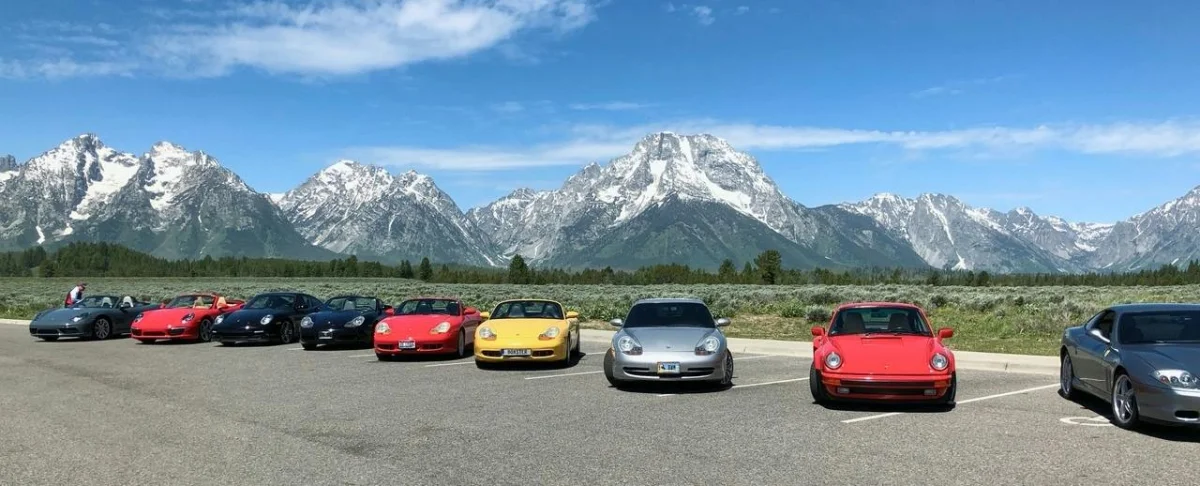
The race took place near the couple's summer home, but Marty would rather be on a winding mountain road than a drag strip. He and his wife, Paula Szypko, do multi-day sports car tours, and the Turbo has been their favorite partner. "Last fall, we took the Turbo on a four-day trip through Wyoming, Montana, and Idaho," he says. "This year, we've done a couple more of those trips with a different car."
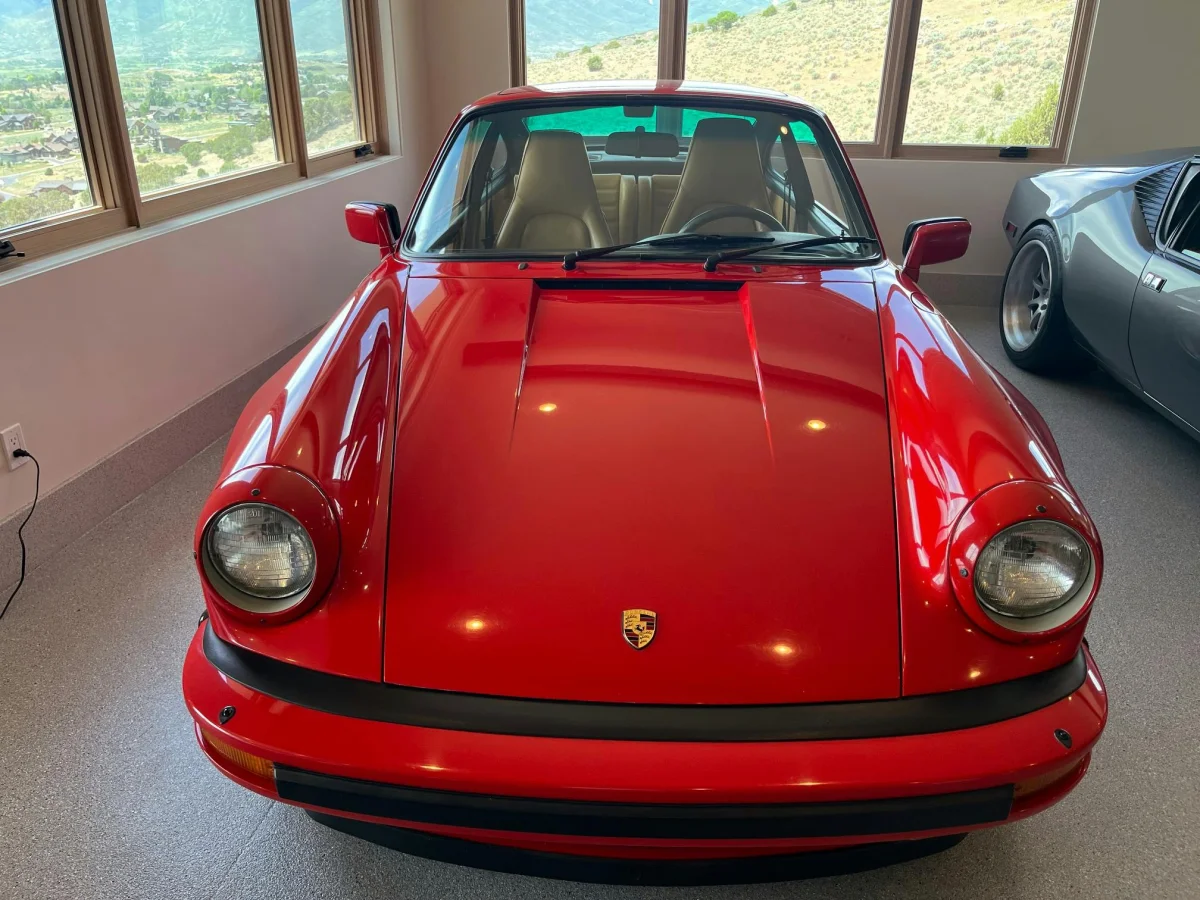
He has plenty of other options. A 1972 de Tomaso Pantera he has owned since that year has recently been through a thorough restomod build, with a 500-hp Ford 5.2-liter Aluminator replacing the original 351 Cleveland. There's also a 2015 Lamborghini Huracán, a 2024 Boxster GTS that he describes as "all hopped up," and a 1936 Ford cabriolet that connects him to a car he drove in college.
After retiring, Marty and Paula settled in Jackson Hole, Wyoming, and joined the Yellowstone Porsche Club. Marty planned most of the itineraries. "I'd spent 30-some years riding motorcycles all over the Northwest, and I knew the really fun roads."
Hot Rods, Hand-Me-Downs and a Lesson in Money
Marty's interest in cars started early. At two years old he would sit in the driver's seat of his dad's 1935 Ford convertible and make engine noises. At 12, his father bought him a well-worn '39 Chevy for $15. Marty drove it for a couple of years, sold it for $20, and then started building Ford hot rods, including a chopped '31 and a '54 ragtop.
At the end of his freshman year at Dartmouth College in 1959, he bought a green 1936 Ford convertible from a graduating senior for $300, with his dad covering the cost. Within weeks, and with help from two friends, he had swapped the flathead for a junkyard Chevy 283 that had been breathed on. "It could keep up with a Corvette," he says.
Campus street racing on a stretch of unfinished highway ended badly during one 1:30 a.m. contest. The Ford's right rear wheel sheared off, and the car skidded across a farmer's front yard, tearing the stairs and banister off his porch. The farmer agreed to let it go if Marty paid for the repairs. "I had to go to my dad for money again, and that was the last straw. He made me sell the car."
A Triumph TR3 followed, and Marty ran it in some hill climbs. Dental school at Tufts University in Boston meant a very used VW Beetle. In 1966, with his first wife expecting, he ended up with a Fairlane wagon instead of the Mustang convertible he had ordered. Two years of Army service at Fort Carson in Colorado Springs came after school.
Racing, Dentistry and a Brumos Phone Call
After the Army came a three-year residency at The New York Hospital-Cornell Medical Center in Manhattan. In 1971, Marty set up practice in North Carolina and finally had the income to indulge his car habit. He bought a slightly used 1971 Corvette, sold it, and picked up a '72 Pantera from an owner who had only held it for a few months.
Racing took over. Over 25 years in the SCCA, he ran Formula Vee, Formula Ford, a Renault spec racer, a GT1 Corvette and a Radical SR3. In his first race in the Corvette, he started from the back of the grid and won. He traded part-time instruction at a racing school for track time, and he co-owned half of a North Carolina shop that built 356 Speedster and MG-TD replicas.
In 1985, on the drive home from the 24 Hours of Daytona, Marty stopped at Brumos Porsche in Jacksonville and drove away in a black 911 Targa. He loved it and covered 10,000 miles in a year before selling it to a fellow doctor. He then called the Brumos sales manager to find a replacement.
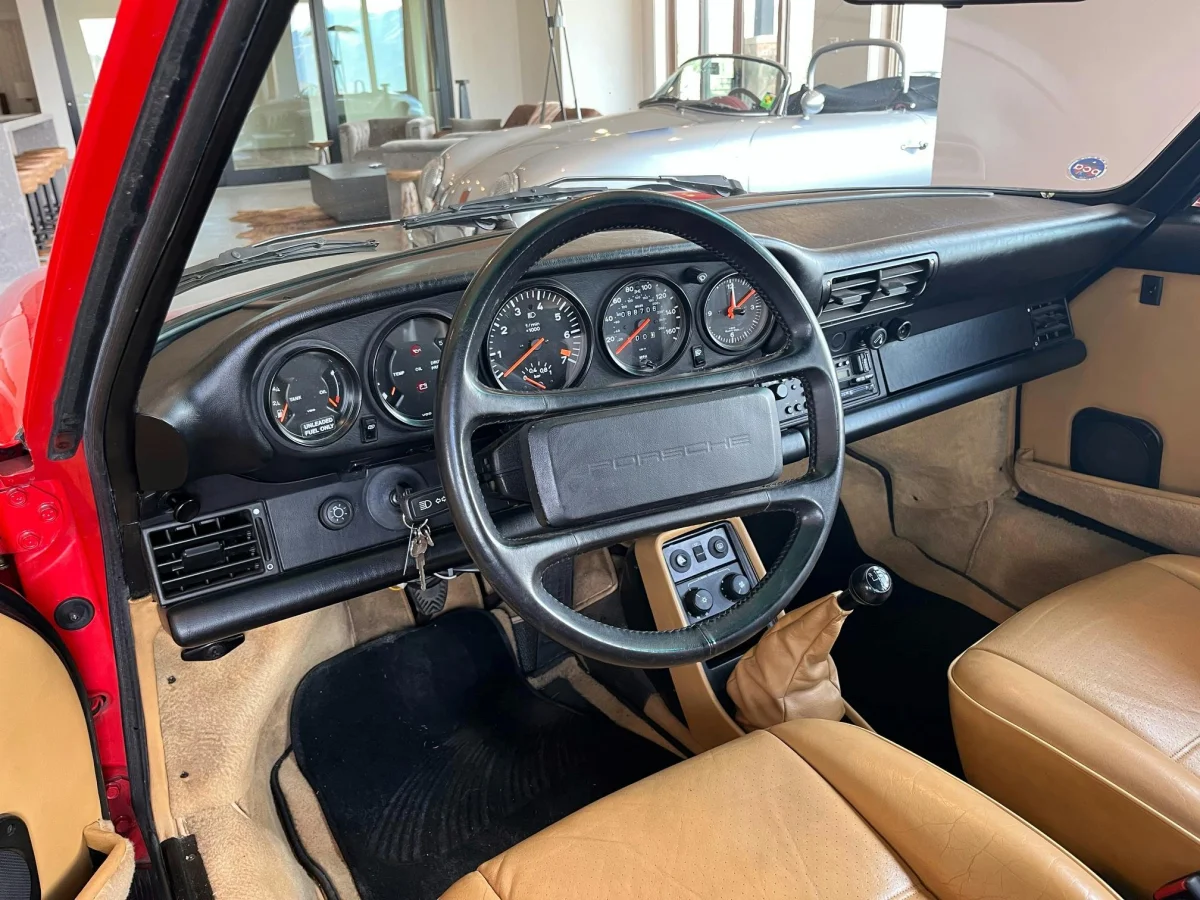
"I asked if he had anything I'd be interested in, and he said, 'How about a Guards Red 911 Turbo?' I said, 'I'll take it.'"
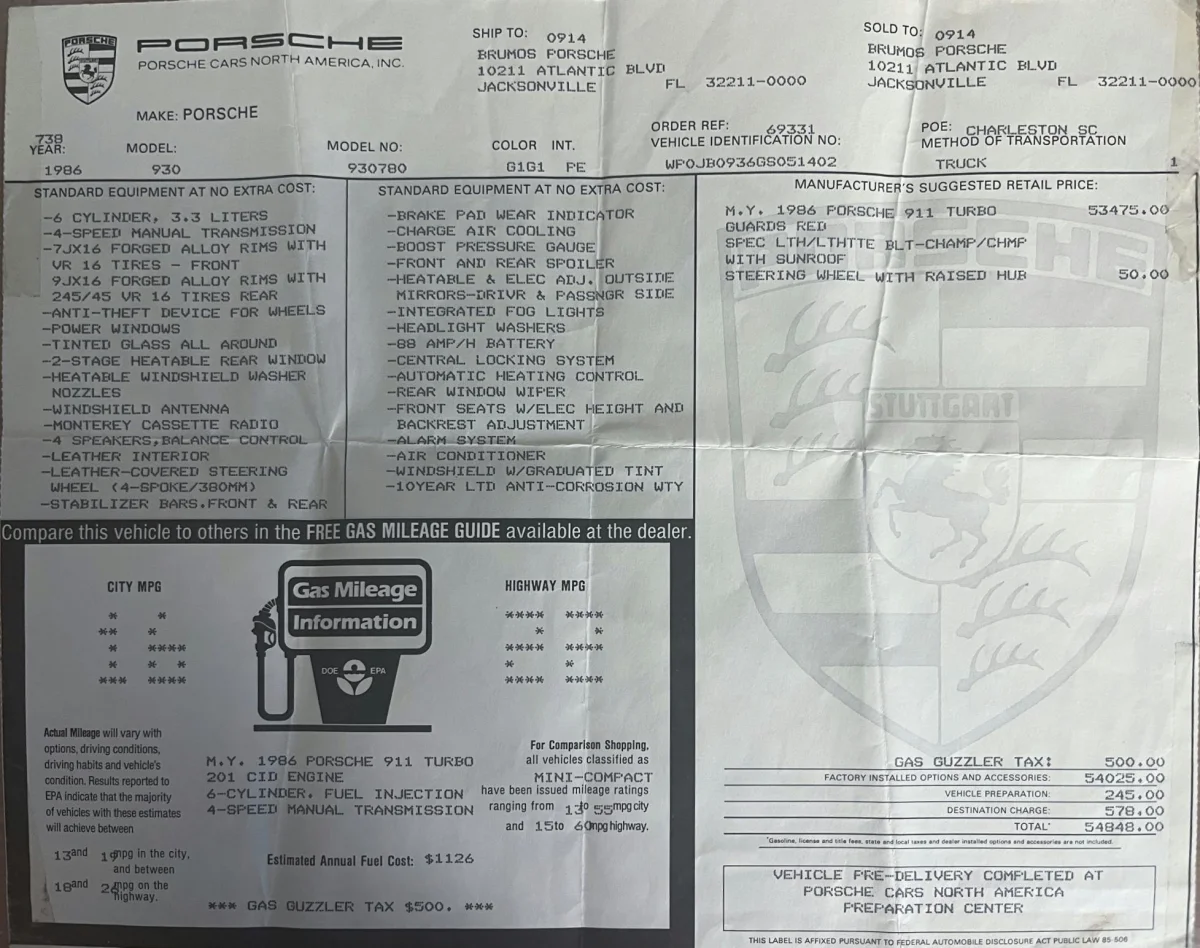
The Turbo stickered at $54,848 with the optional sunroof. Marty flew to Florida with his 13-year-old son and drove it home.
The 930 Before the Badge Got Complicated
Today almost every current Porsche is turbocharged, apart from the 911 GT3 models and top-trim Boxsters and Caymans. Only the strongest version in each line gets the "Turbo" badge, and that includes the EVs. It was simpler in 1975. "Porsche Turbo" meant one car, the 911 Turbo.
Porsche unveiled the production 911 Turbo at the Paris Auto Show about four months after a 911 Carrera RSR Turbo finished second overall at the 1974 24 Hours of Le Mans. European buyers got the car first, and it reached the U.S. in late 1975 as a 1976 model. Porsche sold it here as the "Turbo Carrera," but enthusiasts quickly adopted its internal code, 930.
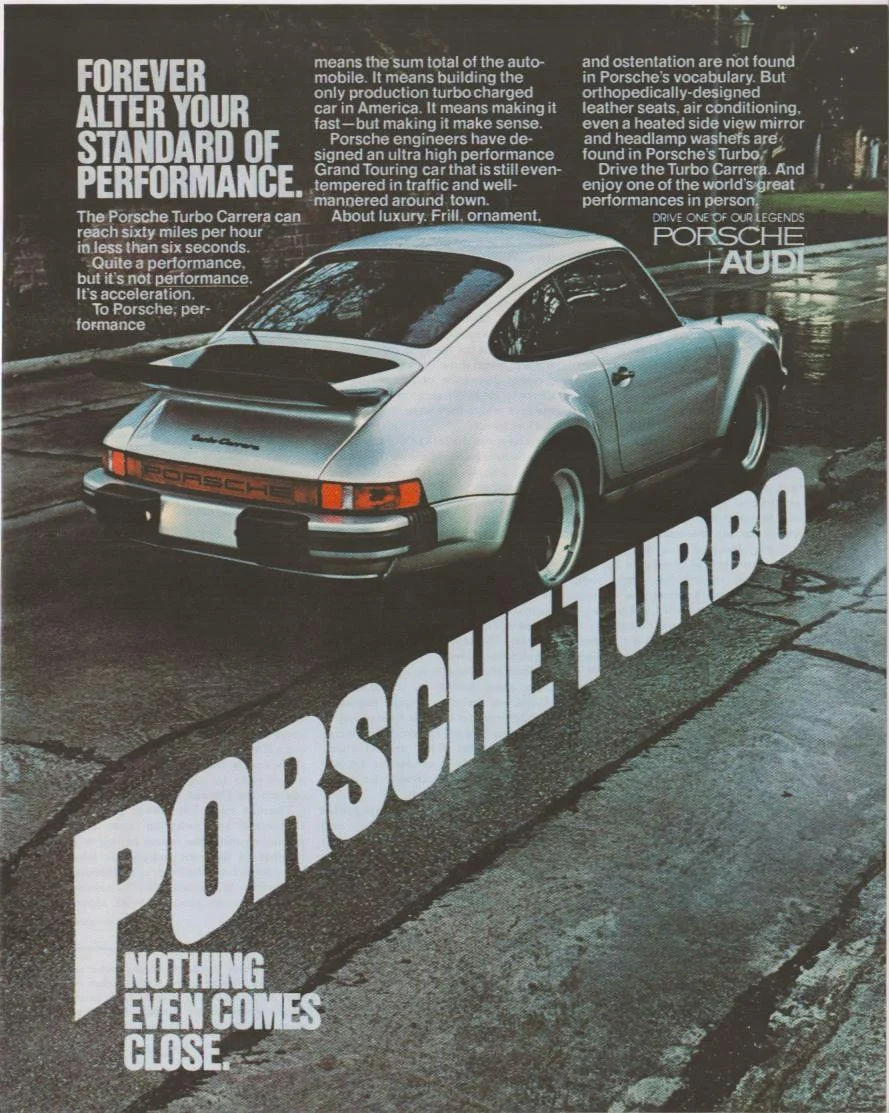
The '76 Turbo cost $26,000, nearly double the 165-hp 911S. Its specs look modest now. The 3.0-liter flat six ran a very low 6.5:1 compression ratio to resist detonation, and a wastegate capped boost at 11.5 psi. The European car made 260 hp. The U.S. version, which used thermal reactors for emissions control, produced 234 hp and 246 lb-ft. Its four-speed manual was geared around that torque, which frustrated some drivers. First gear ran out at 51 mph, and third and fourth were both overdrives, with fourth at a very tall 0.65:1.
At the time, Corvettes and Ferrari 308s struggled to reach 0-60 in under eight seconds. Car and Driver recorded 4.9 seconds to 60, a 13.5-second quarter mile at 103 mph, and a 156-mph top speed. Road & Track described the sensation this way: "It takes the driver a moment or two to realize some awesome, unseen force is pushing him back into his seat and thrusting the Carrera forward at an incredible rate."
That force came with a handling risk. Snap oversteer caught drivers who weren't ready for the 911's rear-engine behavior, and it earned the early Turbo the nickname "widowmaker." The car also looked the part, with widened rear fenders, wide tires and the "whale tail" rear wing, all meant to help stability at high speed.
For 1978, the U.S. Turbo grew to 3.3 liters and gained an intercooler, lifting output to 265 hp. Porsche also upgraded the brakes. Then it withdrew the Turbo from the American market because it couldn't meet emissions standards. The car came back for 1986 with catalytic converters, Bosch Motronic engine management, and 282 hp with 288 lb-ft of torque. The price had also roughly doubled compared with a decade earlier. Marty's car is one of those 1986 cars.
From 282 Hp to 461 Hp
Marty was still in North Carolina when the Turbo shifted from daily commuter to weekend car. He took it to SpeedWërks, a Porsche performance and racing specialist, to add some punch. The work, finished in fall 2010, included a complete top-end rebuild with custom-ground cams. A Garrett GT35 turbo, Kokeln intercooler and B&B exhaust replaced the factory parts.
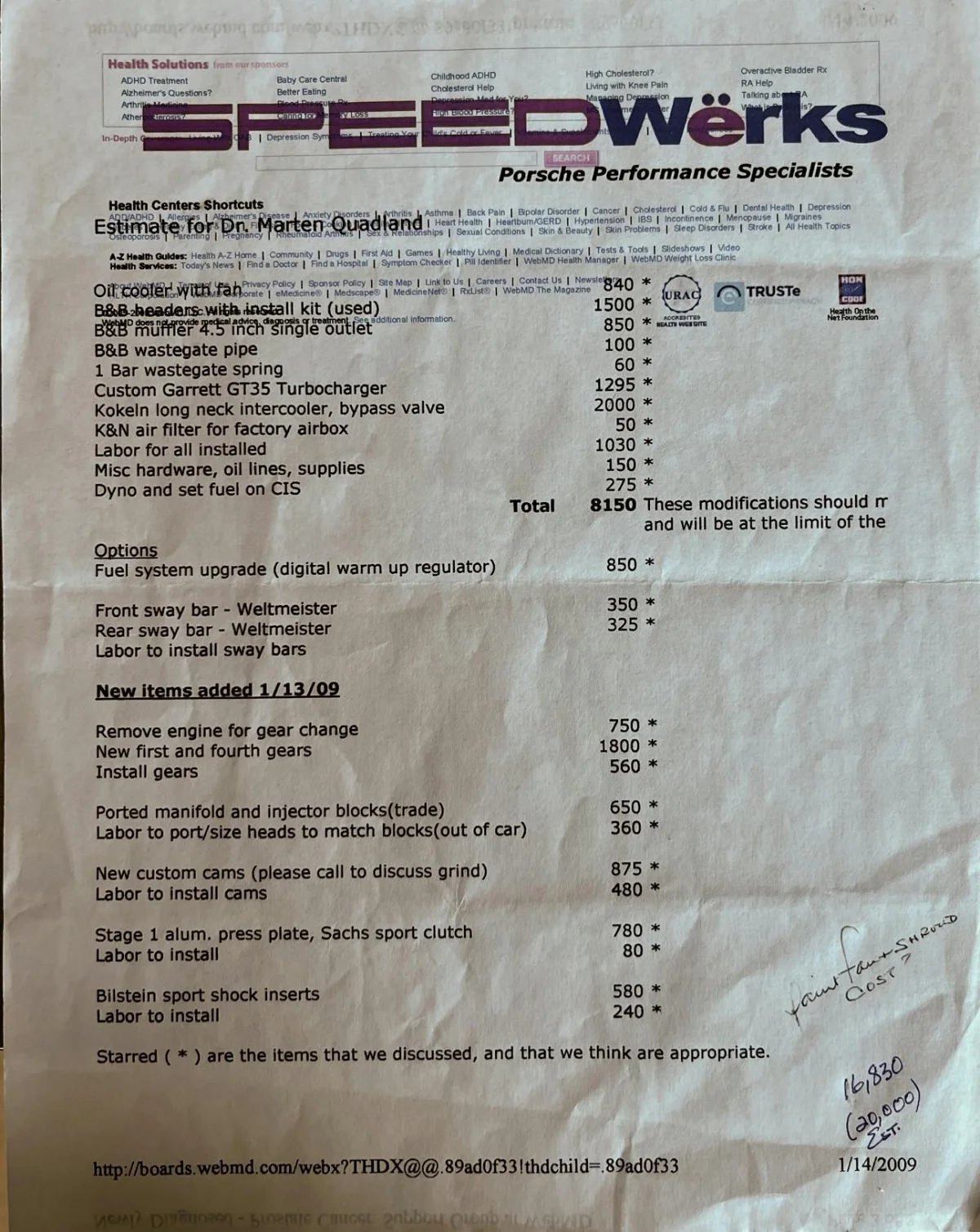
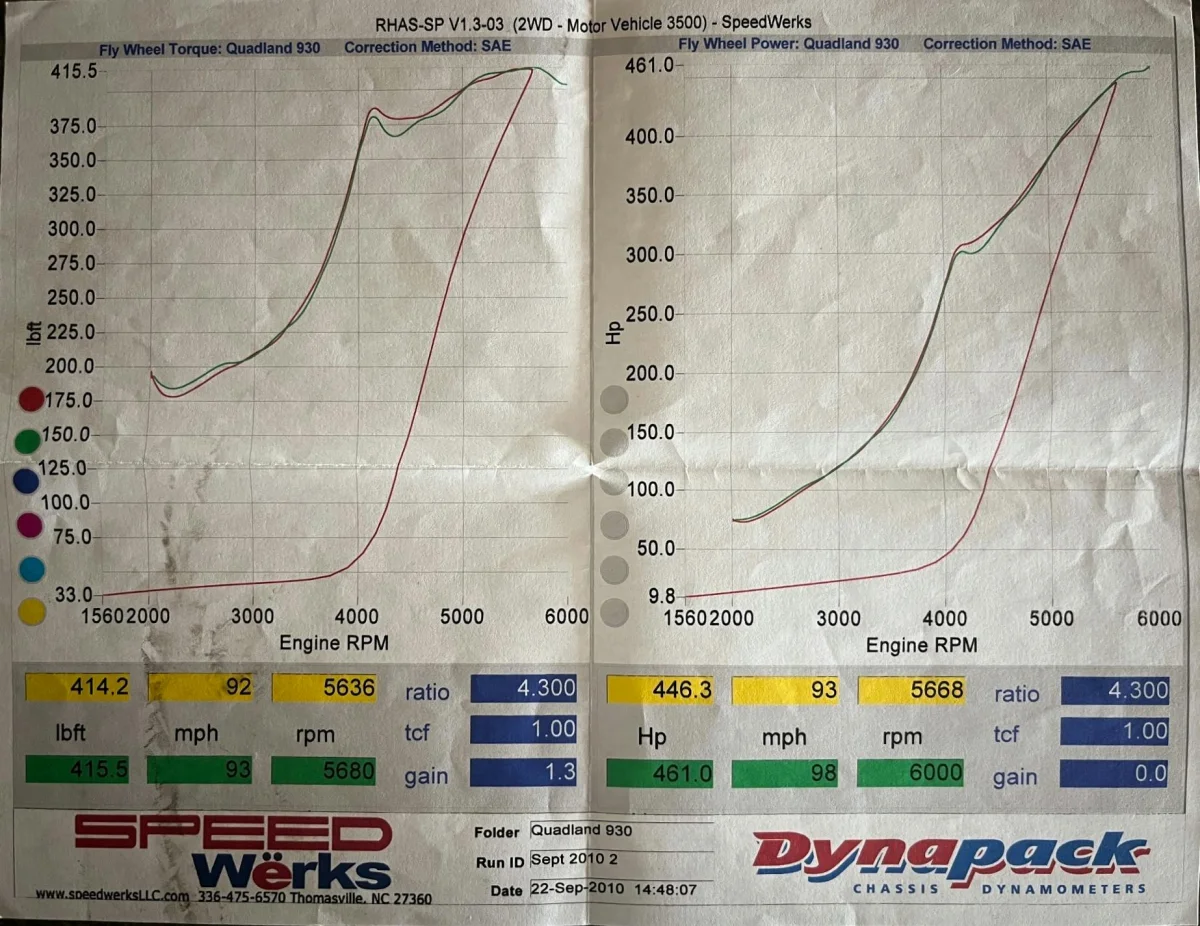
On the dyno, the car made 461 hp and 415 lb-ft of peak torque. Upgraded anti-roll bars and Bilstein shock inserts sharpened the handling. To soften the Porsche's noticeable turbo lag, SpeedWërks fitted a taller first gear and a shorter fourth.
Those gear changes carry a trade-off. "There's a little less time for it to unspool during shifts," Marty says. "Back in the day I would take it up to 155-160, but after the transmission work, top speed dropped 10 or 12 mph. It has no modern tech on it that will save you if you're stupid, so I take great care of making sure it goes straight."
The odometer quit at 88,706 miles, shortly after the engine work. Marty estimates the car now has about 120,000 miles.
A Breakdown in Colorado
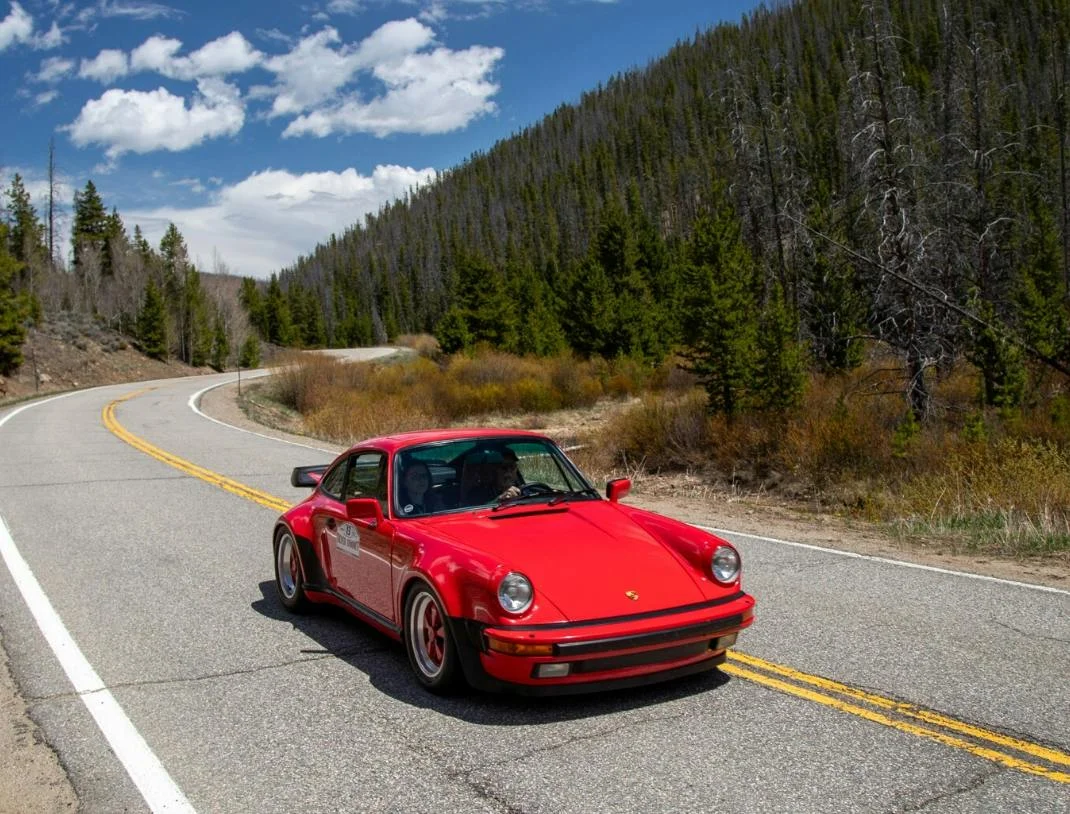
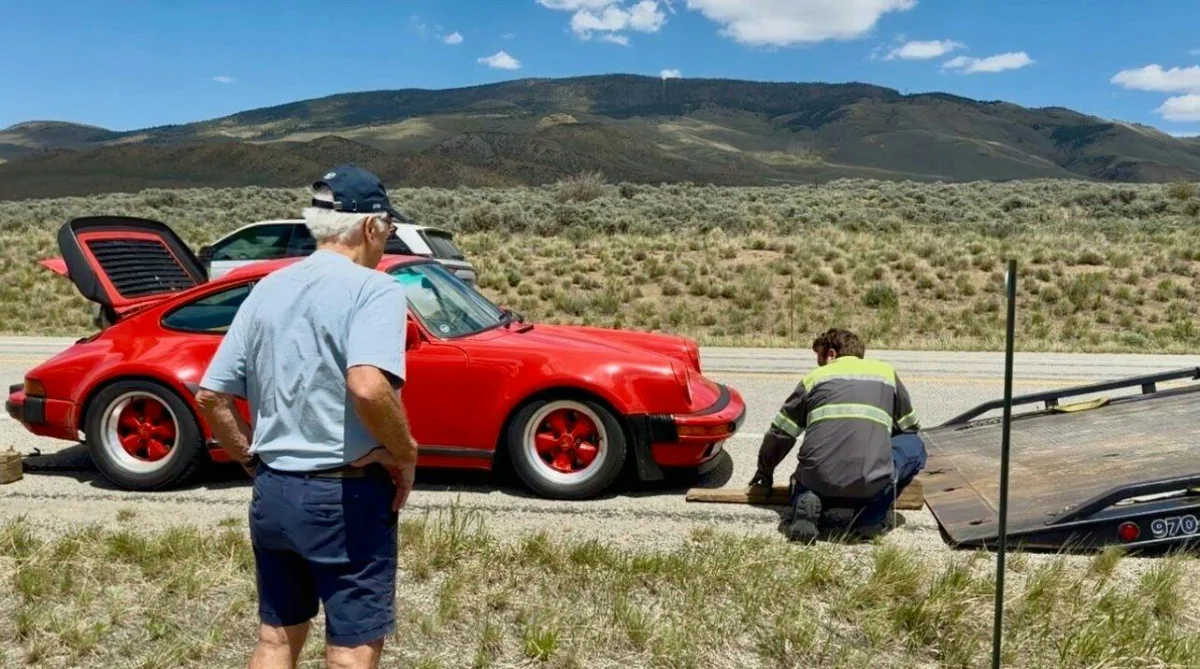
The Turbo is normally dependable on long tours. The exception came the night before the Hagerty Silver Summit, a 700-mile route around Colorado. The car died 80 miles outside Denver. A marque specialist in Salt Lake City had given it a clean bill of health only days earlier, but a 40-year-old car can always surprise you.
A flatbed hauled the car into Denver that afternoon. Marty and Paula rode in the cab with the driver and his two sleepy dogs. Marty called shops that worked on air-cooled Porsches, but the first few were booked or closing. The last option was Storz Garage, which was about to close. Owner Bob Brown agreed to wait.
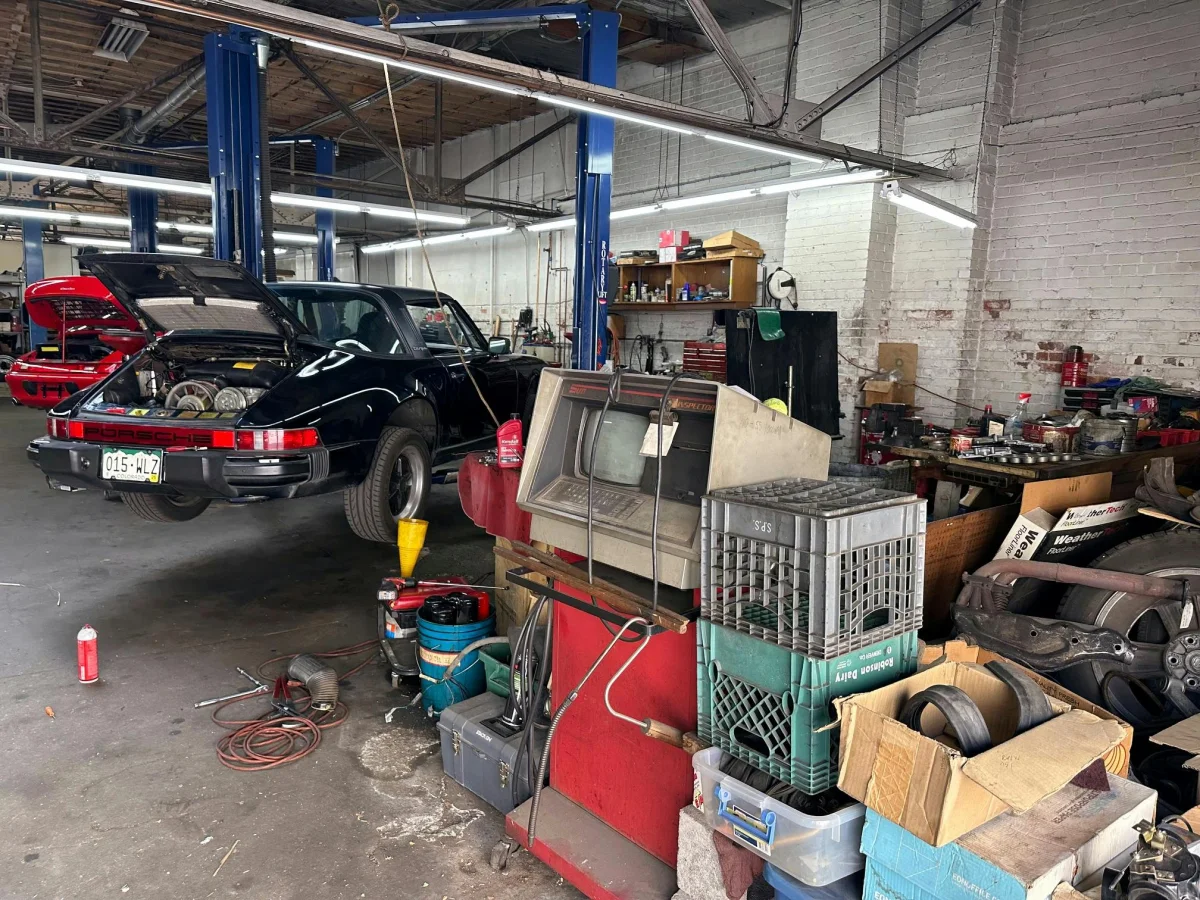
Storz sits in a rougher stretch just off Colfax Avenue, Denver's main east-west route, between two liquor stores and a tattoo parlor. Inside, two large black dogs guarded the bays, and the smell of the shop reminded Marty of his hot-rodding youth. Air-cooled 911s on the lifts were a comforting sight.
Bob would look at the car the next morning. With the local rental office closed, he lent the couple his pickup and filled its tank. That evening, Marty and Paula joined the other Silver Summit entrants for dinner in Parker.
Bob called early the next morning with good news. He had stayed late and worked through the problem with an electrically minded friend. The engine builder had correctly rolled up two spare wires in the aftermarket ignition box but never insulated them. Sixteen years on, they had unrolled and shorted out.
When Bob named his fee, Marty was stunned. "No charge." Bob suggested a $50 donation, if it would make Marty feel better. Marty handed it over on the spot.
"We had a great tour and then drove home with no issues. The whole trip was about 1800 miles."
Marty also sent Bob a thank-you letter, since the mechanic doesn't use computers or email and wouldn't want a phone call.
What Comes Next
The couple will spend the winter in Florida, where Marty is picking up a recently purchased, very low-mileage Porsche 718 Boxster RS Spyder. That model is the top of the Boxster range and uses the naturally aspirated flat six from the 911 GT3. One of his first stops will be the Sarasota Café Racers, a "non-club club" of dedicated enthusiasts who meet for lunch and good-natured bench racing.
Come spring, Marty and Paula will head back to their Western home in Heber City, Utah, and take the red 911 Turbo back out on tour. Their Turbo has racked up a lot of miles, and it still gets the same treatment it got from the start: careful attention, plenty of road, and an owner who knows exactly how far it can go.