Six Decades Behind the Wheel of a 1956 Porsche 356A Speedster
- Cargo
- Electric Vehicles
- Shipped
- Shipper
- Paul Stenquist
- Readers
- 890
Owned since 1963, this 1956 Porsche 356A Speedster has been repainted, re-engined and driven hard, and its early bearing swap turned out to be a smart move.
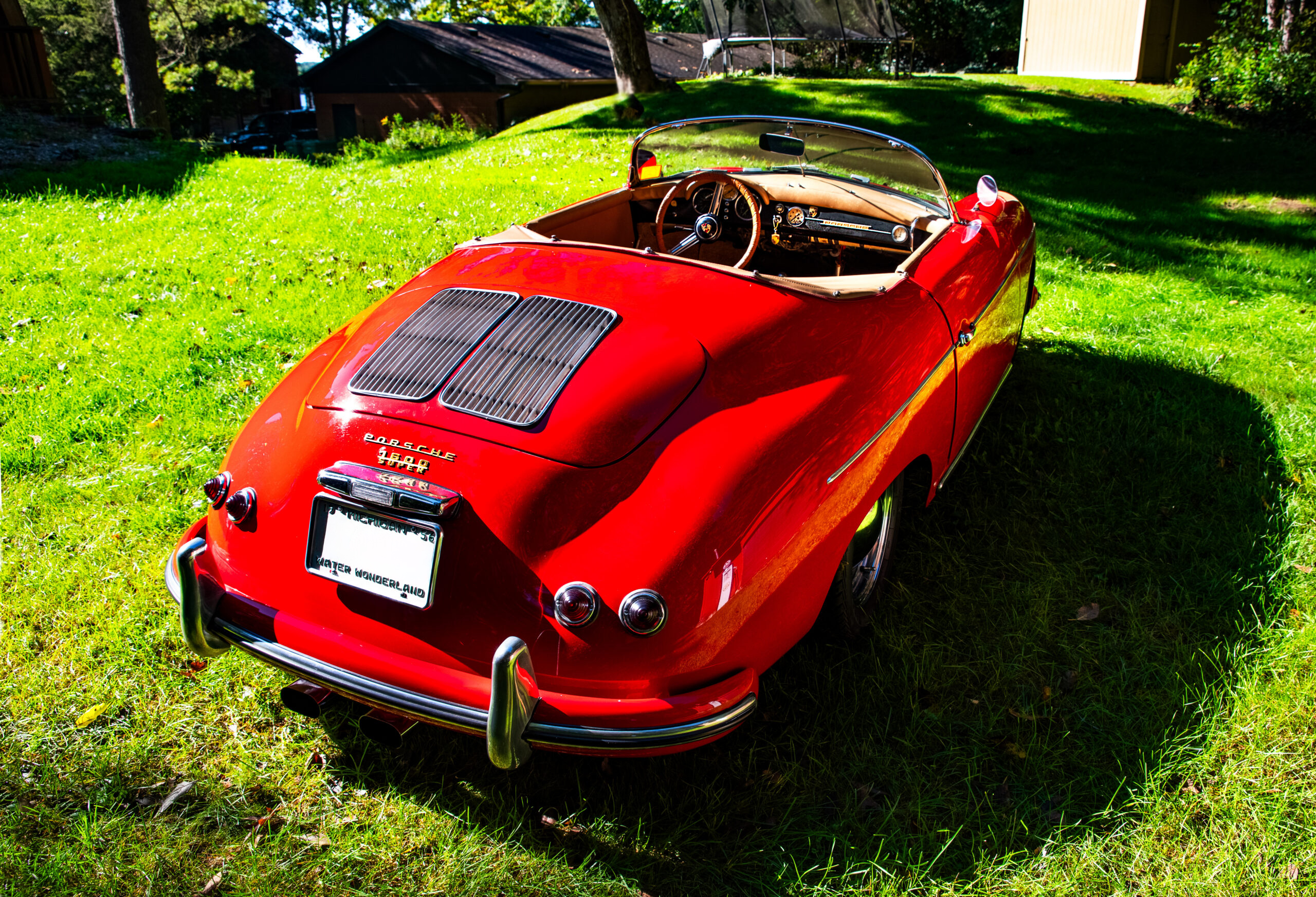
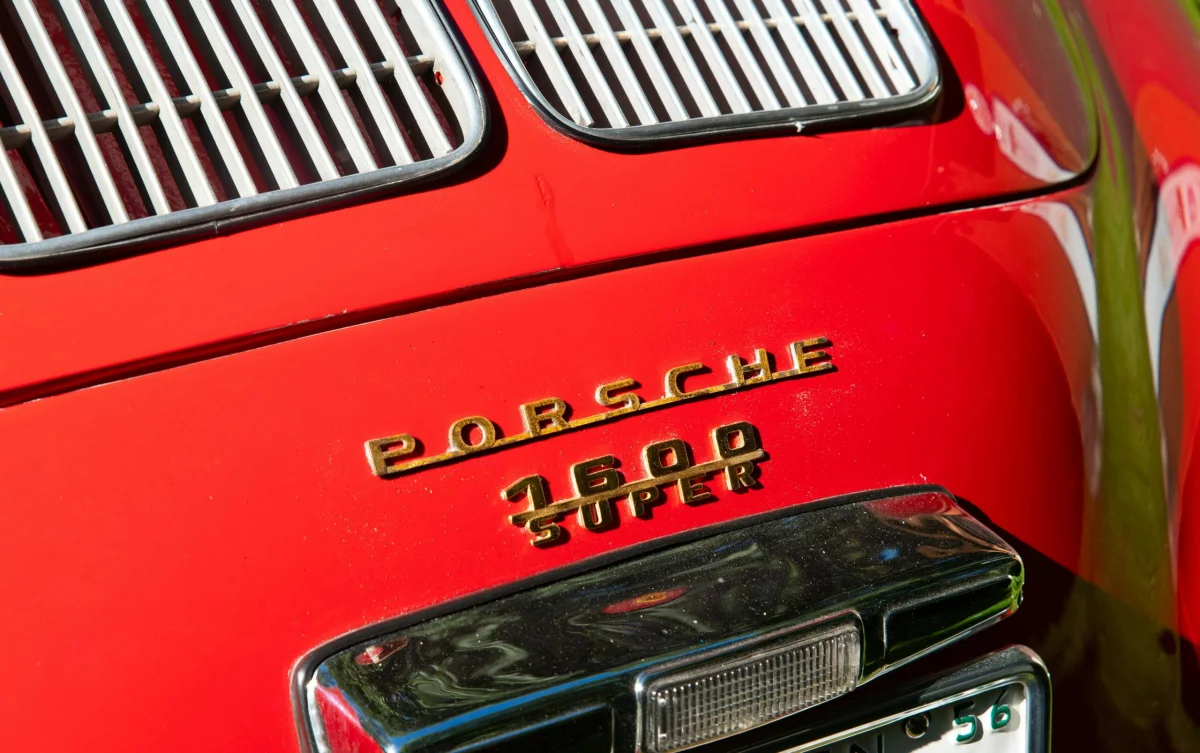
Phil Reilly was a 28-year-old engineer at the Ford Research and Engineering Center in Dearborn when he spotted a 1956 Porsche 356A Speedster 1600 Super for sale in 1963. Today that car is prized German hardware. Back then it was a small, underpowered foreign sports car with a loyal but limited following, and Reilly was hooked anyway. He bought it for $1,600, less than half its original sticker price. The 911 had just arrived, and the 356 was already looking like yesterday's news. The same car now carries a value that the source puts at roughly 200 times what Reilly paid.
Two deliberate departures from the norm
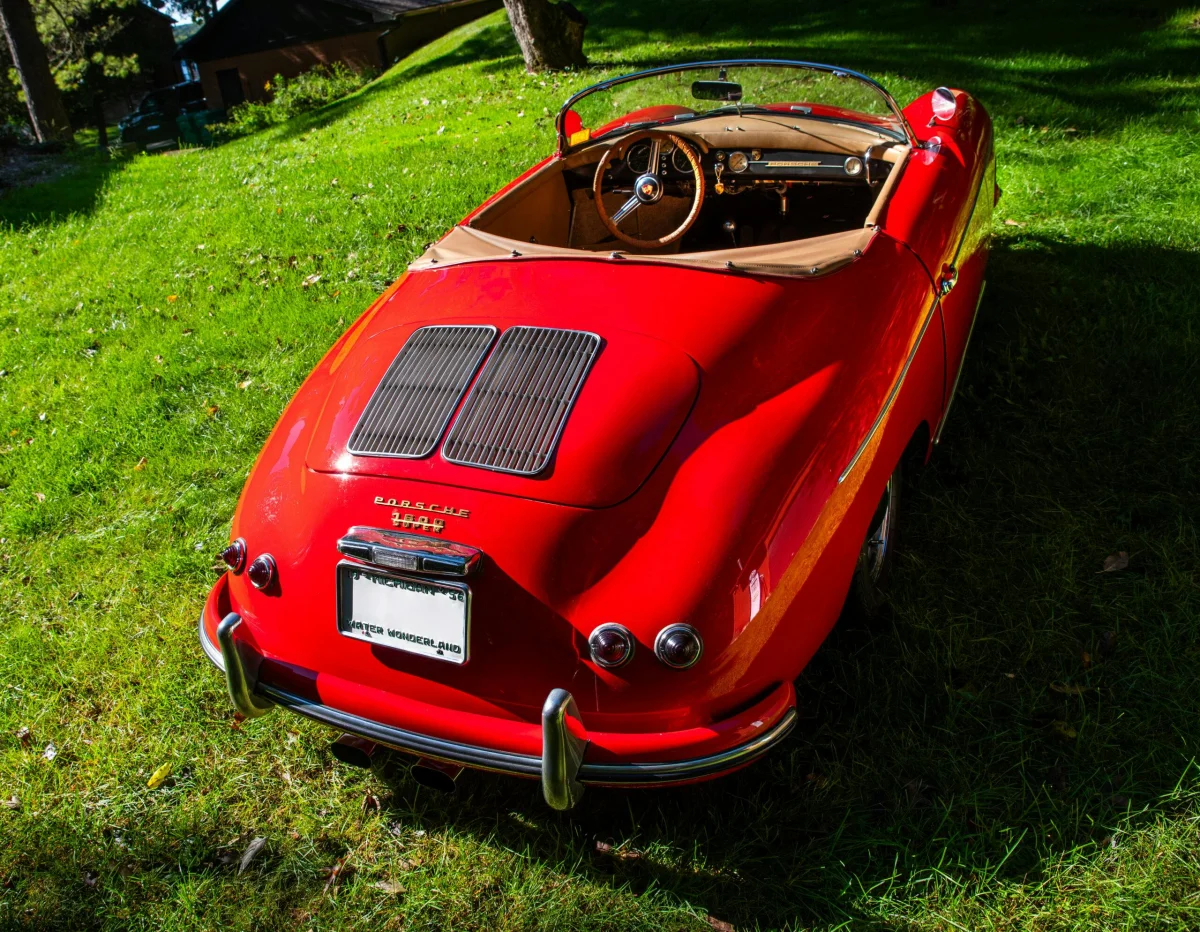
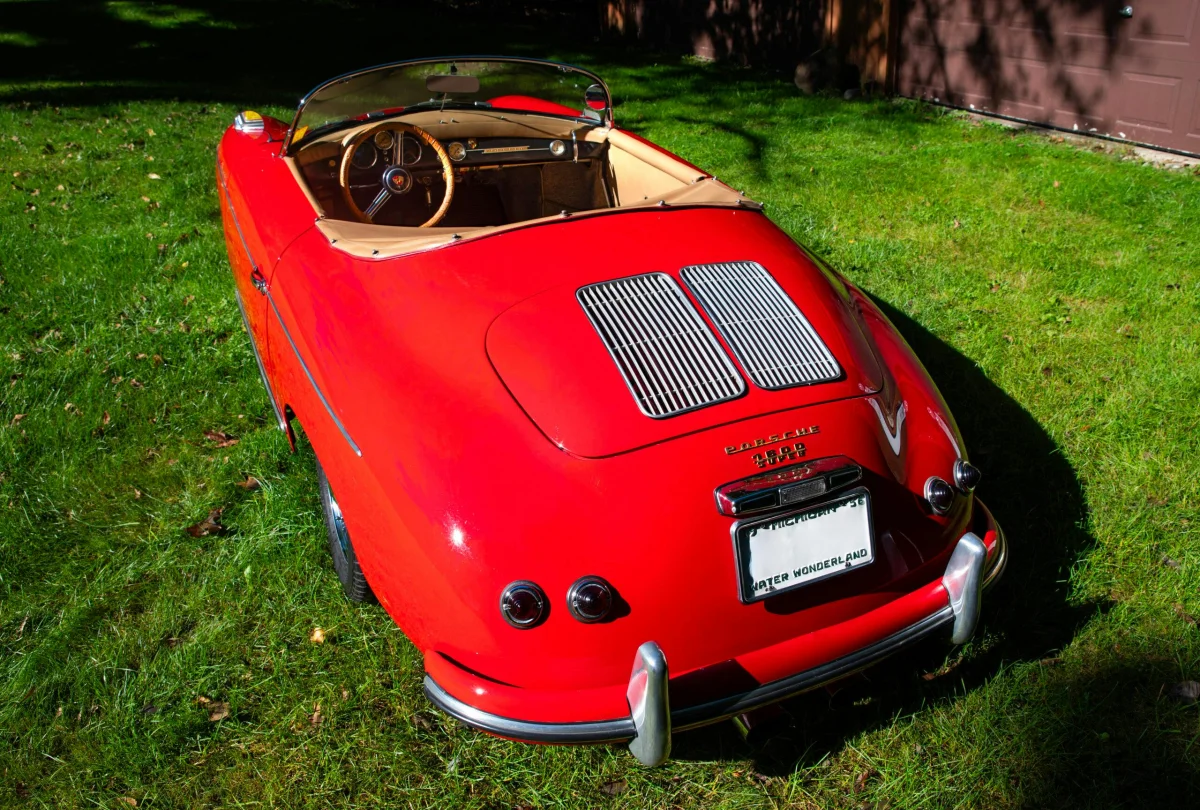
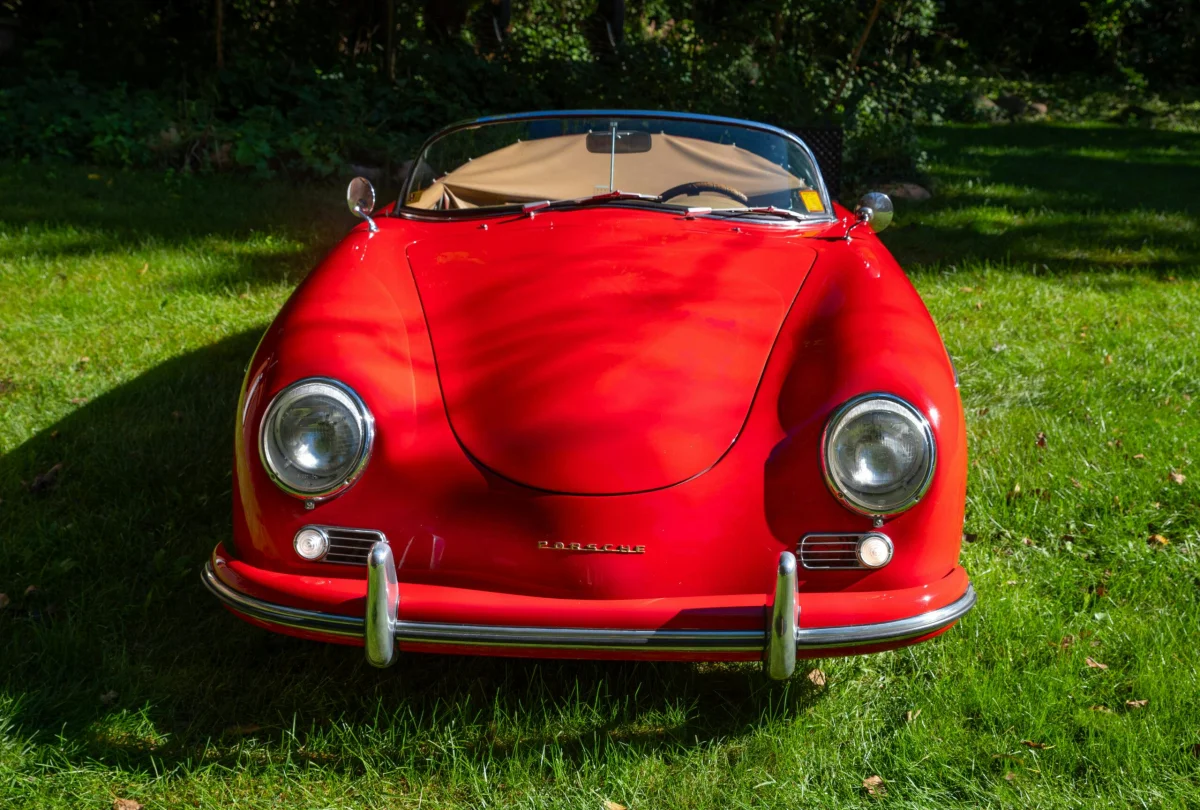
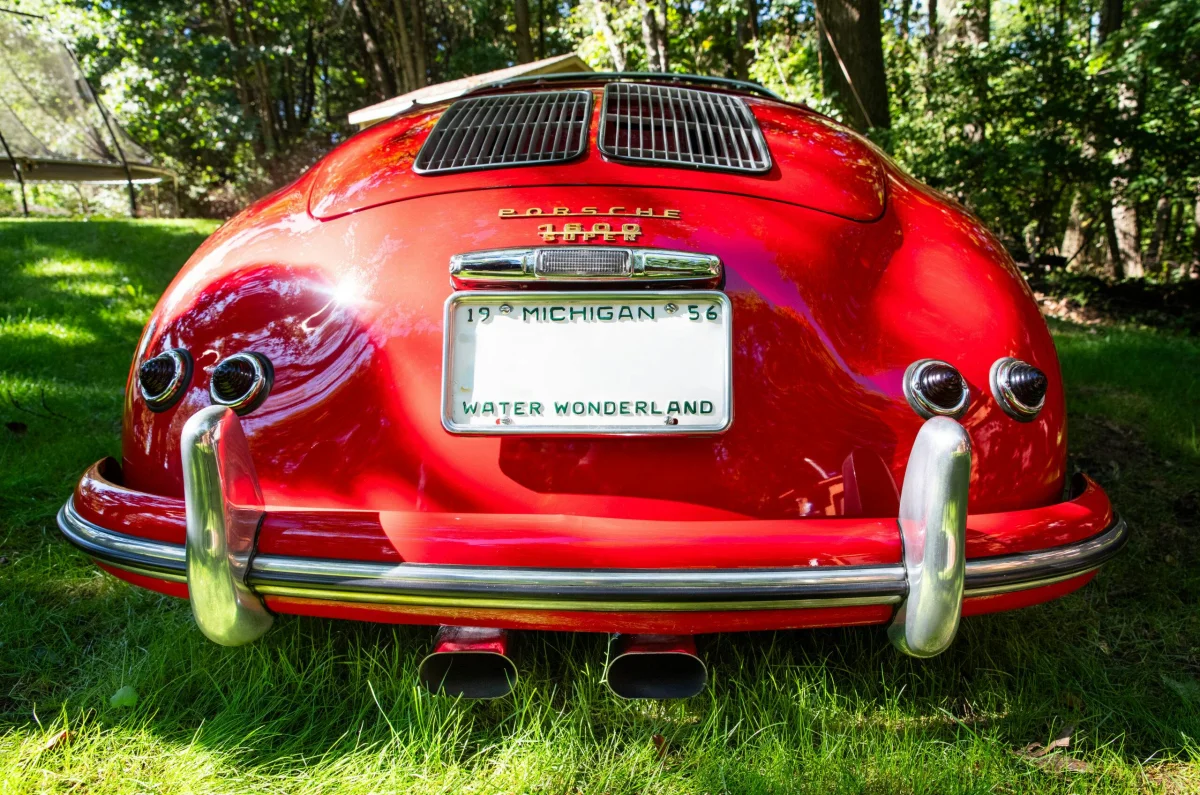
Porsche purists will spot two things right away. The bonnet handle is missing. It came with the car but wasn't fitted when Reilly bought it, and it has been sitting on a shelf in his garage ever since. "I like the look of the car better without the handle," he says. The second departure is at the back: a pair of grilles on the rear decklid, where most Speedsters of this vintage have one. Reilly admired the twin-grille layout of the later 356B Super 90 and added a second grille to his Speedster. Purists may wince, but the car looks deliberate rather than fussy, and Reilly clearly doesn't mind the reaction.

Paint, interior and a bearing swap that paid off
When Reilly bought the car it was pearlescent white with a poorly done red vinyl interior. He has repainted it twice. The current red finish is one Porsche used on some 944s, and the tan interior came from a German supplier, described as close to original Speedster upholstery with a few refined touches. The dashboard still carries its three-gauge layout. The speedometer and tachometer look original, while Reilly swapped in a replacement oil temperature gauge and added an oil pressure gauge and an ammeter.
The engine is where the story gets more interesting. Like all early Speedsters, the car left the factory with a 1600 cc flat-four built around a Hirth roller-bearing crankshaft. In the 1960s, a racing friend of Reilly's wanted that engine, so the two agreed on a trade: a later 1600 with conventional bearings, plus cash, for the roller-bearing unit. At the time it was simply a fair deal. In hindsight it looks like a clear win.
The roller-bearing cranks existed because the longer stroke left no room for standard connecting rods to clear the camshaft. Engineers also hoped the rollers would cut friction and allow higher revs. In practice, any irregularity in oil flow could flatten the rollers against the crank, and the result could be catastrophic, often a rod punched through the crankcase. As conventional bearings and oils improved and two-piece connecting rods solved the clearance problem, Porsche moved to plain bearings even for its most powerful engines. Rebuilders now routinely convert early roller-bearing engines to conventional bearings.


What the 1719 cc engine actually does
The 2013 rebuild is the one that matters for anyone thinking about performance. Norris Racing Engines fitted new aluminum-finned cylinder barrels with 86 mm bores and forged pistons, bringing displacement to 1719 cc. The crankshaft was modified for better oil flow. A Neutek street performance camshaft, with 282 degrees of duration and 0.442-inch lift, works with a three-angle valve job, blended ports and new valve springs. A pair of 48 IDA Webers handles the fuel. Reilly puts output above 100 horsepower, and with a curb weight of about 1,700 pounds, that makes the Speedster a lively car. He calls it a hoot to drive, and the figures back him up.

Eighty-seven thousand miles and a working life
This is not a garage queen. For much of the 1970s the Speedster was Reilly's daily driver, covering a commute of about 46 miles round trip from his home in Birmingham to Dearborn. The odometer now reads 87,000 miles. Engine and transmission rebuilds, careful maintenance and regular replacement of wear items such as brakes, springs, shocks and bushings have kept it in shape. Reilly has done nearly all the work himself, and he still does in his nineties. Few low-mileage cars look and run as well as this one does.

Three garages, and a Speedster in the middle of it
Reilly's Speedster shares space with a Ferrari 308, a Ford GT, a Shelby-badged early Fox-body Mustang, a '48 Ford convertible with a Mustang drivetrain, a T-bucket with 429 Ford power, and a Cobra replica he built with a full-race 460 Ford and four Webers. Most of these cars were modified or built in those garages, and they are all driven. A big black Harley with ape hangers also sits in the mix. Reilly says he rides it only occasionally now, since his riding partner moved away.
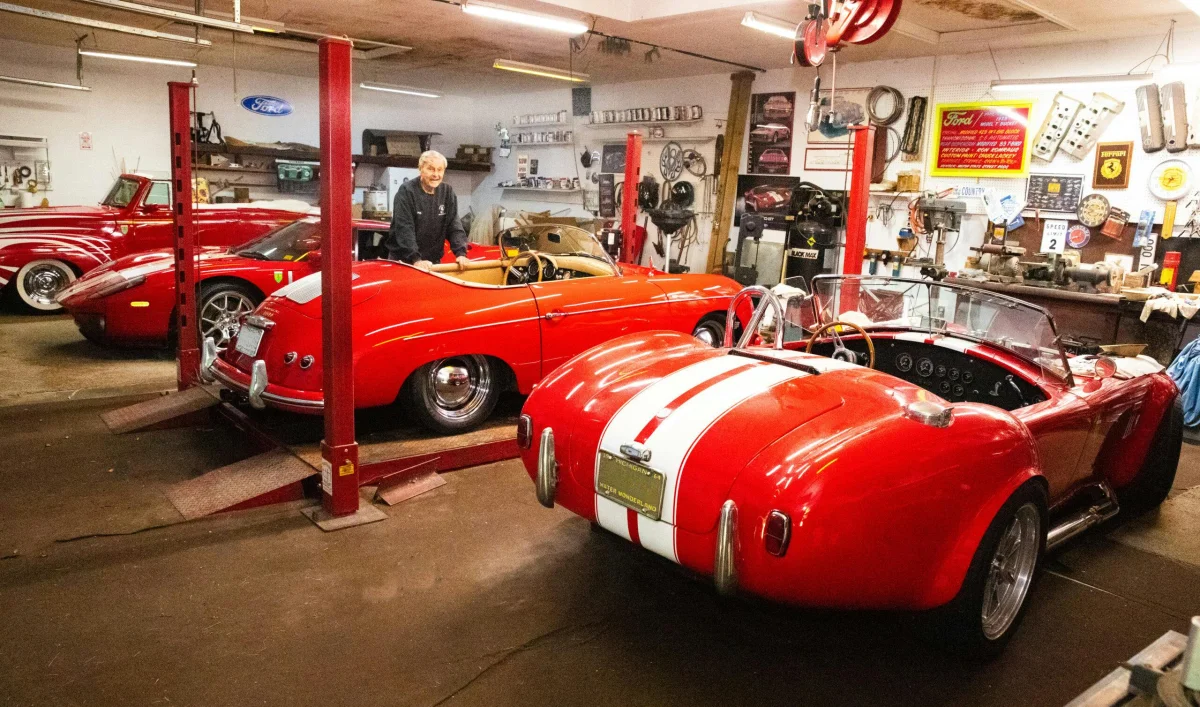

Here's the thing: a car like this shows what a long-term owner can do with an early 356 that is willing to live with its quirks. The bearing swap that seemed routine in the 1960s now looks like the right call, and the 1719 cc build gives the car the performance that matters on real roads. The Speedster may never be a museum piece in Reilly's hands, and that's the point.