The 1998 Subaru Impreza 22B: Why It Sits at the Top of the Collectible Subaru List
- Cargo
- Electric Vehicles
- Shipped
- Shipper
- Brendan McAleer
- Readers
- 971
The 1998 Impreza WRX STi 22B pairs a Colin McRae-era rally pedigree with a limited run and prices that now rival air-cooled 911s.
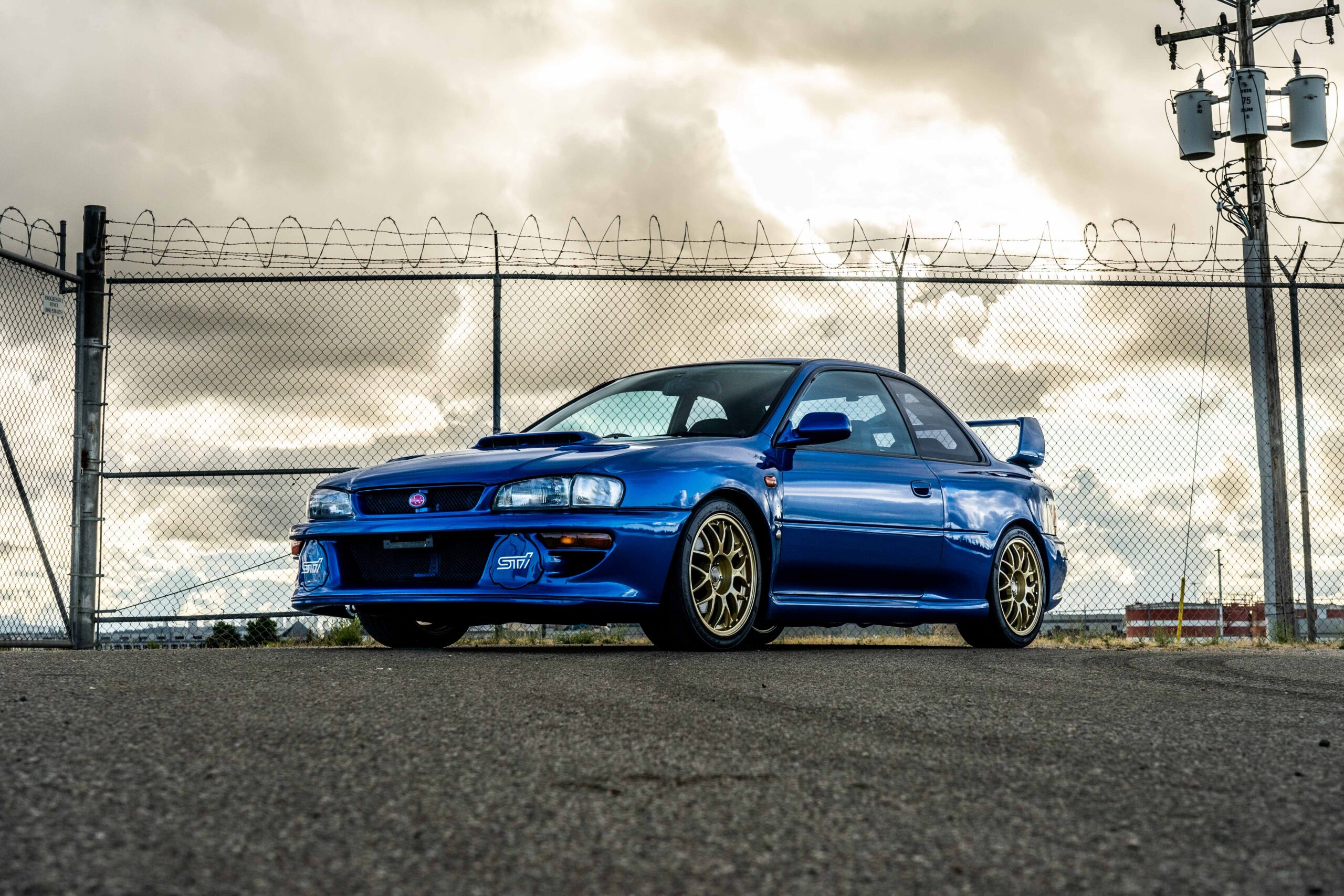
Subaru has plenty of fast cars with loyal followings, but the 1998 Impreza WRX STi 22B sits in a category of its own. It's rare, it's expensive, and it carries the kind of rally pedigree that makes a collector's pulse jump. My read is that it's the one Subaru that museums and serious enthusiasts both want, and the price tags reflect that.

Think about how a curator would build a display of Japanese performance cars. Nissan would need to choose between Skyline generations or the 240Z. Toyota's answer might be the Supra, or the rarer 2000GT. Subaru has one obvious pick, and it's the 22B.
From Sleepy Wagons to Rally Heroes
Subaru's earlier cars earned respect for winter traction rather than excitement. Models like the Leone were sure-footed in snow, but they weren't fashionable, and on pure performance they only beat rivals when those rivals were stuck in a ditch. The brand had a quirky, engineering-first identity, something closer to Saab than the safety-focused image it carries today.

That changed with the Legacy in 1989 and the Impreza in 1992. The Legacy, equipped with the new EJ-series 2.0-liter turbocharged flat-four, proved swift and capable, and it set a series of endurance speed records that still stand. Subaru didn't push those records hard in its advertising, but it did put its rally program in the spotlight once results started arriving.
In 1995, Colin McRae gave Subaru its first World Rally Championship constructors' title. He became the first British driver to win the title and the youngest to do so. McRae had driven the Legacy RS, but his championship came in a turbocharged Impreza, and the WRX started becoming a household name among enthusiasts.

The North American market didn't get the WRX until 2002, so American fans followed the rally action from a distance. U.S. buyers could still get closer to the sport through models like the 2.5RS coupe, which was the next best thing to wearing a McRae fan club T-shirt. Subaru went on to win the constructors' championship in 1995, 1996 and 1997. In 1998, the company's 40th anniversary arrived, and it marked the occasion with a limited road car built to look like the rally machines.

A Road Car With Rally DNA
The 22B began life as a fairly standard Impreza coupe chassis. Its engine and transmission were nearly identical to those in the Japan-market STi Type-R. The drivetrain combined a five-speed manual with a 50:50 front-to-rear torque split, a limited-slip differential at the rear and a driver-adjustable center differential. Subaru strengthened the gearbox with shot-peened gears, an upgraded mainshaft and a twin-plate ceramic-metallic clutch.
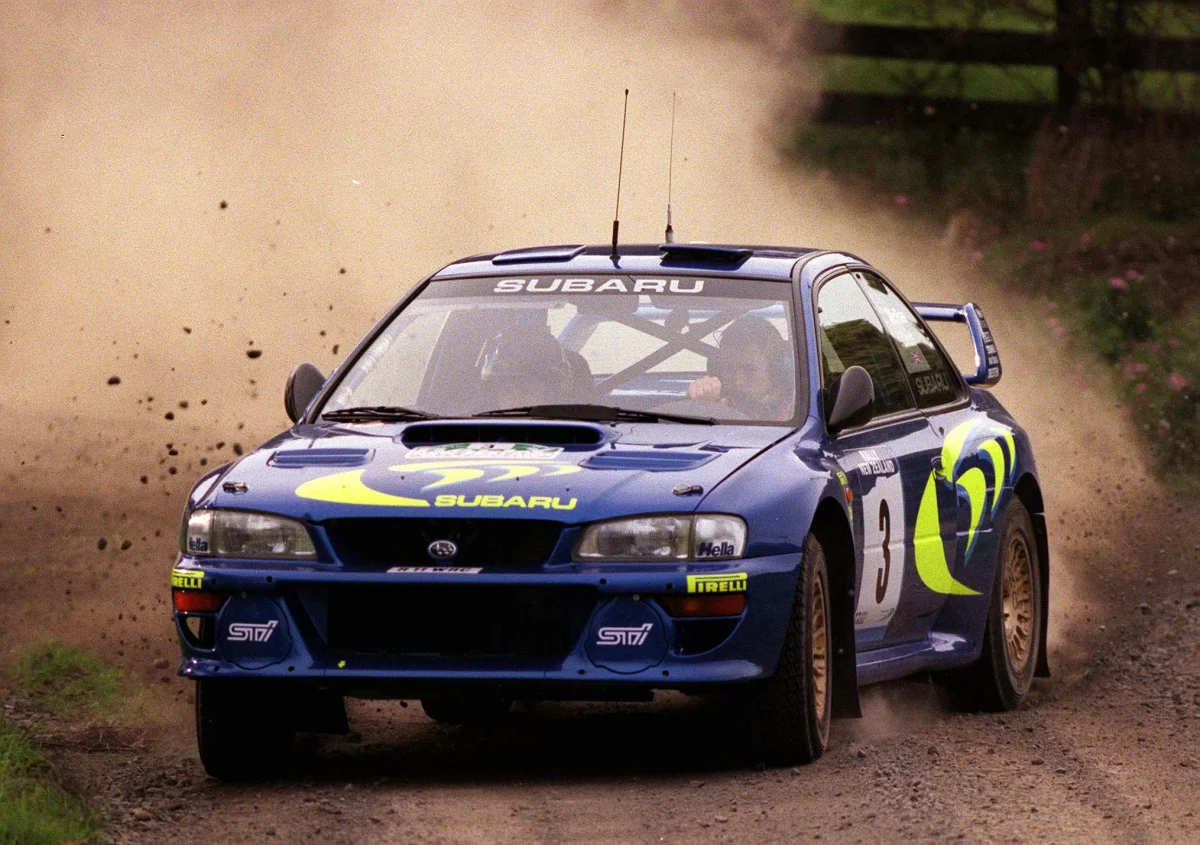

The engine follows the EJ20 architecture but grows to about 10 percent more displacement, thanks to a 4mm (0.16") bore increase. The turbo is a ball-bearing unit matching the Japan-market STi, with a bit more top end than the one in the later U.S.-market STi. The published output is 276 hp, the same figure carried by much of Japan's 1990s performance fleet. Most people who have studied the car think the real number is closer to 300-plus, in line with factory Skyline GT-Rs. There's more power to extract, but the car doesn't really need it.
Curb weight is 2,800 pounds. That's lighter than the current BRZ, and the 22B still has full all-wheel drive. The "B" in the name is said to refer either to the Bilstein dampers or to Subaru's internal code for turbocharged engines.

What makes the 22B so recognizable are its flared wheel arches. They wrap 8.5-inch-wide forged BBS wheels fitted with 235/40 R17 Pirelli tires, finished in rally-style gold. Peter Stevens, who also styled the actual WRC cars, penned the shape. Every example was painted Sonic Blue Mica.
The flares came from an unlikely source. Subaru hired Takada Kogyo to make and fit them, and that company is better known for its work with Nissan. There's a neat bit of symmetry there, since Subaru's first all-wheel-drive Leones were built using rear-wheel-drive parts from a Datsun 510. Takada Kogyo also assembled the Pike Factory retro cars, which links the 22B to the Nissan Be-1 and Figaro.


Scarce by Design
Exactly 400 cars were made for Japan, and roughly two dozen more went to the U.K., Australia and elsewhere. Three prototypes went to people central to the rally effort: McRae, his co-driver Nicky Grist, and David Lapworth of Prodrive, the firm that ran the racing cars. Subaru of America received a production-run car, oddly numbered thirteen, but it came without a numbered plate.
Sources differ on how fast the run sold out, with estimates ranging from under two days to roughly half an hour. Either way, the scarcity built a mystique. Most Subaru fans would only see a 22B at a car show, and it's rare that one turns up anywhere else.

What It's Like Behind the Wheel
In person, the 22B is small. Its wheelbase is about two inches shorter than the BRZ's, and it sits low and wide. It's also handsome and well proportioned, which is hard to say about most Subarus, even the quick ones.

The cabin feels spacious, with thin C-pillars and a wide view ahead. Gauges are minimal, and a central tachometer dominates the display. It's a no-nonsense setup.

The car's owner, Charles Wong, has owned Nissan GT-Rs and Silvias. He argues that the 22B is better than those Nissans straight from the factory. The R34 GT-R tends to shine after tuning, but the 22B arrives light and lithe.
It's also eager. The extra displacement adds low- and midrange torque, and the turbo delivers a strong surge of mid-range boost. It spools quickly, and it revs to 8,000 rpm through a five-speed gearbox with close ratios. The whole package feels like a hand-assembled machine built at the moment Subaru stood on top of the WRC podium.


Priceless, Within Reason
The real question is whether exclusivity works against the 22B, much as it does with the Porsche 911 RS 2.7. Running a genuine example is expensive, and every mile carries risk for a car this valuable. A clone built from an Impreza 2.5RS coupe could deliver much of the same fun in a car you'd happily drive every day. You could tune it further, add modern tires and skip worrying about door dings and rock chips. That's true of most classics.
Still, the 22B has something a clone can't copy. Its history, its hand-built character and its link to a golden era of Japanese performance carry real weight. It's the car Subaru considered good enough to give to Colin McRae and Nicky Grist.
Wong has taken his car to events, including a recent gathering of the local Subaru club, where attendees were thrilled to see one up close. For most mainstream Subaru fans, though, owning one remains out of reach.
This car came to the West Coast of Canada by way of Hong Kong and is now heading south to a Japan-focused collection. It will sit alongside Acura NSXs, rare GT-R variants, tuned Mazda RX-7s and a Ferrari or two. Next to those exotics, the 22B looks humble, with its compact-car roots, four-cylinder engine and tinny construction. Its badge carries stars, but it doesn't share a constellation with Italian exotics or Japan's other speed legends. Even so, it's the Grail among Subaru's Grails, and that's a title nothing else in the lineup can claim.