Piastri's 2026 Slump Has Hill and Montoya Puzzled, but Neither Is Writing Him Off
- Cargo
- Electric Vehicles
- Shipped
- Shipper
- David Comerford
- Readers
- 899
Oscar Piastri's points share has fallen sharply in the 2026 regulation reset. Damon Hill and Juan Pablo Montoya still see a future world champion.
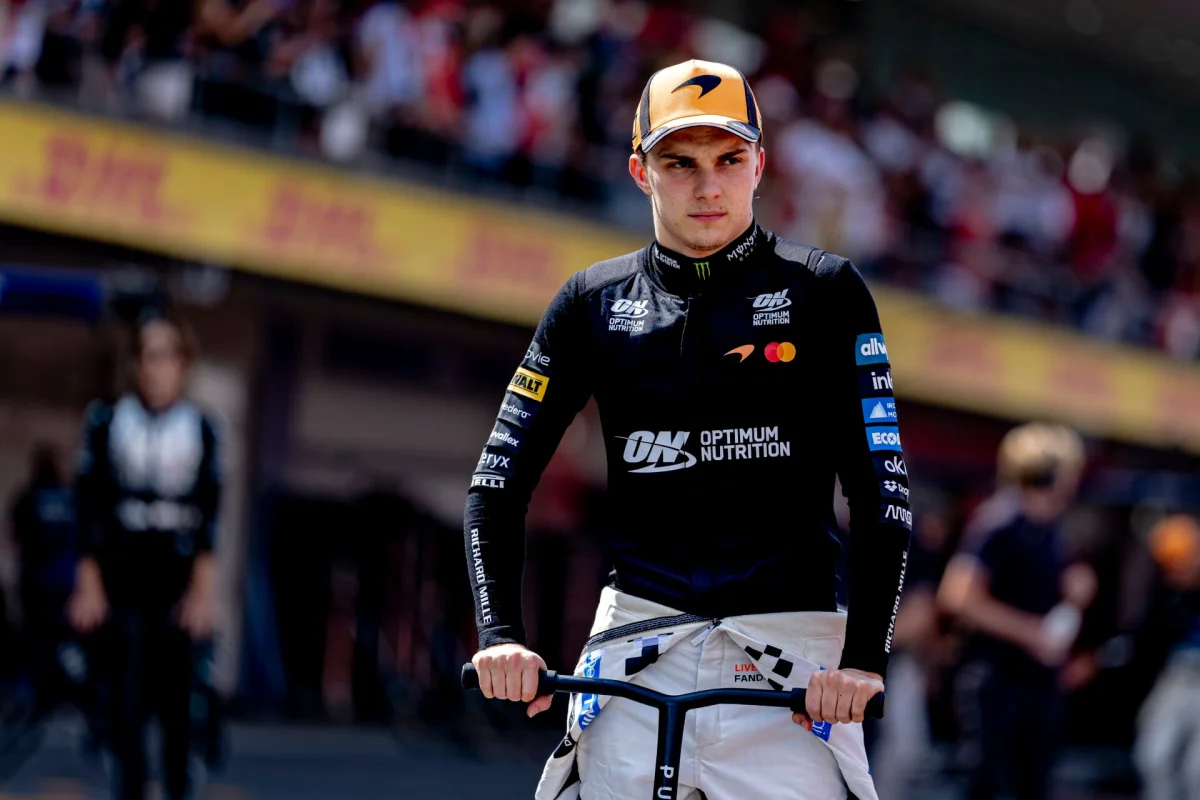
Few drivers on the grid have fallen further in reputation this season than McLaren's Oscar Piastri. A year ago he was leading the world championship by 34 points with nine races left. He then faded badly over the run-in, finishing 13 behind teammate Lando Norris. Back then it looked like a young driver hitting a rough patch. Now the question is whether the 2026 regulations have exposed something more fundamental.
The numbers behind the fall
The trajectory across his first three seasons is what makes 2026 hard to read. Piastri's share of McLaren's total points climbed from 32.1% in 2023 to 43.9% in 2024 and then 49.2% last year. That's a steep curve, and it's the kind of progression that teams use to justify long-term faith in a driver. He was reaching a high level more consistently, to the point that McLaren reportedly rated his potential above Norris's.
This season that share has dropped to 39.5%. Piastri hasn't found the pace he showed in 2025, and the gap to Norris is the clearest measure of it. Norris has been convincingly quicker, and that's hard to dismiss as bad luck over a single race weekend. Piastri has also been classified outside the points four times this year, which is a worrying tally for a driver who was fighting for the title not long ago.
Piastri isn't the only high-profile name to take a hit. George Russell, beaten by Mercedes teammate Kimi Antonelli in the title race, has arguably suffered as much reputational damage. Two drivers at the front of the sport both struggling with the new cars suggests the regulation change is doing more than rearranging the order of the field.
Why the 2026 cars are different
Here's the thing: a regulation reset rarely rewards the same habits that worked under the old rules. When the car's behaviour changes, drivers have to rebuild their feel for braking, turn-in and how the car responds mid-corner. The drivers who adapt quickly tend to pull ahead, and those who take longer can find themselves chasing a setup that never quite clicks. The reference point is always the teammate, because they're working with the same machinery under the same conditions.
That's why Norris is such a useful benchmark here. It's clear that Piastri hasn't adapted to the trickier handling of the 2026 cars in the way Norris has. That said, a difference in speed doesn't automatically point to a difference in talent. Setup direction, data interpretation and the willingness to change driving style all feed into it, and outsiders rarely see those details clearly.
Hill and Montoya see the same problem and a different outcome
Damon Hill was blunt after Piastri's Q2 exit in Mexico, his first in two years. "I have no idea [what's going wrong with him]," Hill said on F1TV. "It's very frustrating for the driver. If they don't know, it tells you that there's something unique about the way you have to drive these cars." He pointed to the regulation change and the fact that Piastri hasn't really found his footing all year, adding that Russell has also found the car only occasionally.
Yet Hill's frustration doesn't translate into a verdict. "It's a mystery and it's frustrating, because you know you're good inside," he said. "We know Oscar is potential, we thought at least, world champion material. He fought for a championship." Juan Pablo Montoya, speaking alongside him, didn't hesitate: "I think he is. I really think he is."
Hill also raised a point that matters for how the season ends. Late-season changes, he suggested, often set things up for the following year, and drivers in this position are trying to earn their place. For Piastri, the remaining races are less about salvaging 2026 and more about showing that the progress he made before the regulation change is still there.
Jolyon Palmer's sharper take
Not everyone is as patient. Jolyon Palmer has argued that Piastri has only looked "amazing" for half a season in his F1 career, and that Norris has been the stronger driver over the same stretch. That's a harsher reading, but it points to the real debate. Is this a driver whose peak came quickly and hasn't repeated, or one who simply needs to recalibrate for a new rulebook? The answer will determine how much weight the early numbers should carry.
Mexico shows the pressure
Mexico captured the situation well. Piastri finished seventh on track, but a 10-second penalty for his collision with Arvid Lindblad dropped him to 15th. For a driver already struggling for consistency, a result like that adds to the sense that small errors are costing him disproportionately. Norris's reception in Mexico also showed that fans haven't forgotten the events that followed the Australian's form earlier in the year, which keeps the comparison in the spotlight.
My read is that Piastri's position is more fragile than his talent deserves, but the trend is still unresolved. The steep improvement he showed through 2025 is hard to ignore, and Hill and Montoya are right that the underlying potential is visible. The question for the rest of 2026 is whether he can turn adaptation into results before the next regulation cycle starts. Watch his qualifying gap to Norris over the final rounds. If it narrows, the slump looks like a transition. If it doesn't, the debate will move from why he's struggling to what he can realistically become.