Antonelli Edges Norris to Top Sao Paulo GP FP2 Timesheets
- Cargo
- Electric Vehicles
- Shipped
- Shipper
- Kyle Archer
- Readers
- 682
Antonelli set a 1:10.763 to top FP2 at Interlagos ahead of Norris, while Piastri led the race-pace runs on soft tyres and Hulkenberg missed the session.
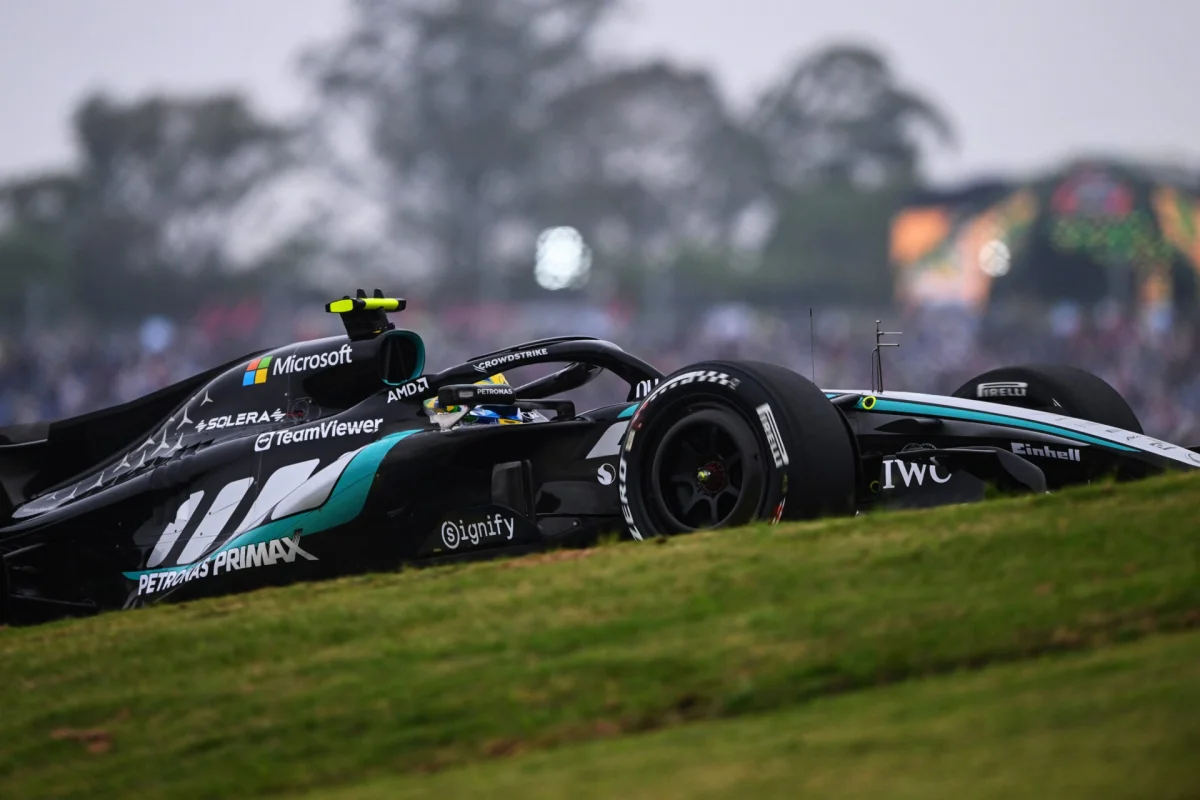
Mercedes' Kimi Antonelli answered Lando Norris's early pace and took the fastest lap in FP2 at the 2026 Sao Paulo Grand Prix. His 1:10.763 came after a session where the top of the order kept swapping places, and it's the kind of late lap that tells you more about tyre choice and track evolution than about who had the quickest car on paper.
The session started under unusual conditions. Misty air hung over Interlagos even though the forecast gave only a 10% chance of rain. Conditions kept shifting through the afternoon, and by the end, low cloud was blocking the TV helicopter's view of the circuit.
Early benchmarks and the tyre question
Six drivers returned to the track for FP2 after sitting out FP1, when their teams ran rookies instead. Those six were Oscar Piastri, Pierre Gasly, Charles Leclerc, Carlos Sainz, Nico Hulkenberg and Sergio Perez. Leclerc was first to settle into his SF-26, setting an early 1:13.247 and then dropping to 1:12.759 on the medium C4 Pirelli. That mark didn't last long. Antonelli went to 1:11.824 on the hard C3 compound, putting the Ferrari about 0.935s off the pace.
Norris had already topped FP1 with a 1:11.717, and he started FP2 with a 1:12.033 on the hard C3s. McLaren's upgrades look like they're working. The team was the only one to declare aerodynamic changes for Interlagos: a new front wing, rear wing and floor. The front wing was developed with the 2027 car in mind, which suggests McLaren is using this weekend to validate direction as much as to chase lap time now.
The soft C5 tyre was the one to watch in the middle of the session. Isack Hadjar put his Red Bull RB22 into P2 with a 1:11.839 on the softest compound Pirelli brought to Interlagos this weekend, making him the first front-runner to set a fast lap on it. That time also started the qualifying simulations, and George Russell responded with new fastest splits in all three sectors to go P1 with a 1:11.036.
The final flying laps
The order changed repeatedly in the closing runs. Liam Lawson briefly moved into P5 before Norris took P1 with a 1:11.016, only for Lewis Hamilton to respond with a 1:11.213. By the end of the first flying runs, Lawson had dropped to P13, behind his teammate Arvid Lindblad.
Verstappen took P2 with a 1:11.022 after topping FP1. Then Antonelli found 0.288s in the middle sector and another 0.033s in the final sector compared with Russell's earlier split, and his 1:10.763 went to the top of the timesheets. That's a gap of 0.253s to Norris and 0.259s to Verstappen. Russell finished fourth at 1:11.036.
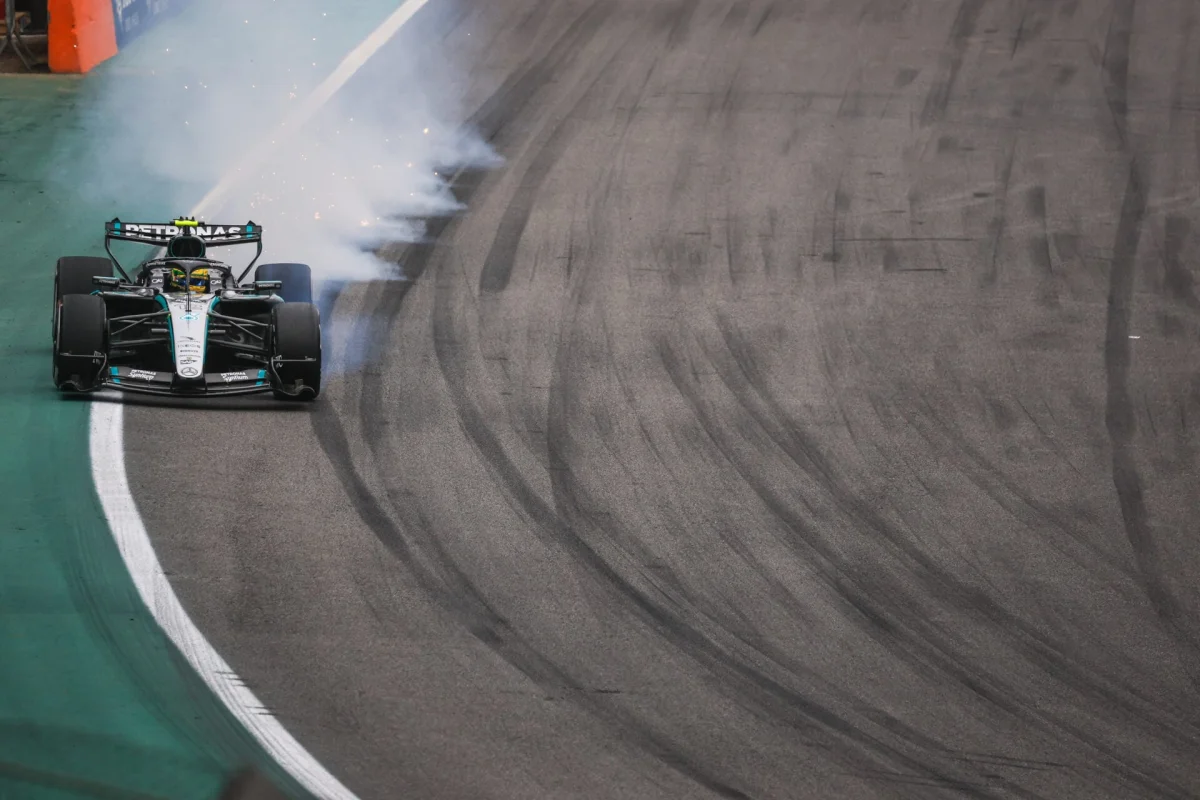
Not every move on the corner went smoothly. Antonelli locked both front tyres into the Senna S, and he radioed in to report "massive bottoming" under braking. Turn 1 caught plenty of others out too. Alex Albon and Lance Stroll both locked up there again on soft tyres. Albon was clearly frustrated after locking his front-left on the Williams FW48, saying over the radio: "I'm not even over-driving, and the thing is just everywhere!"
Leclerc and Camara
Leclerc didn't get much out of his soft tyres. He arrived late to Interlagos after the birth of his daughter, and he ran out of step with the rest of the field. That timing put him behind Haas rookie Rafael Camara on the run up the hill from Juncao and through Subida dos Boxes, just as Camara was preparing for a flying lap of his own. The incident between the two drew the attention of the FIA race stewards, and Camara asked for a post-session investigation.
Camara's Haas VF-26 debut is one of the more interesting threads this weekend. He's still adapting to the car, and the shifting conditions added another variable to a session where track evolution was already hard to read.
Race pace: Piastri ahead of the field
Race-pace runs told a slightly different story. Piastri produced the best average on soft C5s, averaging 1:15.1 over nine laps. Antonelli, Russell and Hadjar followed on 1:15.4 averages over 15, 13 and seven laps respectively. Hadjar's seven-lap sample is short, so it's hard to read too much into it, though a soft-tyre average this close to the Mercedes pair is still a useful signal.
On mediums, Verstappen set the best average at 1:15.6 over 17 laps. Hamilton followed with 1:15.9 over 18 laps. Verstappen's session didn't end cleanly, though. He reported clutch issues linked to how his power unit was adapting to the way he was attacking the circuit. Given that he was joking about it, he didn't seem too worried. "I think I should be like 'oh clutch, I'm switching. You will be punished otherwise.'"
Hulkenberg's weekend
Hulkenberg's weekend got harder before it got better. He missed FP1, and Audi had to rebuild his A26 after Freddie Slater stopped on track during his weekend debut in the first session. The team worked to repair the car in time for FP2, but deep-rooted electrical issues kept engineers busy. Hulkenberg finished FP2 without setting a time, and the 39-year-old was the only driver in the classification with no lap recorded.
My read: Sao Paulo is shaping up as a weekend where setup and tyre management matter more than a single quick lap. Norris's upgrades look promising, Mercedes has the one-lap pace, and Piastri's soft-tyre average suggests McLaren has the long-run speed to back it up. The conditions and the Turn 1 lockups mean the picture could change once qualifying gets going.