Building a 1969 Camaro From a Bare Steel Body: Bigun's Pro Touring Plan
- Cargo
- Electric Vehicles
- Shipped
- Shipper
- Scott Parker
- Readers
- 547
Customs by Bigun is starting a 1969 Camaro from a bare Real Deal Steel race body, with a Coyote drivetrain planned. Here's how the build comes together.
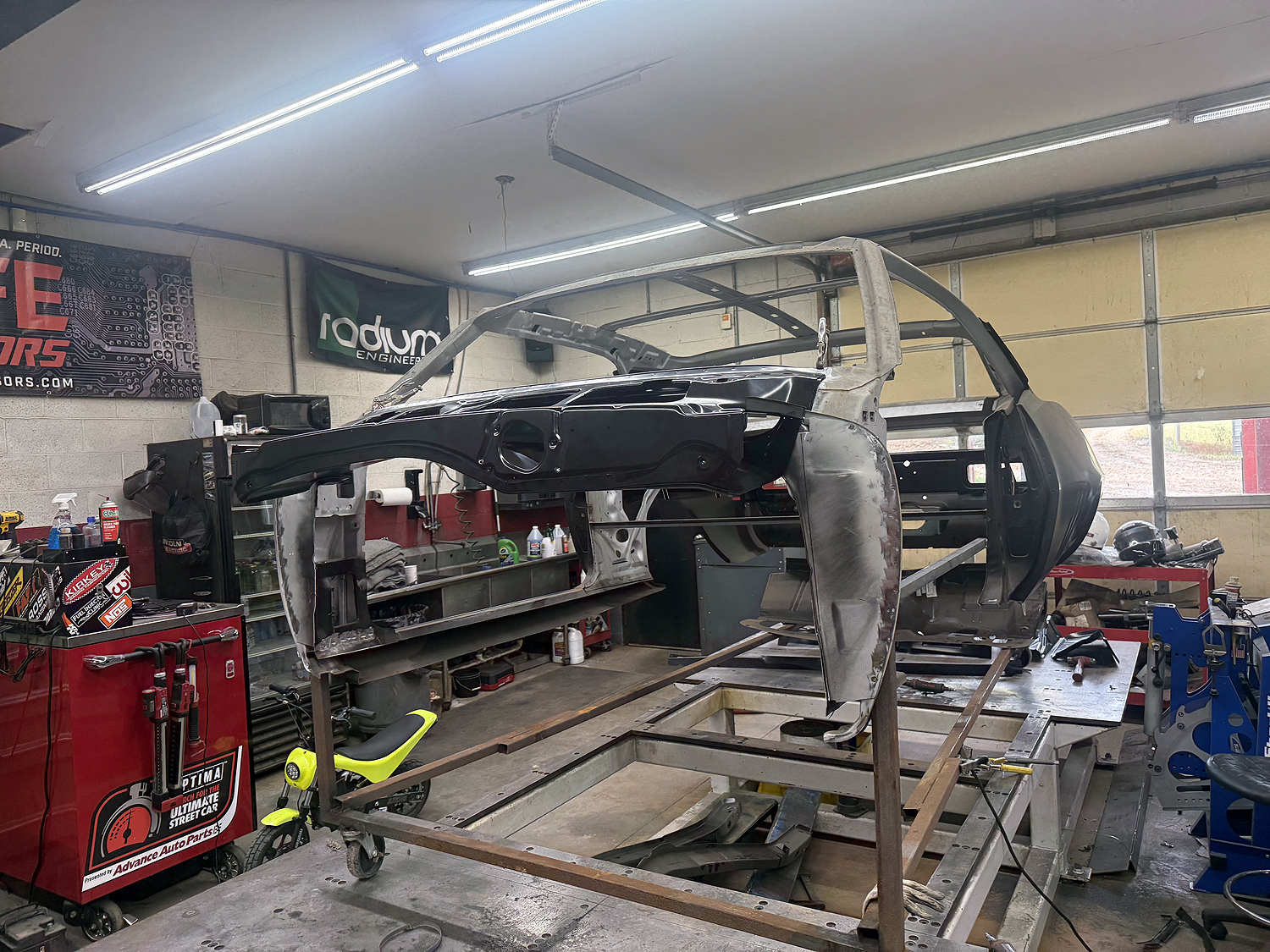
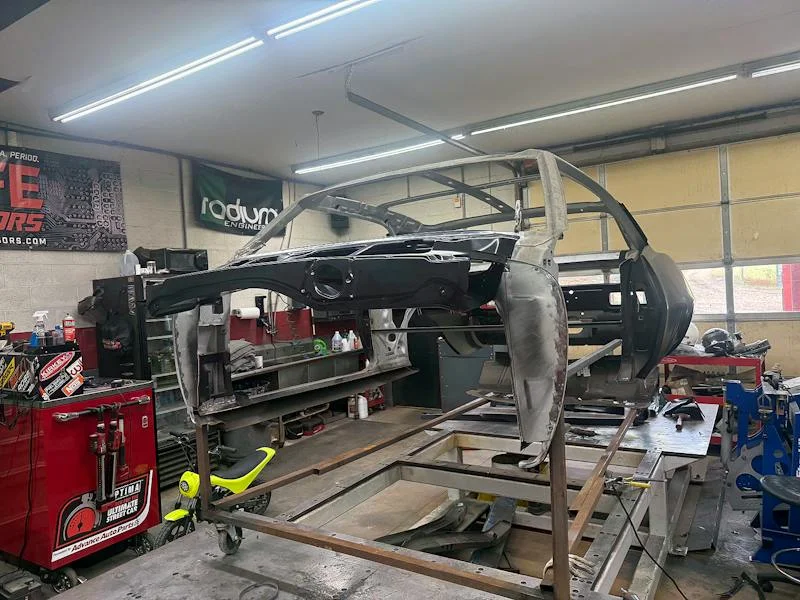
Complete reproduction bodies have a simple pitch: skip the rust repair and start with clean metal. Anyone who has priced a rotted first-gen Camaro shell knows the appeal. Restoring one can cost tens of thousands of dollars in metalwork before the real build even begins. So when Customs by Bigun took delivery of a bare Real Deal Steel 1969 Camaro race body, the interesting question wasn't whether to start from scratch. It was how far from scratch you can really get.
Eric Yost, known as Bigun, is the person answering that question. He's building the car as a Pro Touring project, and it's intended for his sons rather than for a show floor. The timing was fitting, arriving just ahead of Halloween, though the car itself is anything but spooky.
What arrives in the crate
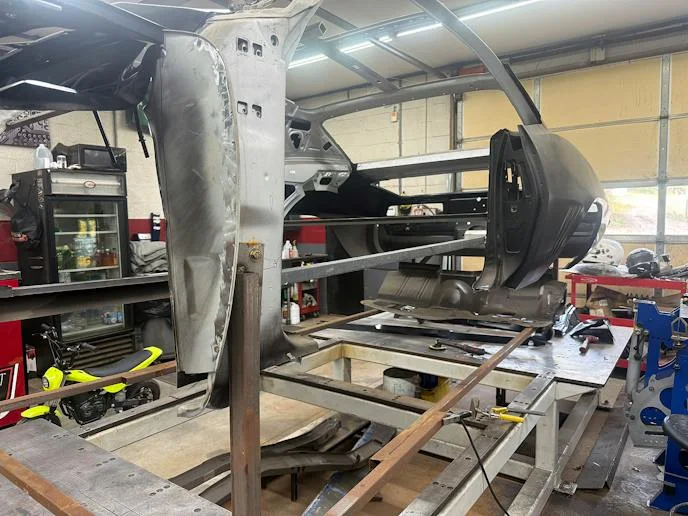
Calling this a body undersells how little of a car it actually is. The shell has no floor, no frame rails, no firewall, no dash, no rear seat structure, and no inner or outer wheel tubs. This particular unit also came without a roof skin, which gives full access to the top of the cage during construction. Bracing holds the shape while you build the chassis underneath, and the idea is to drop the body onto that chassis once it's finished.
The price is $11,000 for a body made from 18-gauge steel sourced through Auto Metal Direct. Real Deal Steel also offers more complete bodies, but this one is the bare race version. For anyone comparing it against a restoration candidate, the trade-off is simple: you're paying for clean, straight metal and taking on all the fabrication work yourself.
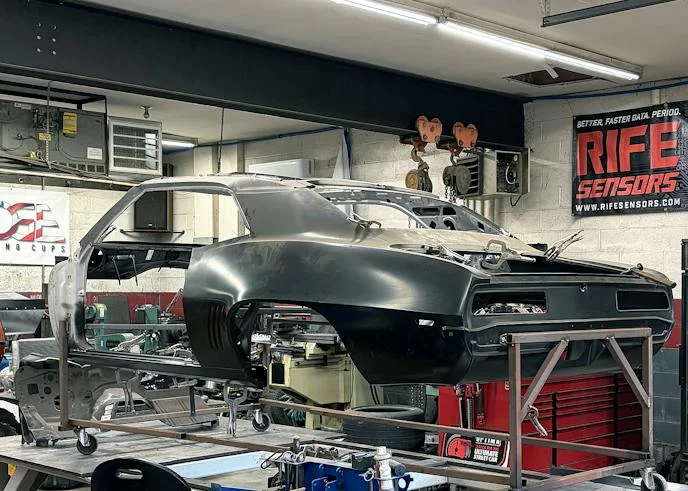
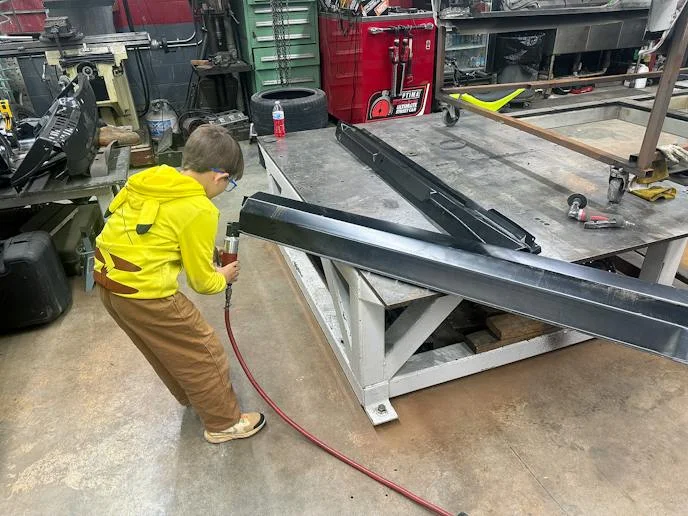
Auto Metal Direct's parts list for the project is long and specific. It covers rear frame rails, a floor pan set up for wider wheels, mini tubs, a firewall without AC, inner and outer rocker assemblies, a cowl, trunk floor, dash panel and top, package tray, and roof skin. Stacking those pieces onto a shell is where a lot of the build time goes, and Yost plans to add more panels from the same supplier as the car takes shape.
Why the chassis table matters
A bare body is only as straight as the fixture holding it. Yost set the shell on his chassis table, a tool that's essential for this kind of work and one he has built from the ground up before at his shop in Mooresville, North Carolina. He started with the rockers so the body would begin holding its shape early. From there, the rockers were clamped on and tack-welded to tie the A- and B-pillars together. The package tray and cowl were clamped into position for welding as well, which holds the structure laterally before the firewall and floor go in.
Test-fitting doors and glass during this stage is a useful habit. Those pieces reveal alignment problems while they're still cheap to correct. If the gaps and shut lines are right at this point, the finished car has a far better chance of looking right on the road.
The street question
Anyone looking at this kind of project will ask the obvious question: how does a car without a factory VIN get on the street? Yost's answer relies on state replica titling. North Carolina, for example, has a replica provision that allows titling and street use, though the vehicle still has to be inspected and verified, just not for emissions.
Replica-friendly rules vary a lot from one state to the next. Texas, Florida, Virginia, and Arizona are often cited as receptive to replica builders, and California allows this type of build too, though it caps how many can be registered each year. The practical advice is to check your own state's requirements before you commit to a body and a build plan. A project that's registrable in one state can end up as a track-only car in another.
The drivetrain plan and the Coyote math
The current plan calls for a Gen 2 Coyote V8 paired with a 6-speed transmission. The rear will come from a complete S550 Mustang rear cradle, including the suspension and the 8.8-inch independent rear end. Up front, Yost intends to fabricate the front end himself using either Mustang or Corvette spindles, which gives him flexibility on geometry and brake packaging.
The Coyote choice isn't a surprise coming from Yost. He's the brains behind the Coyote 10 project covered in the Dragzine horsepower wars series, and he has plenty of experience with small-block Chevy and LS engines. Even so, he has said the cost per horsepower on the Coyote was hard to beat. For a Pro Touring car that needs to be fast and reliable across both street and track use, that math carries real weight. Pairing a modern Ford powertrain with an S550 rear is also a well-trodden route, which makes parts sourcing and fitment considerably less of a gamble.
What to watch next
The build is still early, and the most consequential decisions are ahead. Watch how the chassis is laid out around the Coyote and the S550 rear, because that's where packaging compromises tend to show up. Also watch the front-end fabrication, since building a custom front with either Mustang or Corvette spindles is a common point where a Pro Touring car either sorts its geometry or develops problems.
Yost's background suggests this one will be carefully engineered rather than rushed. Stay tuned for the next round of updates as more metal from Auto Metal Direct goes on the car and the chassis takes its final shape.