Detroit Speed Brings Full Suspension Systems to B- and E-Body Mopars
- Cargo
- Electric Vehicles
- Shipped
- Shipper
- Jim Campisano
- Readers
- 614
Detroit Speed's new front, rear and chassis kits for 1968-70 B-bodies and 1970-74 E-bodies aim to lower, sharpen and stiffen classic Mopars. Availability is set for Q1 2027.
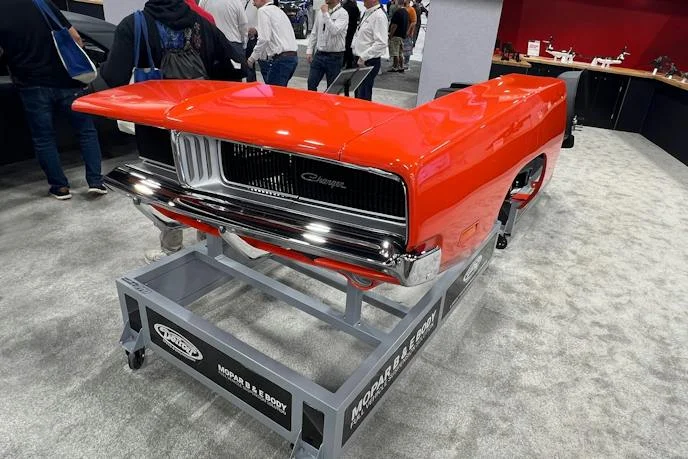
Detroit Speed came to the SEMA Show in Las Vegas with something that goes well beyond bolt-on parts. The company is offering complete suspension systems for classic Mopars, covering the front and rear of the car along with chassis stiffening. For anyone building a B-body or E-body, that's a meaningful shift. You're no longer assembling a suspension from a handful of separate pieces. You're buying a matched package.
What's covered and when it arrives
The initial lineup targets 1968-70 B-bodies and 1970-74 E-bodies. Detroit Speed says the systems should be available in the first quarter of 2027. The kits break down into three categories: front suspension, rear suspension and chassis stiffening. Each one is designed to work with the others, which matters more than it sounds. Mixing a front end from one supplier with a rear from another is where alignment headaches and geometry compromises usually start.
Nate Peterman of Detroit Speed described the front and rear packages as the core of the offering, with the stiffening kits rounding out the set.
Front end: geometry first
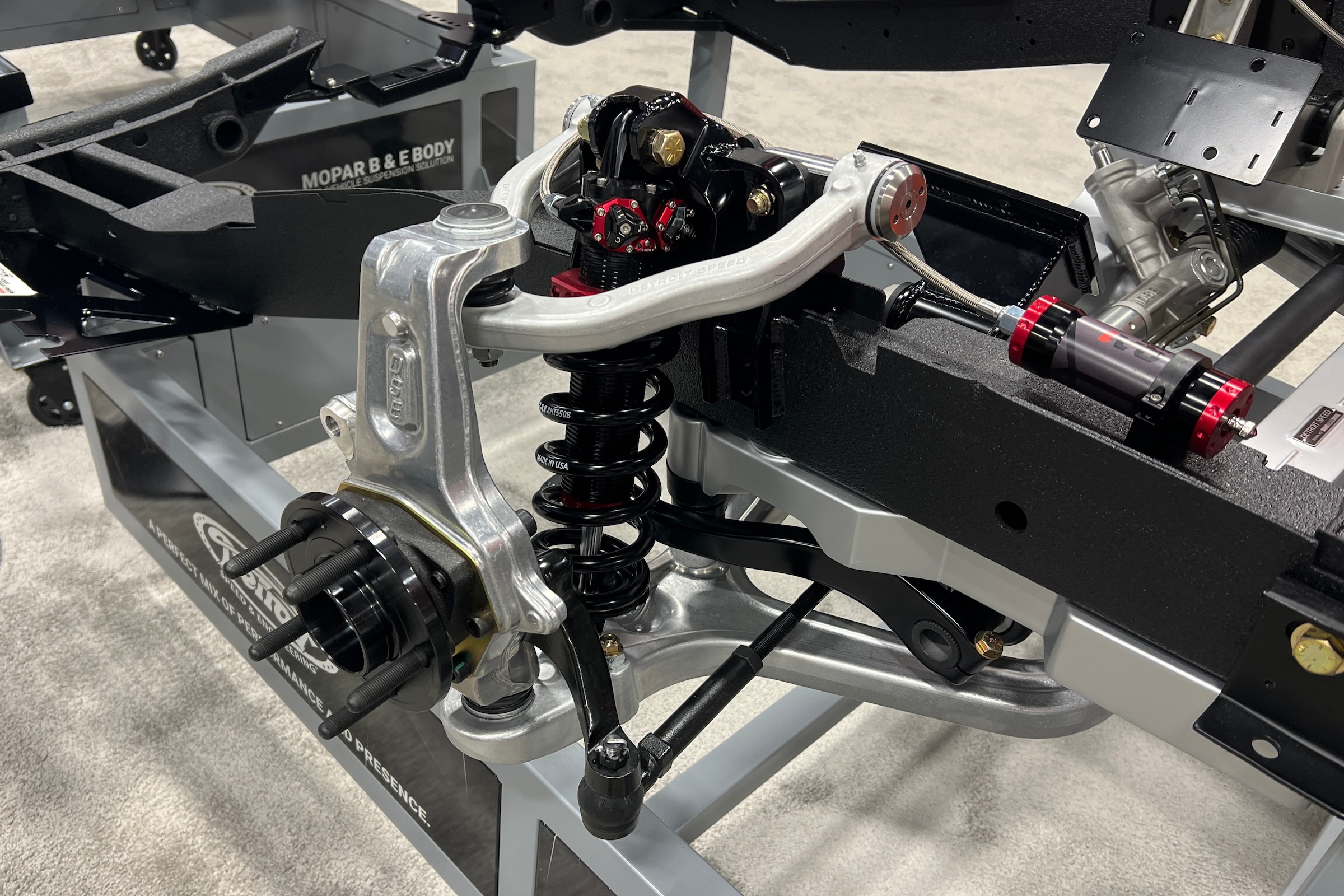
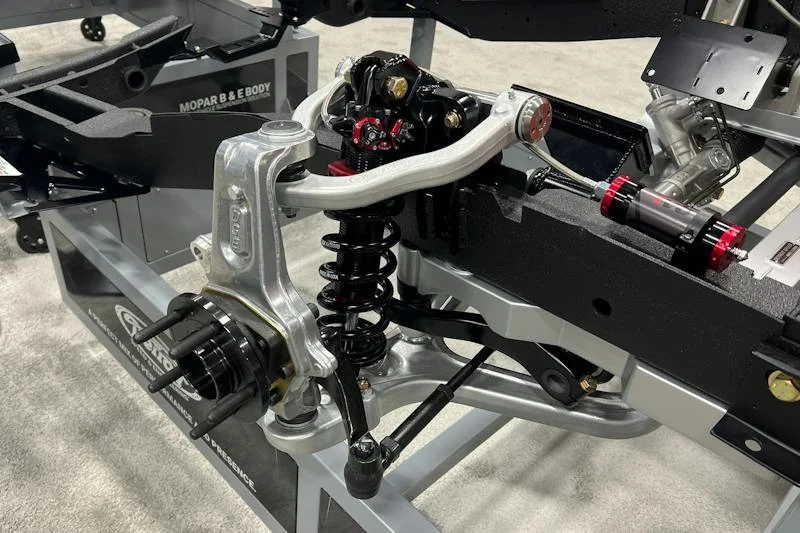
The front starts with a cast aluminum cradle that bolts into place, a detail that should simplify installation compared with fabricating mounts from scratch. From there, forged aluminum upper and lower control arms set the geometry. Detroit Speed pairs them with QA1 coilovers and spindles designed to match.
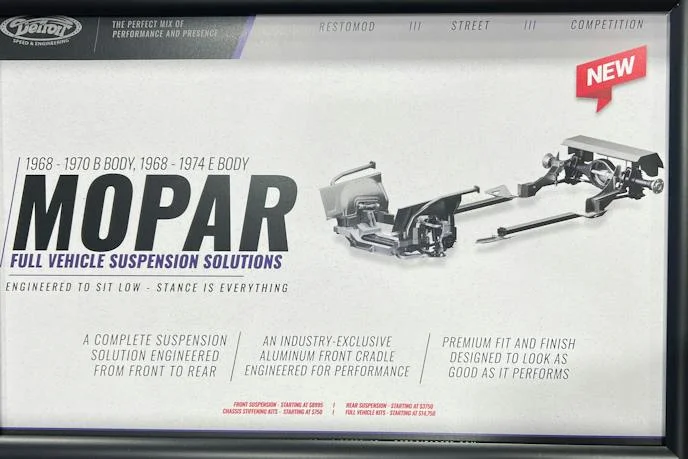
The most interesting engineering choice here is the elimination of the factory shock towers. Peterman's argument is that the control arms locate the suspension geometry precisely enough that the stock towers are no longer needed. He said the result is better ride and handling, with sharper turn-in than setups that still use the factory Mopar upper A-arm mounts. He also pointed to packaging gains: without the towers, he said, you can remove a valve cover on a HEMI to free up room. That's a claim worth checking against your specific engine and headers, but it's a real packaging advantage if it holds up in your build.
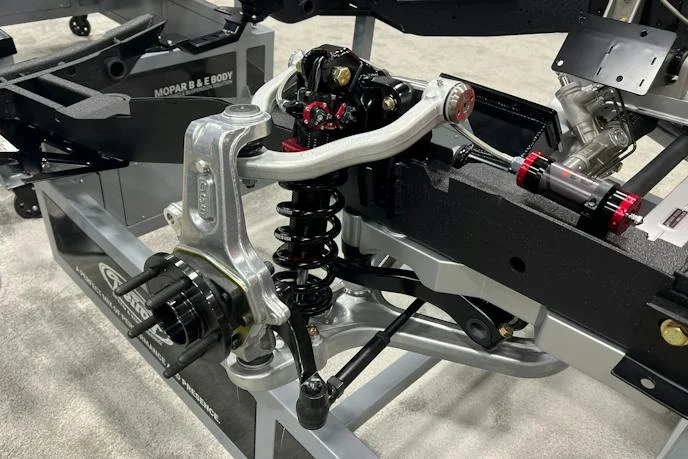
Steering moves to a front-steer rack-and-pinion arrangement, which eliminates the old steering box. The trade-off is a rear sump oil pan. That's a reasonable requirement on a car that's going to be driven hard, since it keeps oil where the pump can reach it under sustained cornering and acceleration.
The spindle package also changes the maintenance picture. Because the system replaces the factory spindles, there are no wheel bearings to repack. For owners who have done regular greasing on older front ends, that's a small but genuine ownership benefit. The kit accepts popular aftermarket brake setups and uses a 5x4.5-inch bolt pattern, so the wheel selection most Mopar owners already run should fit.
The transmission and tunnel side
Moving rearward, Detroit Speed is offering a transmission crossmember that covers factory automatic and manual units as well as popular swap transmissions such as the TREMEC T56 and TKX. It also works with the factory crossmember, which gives owners a path that doesn't require giving up the original mount if they're not swapping.
A universal tunnel kit is also on the way. It lets you raise the tunnel slightly to clear a larger transmission, and Peterman noted it can help the car sit lower. Swaps are often where a low-slung build runs out of room, so that flexibility is practical rather than cosmetic.
Rear: QuadraLink on a Mopar
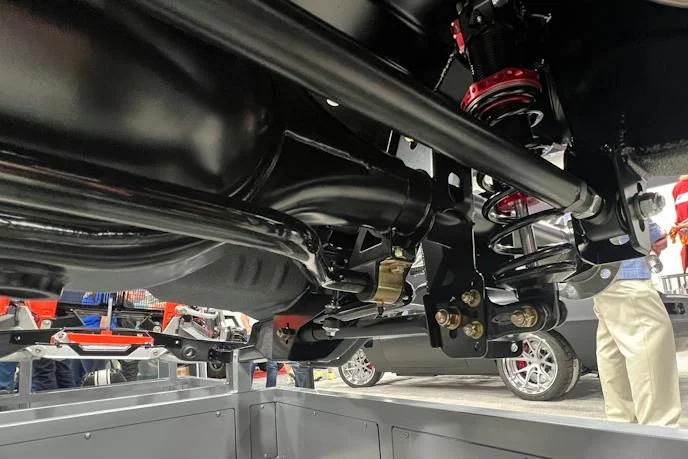
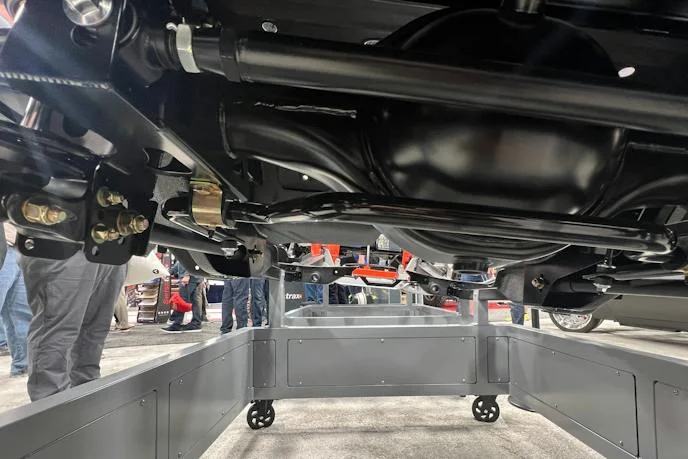
Detroit Speed has built its reputation on the QuadraLink rear, and now it's coming to these Mopars. It's a four-link conversion using coilovers in place of leaf springs. That change gives a wide range of ride-height adjustment, so you can set the car level or with a bit of rake.
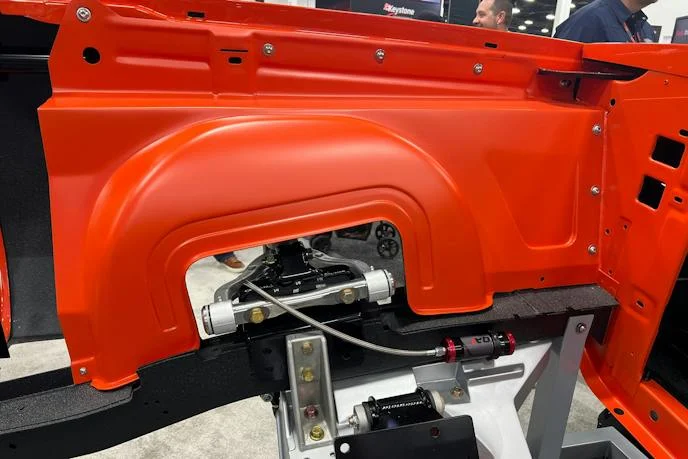
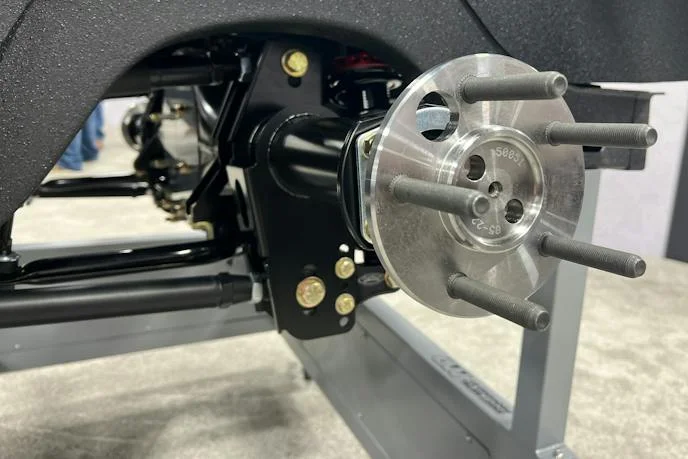
Peterman explained the adjustment approach in two stages. The coilover mount on the bottom is designed for easy movement, giving you coarse ride-height changes. Fine tuning comes from the spring adjusters. The links themselves use what Detroit Speed calls its patented Swivel-link technology, a rubber-bushed link where the link itself pivots. Peterman's pitch is noise, vibration and harshness: the rubber bushing is meant to keep the ride quiet on the road, which is not a given on many performance rear setups.
Tire fitment is where the QuadraLink gets specific. The system is said to accommodate up to 345mm rear tires, with inner minitubs developed with Auto Metal Direct to package them. The rear also allows up to a 3.5-inch exhaust passing over the rear axle while retaining the factory fuel tank. To make that work, Detroit Speed modified the trunk floor to create additional room for exhaust routing.


Up front, sheetmetal aprons are planned to refresh the look of the inner fenders, which will matter to owners chasing a clean, finished engine bay.
Chassis stiffening: the unibody question
Unibody cars are the reason stiffening kits deserve more attention than they sometimes get. Peterman said weak areas need reinforcement so the suspension can do its job. Detroit Speed's answer is front and rear torque box reinforcements plus subframe connectors. Those pieces are designed to integrate into the unibody, and Peterman said the finished install should look factory-installed.
That matters in practice. A suspension that is well located but mounted to flexing sheetmetal won't deliver the handling it promises. Whether you're running street miles or building for the track, the stiffening is what keeps the geometry you paid for from bending under load.
What it adds up to
Peterman's summary was that these cars can be lowered substantially, ride and handle well, and package popular Mopar engine options. He also described the goal as making a big, heavy classic handle like a sports car, with 19- and 20-inch wheels filling the wheel openings.
Any complete system like this comes down to the details that were not in the show-floor pitch: final pricing, installation time and how the kits perform on different engines and drivetrains. Those are the questions to ask once the kits ship. My read is that Detroit Speed is trying to make the B- and E-body suspension a single decision instead of a dozen compromises, and if the Q1 2027 timeline holds, owners planning builds next year will have a clearer picture of what that buys them.