Ferrari Raises Forecast as Europe's EV Share Hits a Record
- Cargo
- Electric Vehicles
- Shipped
- Shipper
- [email protected] (Andy Kalmowitz)
- Readers
- 789
Ferrari lifts its 2026 outlook, Audi eyes a bigger Georgia plant, and battery-electric cars reach a record 34% of European registrations in October.

Ferrari's latest numbers show that wealthy buyers are still spending freely, and the company is cashing in. The Italian supercar maker raised its full-year forecast after beating estimates for core profit and revenue in the third quarter. Meanwhile, Audi may expand a U.S. plant it hasn't finished building yet, battery-electric cars set a new share record in Europe, and Mitsubishi cut its profit outlook while betting on a revived Pajero. It's a busy Friday.

Ferrari's upgraded forecast is built on options, not volume
Ferrari now expects adjusted EBITDA of at least €3 billion ($3.36 billion) for 2026, up from a previous forecast of at least €2.97 billion. It also nudged up its net revenue outlook and guided for industrial free cash flow of up to €1.65 billion this year.
The reason isn't simply more cars leaving the factory. Ferrari credited higher-margin models and personalisations, the extra-cost finishing touches buyers add to make a car their own. Demand for those options was stronger than expected, led by the 296 Speciale family. Softer currency headwinds and the team's second-place standing in the Formula 1 Championship also helped the picture.
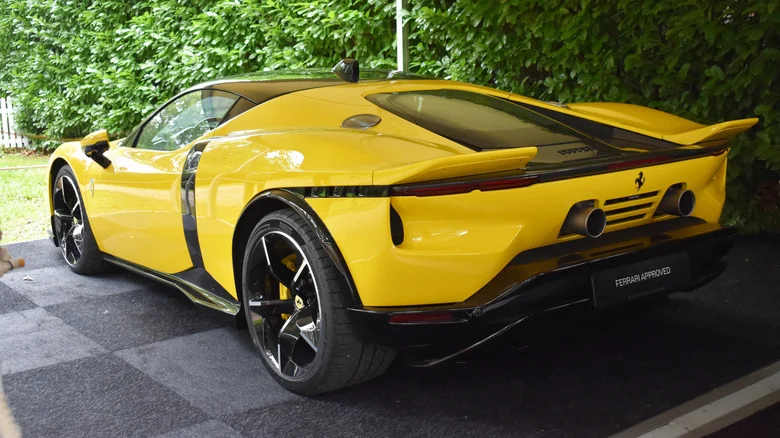
Third-quarter adjusted EBITDA rose 12% to €753 million, comfortably ahead of a €739 million analyst consensus cited by Reuters. Sales of the €3.6 million F80 limited-edition supercar improved the product mix, which mattered more than the headline shipment count. Ferrari delivered 3,368 vehicles between July and September, 33 fewer than a year earlier. Order books now reach into 2028.
The Luce EV is a useful test of that demand. Ferrari has already sold out its first electric model for all of 2027. CEO Benedetto Vigna said two more model launches are still coming this year and that he's confident clients will be pleased. Here's the thing: the same rarefied pricing that keeps the order book full has also drawn plenty of resentment from enthusiasts who can't afford a Ferrari at all. Whether that frustration affects the brand over the long run is an open question, but the current financials suggest it isn't slowing sales.
Audi's Georgia plant could grow by nearly half again
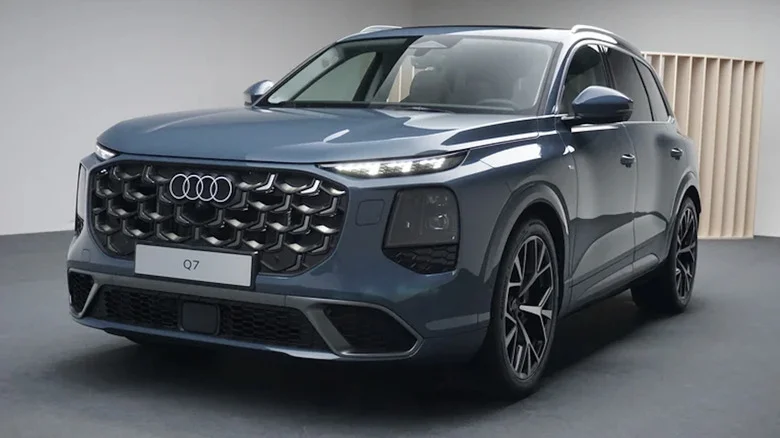
Audi is preparing a $4 billion assembly plant in Macon, Georgia, which won't open until the early 2030s. Documents released by the Mid-Georgia Gateway Development Authority suggest the German automaker is already weighing a second phase that would add $3 billion in costs and roughly 3,000 workers.
The incentive package is substantial. The state is providing a 1,500-acre site, $458 million in tax incentives, and more than $120 million in grants covering infrastructure, rail improvements, environmental remediation and construction. Another $430 million is earmarked for water, road work, utilities and workforce training and recruitment. Those figures come from the development documents, and they sit on top of the tariff relief the Trump administration has promised Audi to help secure the plant's future.
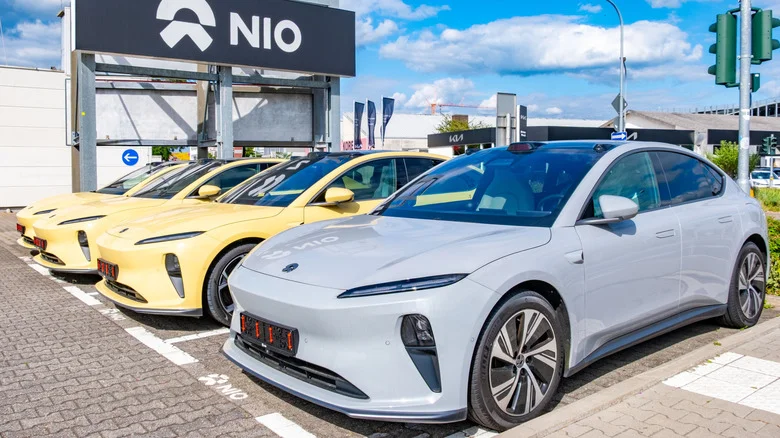
The current plan calls for 200,000 SUVs a year and 4,500 employees, so an extra 3,000 jobs would be a significant expansion. Reuters, citing two sources briefed on the matter, reported that Audi has pushed for its tariff rate on EU-built imports to fall from 15% to 7.5%, but that the U.S. Commerce Department is expected to agree to around 10%. The relief program is designed to reward automakers that add domestic production or other investment. Audi's tariff costs on its imports already reached around €1.2 billion ($1.4 billion) last year, since it ships every U.S.-bound vehicle from Europe or Mexico.
No capacity figure has been published for the expansion. Given the workforce numbers, though, it would be a big jump, and it's a reminder that these plants are often planned in stages long before the first car rolls off the line.
Battery-electric cars hit 34% of European registrations
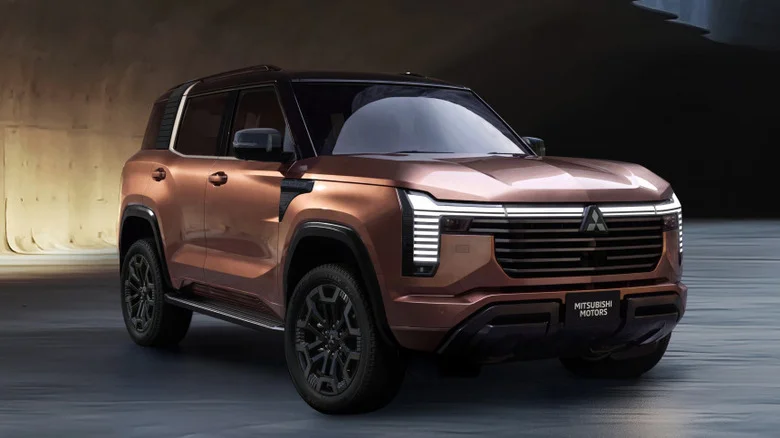
Battery-electric vehicles accounted for 34% of new car registrations across 12 European markets in October, according to an Automotive News Europe analysis. That's up from 22.4% in October 2025 and represents a monthly record. BEV sales in those markets rose 57% during the month. Penetration averaged 21% in the first half of 2026 before climbing steadily through the third quarter and reaching 33% in September.
Germany posted a record 37% share for the month, with 94,086 BEV registrations, a 79% jump. Through October, electric cars held 28.2% of the German market, nearly ten percentage points higher than in 2025. The U.K. reached 32.7% in October, and France hit 41.5%, just below its September record of 41.7%. Smaller markets are further ahead still: the Netherlands reached 55%, Sweden 51% and Belgium 49%.

Strong demand is now creating supply problems. Mercedes-Benz says its electric GLC midsize SUV is sold out in Europe for the rest of 2026, and some configurations may not be delivered until the third or fourth quarter of 2027. Volkswagen Group reported more than 30,000 orders for the ID Polo by early September and over 51,000 reservations for the Cupra Raval, with longer waits likely for some versions.
The margin question is the harder one. VW's CFO Arno Antlitz said on the group's October 29 earnings call that the BEV transition is moving faster than planned. Its order book is now around 40% electric, a level the company had expected to reach only in 2029. Toyota Europe's marketing chief, Till Conrad, said EVs still carry thinner margins than hybrids and combustion cars, though falling battery costs should narrow that gap. My read is that automakers are caught between customers who want electric cars sooner than expected and balance sheets that aren't ready for it. That's why the industry has pushed back so hard on the transition, and why the pressure is unlikely to ease soon.
Mitsubishi is pinning its hopes on the Pajero
Mitsubishi cut its full-year profit forecast, citing the conflict in the Middle East as a drag on sales and a driver of higher transportation and raw material costs. The company now expects operating profit to fall 7.3% this fiscal year, to ¥70 billion ($444.8 million). In August, it had forecast a 19% increase to ¥90 billion. Net income is now expected to be flat, down from an earlier projection that it would more than double.
COO Keisuke Kishiura said Middle East disruption will reduce full-year operating profit by ¥45 billion ($285.9 million), including lost sales and higher costs. The revision is a sharp reversal, and it comes even though Mitsubishi reported a 75% jump in operating profit and a narrower net loss for the fiscal second quarter ended September 30. The company also acknowledged that it trails rivals in hybrids and EVs.
Global sales guidance has been trimmed to 764,000 vehicles, a 4.1% decline from the previous year and well below the earlier target of 857,000, which had implied 7.5% growth. Declines are expected in Southeast Asia, Australia, North America and Europe. North American deliveries are forecast to fall 7% to 154,000, and European sales to drop 5% to 40,000. Japan is the one bright spot, with a projected 11% rise to 136,000.
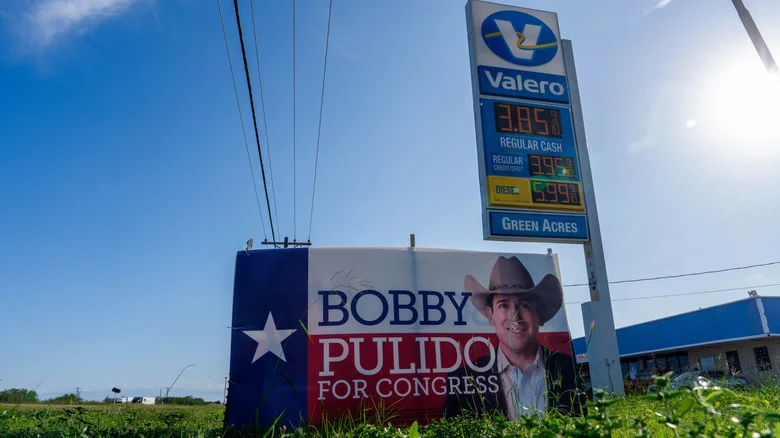
The reintroduced Pajero is central to the recovery plan. Mitsubishi says it has already taken 9,000 orders worldwide for the off-road SUV, which is aimed at the Toyota Land Cruiser. The target is 10,000 orders by the end of the fiscal year on March 31, 2027. It's already on sale in Thailand, where it's built, and reaches dealerships in Japan and Australia in December. There's no word yet on a U.S. launch, so for now American buyers will have to keep watching.
Fuel prices keep easing
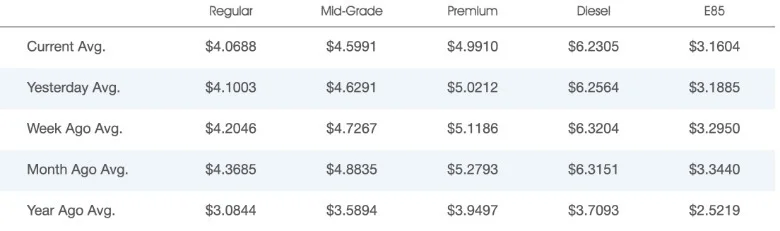
Pump prices continue to fall. WTI crude futures sat at $91 a barrel and Brent at $98 at the time of publication, both lower. According to AAA, the national average for regular gasoline dropped another 3 cents overnight to $4.07 a gallon. Diesel fell by a similar 3 cents to $6.23. Crude moves don't translate to pump prices instantly, so drivers may see the decline continue for a while, though volatility in the Middle East remains the main wild card.
Odds and ends
Rutgers is credited with hosting the first college football game, but the program's record since then is 686–710 across 112 seasons, with 42 ties. This year's team started 2–6. Penn State fans aren't in a position to gloat, either.
And Olivia Rodrigo has released a Christmas song, "take me home (4 christmas)." Early listening is the only rational response, whatever you think about holiday music arriving in November.