Truckload Contract Resets Stay Above 10% as Shippers Absorb Higher Base Rates
- Cargo
- Electric Vehicles
- Shipped
- Shipper
- Zach Strickland, FW Market Expert & Market Analyst
- Readers
- 646
SONAR's CRCD.USA index hit 13.11% in October. Shippers resetting truckload contracts are paying well above prior rates, and capacity hasn't caught up.

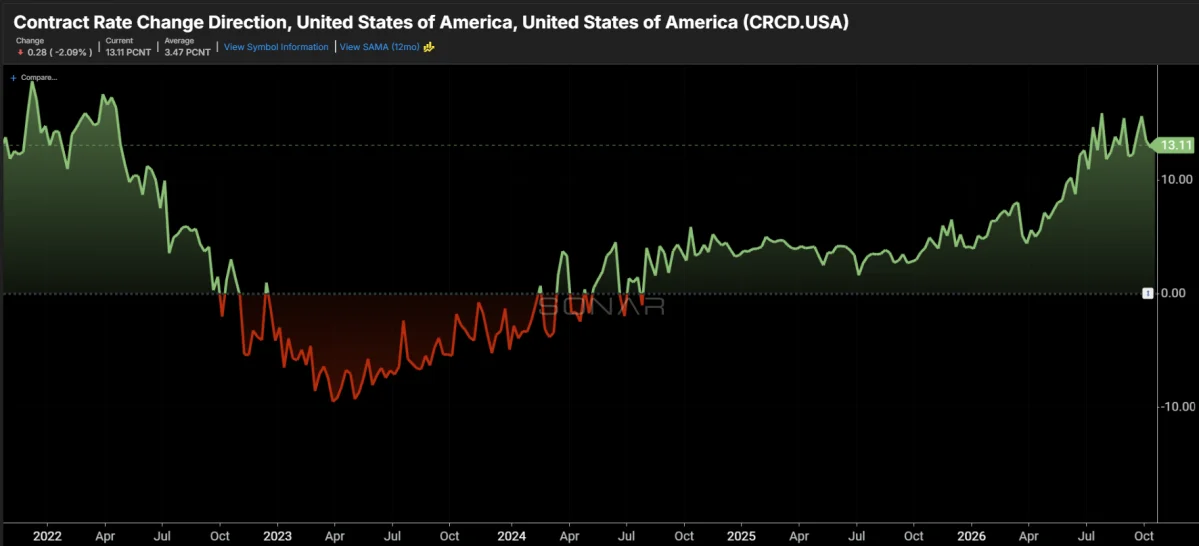
Shippers that renegotiated truckload contracts over the past several months are paying about 13% more than they were before. That's the reading from SONAR's new Contract Rate Change Direction index (CRCD.USA), which stood at 13.11% on Oct. 22. A year earlier it was 3.53%. The gap matters because it shows where contract pricing is heading, not just where spot rates have been.
What the index actually measures
CRCD tracks the average percentage change between a new contract base rate and the rate it replaced, but only within an established shipper-carrier relationship. A change counts only when the old rate held steady for more than 90 days. That filter matters. It strips out short-lived swings and isolates the repricing that happens when a bid cycle comes around. The index is a seven-day rolling average, updated daily, so it moves with the flow of new contracts rather than with a single quarterly snapshot.
The metric also removes two effects that can distort the picture. Temporary route guide waterfalling, where tendered loads fail and move down the list to more expensive carriers, is excluded. So is contract-plus pricing, the premium layered on top of a base rate. Both reflect real market pressure, but they can overstate what becomes the sustained cost of moving freight. Stripping them out gives a cleaner view of which increases are durable.
Here's the catch: CRCD only looks at contracts that are changing. That makes it largely indifferent to volume, but it also means readings can thin out when relatively few contracts reset in a given stretch. The index doesn't account for whether a carrier moves up or down a shipper's routing guide after a rate change, either. A carrier can win a higher rate and still lose share, and the index won't show that.
The 2025 disconnect
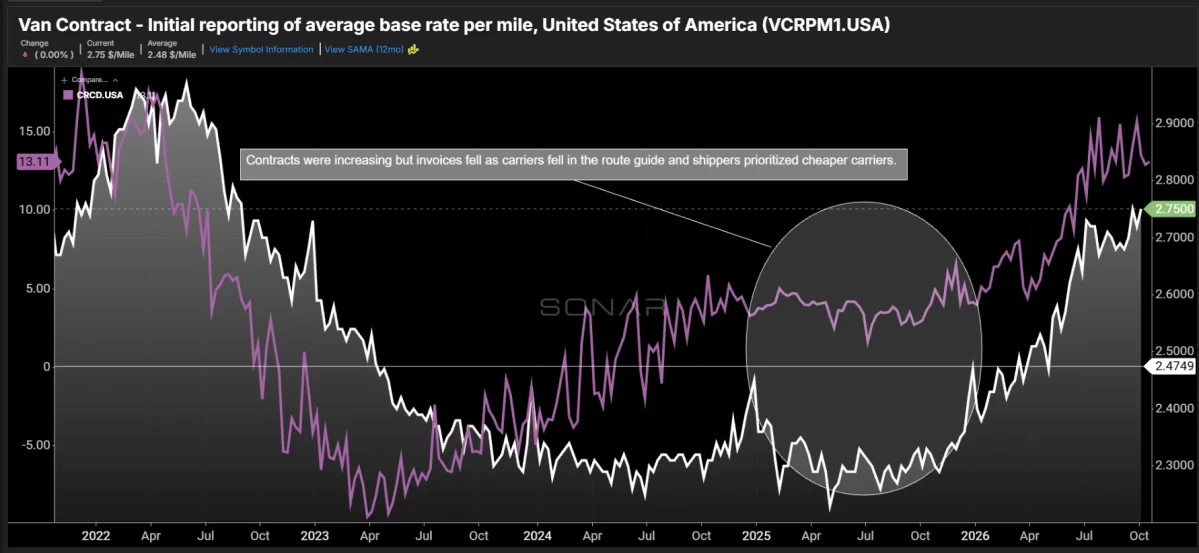
The clearest example of that blind spot came in 2025. Contract resets ran at roughly 3% to 4% starting in late 2024, yet the average contract rate index (VCRPM1) showed flat to slightly lower invoiced rates through most of the year. On paper, shippers were agreeing to bigger numbers at renewal, but the freight actually moving under those agreements wasn't pricing higher on a per-mile basis.
Read together, the two indexes tell you how well carriers are converting market tightness into pricing. CRCD leads invoice data directionally, which makes it a useful early signal. It doesn't predict whether an increase will stick, though. A contract can reset higher and still produce flat invoices if the lanes underneath it soften or if the carrier quietly shifts position in the routing guide. That's why a single index shouldn't be read in isolation.
The bigger lesson is about timing. Carriers were pushing for increases well before the current cycle turned. For shippers, that history is a warning. Pricing power that builds slowly can look modest for a long time and then show up all at once in renewal season.
Why contract resets are lagging the market
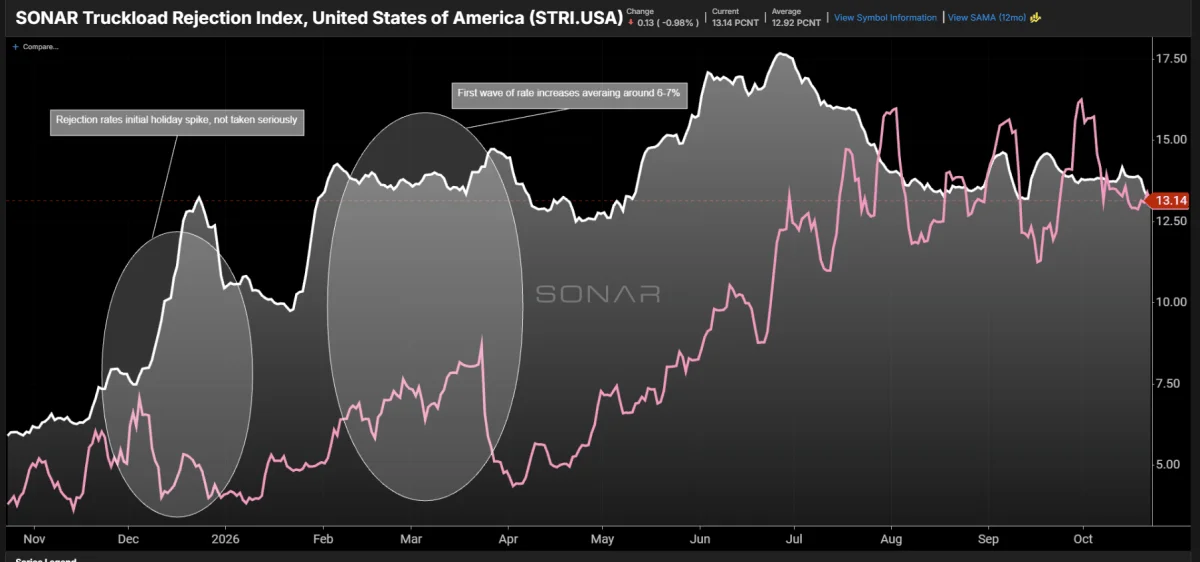
The current 13% reading means most contract changes are now landing in double digits. That's a significant move, and it followed tender rejection rates that jumped above 9% nearly a year earlier. The second chart in the series makes the relationship clear: contract rate changes trail rejection rates. In practical terms, carriers don't usually win large contract increases after a brief spike in rejections. It tends to take a sustained stretch of elevated rejections before shippers accept new base rates, because procurement teams typically re-bid on a fixed cycle and only reprice when a contract comes up for renewal.
That structure helps explain why the numbers are still rising. Rejections have averaged close to 13% over the past few months. Because most contracts reset on an annual or similar schedule, the backlog of renewals that were negotiated during the softer period is only now rolling over. Each new contract that resets reflects the tighter conditions of the recent past, not the market as it stood a year ago. That's a lagging dynamic, and it means the index can keep climbing even if spot conditions stabilize.
One detail deserves attention: CRCD is not an annualized rate. It measures the average change in contracts at the moment they move, and a change doesn't register until it's implemented. So the 13% figure describes the size of resets, not the total cost increase a shipper will absorb across a full year. A shipper with a small share of contracts up for renewal will feel the effect differently from one renegotiating most of its network at once.
What shippers should watch next
The takeaway is that carriers are still winning strong increases, and the invoice-side index suggests those increases are holding. The expectation is that the average increase should moderate over time as carriers move onto contracts that are more financially sustainable. That's the normal path after a tight cycle, and it's the scenario most shippers will plan around.
The harder question is capacity. FMCSA data and tender data both indicate that capacity hasn't grown meaningfully over the past 12 months, even with rates elevated. Higher prices usually pull equipment back into the market, so a flat supply picture suggests the pressure may persist longer than a simple reversion model would predict. It may take time for the curve to flatten, and the pace will depend on whether new capacity arrives or whether carriers continue to exit.
For anyone managing a truckload budget, the practical move is to model renewals against the current reset range rather than last year's numbers. Pay attention to whether invoiced rates follow contract resets, because the gap between the two is where the surprises tend to show up. If CRCD keeps climbing while VCRPM1 stays flat, the lag is still at work. If invoice rates start catching up, the squeeze is moving from the contract desk into day-to-day freight spend. That's the signal to watch next.