Death Proof's Chevy Nova Is Now a Family Car With Stunt-Bred Bones
- Cargo
- Electric Vehicles
- Shipped
- Shipper
- Eric Weiner
- Readers
- 706
Stuntman Buddy Joe Hooker's 1970 Chevy Nova from Death Proof now lives with his family, still carrying its roll cage and 383 V-8.
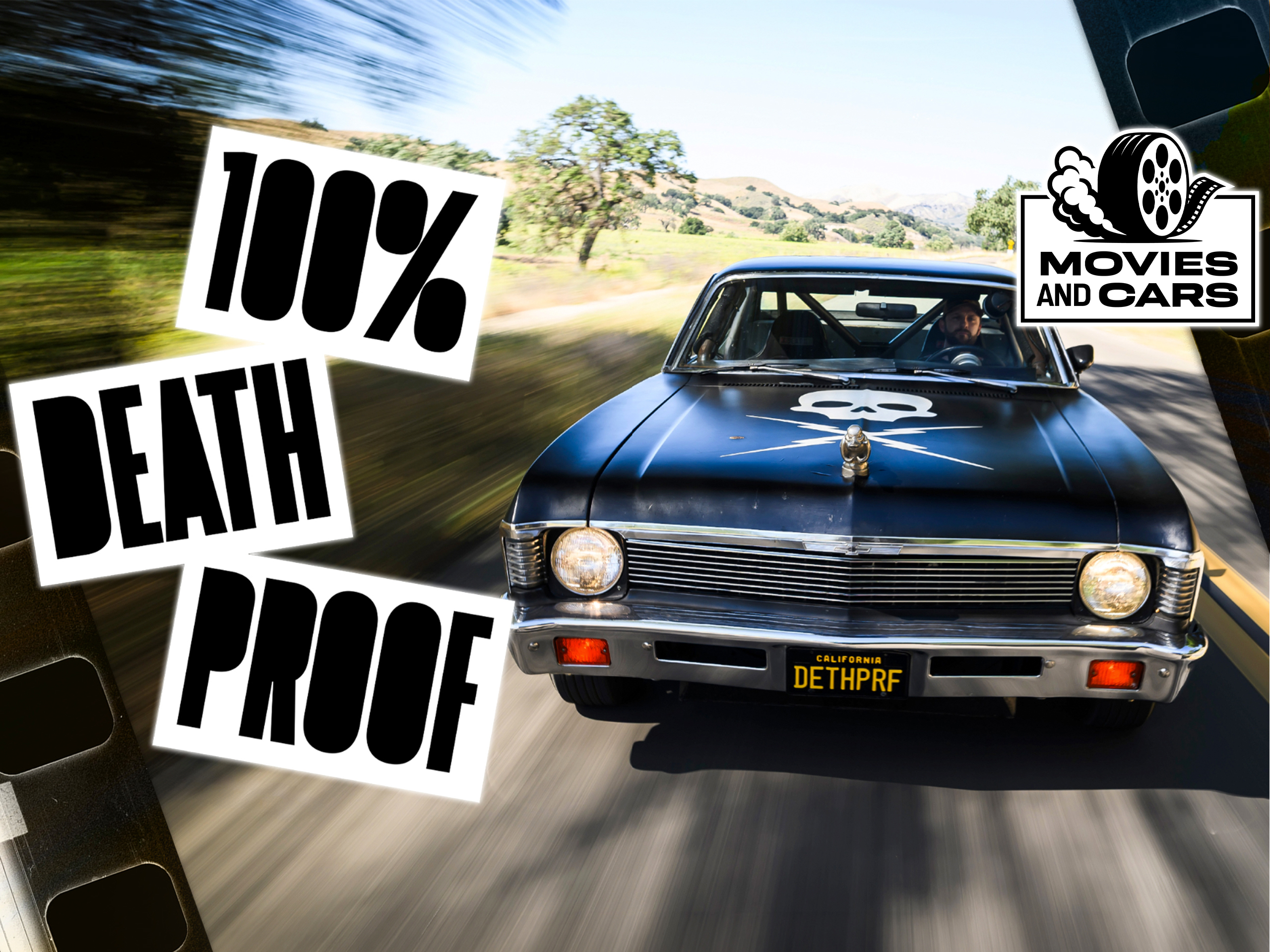
Most movie cars end up in storage, on a studio lot, or in a collector's climate-controlled bay. The Nova from Death Proof went to a family home, and the family drives it. That's what makes this one worth a closer look. It's a stunt car that was built to be destroyed on camera and then kept, with its safety cage and suspension tuning still intact, by the people who knew best how to use it.
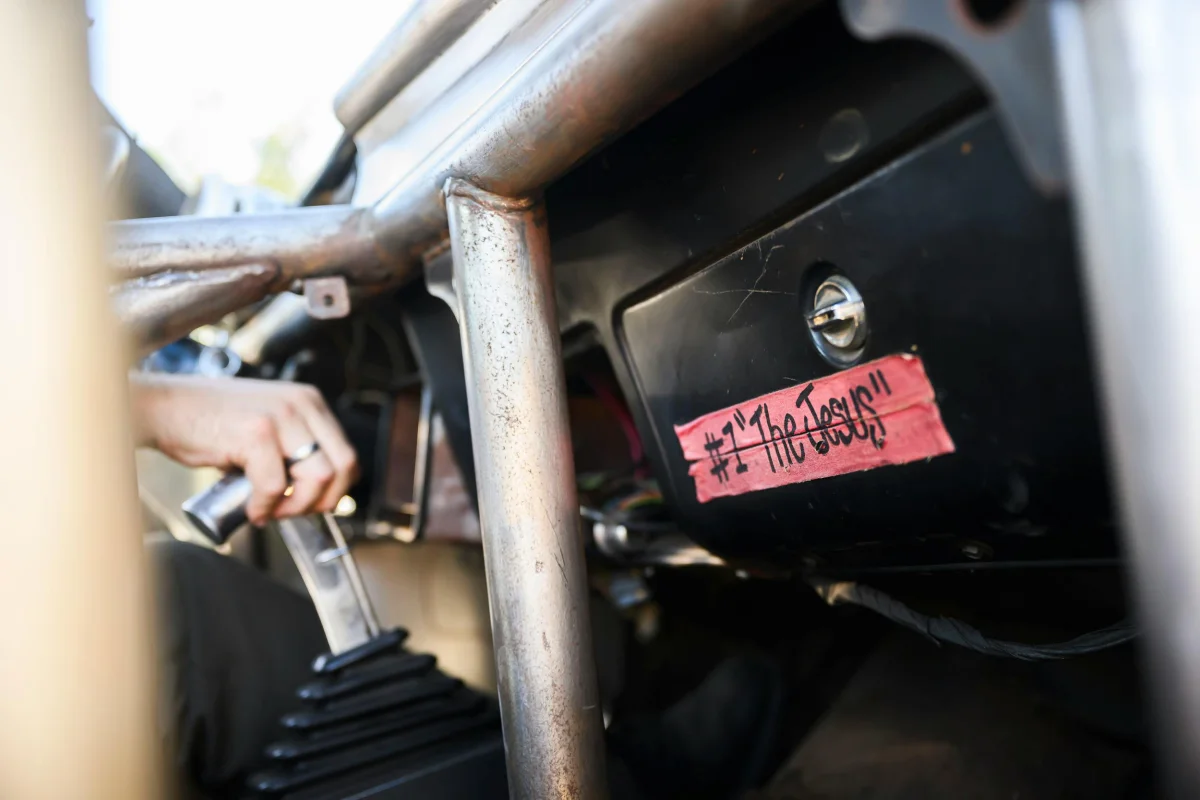
The car is a 1970 Chevrolet Nova, and in the film it's the weapon of choice for Stuntman Mike, the character Kurt Russell plays. On set it was nicknamed The Jesus. Today it's the Hookers' car, and Buddy Joe Hooker, who doubled for Russell, calls it a keeper for reasons that have more to do with memory than market value.
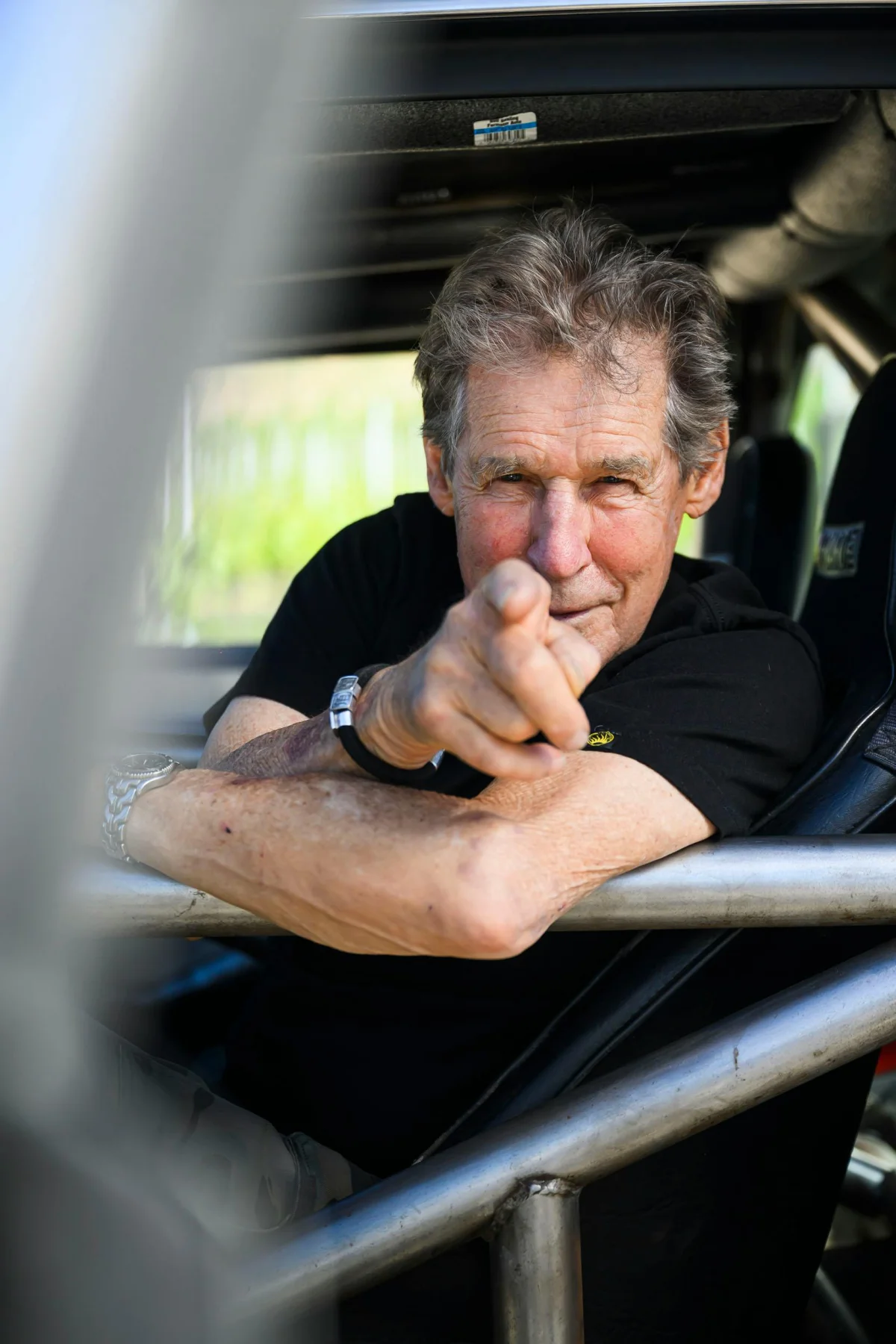
The stuntman behind the wheel
Buddy Joe is 83 now, medium height and fit for his age, and he has the kind of face that audiences have seen in the background of dozens of films without necessarily putting a name to it. His career started young. His father ran a ranch that supplied horses for Westerns, and Buddy Joe began doing horse stunts as a kid before following his father into the business at 13.
His credits as a stunt performer and coordinator read like a survey of 1970s and '80s Hollywood. The list includes Close Encounters of the Third Kind, To Live and Die in L.A., Scarface, Harold and Maude, Terminator 2: Judgment Day, Days of Thunder, and the 2000 remake of Gone in 60 Seconds, along with many others. The physical work he's done is just as striking. He jumped a motorcycle over the spinning blades of a landing helicopter for Daredevils, rolled a truck 17 consecutive times down a sand embankment for Clay Pigeon, and sent a car roughly 120 feet over Burt Reynolds' head and into the Arkansas River for White Lightning.
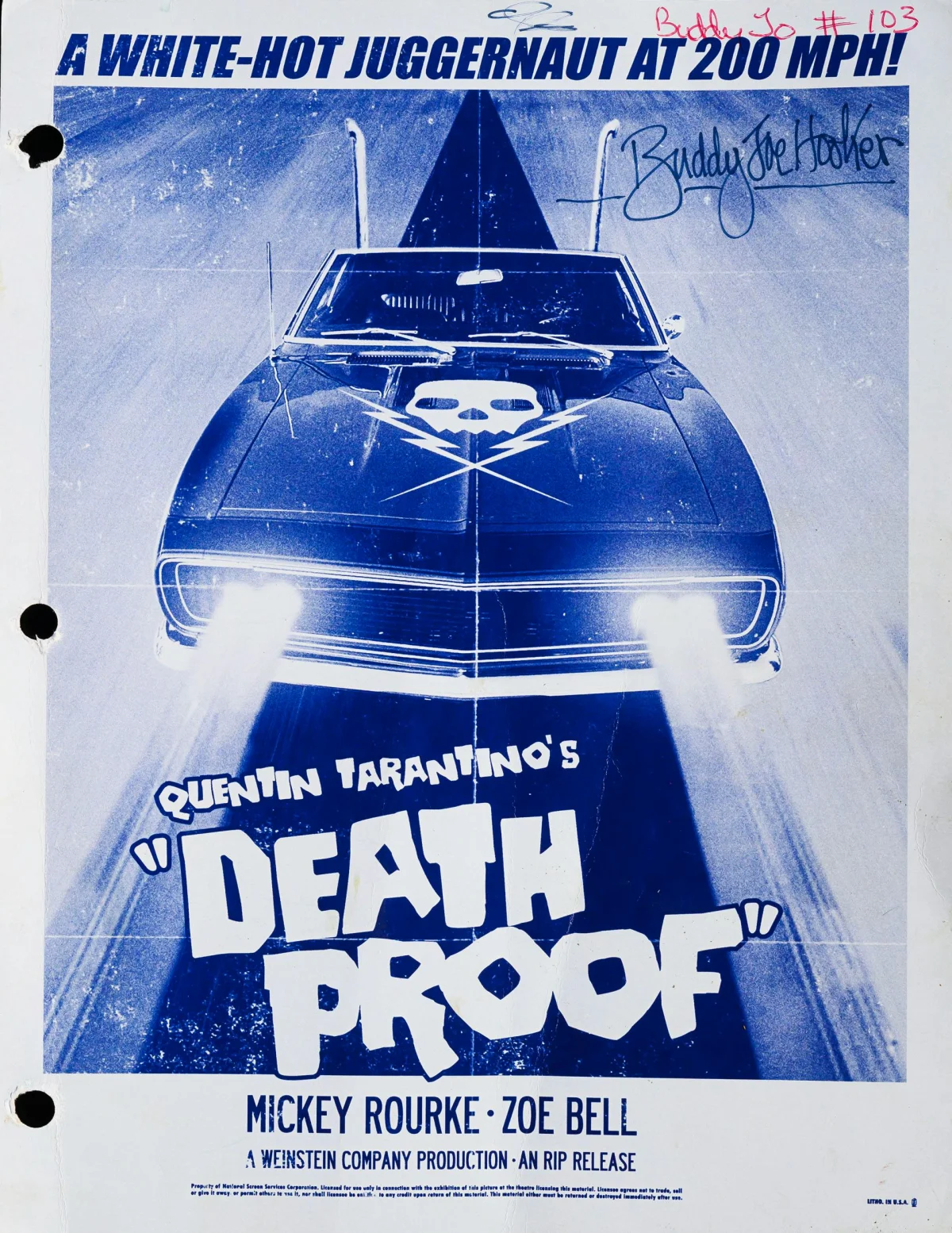
That résumé is why Quentin Tarantino picked him. Death Proof needed a principal stunt driver who could double for Russell and anchor a crew of established professionals, and Tarantino made the call personally.
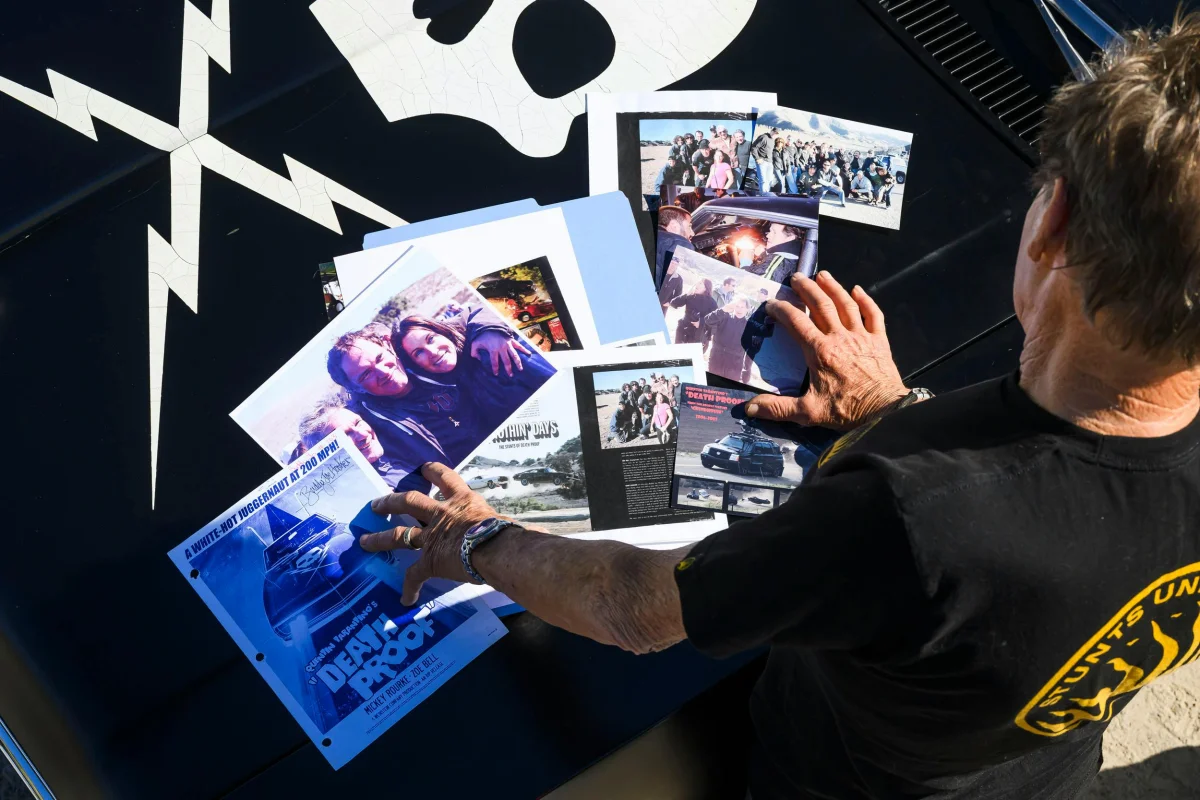
Practical stunts and a film built around them
Death Proof is Tarantino's homage to the grimy B movies of the 1960s and '70s, and he's famously fixated on the details of that period. For a film about stunt drivers pushing cars to the edge, he set two conditions. The first was an all-star team of stunt veterans. The second was that the stunts would be practical, without visual effects or CGI doing the heavy lifting. His own phrasing was "real cars, real sh*t, at full… speed."
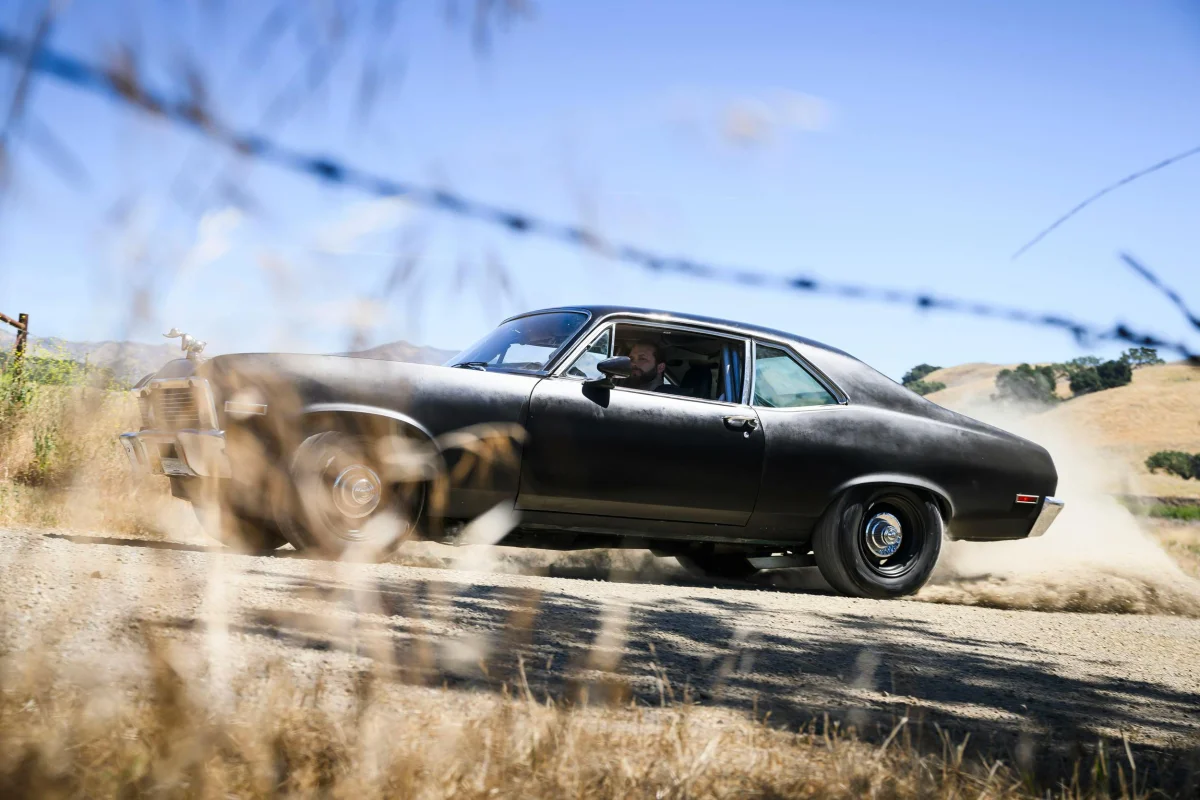
That commitment shaped the whole production. The result isn't a clean, polished action movie. The film is grimy and deliberately rough, and that roughness is largely the product of real metal and real speed. The movie was a commercial and critical disappointment on release. Roger Ebert gave it two and a half stars and took a sharp shot at Tarantino's ambitions. Even so, the practical approach has held up, and stunt-focused viewers still point to it as a case study in how far physical stunt work can go on camera.
Here's the thing about a film like this: the cars aren't props in the usual sense. They're working equipment, and the people who drove them had to trust what they were driving.
Three Novas, one favorite
Production bought and prepared three 1970 Novas. One was used for close-ups. The other two handled stunt work. Most stunt cars are modified to hide their roll cages, camera mounts and general toughness so the audience sees a normal car. Stuntman Mike's black Nova went the other way. In the film, its cage and hard-use modifications are visible, and the car looks like exactly what it is, a purpose-built machine.
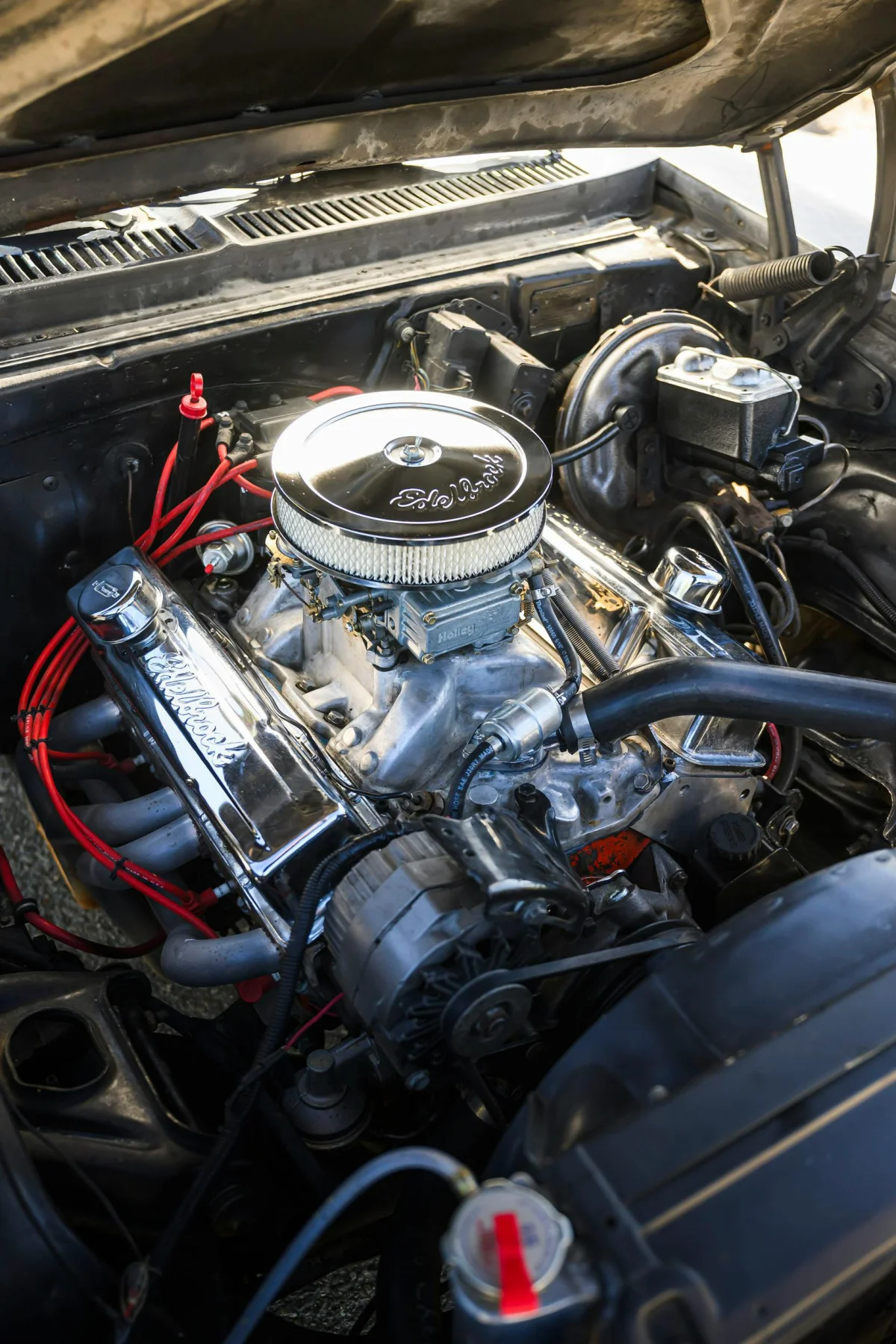
The Jesus became Buddy Joe's favorite. He describes its drivetrain in detail: a 350 V-8 stroked to 383 cubic inches, long-tube headers, a four-barrel carburetor. In his words, "It had good power and it handled better than the others." He also admits to a bit of protectiveness. Before the big action sequences, he'd park The Jesus a short distance from the set, because he didn't want to risk the car he'd come to like best.
The cannon roll and the car that didn't survive
The second prepared car, The Cleetus, was the one that paid for the spectacle. It was destroyed in one of the film's major action scenes during a maneuver known as a cannon roll. In general terms, the technique uses a device mounted under the car that launches it into the air at a set angle and speed, starting a series of horizontal rolls. In the film, the rolls lead into a head-on collision with another car carrying Stuntman Mike's intended victims. Stunt teams rehearse this kind of work exhaustively because every variable, from timing to speed to positioning, has to land where the camera expects it.
Buddy Joe triggered the maneuver himself while driving. Some drivers prefer to hold the trigger in one hand, but he kept both hands on the wheel and taped the trigger to his thumb. Whatever the mechanics, the sequence worked. The Cleetus rolled about 160 yards and slid to a stop on its roof, and it came to rest almost directly in front of the camera. He got it on the first take.
That precision also protected The Jesus. The scene's success meant the car he wanted to keep stayed intact. At the end of production, he asked Tarantino if he could buy it. The director agreed, and the sale price was about $500, which Buddy Joe frames as more of a formality than a transaction.
The car slid heinously on its roof in a tempest of screeching metal… He nailed it on the first take.
From set car to family car
Buddy Joe's twin sons, Kanan and Houston, were teenagers when The Jesus became theirs to drive. They worked on the car extensively, and they had to refresh much of the engine, since the Nova had been thrashed through a Hollywood schedule. They also made changes that reflect the difference between a stunt car and a car meant for regular use.
The steel panels that had been exposed on the car's door interiors got steel inner panels, which reduces weight and cuts down on the risk of debris. The Plexiglas barrier between driver and passenger came out, along with the tractor seat that the film's stunt setup had used. A standard seat made a lot more sense for two teenagers. Kanan put it plainly: a normal seat is "a lot more sensible for a couple of teens trying to score dates."
The brakes were a bigger story. On set, the pedal had been configured to brake only the front axle, and a separate pedal near the dead pedal controlled the rear brakes. That arrangement helped with spins and 180-degree turns, but it wasn't practical day to day. Kanan said they kept it for a while "because we wanted to mess around," but it "isn't conducive to much else, least of all daily driving." The car went back to a conventional setup, with one addition: a bigger brake booster from a C/K-series truck.
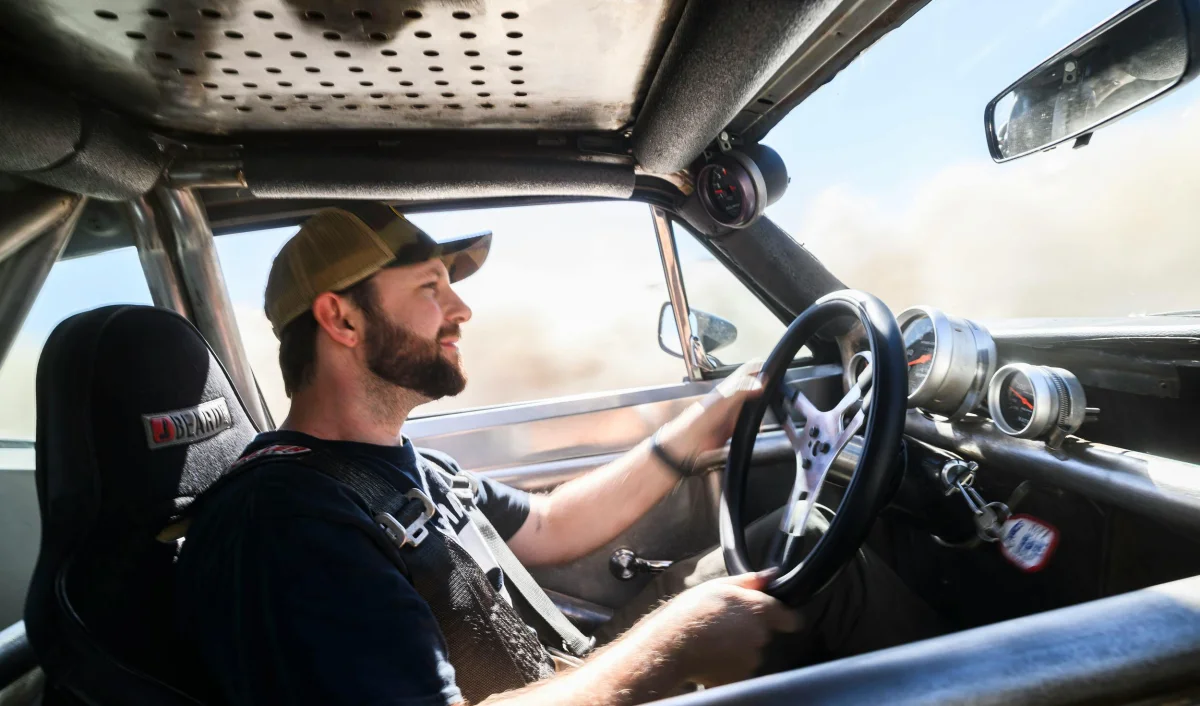
Kanan, 33 and now out of the stunt business, works for the off-road mapping technology start-up onX Offroad, based in Montana. He flew home to California for the shoot, which took place near Buellton in the Santa Ynez Valley northwest of Santa Barbara. That's where the second half of Death Proof was filmed. He described reuniting with the car as "kind of like going back to my childhood, honestly." He has been a gearhead for a long time and hadn't done much wrenching since moving away. Getting the Nova sorted for the shoot brought a lot of that back.
Power, weight and a car that wasn't built to be gentle
The numbers matter here. The Nova is rated at 400 to 425 horsepower, a figure that would make most parents uneasy in a car with no airbags. Gayle Hooker's perspective is that her sons inherited their father's physical instincts. She talks about "that natural sense of space and time and movement and body awareness." Both parents watched the boys develop their driving through karting and through training with friends in the professional stunt world. Gayle also says the car talks to Kanan, which is the sort of thing you hear from people who've spent a lot of time with one machine.
Buddy Joe's confidence in the car's crash protection comes from a simple premise: it was built to protect the person inside. "Once Kanan was strapped in there, I knew he was pretty bulletproof," he says, adding a wink and an offhand caveat about what might happen to someone else.
The Hookers have the car's history in mind, but they also understand what the Nova is now. For the family, it's not a museum piece. It's a car they use, and one they can't imagine selling.
The Nova is a treasured family car, one they can't think about ever selling.
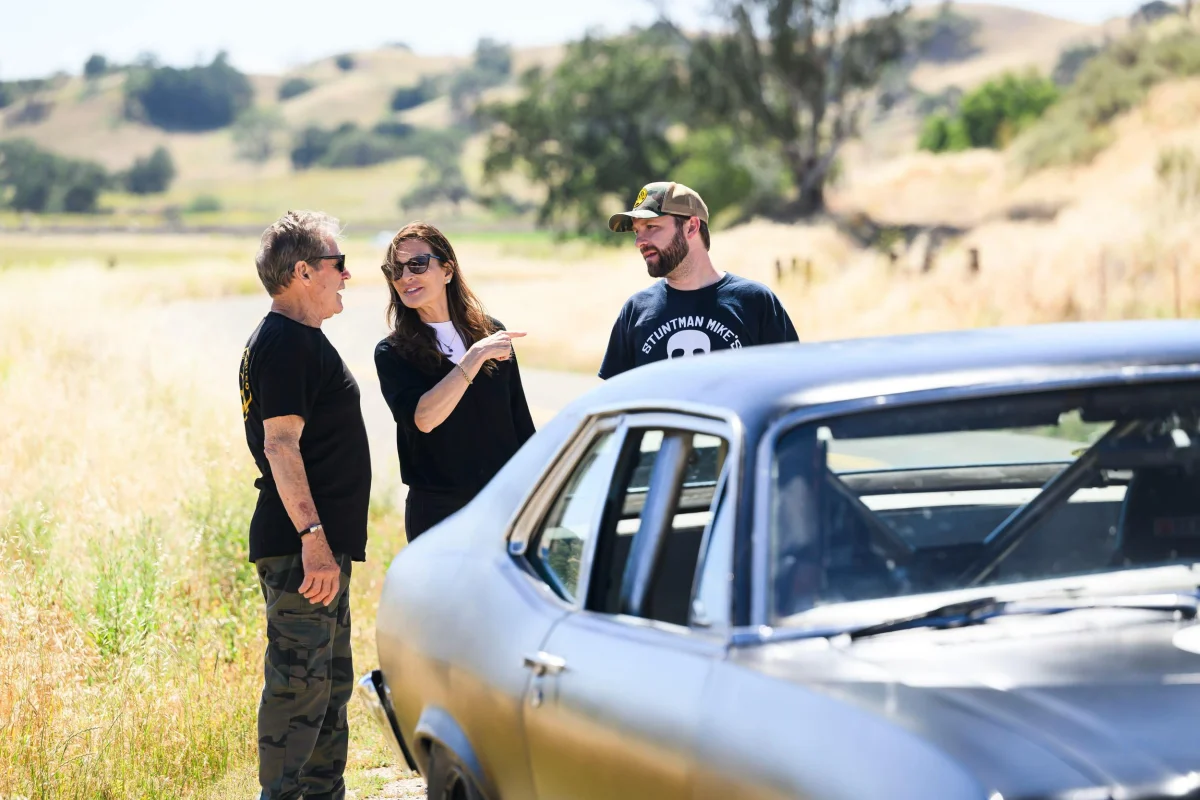
Behind the wheel
Getting into the car is an exercise in managing the cage. The roll cage includes a horizontal bar just inside the door, so you have to swing one leg over the steel and duck to clear the window frame. A second bar, wrapped in zip-tied foam and running along the underside of the roof, gives you something to hold while you lower yourself into the fixed bucket seat. Kanan's advice is to move slowly when swinging your second leg in. People tend to catch the turn signal, a fragile part that can break off.
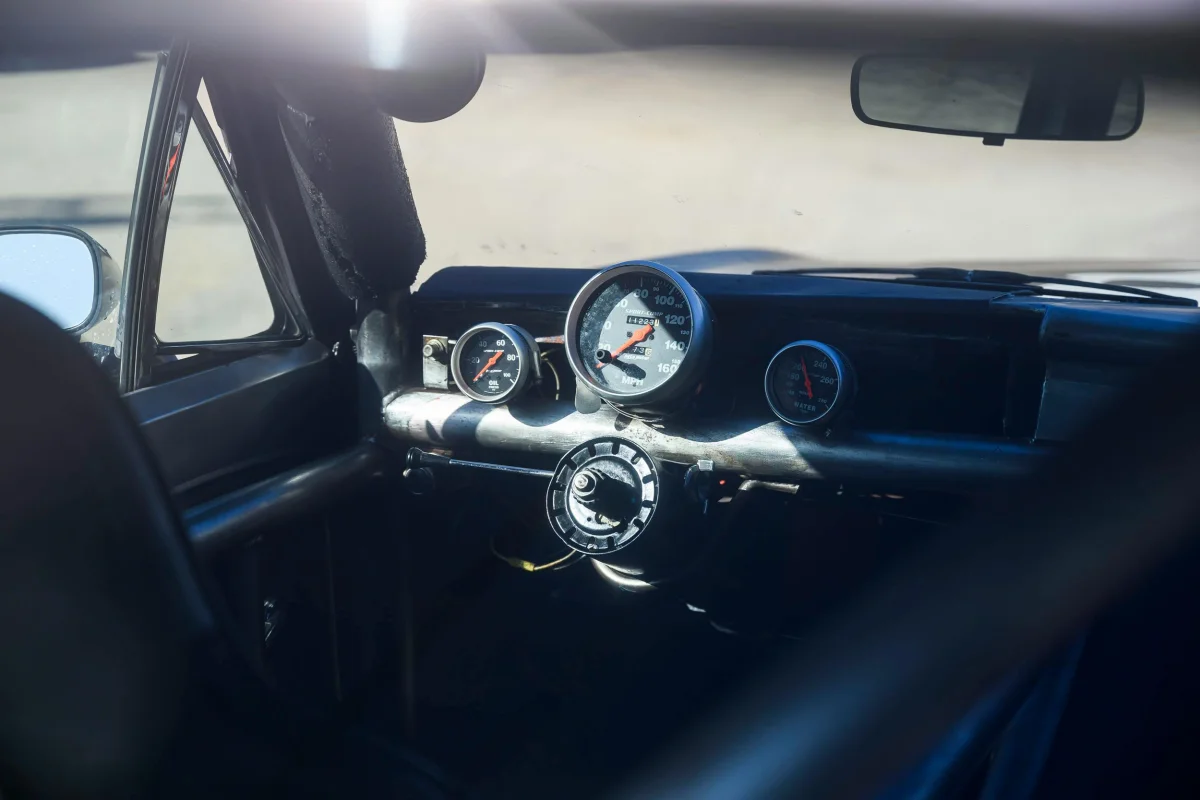
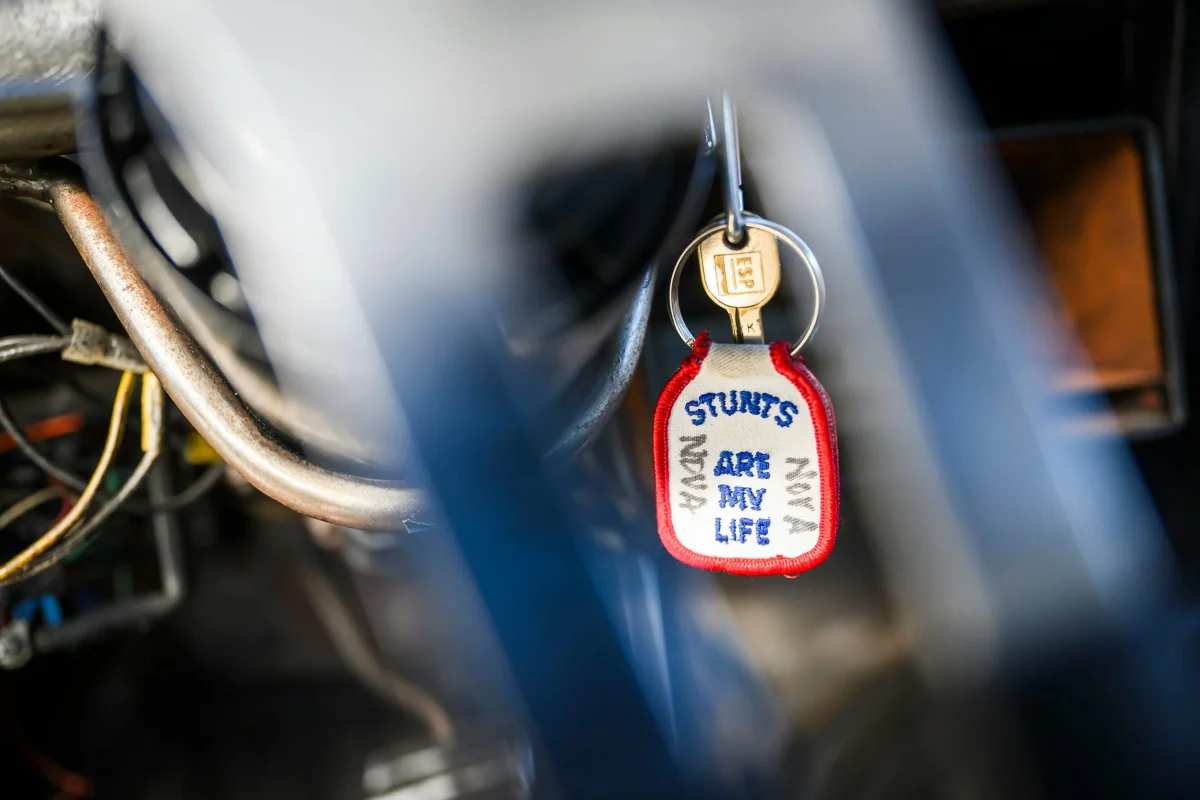
Once belted into the five-point harness, your position is fixed. The rest of the interior is stripped down. The dashboard and rear seat are gone, and a drilled steel panel replaces the headliner. Stunt coordinators added that panel to reinforce the roof, because the extreme upside-down slides might otherwise wear through the factory sheet metal. Three gauges sit above the quick-release steering wheel hub: a central speedometer flanked by oil pressure and water temperature. The tachometer hangs from a bracket at the top corner of the windshield. Wiring runs exposed under the column. Kanan has said the gauges were likely bought off the shelf at a local auto parts store, which fits the car's no-nonsense character.
Start it up and the 383 settles from a bristling idle into a steady burble. The sound deadening is minimal. Rattles and rumbles come through clearly, and that's intentional in a sense. Tarantino wanted real sound from the cockpit, real engine note, and real mechanical feedback. The shifter is a B&M handle connected to a GM four-speed automatic with overdrive. Buddy Joe prefers automatics for stunt work, saying "you are much more free to make a car do things." Dual Flowmaster exhausts give the engine a sweet, unhurried voice.
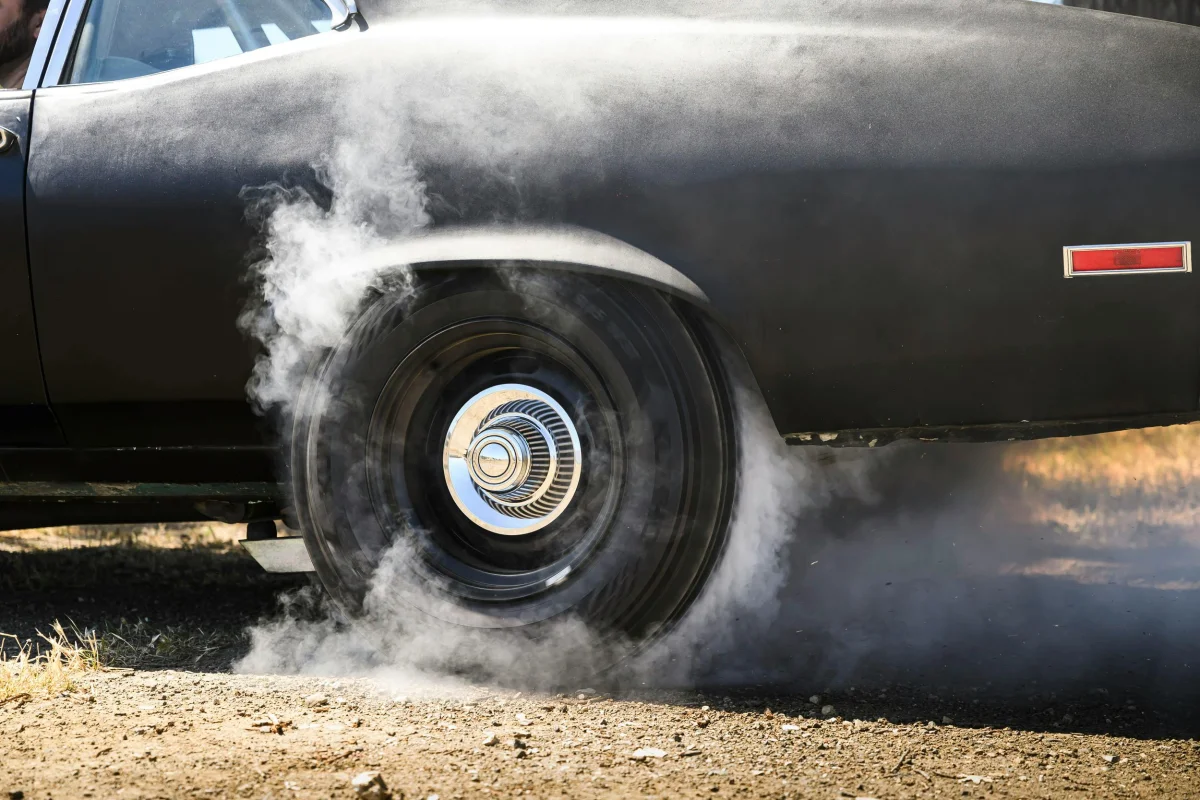
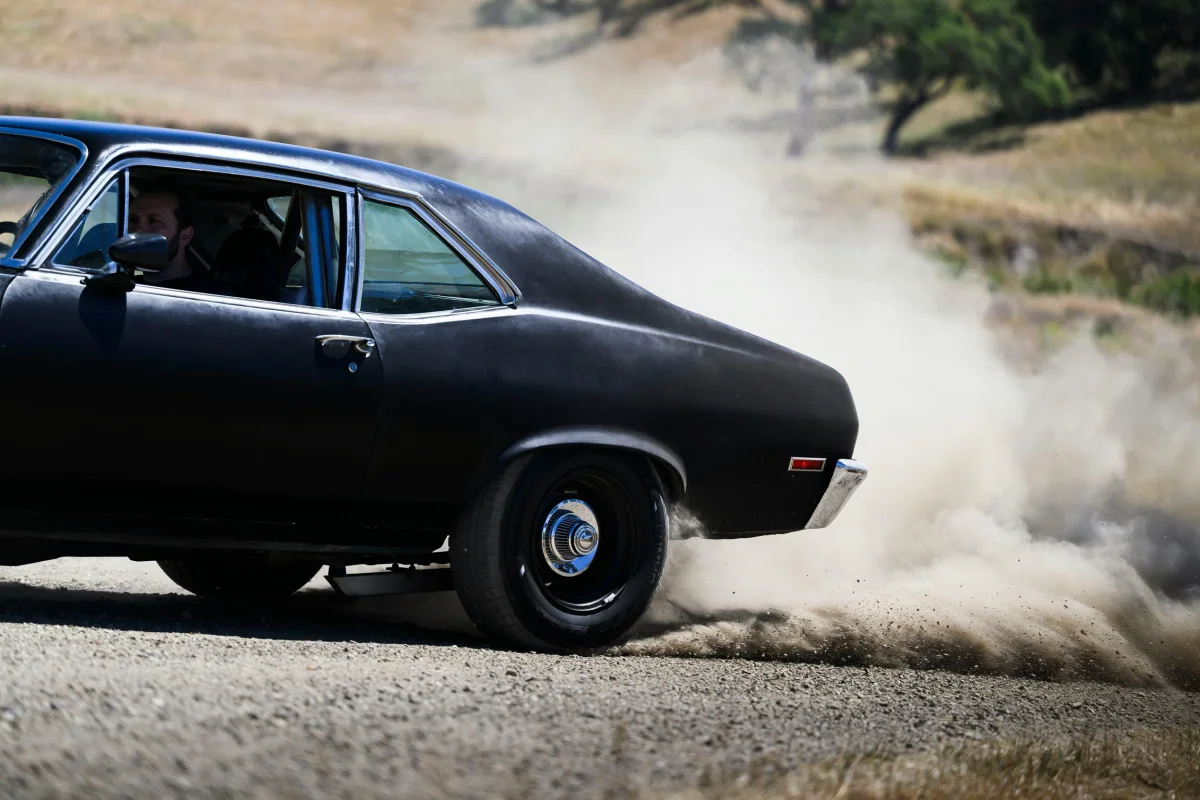
On an open road, the Nova lights its rear tires with very little encouragement. Steering is vague around center, which is typical of old cars with heavy power assist. After a few degrees of input, the truck-spec assist kicks in and the front end begins to track your hands. At speed, it holds a straight line well. Brakes need a firm press before the drums bite, so you learn quickly to leave extra room ahead.
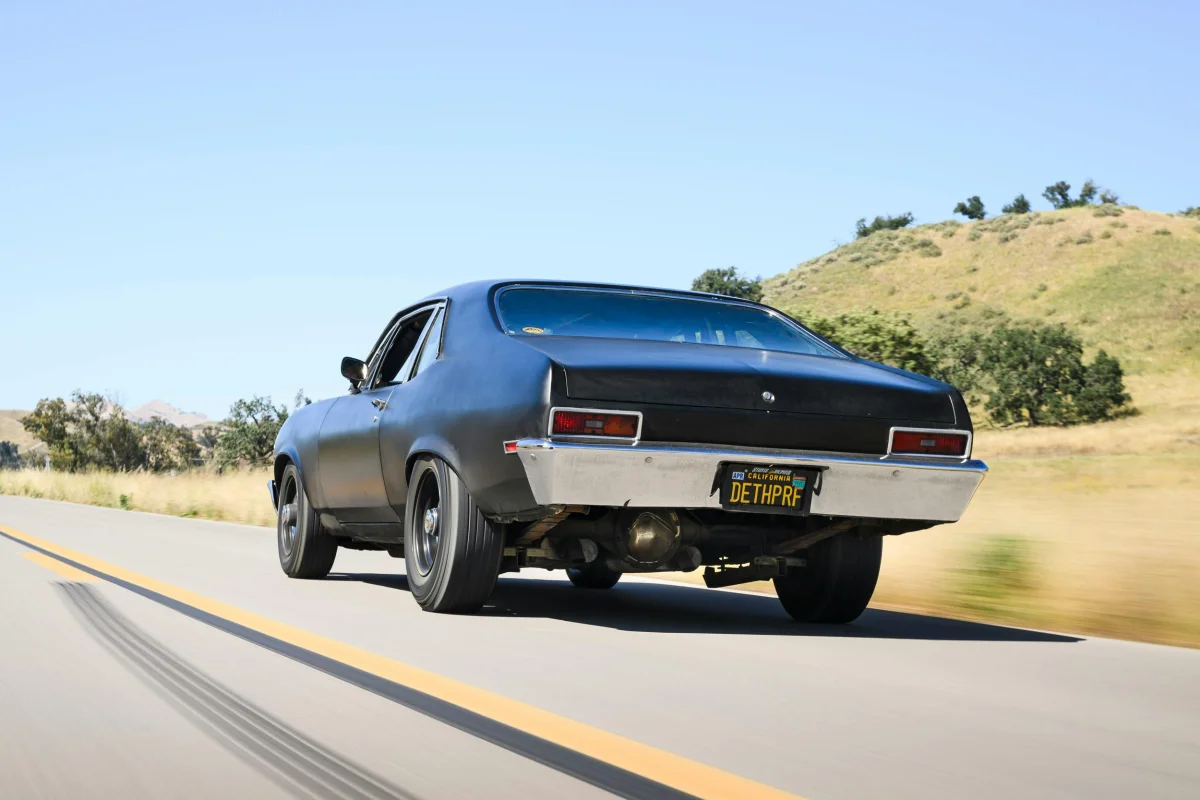
Why this Nova is lighter, and why that matters
A small-block Chevy V-8 is common in modified cars, so the engine isn't what sets this Nova apart. The weight does. Stock Novas weighed just over 3,000 pounds, and their light, tunable engines helped make V-8 versions popular street racers. Hot Rod's 1969 review praised the Nova SS 396 for its "total lack of identification" and declared that "the sleeper car era has returned." With the interior gutted and the fuel tank swapped for a 10-gallon fuel cell, the film car comes in closer to 2,800 pounds.
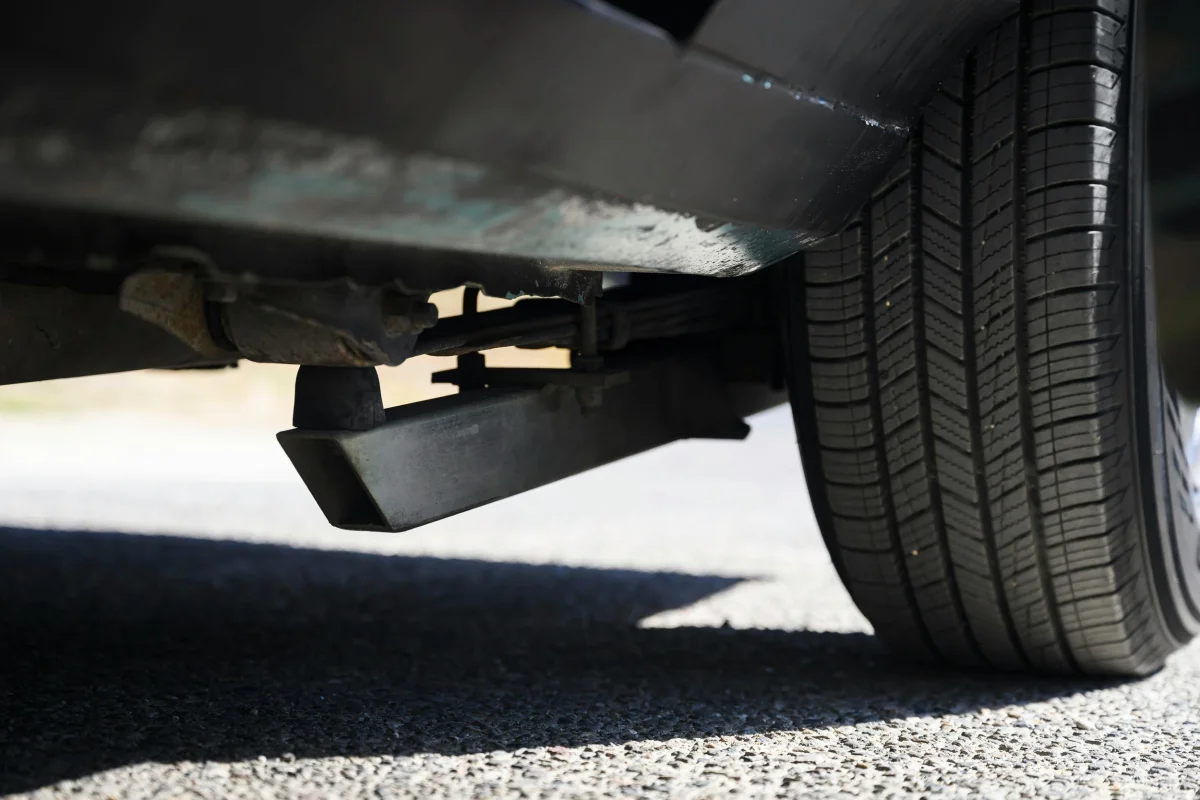
That light weight makes the car a different machine on winding roads. The suspension is largely stock aside from the rear traction bars, which are an old drag-racing addition. The result is the classic 1970s weight transfer that can catch you off guard, especially if the transmission shifts at the wrong moment. Kanan's guidance on the road was practical. Don't overload the front tires. Brake with the left foot into corners instead of lifting off abruptly, because a sudden lift with steering input can break the car loose.
Still, the Nova is friendlier than its on-screen persona suggests. Looking out over the long hood, with the skull graphic and the angry duck ornament in view, you can see why it appealed to Buddy Joe. For a minute, you feel like the tough guy in the movie. Then you think about launching a car like this into the air at 60-plus mph, rolling it several times, and landing it upside-down. The gap between the screen and the cockpit gets very clear.
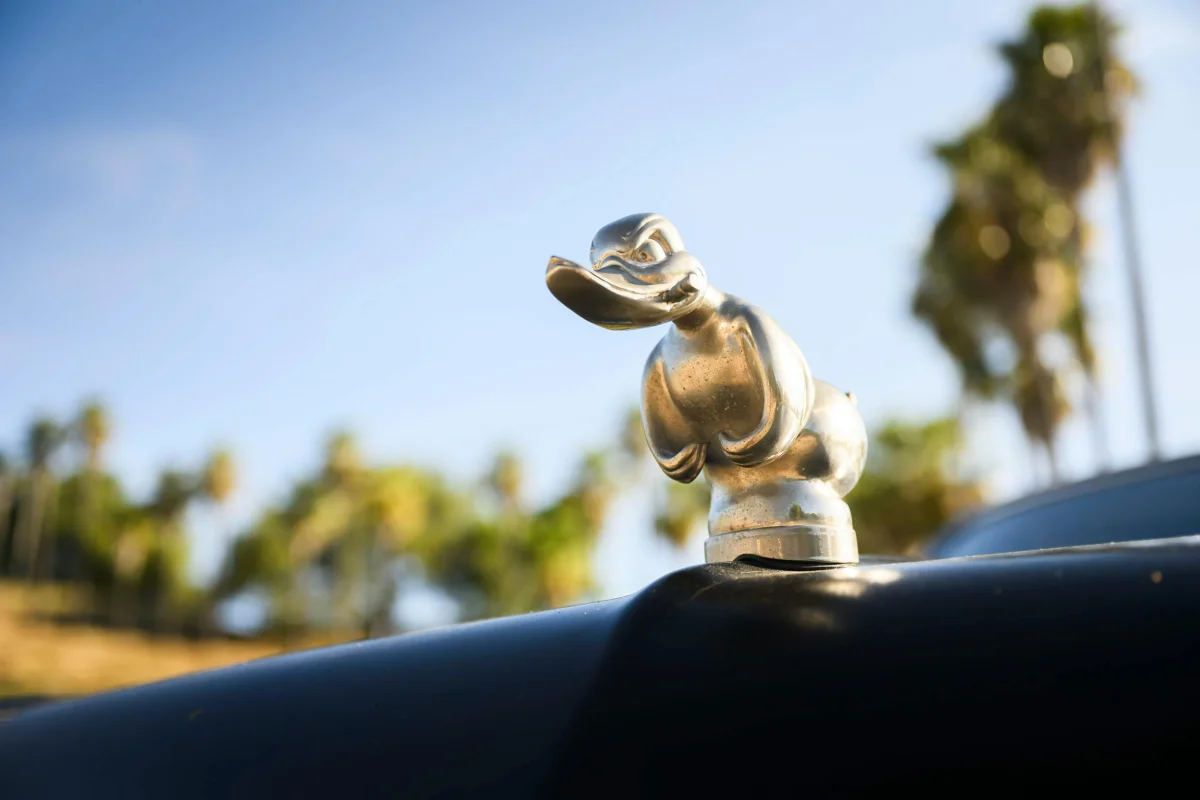
The skull graphic and the angry duck ornament point the way like they're on the prow of a devil-may-care pirate ship.
What stunt work actually looks like
Asked whether stunt performers have a death wish, Buddy Joe doesn't hesitate. "People ask me that, but no, no, I have a life wish. A survival wish. At no point in my career did I ever do anything, ever, that I thought would kill me. It was all about preparation." Gayle makes a related point about how fragile the whole process is. A production depends on everyone, and one weak link can cause serious trouble. Weeks of planning go into a few seconds of action, and stunt teams manage to keep a sense of humor while they work.
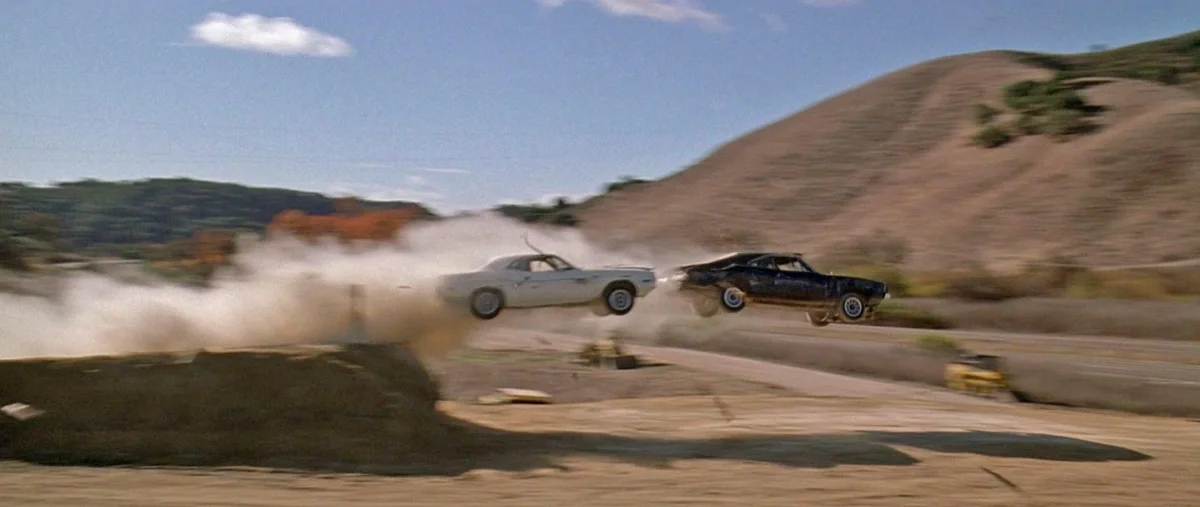
The final chase sequence in the film shows that planning in practice. Kanan drove Buddy Joe to the stretch of country road where the movie's final chase was staged, at the high point of a field near the base of some hillsides. In the film, a '69 Charger and a '70 Challenger crash into each other repeatedly on these roads, with stuntwoman Zoë Bell, playing herself, strapped to the Challenger's hood.
Buddy Joe was in the black Charger, which gave him a lot of steel around him. He notes that the stress on his side was considerably lower than the stress on driver Tracy Keehn-Dashnaw, who had Bell on the hood to consider. Bell's only protection was a cable routed through pulleys to make her movement look more violent. The bumps were hard, and the cars were old. "You don't know when an axle is going to break, or a wheel," he says. Tarantino kept pushing for harder hits, and Buddy Joe admits he held back. If he had buckled a front wheel on the Challenger, the car would have flipped.
He also credits Keehn-Dashnaw without reservation. "She's one of the better drivers I've ever worked with." The two worked from a shared sense of what the other would do. In the climactic crash, Buddy Joe had to come down the lower road at a steady speed so Keehn-Dashnaw could time the collision at a precise spot in front of the camera car. The road was wet in one spot, and both cars spun out. That wasn't the plan. Tarantino liked the result, and the crew set up to recreate the accident as a planned shot. The scene that resulted is, in the authors' view, thrilling. Buddy Joe describes the whole thing matter-of-factly, the way you might describe last weekend.
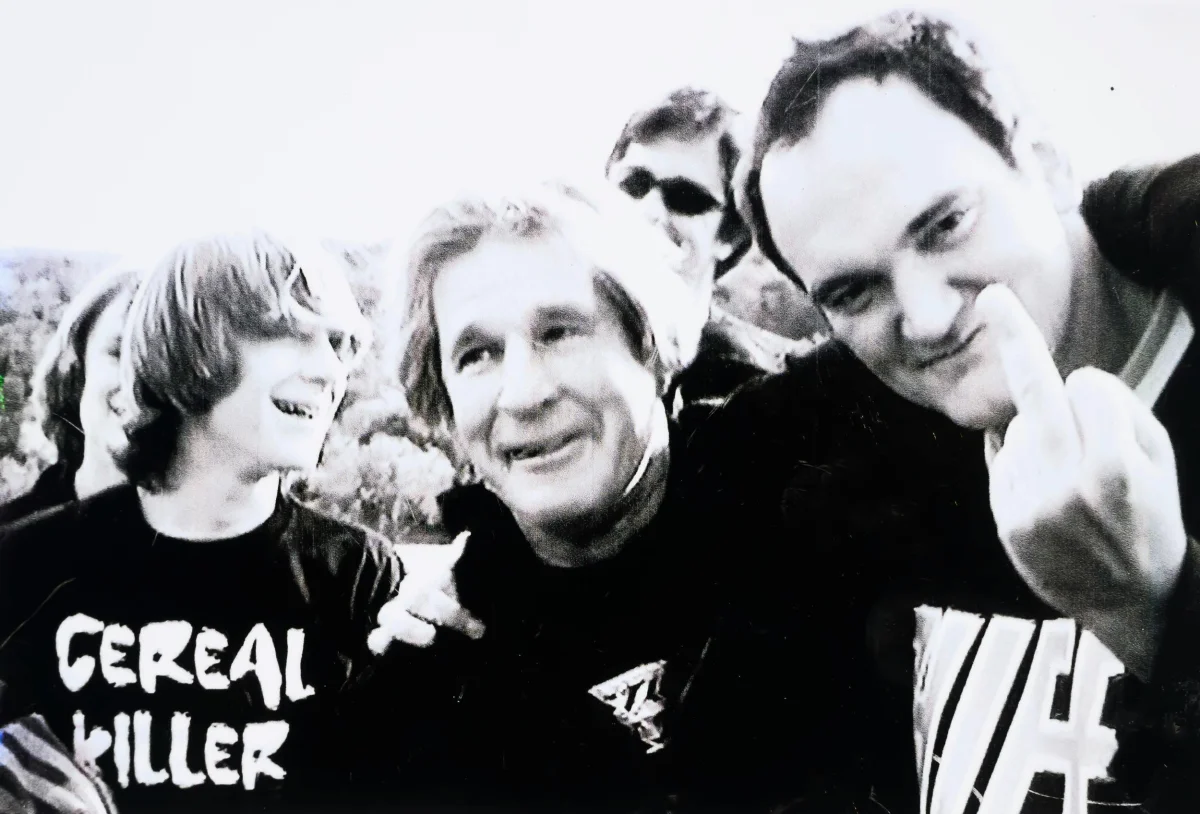
Stunt drivers rarely get public recognition. They aren't household names, and they don't do the talk-show circuit. They get the call when CGI won't cut it, and then they go home. For a car like the Nova, that anonymity is part of the story. It made the car a background tool in a film, and then a family car.
Movie car, family heirloom
For the Hookers, the Nova represents their family's connection to the work. Gayle says the car came to stand for how the boys saw so much of what their father did. Later, for a school project, the boys made a movie in which the Nova acts as a protector. Kanan and Gayle had visited the set during production, and those memories are part of why the car matters to them now.
The matte-black paint on the Nova says a lot about its character: villainous, all business, and not to be trifled with. That's the car the audience remembers. The one in the Hookers' driveway is more complicated. It carries the film's history, the family's history, and the practical choices of people who understood what a stunt car could do and what it shouldn't be asked to do on public roads.
Rewatching the movie after driving the car changes the experience. Some of the mystery is gone. Certain tricks are no longer invisible. What remains is respect for the drivers, the coordinators and the car itself. There's less to imagine now, but the sense of wonder is still there.
The bigger takeaway for enthusiasts is that movie cars can have a second life, and that second life depends on people who know exactly how the car was built. The Hookers' Nova is a rare example: a purpose-built stunt machine with its history documented by the people who ran it, and still in use on real roads. Keep an eye on the Movies and Cars coverage if you want more on how these cars change hands after production wraps.
In the car's case, that's not a bad outcome. A Nova designed to be destroyed on camera ended up with a family that won't sell it, and that tells you more about the car than any spec sheet.