Norris Credits the Rain for Sao Paulo Pole as Piastri Backs McLaren's Dry Pace
- Cargo
- Electric Vehicles
- Shipped
- Shipper
- Sean Fisher
- Readers
- 746
Norris took pole at Interlagos and says rain saved McLaren's qualifying. Piastri, starting 10th, sees the MCL40 as stronger in the dry.
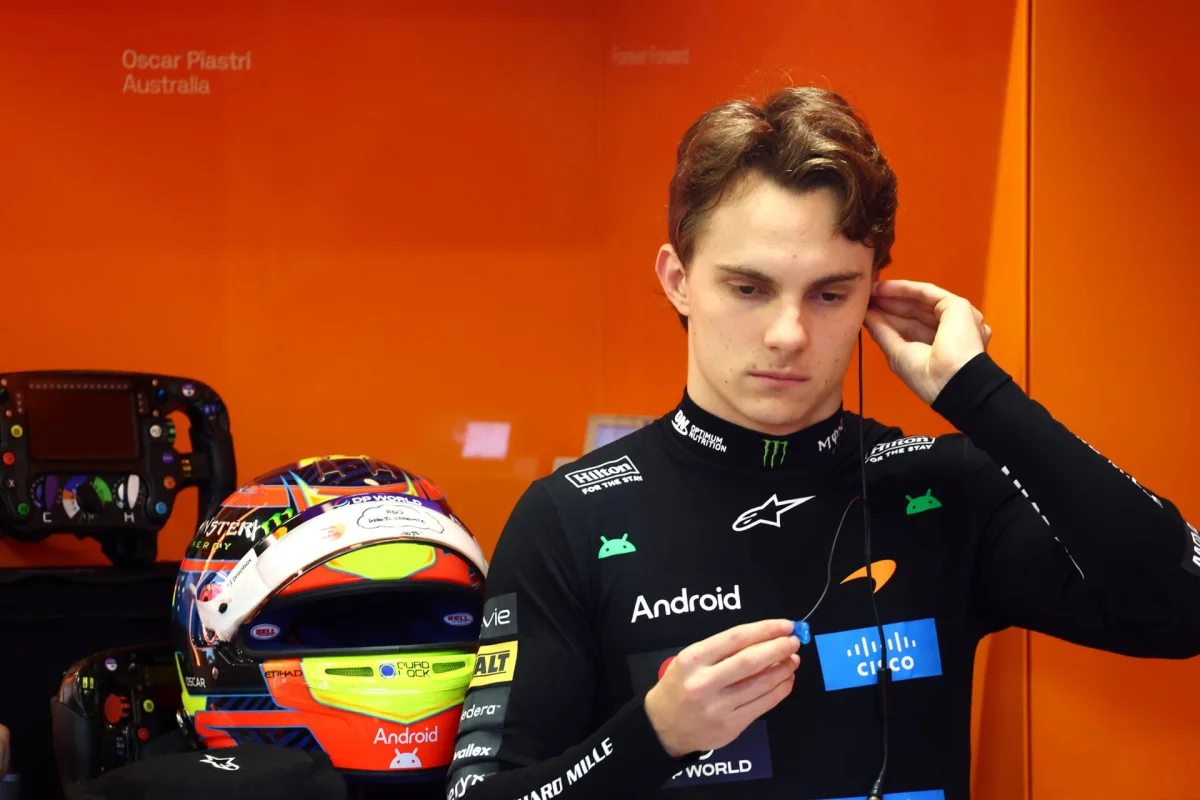
Two McLaren drivers left Interlagos with very different readings of the same car. Lando Norris banked pole position in the rain, while Oscar Piastri was knocked out in Q2 and will start 10th after penalties elsewhere on the grid. Both drivers are describing the MCL40's character, and they don't agree on what it's good at.
A third straight Sao Paulo pole, and a rain-sized asterisk
For the third year running, Norris claimed pole in Brazil, ahead of Mercedes pair George Russell and Kimi Antonelli. That's a strong run at a single venue. But the time sheets only tell part of the story. Norris was quickest consistently through the wet session, and his record in wet conditions is hard to argue with. The question is how much of that result belongs to the car and how much belongs to the weather.
Norris was candid about it. He argued that McLaren was fortunate the rain arrived, because in the dry the MCL40 didn't have the pace to fight for pole. "We're lucky it's wet, because if it was dry, I wouldn't be sitting here. In the dry, we definitely didn't have the pace," he said. That's an unusually direct admission from a driver who just won pole, and it's worth taking seriously. A pole in changeable conditions tells you about the driver's ability to find grip where others can't. It doesn't necessarily tell you where the car sits in a normal dry qualifying session.
Two readings of the MCL40
Piastri's assessment points the other way. He said the car felt reasonable in the wet, but that McLaren had been more competitive and comfortable in the dry across the weekend. His disappointment came from the result, not from the car's behaviour in the rain. "We'll review what happened and see what the weather and final grid order bring tomorrow. If it's dry, we look strong. If it's wet, we're still decent, but we'll need to work hard overnight and into the race to make progress up the field."
Piastri's framing is measured, but the contrast is clear. Norris sees a car that struggled in the dry and came alive in the wet. Piastri sees a car that performed better in the dry all weekend, with wet running as a manageable fallback. Both can be true at once if the team's dry performance was strong in long runs but didn't translate into a single qualifying lap at the right moment, or if Piastri's own approach suited the dry better than the wet. Piastri has also acknowledged that his driving style didn't work in the wet conditions, which points to a driver-and-car interaction issue rather than a clean read on the chassis.
That's the part of the debate worth watching. When a team's two drivers split this sharply on wet and dry performance, it usually means the setup window is narrow, and the balance that suits one driver's inputs can frustrate another. Wet running tends to reward confidence and precision at low grip. Dry running rewards a car that's stable under heavy braking and high-speed loading. A driver who's comfortable on the limit in the wet may be less comfortable with a car set up to rotate or settle differently in the dry, and vice versa.
Sunday's forecast favours Norris, probably
The weather outlook leans toward Norris. The forecast calls for persistent rain through the day, including before and during the Grand Prix. If that holds, Norris starts from pole in the conditions where he has been strongest this weekend, and he has said he's hoping for exactly that. He also expects a damp track and a race with plenty of variables.
Piastri's job is harder. Starting 10th, he has to move through the pack in conditions that are unpredictable by nature. Wet races often reward drivers who can gain places through strategy calls, tyre choices and clean passes rather than raw speed off the line. Starting outside the top few is less punishing in the rain than it would be in the dry, because grip is scarce for everyone and track position can shift quickly. That said, a damp, changing track can also produce chaos, and a driver starting midfield on the grid can benefit from it.
The bigger question is what Piastri learns from watching Norris in these conditions. Norris has shown how to extract the most from the car when the grip is low. Piastri has said he'll need to work overnight and into the race, which suggests a targeted look at his wet-weather approach. If he can adjust his inputs without losing the dry pace he's been describing, McLaren gets a stronger two-driver package for the weekend and beyond.
What to watch next
The clearest signal will come from the race itself. If the rain stays as forecast, expect Norris to lean on pole and his wet-weather record. If the track dries, Piastri's view of the car will get tested quickly. Either way, the Brazilian weekend has laid out the trade-off McLaren has to manage: a car that shines when the conditions are awkward, and a driver pairing that is still working out how to get the most from it in every condition.