Piastri Pins Sao Paulo Q2 Exit on Late Intermediate Switch
- Cargo
- Electric Vehicles
- Shipped
- Shipper
- Kyle Archer
- Readers
- 864
Piastri says a late move to intermediates and wet-tyre driving habits sank his Sao Paulo Q2, while teammate Norris took pole.
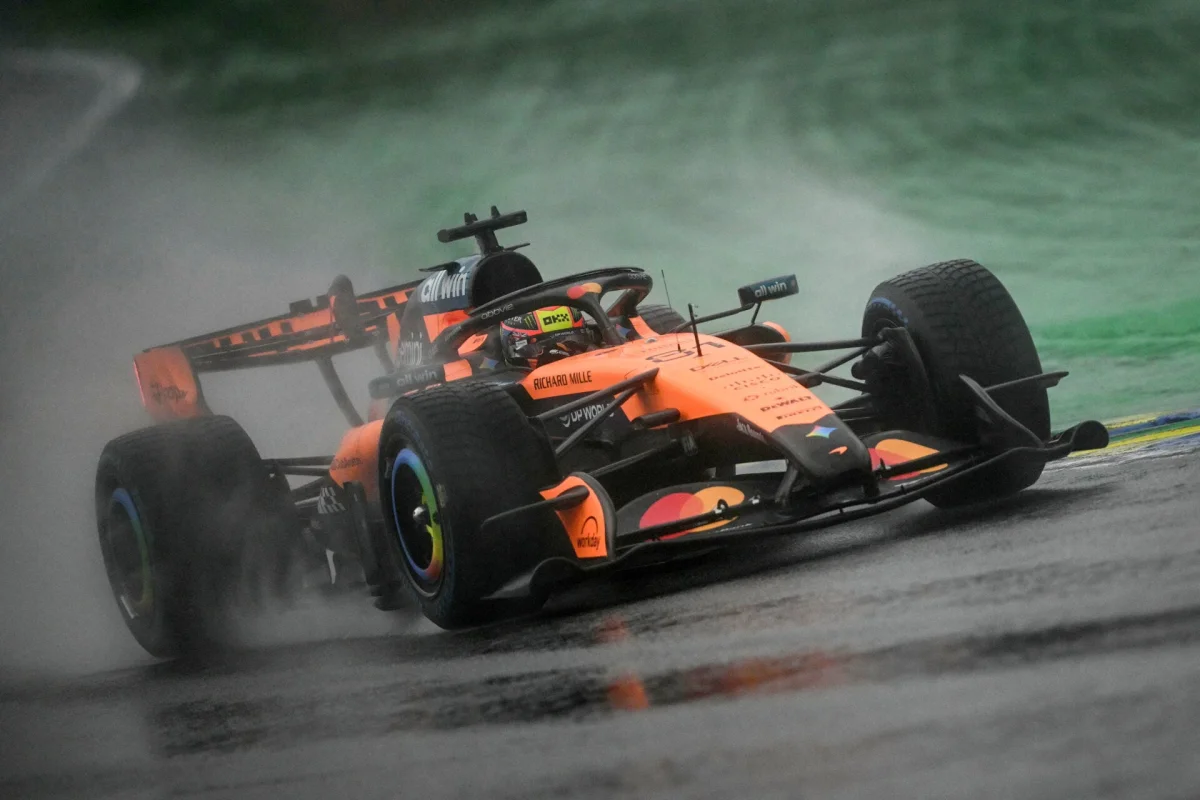
Oscar Piastri's problem in Brazil wasn't a red flag. It was the timing of one tyre change and a driving style that didn't translate. He went out in Q2 in 12th, while Lando Norris took pole for McLaren, so the team's weekend split in two within a single session.
Norris set a 1:27.470 on the way to pole at Interlagos, beating George Russell by 0.204s. It was his fourth pole of 2026. Piastri, meanwhile, has yet to take one this year, and his Q2 exit followed the one in Mexico City the week before. Until that run, he had reached Q3 at every round since the season began. Two straight early exits is a different conversation, and it's one the team now has to have.
Late to the intermediates, and it showed
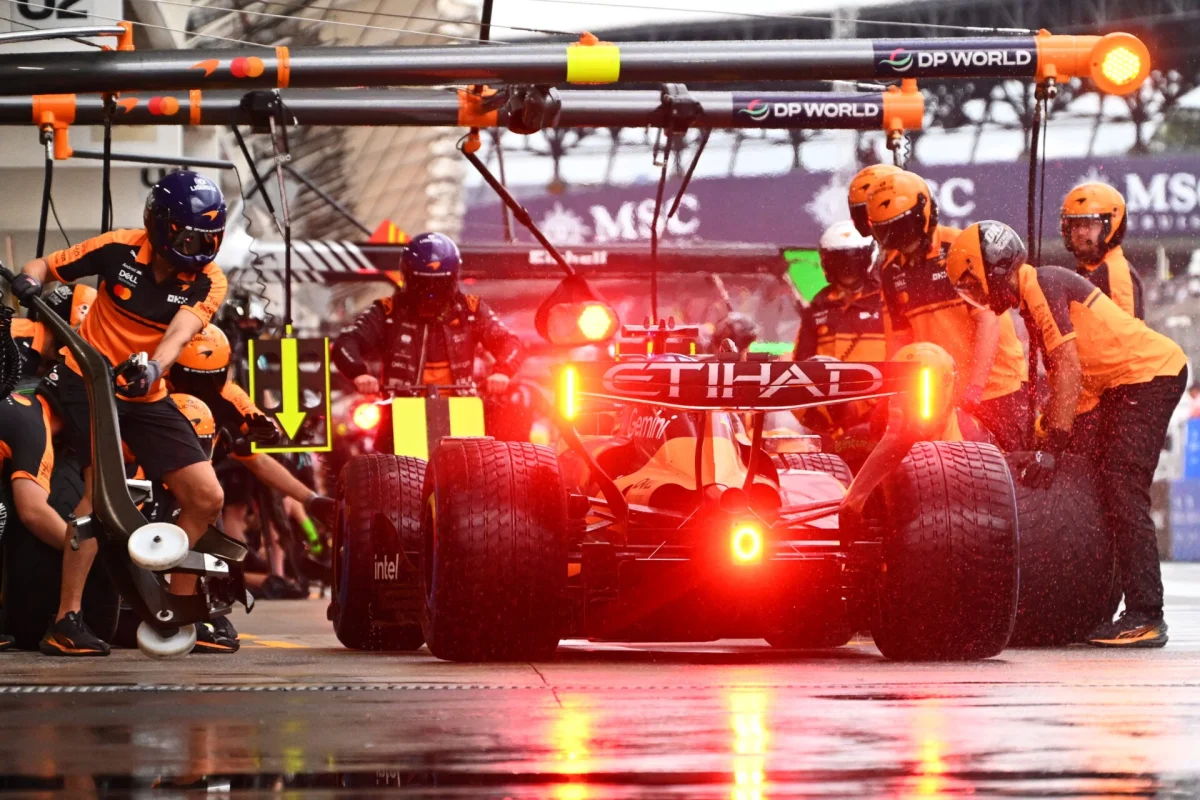
Piastri's explanation starts with tyres. He was on the full wet Pirelli compound when the session turned on the track, and he stayed there too long. Fernando Alonso was the first driver to pit from the full wets to the intermediates, with just under seven minutes left in Q2. Liam Lawson and Isack Hadjar followed quickly. Piastri didn't leave the pits on inters until four minutes remained.
That gap decided the session. By the time Piastri got his first flying lap on intermediates, several rivals had already banked times. Alonso had set a 1:29.339 and then improved to 1:29.072. Oliver Bearman had gone 1:29.130. Piastri's only flying lap on inters was a 1:30.369, and it wasn't enough to move him up the order.
Here's the thing about intermediates: they need heat before they grip properly. Running them for a single lap is rarely enough to bring them up to temperature and give a driver real confidence in the rear end. Piastri essentially had one lap to find the grip, and he admitted as much, saying the team probably went onto inters "a little bit too late" and needed "that extra lap or two" to get temperature into them.
Wet-tyre habits don't carry over
The more interesting part of Piastri's comments is about driving style. He said some of the lines he'd used on the full wets "definitely didn't work" on the intermediates. That's a familiar problem. On full wets, the surface offers more mechanical grip and a bit more forgiveness, so drivers carry speed through corners on lines that don't suit a tyre with less bite. On inters, the same lines can leave the car unsettled.
Martin Brundle clearly noticed that unsettled moment. He felt Piastri "cost" himself in Q2 when the rear of the McLaren MCL40 stepped out on the exit of Turn 12, the corner after Juncao. Karun Chandhok went further, arguing that the Q2 run fell apart because Piastri didn't switch from the full wets to inters soon enough. Piastri's own account lines up with both observations.
The sector data tells the same story. On the full wets, Piastri posted a 23.057s first sector, a 47.731s middle sector and a 19.715s final sector for a 1:30.503 lap. On the inters, his first sector was 22.784s, quicker than the wets, and his final sector was 20.445s. His middle sector, though, came in at 47.140s, but that was the section affected by the mistake at Juncao. That slip cancelled out the gains elsewhere, so the 1:30.369 on inters still wasn't quick enough to climb out of 12th.
Camara's crash was a factor, but not the cause
Haas debutant Rafael Camara's late crash at Juncao did force an early end to Q2. The red flags were needed to recover his VF-26 from the barriers. Piastri crossed the line with about two seconds to spare before the session was stopped, and that's the detail he fixed on when he was asked whether the stoppage cost him.
His answer was measured. He said he "definitely would have got one more lap in," but added that everyone was in the same position and that the other drivers would have had the same chance. It's a fair read. A red flag affects everyone in the session, and the drivers who had already set competitive inter times weren't going to be stopped from building on them. Piastri's point is that the lap he needed was the one he didn't have, not that someone else's crash took it from him.
Where the Q2 misses leave McLaren
Two Q2 exits in a row won't alarm anyone on their own. But the pattern is worth watching. In Mexico City, Piastri's problems came down to tyre temperatures. In Brazil, the issue was the timing of a compound change and the driving adjustments that followed. Both point to the same area: how quickly he and the team read changing conditions and commit to a tyre decision.
Piastri is clearly reviewing it. He's talking about "slightly better decisions" and the need for another lap in the window. The next races will show whether that review turns into a faster reaction in changing conditions. For a driver who has spent most of the year in Q3, the more useful test isn't the points gap to Norris. It's whether that window of uncertainty closes before the next wet qualifying session arrives.