Piastri's Interlagos Q2 Exit: Juncao Slide or Wet Tyre Call?
- Cargo
- Electric Vehicles
- Shipped
- Shipper
- Kyle Archer
- Readers
- 404
Piastri missed Q3 at Interlagos after a slide at Juncao, but Karun Chandhok argues the real damage came from staying on full wets too long.
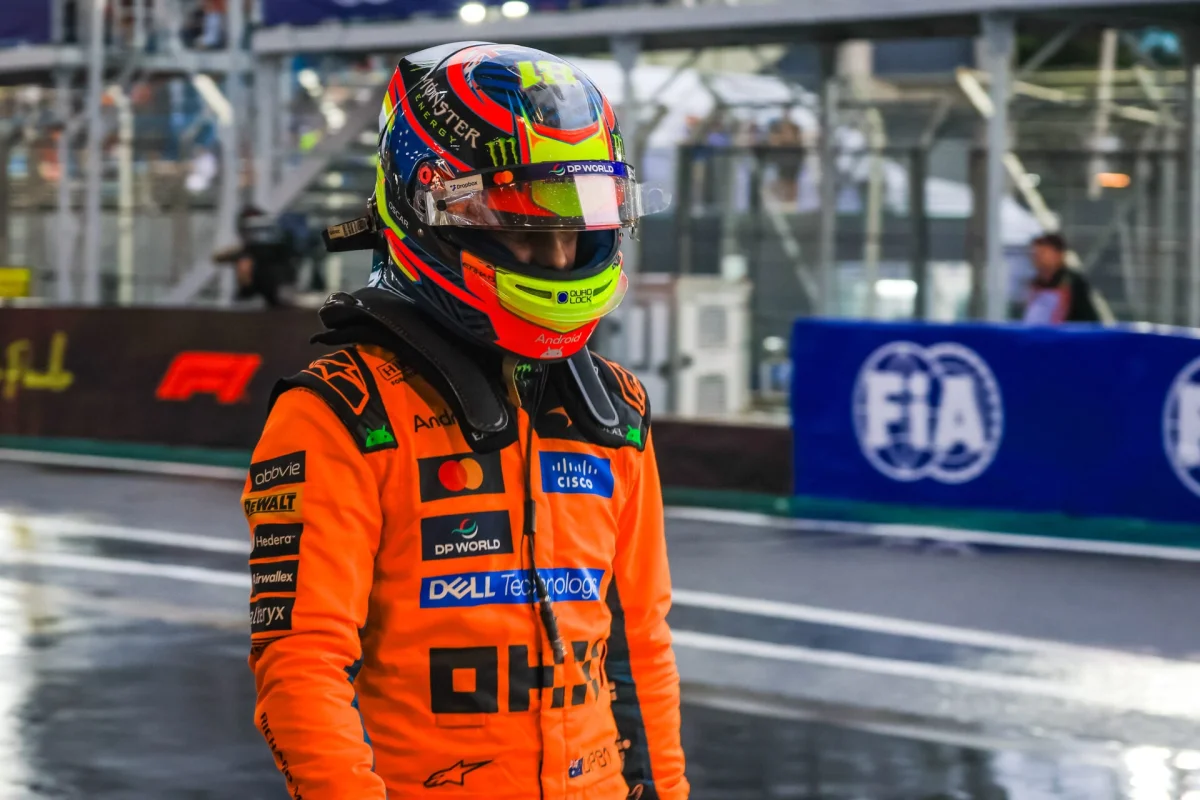
Martin Brundle blamed a late error at Juncao for Oscar Piastri's Q2 exit at Interlagos. Karun Chandhok thinks the bigger mistake came earlier, when McLaren kept the Australian on full wet tyres for longer than almost anyone else. My read is that Chandhok has the stronger argument, because a slide at the end of a lap usually reflects a problem that started several minutes before.
This is Piastri's second Q2 exit of the 2026 season and the 20th round of the campaign. His only previous failure to reach Q3 came at Mexico City the previous weekend, where he qualified 13th after struggling for speed. Two early-season-style outings in consecutive races suggest the problem wasn't a single bad lap but a wider struggle to get the car and tyres working together in changing conditions.
Norris takes pole as Q2 ends under red flag
Lando Norris made the wet conditions look straightforward in Q3, setting a 1:27.470 to take pole for the Sao Paulo Grand Prix. It was his fourth pole of the season. He had only reached Q3 from ninth in Q2, which says plenty about how unpredictable the session was. Norris was also the beneficiary of a red flag that cut Q2 short, after Rafael Camara crashed his Haas VF-26 on debut. Haas had given the young Camara an early outing on home soil in Brazil following the team's decision to release Esteban Ocon, whom he was set to replace in 2027.
Two possible causes for one lost lap
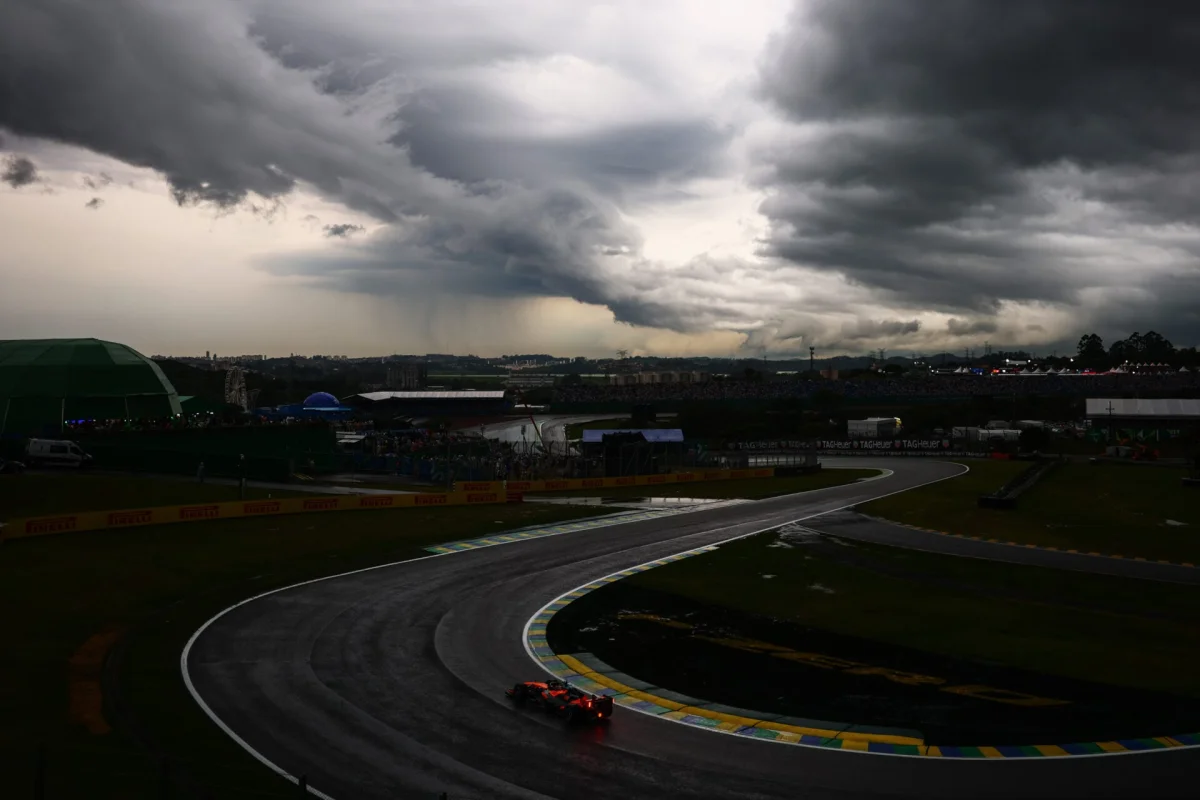
The red flag did Piastri no favours. Stopping the session at that moment disrupted the rhythm of drivers who were already on a flying lap, and it added to the feeling that his chance had slipped away. Still, the red flag doesn't explain everything, because Piastri also had a rear snap from his McLaren MCL40 as he lifted off the brakes into Juncao on his final push. He caught the car and kept it out of the grass at Turn 12, which Camara couldn't manage shortly afterwards. But the correction cost enough time that he couldn't improve on his best Q2 effort.
That's the moment Brundle picked up on. On Sky Sports F1 he said the Juncao moment had cost Piastri a Q3 place. It's a fair observation for a viewer watching the final sector, and it's the kind of error that's easy to see on screen. The trouble is that it's the last symptom rather than the cause.
Why the wet tyre call mattered more
Chandhok's point is about timing. Piastri was caught on the full wet Pirelli tyres while the track was drying in patches, and he stayed out longer than most before switching to intermediates. Speaking on Sky Sports F1, Chandhok described Piastri coming through the Curva do Sol just as George Russell pitted for intermediates. Piastri was then roughly a minute and a half out of sync and ended up running another lap on the full wets behind Russell.
Chandhok also pointed to Fernando Alonso, who was the first driver to switch to intermediates. Chandhok said Piastri stayed out a lap or two, probably two laps too long, and that this cost him against rivals like Alonso and Nico Hulkenberg, who both reached Q3. That's the heart of the argument. Once a driver falls behind the track's changing grip, every following lap has to be pushed harder just to recover, and the margin for mistakes shrinks with each one.
This kind of situation is familiar in mixed conditions. Full wets are built for standing water and can feel fine in a lap that looks wet on the dashboard, but once the racing line dries they lose their advantage quickly. Intermediates are the better call as the surface changes, and a team that waits for certainty often pays for it on the timing screen. My sense is that McLaren's read on the conditions was probably reasonable at the moment of the decision, and the penalty came from how quickly the track changed underneath them.
Grid penalties reshape the top ten
Piastri will move slightly up the grid thanks to a set of grid penalties handed out for new engine components. Russell will still start ahead of him despite a five-place drop, after finishing Q3 in second with a deficit of 0.204s to Norris's pole lap. Charles Leclerc drops 10 places from fourth in qualifying because he took a new ICE at Interlagos. Lewis Hamilton initially faced a 10-place drop for his own new ICE, but he and Max Verstappen will both start at the back after also taking fresh power units following FP3.
Those penalties matter for the race as much as the qualifying order. Starting from the back means a much longer route to the points, and it turns Interlagos into a race where the midfield and the back of the grid will be doing most of the overtaking. For Piastri, the starting position is less damaging than the qualifying story suggests, but the lesson from Saturday is clear: in changing conditions, the timing of a tyre call can outweigh a single mistake at the end of a lap. Watch whether McLaren's wet-weather strategy gets a closer look ahead of the race, because that's where the real cost of Saturday's decision could show up.