Norris Takes Interlagos Pole as Rain Reshuffles the Sao Paulo Grid
- Cargo
- Electric Vehicles
- Shipped
- Shipper
- Kyle Archer
- Readers
- 363
Norris takes pole at Interlagos after a rain-stopped qualifying, with Russell second and Lawson's Q3 pace lifting him to a career-best grid slot.
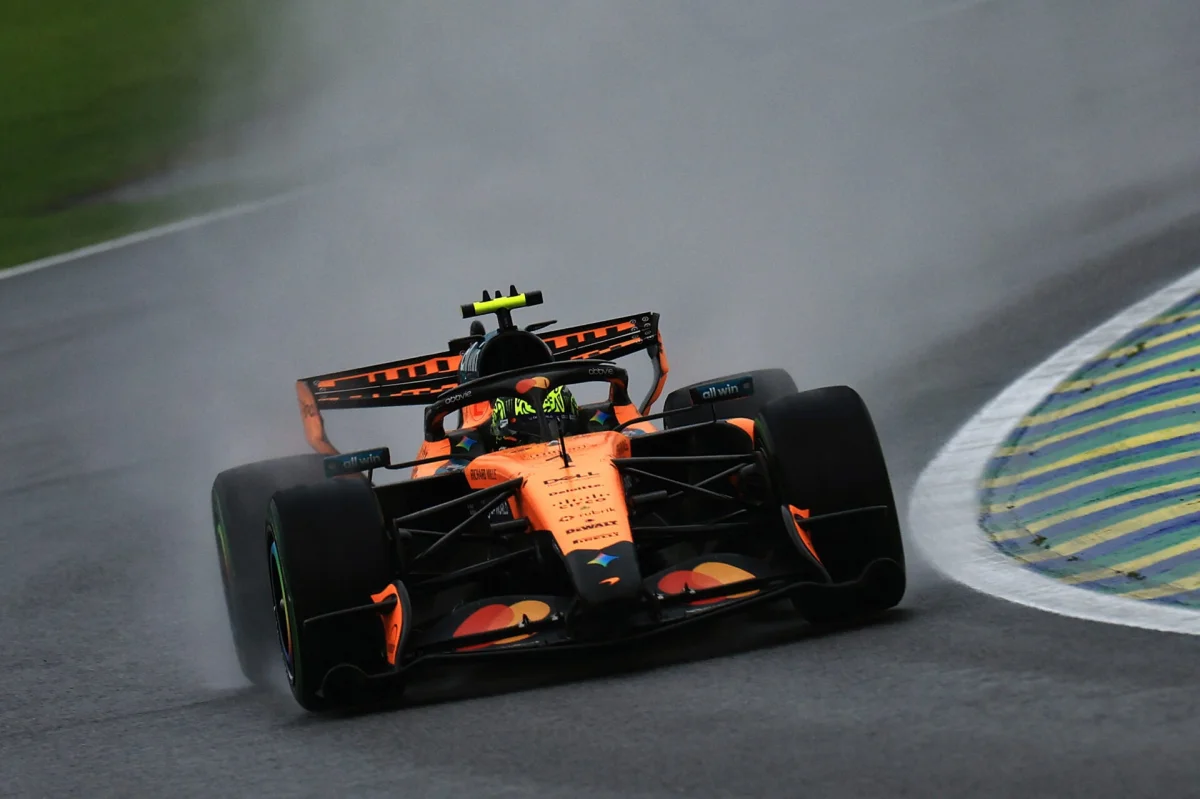
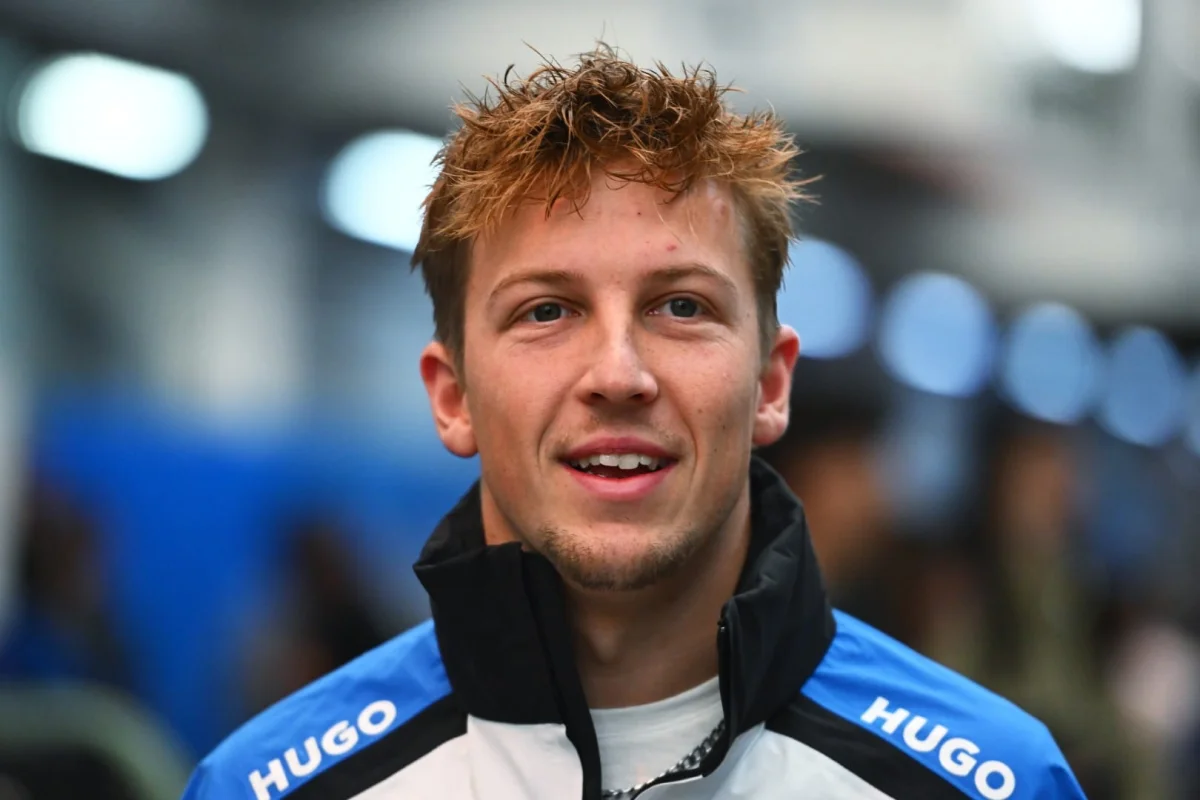
Lando Norris will start the Sao Paulo Grand Prix from pole, but the more interesting story is how wet conditions and engine-related grid penalties reshaped the top of the order. Norris edged George Russell by 0.204s after a qualifying session stopped twice by rain. Liam Lawson, meanwhile, produced a lap that could translate into the best qualifying result of his Formula 1 career.
Penalties decide who starts where
Much of the grid was already decided before a wheel turned in qualifying. Max Verstappen takes a new engine in his Red Bull RB22 and will start from the back, as will Lewis Hamilton. Ferrari changed Hamilton's power unit after problems appeared in final practice, which meant a full replacement rather than the ten-place drop both Ferrari drivers had initially faced after their fifth internal combustion engine of the season.
Russell's situation is more modest. He fitted his sixth ICE of the year, which earns a five-place drop. Because he had taken his fifth in Singapore, the penalty is lighter than it would have been. Cadillac's Sergio Perez also starts from the back after multiple new power unit parts.
That shuffling matters for the front row. Russell's drop promotes Andrea Kimi Antonelli onto the front row alongside Norris, and it also opens a path for Lawson to climb. Penalties in this season have become a regular feature of the calendar, and at Interlagos they are doing the heavy lifting for the rest of the order.
Q1: a red flag, an 83-minute wait and a lot of aquaplaning
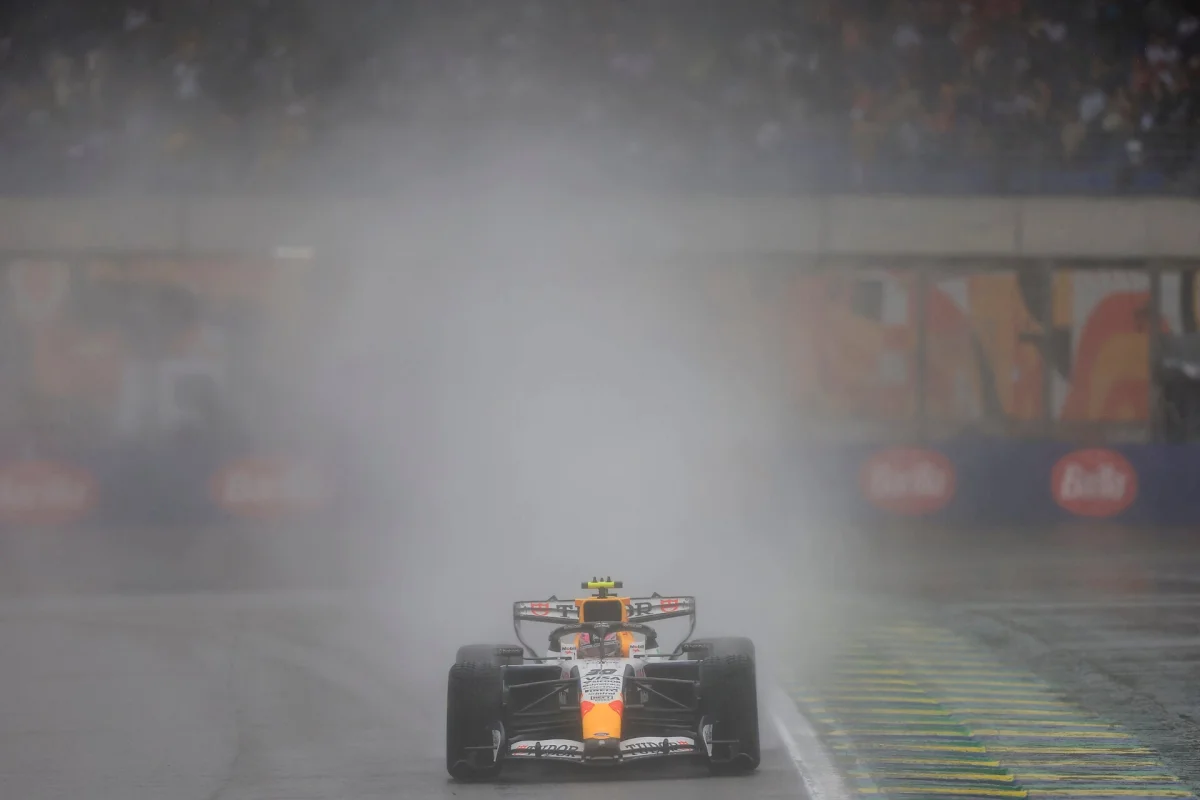
Qualifying was always going to be a test. Rain fell across Interlagos after final practice, and Mercedes sent Antonelli out first on intermediates. He didn't get half a lap before conditions turned, and the red flags came out. A heavy burst of rain in the opening minutes flooded sections of the circuit, and visibility in the pit lane dropped fast.
Marshals spent long periods pushing standing water off the track, but the rain kept coming. Race director Rui Marques held the session until a brief improvement allowed running to resume after an 83-minute delay. Cadillac used its pit lane position to send Valtteri Bottas and Perez out first. Pierre Gasly reported heavy aquaplaning on his out-lap, which gives a sense of how little grip there was.
Bottas set the first flying lap at 1:42.314 while fighting his Cadillac MAC-26 through deep puddles. Early in the session Rafael Camara, making his Haas debut in front of his home crowd, lost control in a straight line on the Reta Oposta and hit the barriers. He got back to the garage without setting a time.
The timesheets then tumbled as the track came around. Verstappen briefly led on a 1:37.932 before Fernando Alonso took the top spot in his Aston Martin with a 1:36.930. Nico Hulkenberg's Audi went to 1:35.793, and Verstappen responded with 1:35.477. Late in the session Hulkenberg reclaimed the top with a 1:33.890 and Verstappen answered with 1:33.074 before finally setting 1:31.238 to take P1. Gabriel Bortoleto's Audi hit the barriers and damaged its rear wing, ending his session early.
Norris ended Q1 on top with a 1:30.939. Haas had a mixed session: Camara progressed with the 13th-fastest time of 1:32.809, while Oliver Bearman spun at Juncao and brought out yellow flags that caught Alex Albon. Both Haas-linked and Williams-linked drivers avoided the drop zone, but both Alpine cars went out in Q1.
Q2: Verstappen sits out, Hamilton and Piastri are caught by a late crash
Verstappen didn't return for Q2, saving his tyres given his grid penalty. Once the track dried, lap times dropped sharply. Antonelli set the early benchmark at 1:30.283, and Norris moved to P1 with a 1:30.198 on his first run.
Charles Leclerc then took over. His 1:29.795 beat Norris in the first two sectors. Hamilton briefly jumped to P2 with a 1:30.001 before Russell went to the top with a 1:29.285. Antonelli followed with 1:29.644, a Mercedes one-two that was quickly rearranged by the Ferrari pair's strength on the dry sections. Isack Hadjar was struggling, sitting just above the drop zone with a 1:31.045.
Alonso then made a bold call. He set a 1:31.227 and became the first driver onto intermediate tyres, which turned out to be the decisive move of the session. Lawson and Oliver Bearman followed. Alonso's new tyres gave him a fastest middle sector of 46.690s and a 1:29.339 lap. Lawson and Bearman then took P1 and P2 with 1:27.478 and 1:29.130.
Lawson's pace on the intermediates was striking. Hadjar's first flying lap on that tyre finished 1.643s down. Russell then came back with 1:26.745 to push Lawson into P2, with Hulkenberg and Albon moving into the top five. Hadjar found more at the very end of the session with a 1:27.218, and the drop zone battle grew tense for Norris, Antonelli, Hamilton and Piastri in P9 through P12.
Then Camara's session ended abruptly. He ran straight on at Juncao with less than a minute remaining, and his Haas stopped in the barriers. Rui Marques threw the red flags, and the session was over. Piastri had a moment of his own at the same corner moments earlier and was left in P12. Hamilton, who was in the mix, didn't get another run.
Albon was the beneficiary. He reached Q3 for the first time since the 2025 Belgian Grand Prix, ending a run of 30 races without making the final phase. That's a notable result for Williams, which has been fighting to find consistent pace.
Q3: Norris pulls clear, Lawson gets close to a career best
Q3 was a short session with a pause in the middle. Lawson set the pace from the start, posting a 1:28.321 with the fastest final sector split of 18.631s. Hadjar, by contrast, had shown up at the pace in the Red Bull, but it wasn't enough to match Lawson's first attempt.
The conditions got worse again during the session, and that changed how drivers approached their final laps. Russell was told by his race engineer to back off and let Albon pull away. He was furious about it, because he had given up a lap that could have put him back on top. The move left him second at the mid-Q3 lull behind Norris, who set a 1:27.470.
Norris didn't win any individual sector, but he put three fast sectors together. That was enough to beat Russell by 0.204s, and he took pole. Antonelli, meanwhile, set a 1:28.095 that would have been good enough for the front row, and after Russell's grid penalty he will line up beside Norris.
The biggest result for Lawson is the way his grid spot might end up. Finishing Q3 in fifth place would, after the penalties ahead of him, promote him to third on the grid. That would match the best qualifying result of his F1 career and give Racing Bulls a strong starting position. For a driver who has spent much of the season trying to prove himself in a midfield seat, it's a result worth noting.
What to watch on Sunday
Here's the thing: pole position at Interlagos is less settled than the timesheets suggest. Norris has the advantage, but he'll be racing a pack with varied tyre choices and drivers who showed they can go fast in wet and drying conditions. Norris needs a clean start from pole, and Antonelli and Lawson are close enough to challenge him if the track conditions change again.
Starting from the back, Verstappen and Hamilton will need strong race pace to recover. Verstappen's new engine and Hamilton's full power unit change mean they start the race with fresh components, but they'll have to make their way through the field. Russell, starting from the second row, looks like the driver with the most to prove after his frustration in qualifying. For drivers and fans weighing up the season, the mix of penalties, weather and tyre strategy at Interlagos makes this one of the more unpredictable grids in recent weeks.