Citroën's Electric 2CV Returns for 2028 From Around €15,000
- Cargo
- Electric Vehicles
- Shipped
- Shipper
- Richard Johnson
- Readers
- 827
Citroën's electric 2CV concept previews a production car due in late 2028, priced from around €15,000, with cost cuts designed into the body.
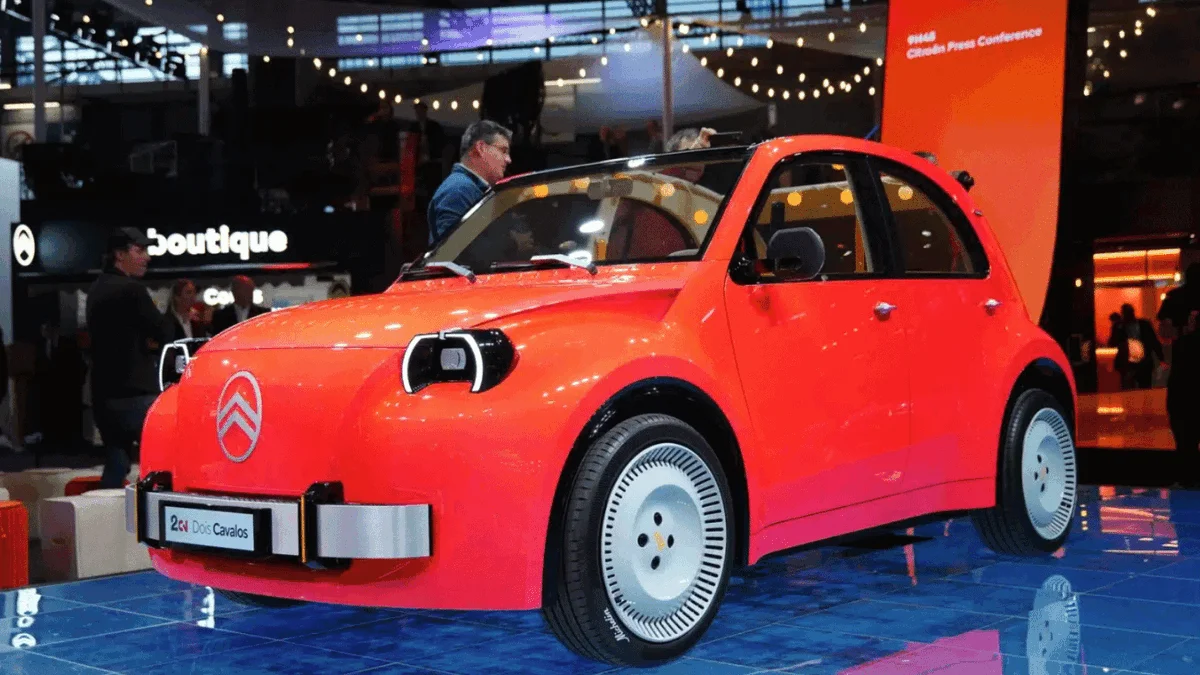
The 2CV has always been a car that made its own rules, and the new concept keeps that streak alive. Citroën says the production version will arrive at the end of 2028, eighty years after the original, with prices starting from around €15,000 (about £12,700). That's the number that matters most here, and it's the reason this concept deserves more attention than a typical retro-styled showpiece.
Where the price comes from
Citroën's target price is tied to the EU's proposed "E-car" category, a class of simpler, cheaper small electric cars that's still being negotiated. Nothing is locked in yet, so treat the figure as a target rather than a promise. Still, the logic is clear. Build a light, basic small EV and you can undercut almost everything on sale today.
The weight target is around 1,000kg. That points to a modest battery, and it's the single biggest clue to what the eventual range will look like. Citroën hasn't confirmed battery size, performance or range, so anyone quoting those figures is guessing. My read is that the car will be aimed at urban and short-hop driving first, with the motorway question still wide open.
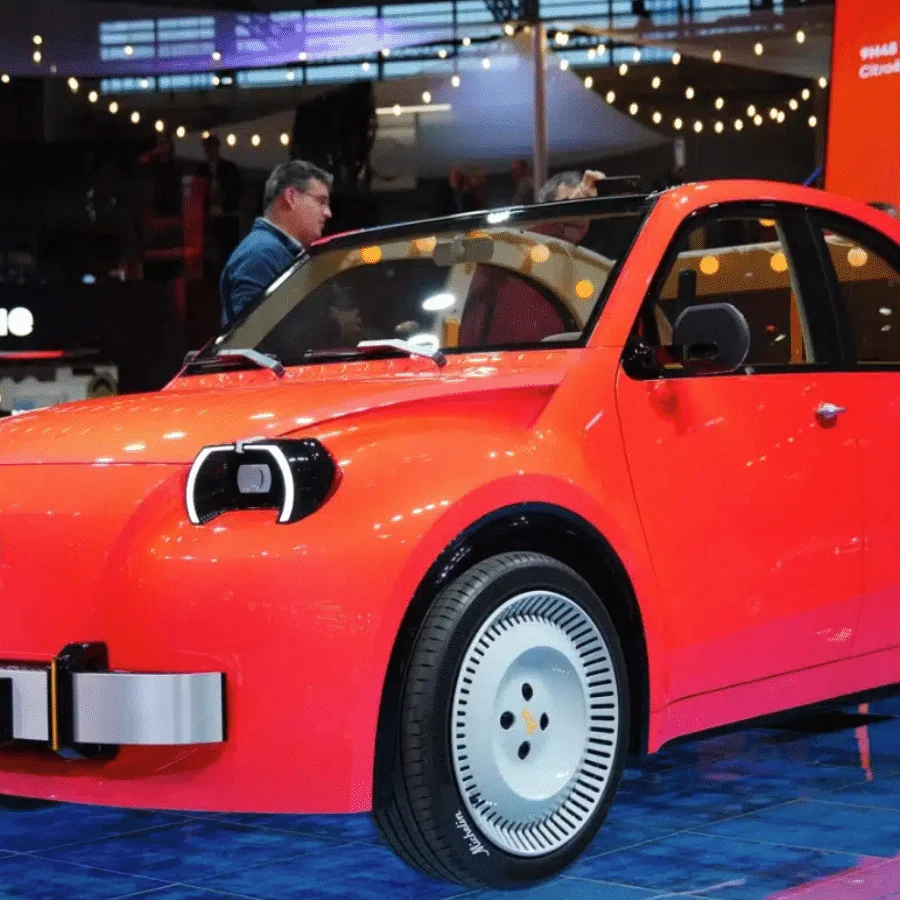
The concept sits at 3.76m long, which makes it shorter than both the original 2CV and the new Renault Twingo. It slots between the Ami quadricycle and the C3 in Citroën's lineup, which is a useful reference point. That's a small footprint, and it's the kind of size that would suit tight city parking far better than most supermini-sized EVs.
Cost-cutting built into the body
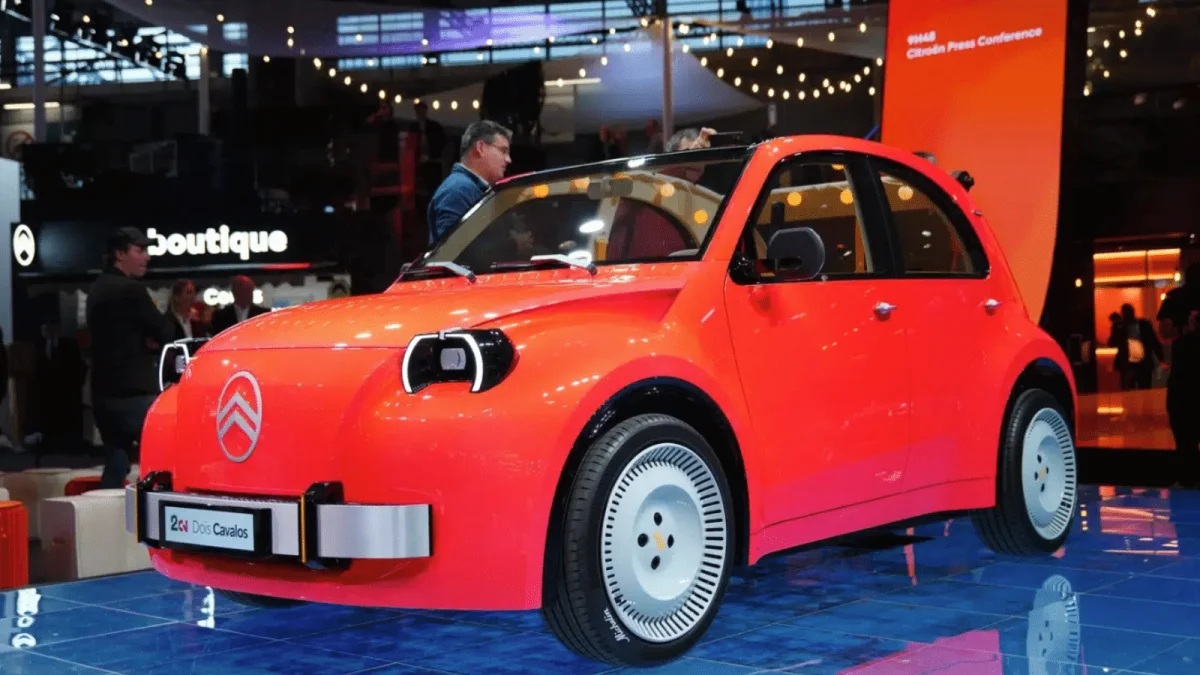
What stands out is that the savings aren't being bolted on later. They're part of the design brief from the start. The glass is flat, because glass that curves in one direction is cheaper to make than glass that curves in two. The black lower rear section is moulded straight into the tailgate rather than painted, which removes a process entirely.
Other choices follow the same logic. The roof is a roll-back fabric unit, and the cowl and wipers are left exposed. The concept's plastic-covered wheels become steel on the production car, with 18-inch rims wearing special Michelin tyres. Anyone who has priced alloy wheels on a budget EV will recognise why that matters.
Windows are a notable change. The concept has no opening glass at all, but the production car gets roll-down windows at the front and pop-out units at the rear. That's a practical concession that should help with ventilation and keep the car usable without air conditioning, which often matters more on a cheap small EV than a spec sheet suggests.
No dashboard, and a lot of personality
Inside, there's no conventional dashboard. A barrel-shaped pod houses a single-spoke steering wheel, a gear selector and a small e-ink screen. Speed and warnings are projected onto a slim bar beneath the windscreen, which keeps the cabin uncluttered and, presumably, cheaper to trim.

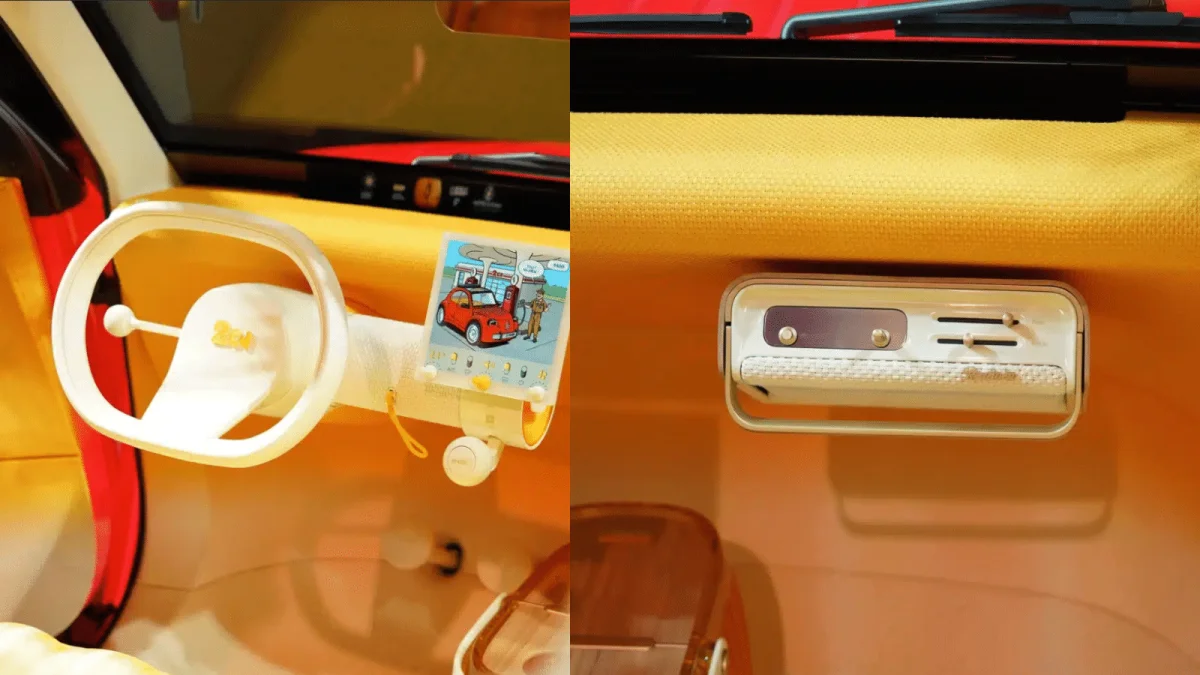
The playful details go further. Door bins have egg-shaped storage, the brake pedal carries a tortoise and the accelerator a rabbit. The motor imitates the flat-twin wheeze of the original, and the horn parps. A removable wicker basket sits where a centre console would normally be, and a detachable portable speaker called the "Radioën" completes the set.
Not all of it will survive to production. The tartan upholstery and hanging lanterns probably won't be standard, though Citroën suggests some could return as accessories. That's the sensible compromise. Accessories like these can carry margin in a way that base-spec trim can't, and they let buyers personalise a car that's otherwise deliberately basic.
What's still unclear
Plenty remains unresolved. Citroën hasn't explained how the E-car rules will handle motorway driving, and the safety and comfort compromises that come with a car this simple are still unknown. Those are the questions that will decide whether this is a sensible second car or a city-only novelty.

Citroën's design lead, Antoine Gaillot-Drevon, insists the car is "super-credible" and not a wild concept built for show. Stellantis design boss Gilles Vidal says the company is "very serious about all this fun". Both comments suggest the aim is to keep the concept's character intact through to production, and that's the real test.
The takeaway
If Citroën can deliver a car at this price without stripping out the charm, it could matter more than a lot of bigger, more expensive EVs. The attraction isn't just the badge or the nostalgia. It's a clear attempt to show that a cheap electric car doesn't have to feel like a cheap compromise. Watch for the battery, the weight and the final E-car rules, because those three details will decide whether the 2CV's 2028 return lives up to the concept.